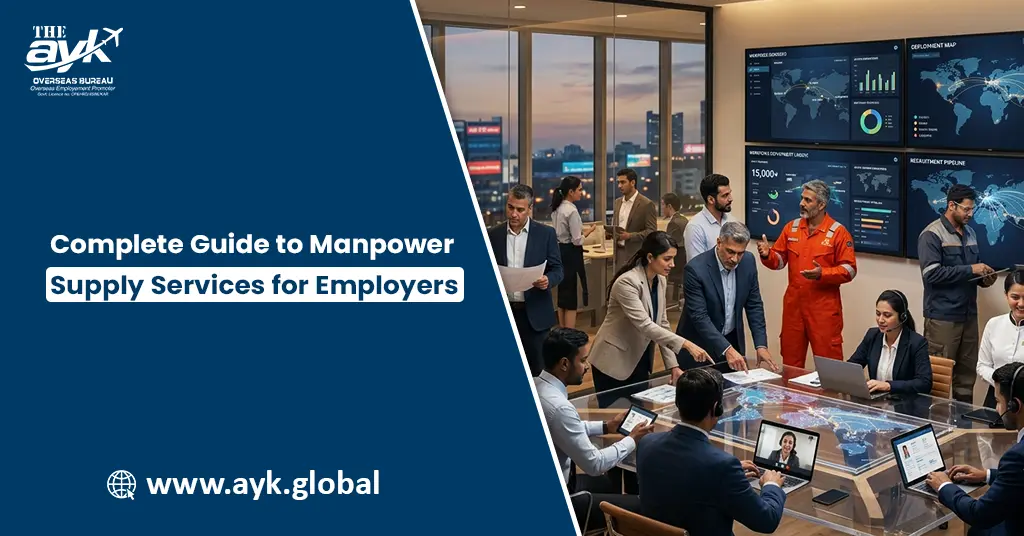
Complete Guide to Manpower Supply Services for Employers
Published: June 23, 2026 | Views: 156
Introduction
In today's competitive business environment, having the right workforce at the right time can determine whether a company succeeds or struggles. Across industries such as construction, healthcare, logistics, manufacturing, hospitality, facilities management, engineering, oil and gas, and transportation, workforce availability directly influences productivity, project completion, service quality, and profitability. As labor markets become increasingly competitive, many employers are turning to manpower supply companies to help meet their workforce requirements efficiently.
Manpower supply services have evolved significantly over the past decade. What was once viewed as a simple labor sourcing activity has become a strategic workforce solution that supports business growth, workforce flexibility, and operational efficiency. Modern manpower suppliers do far more than provide workers. They help employers with workforce planning, candidate sourcing, screening, trade testing, compliance management, documentation, mobilization, and deployment.
Many employers are familiar with recruitment services but may not fully understand how manpower supply differs from traditional hiring. A professional manpower supply company acts as a workforce partner, helping organizations secure the talent required to achieve business objectives while reducing administrative burdens and hiring risks.
This comprehensive guide explains how manpower supply services work, why employers use them, and how they contribute to long-term business success.
1. What Are Manpower Supply Services?
Manpower supply services refer to professional workforce solutions designed to help employers access qualified employees efficiently. These services may include sourcing, screening, recruitment, trade testing, documentation management, workforce mobilization, and deployment support. The objective is to provide employers with the workforce they need while simplifying the hiring process.
Unlike traditional recruitment, manpower supply often focuses on workforce availability and deployment readiness. Employers may require workers for short-term projects, long-term operations, seasonal demand increases, or large-scale expansion initiatives. Manpower suppliers help meet these requirements by maintaining talent networks and workforce databases.
Professional manpower supply companies support both skilled and unskilled workforce categories. They may recruit engineers, technicians, healthcare professionals, drivers, warehouse workers, hospitality staff, construction laborers, and many other employee types depending on industry requirements.
Organizations use manpower supply services because they improve hiring efficiency and reduce recruitment complexity. By partnering with workforce specialists, employers gain access to talent without managing every aspect of recruitment internally.
Key Benefits
Manpower suppliers provide access to qualified workforce resources.
Employers reduce recruitment complexity and administrative workloads.
Professional workforce solutions support business growth and flexibility.
2. Why Employers Use Manpower Supply Companies
Workforce shortages have become one of the most significant challenges facing employers worldwide. Many organizations struggle to recruit qualified employees due to labor market competition, demographic changes, skill shortages, and business expansion. Manpower supply companies help address these challenges by expanding access to talent.
Employers often use manpower suppliers because recruitment requires substantial time and resources. Internal teams must source candidates, conduct interviews, verify qualifications, process documentation, and coordinate onboarding activities. These responsibilities can become overwhelming when workforce requirements are large or urgent.
Manpower supply companies streamline these activities by leveraging existing workforce networks and recruitment infrastructure. Employers receive access to pre-screened candidates and professional workforce support without building extensive internal recruitment capabilities.
The ability to secure talent quickly is particularly valuable in industries where project schedules and operational performance depend on workforce availability. Manpower supply services help employers maintain productivity and respond more effectively to changing workforce demands.
Why Businesses Choose Manpower Suppliers
Workforce shortages continue affecting many industries.
Professional manpower providers improve hiring efficiency.
Employers gain access to larger talent pools.
3. Skilled vs Unskilled Manpower Supply
One of the most important aspects of manpower supply services is the ability to support different workforce categories. Employers may require highly specialized professionals, general laborers, or a combination of both depending on operational needs.
Skilled manpower includes employees with technical expertise, certifications, trade qualifications, or professional experience. Examples include engineers, electricians, welders, plumbers, HVAC technicians, healthcare professionals, machine operators, and IT specialists. Recruiting these workers often requires specialized sourcing and evaluation processes.
Unskilled manpower includes workers who perform tasks requiring limited technical training. Construction laborers, warehouse assistants, cleaners, helpers, loaders, and support staff typically fall into this category. Although recruitment requirements may differ, workforce quality remains equally important.
Professional manpower supply companies maintain networks covering both skilled and unskilled workforce categories. This flexibility enables employers to build balanced workforce teams that support operational requirements effectively.
Workforce Categories
Skilled workers provide technical expertise and specialized capabilities.
Unskilled workers support operational efficiency and workforce capacity.
Balanced workforce planning often requires both categories.
4. Industries That Depend on Manpower Supply Services
Manpower supply services support a wide range of industries. While workforce requirements vary, many sectors depend heavily on external recruitment support due to labor shortages, project-based staffing needs, and workforce scalability requirements.
Construction is one of the largest users of manpower supply services because projects require significant workforce volumes and specialized trades. Employers often recruit electricians, welders, plumbers, masons, carpenters, operators, and laborers through manpower providers.
Healthcare organizations use manpower suppliers to recruit nurses, caregivers, technicians, and support personnel. Manufacturing companies require machine operators, technicians, maintenance staff, and production workers. Logistics providers often recruit drivers, warehouse personnel, and supply chain professionals.
Hospitality, facilities management, engineering, transportation, and oil and gas sectors also rely heavily on manpower supply services. Professional workforce providers help employers address industry-specific recruitment challenges and maintain workforce readiness.
Industries Served
Construction and infrastructure development.
Healthcare and medical services.
Manufacturing, logistics, hospitality, and facilities management.
5. Workforce Planning Before Recruitment Begins
Successful manpower supply begins with workforce planning. Before candidates are sourced, employers must identify workforce requirements, define job roles, establish hiring priorities, and determine deployment schedules. Effective planning improves recruitment outcomes and reduces workforce risks.
Workforce planning helps organizations understand how many employees are needed, what skills are required, and when deployment must occur. This information guides sourcing strategies and helps manpower suppliers identify suitable candidates efficiently.
Poor planning often results in hiring delays, workforce shortages, and increased recruitment costs. Employers that clearly define workforce requirements generally experience better recruitment outcomes and stronger workforce stability.
Professional manpower suppliers frequently begin projects with workforce consultations to ensure alignment between employer expectations and recruitment strategies.
Importance of Workforce Planning
Planning improves recruitment accuracy.
Clear requirements support better candidate selection.
Workforce planning reduces hiring delays.
6. Candidate Sourcing and Talent Acquisition
Candidate sourcing is one of the most important functions performed by manpower supply companies. Workforce quality depends heavily on the ability to identify and engage qualified candidates who meet employer requirements.
Professional manpower suppliers maintain extensive databases, workforce networks, industry relationships, and sourcing channels that enable them to access talent efficiently. These resources allow recruiters to identify candidates more quickly than many internal hiring teams.
Sourcing activities often include database searches, referrals, workforce partnerships, digital recruitment campaigns, industry networking, and candidate outreach initiatives. Effective sourcing expands workforce availability and improves recruitment flexibility.
Organizations benefit because they gain access to broader talent pools without investing heavily in sourcing infrastructure. Candidate acquisition becomes faster, more efficient, and more scalable.
Why Sourcing Matters
Candidate quality begins with effective sourcing.
Large talent networks improve workforce availability.
Professional sourcing accelerates recruitment timelines.
7. Candidate Screening and Trade Testing
Finding candidates is only the first step in manpower supply. The real challenge lies in identifying workers who possess the skills, experience, and reliability required to perform effectively. This is where candidate screening and trade testing become essential components of the manpower supply process.
Professional manpower supply companies use structured screening procedures to evaluate applicants before they are presented to employers. Screening often includes resume reviews, interviews, qualification verification, reference checks, communication assessments, and behavioral evaluations. These activities help ensure that candidates meet workforce requirements and are prepared for deployment.
For technical positions, trade testing provides additional quality assurance. Skilled workers such as welders, electricians, plumbers, fabricators, HVAC technicians, machine operators, and maintenance personnel often undergo practical assessments designed to evaluate their technical abilities. These tests allow employers to verify workforce competence before hiring decisions are made.
Employers benefit because trade-tested workers generally require less supervision, integrate more quickly into operations, and contribute more effectively to productivity goals. Screening and testing reduce hiring risks and improve workforce quality across all industries.
Why Screening and Testing Matter
Candidate evaluation improves workforce quality.
Trade testing verifies practical skills and competencies.
Employers gain confidence in recruitment decisions.
8. Documentation and Compliance Management
Managing workforce documentation is one of the most important responsibilities associated with manpower supply services. Every recruitment project generates records that must be collected, verified, processed, and maintained accurately. Failure to manage documentation properly can result in delays, compliance issues, and operational disruptions.
Documentation requirements often include identification records, educational certificates, employment histories, trade licenses, medical reports, employment contracts, and onboarding forms. For international recruitment projects, visa applications and immigration documents must also be processed correctly.
Compliance management ensures that workforce acquisition activities align with labor laws, employment regulations, and industry standards. Employers must protect themselves from legal risks while ensuring that workers meet applicable requirements. Professional manpower suppliers help organizations navigate these obligations efficiently.
By outsourcing documentation management to experienced workforce providers, employers reduce administrative burdens and improve recruitment efficiency. Accurate documentation supports smooth workforce deployment and protects business operations.
Compliance Benefits
Proper documentation reduces administrative delays.
Compliance protects employers from legal risks.
Professional support improves recruitment efficiency.
9. International Manpower Supply Solutions
Many organizations rely on international manpower supply services because local labor markets cannot always meet workforce requirements. Labor shortages, specialized skill demands, and business expansion often create hiring challenges that require access to global talent pools.
International manpower suppliers connect employers with qualified candidates from multiple countries. This expands workforce availability and improves recruitment flexibility. Employers gain access to skilled professionals, technical specialists, and general labor categories that may be difficult to source locally.
International manpower supply requires expertise in workforce sourcing, documentation management, immigration procedures, compliance requirements, and mobilization activities. Professional manpower providers coordinate these processes to ensure successful workforce deployment.
For industries such as construction, healthcare, logistics, manufacturing, hospitality, facilities management, and oil and gas, international manpower supply has become an essential workforce strategy. Organizations benefit from access to broader talent pools while maintaining workforce quality standards.
International Workforce Benefits
Global talent access expands hiring opportunities.
International recruitment addresses labor shortages.
Professional manpower suppliers simplify workforce mobility.
10. Workforce Mobilization and Deployment
Workforce mobilization refers to the activities required to prepare employees for deployment. Once candidates have been selected and documentation requirements completed, manpower suppliers coordinate travel arrangements, medical examinations, onboarding preparation, and deployment logistics.
Mobilization is particularly important for international recruitment because workers often relocate across countries and regions. Employers depend on workforce providers to ensure that employees arrive on schedule and are prepared to begin work immediately.
Successful mobilization requires detailed coordination. Travel bookings, visa approvals, accommodation arrangements, transportation logistics, and pre-departure briefings must all be managed carefully. Delays in any of these areas can affect project schedules and workforce readiness.
Professional manpower suppliers help employers avoid these challenges by managing mobilization activities systematically. Workforce deployment becomes more predictable, reducing operational risks and supporting business continuity.
Mobilization Advantages
Efficient deployment improves workforce readiness.
Travel coordination supports project timelines.
Professional mobilization reduces operational disruptions.
11. Long-Term Workforce Management and Retention
Recruitment is only one part of successful workforce management. Employers must also focus on retention, employee engagement, and workforce development to maximize the value of their hiring investments.
High turnover rates create significant costs related to recruitment, onboarding, training, and productivity losses. Organizations that retain employees effectively generally achieve stronger workforce stability and better operational performance. Workforce management therefore extends far beyond the initial hiring process.
Professional manpower suppliers often support employers by helping them identify candidates who align with organizational culture and long-term workforce objectives. Better candidate matching contributes to stronger retention outcomes and reduced turnover risks.
Long-term workforce management also involves training, performance evaluation, career development, and workforce planning activities. Organizations that invest in these areas often experience greater employee satisfaction and stronger business results.
Retention Creates Value
Employee retention protects recruitment investments.
Workforce stability supports productivity and growth.
Long-term workforce management improves organizational performance.
12. Why Employers Choose AYK Overseas Recruitment & HR Manpower Agency
Employers seeking reliable manpower supply solutions often evaluate workforce providers based on experience, compliance standards, recruitment quality, mobilization capability, and industry expertise. Professional manpower suppliers must demonstrate the ability to deliver qualified workers efficiently while maintaining high service standards.
AYK Overseas Recruitment & HR Manpower Agency
License No. GL-4586-KAR
provides workforce solutions across multiple industries including construction, healthcare, logistics, manufacturing, hospitality, facilities management, engineering, transportation, and oil and gas. Through structured recruitment processes, candidate screening, trade testing support, documentation management, workforce mobilization, and deployment coordination, the agency helps employers address workforce challenges effectively.
Organizations increasingly require workforce partners capable of supporting both local and international recruitment requirements. By combining recruitment expertise with manpower supply capabilities, professional agencies help employers improve hiring outcomes and maintain workforce readiness.
Employers that choose experienced manpower suppliers often benefit from faster recruitment, stronger workforce quality, reduced administrative burdens, and improved long-term workforce performance.
Why Professional Workforce Partners Matter
Specialized expertise improves recruitment outcomes.
Structured processes support workforce quality.
Reliable manpower supply contributes to business success.
Conclusion
Manpower supply services have become an essential workforce solution for organizations seeking flexibility, efficiency, and access to qualified talent. By supporting workforce planning, sourcing, screening, compliance management, mobilization, and deployment activities, manpower suppliers help employers address recruitment challenges and maintain workforce readiness.
As labor markets become increasingly competitive and workforce requirements grow more complex, organizations that leverage professional manpower supply services often gain significant advantages. Improved workforce quality, reduced hiring risks, and greater operational flexibility contribute directly to business success.
Employers that view manpower suppliers as strategic workforce partners rather than simple recruitment vendors are often best positioned to achieve sustainable growth and long-term workforce stability.
 The Role of Licensed Recruitment Agencies in Safe Overseas Employment
.webp) Get Job Abroad Fast – Trusted Recruitment Agency in Pakistan (AYK Overseas)
Get Job Abroad Fast – Trusted Recruitment Agency in Pakistan (AYK Overseas)
 A complete guide for Hawalli businesses considering Pakistani manpower recruitment
 KSA Recruitment
 UAE Recruitment
 Qatar Recruitment
 Oman Recruitment
 Kuwait Recruitment
 Libya Recruitment
 Bahrain Recruitment
 Iraq Recruitment
 Malaysia Recruitment
 Malta Recruitment
 Canada Recruitment
 USA Recruitment
 Europe Recruitment
 UK Recruitment
 Romania Recruitment
 Poland Recruitment
 Bulgaria Recruitment
 Albania Recruitment
 Serbia Recruitment
 Lithuania Recruitment
 Japan Recruitment
 Turkey Recruitment
 Kyrgyzstan Recruitment
 South Korea Recruitment