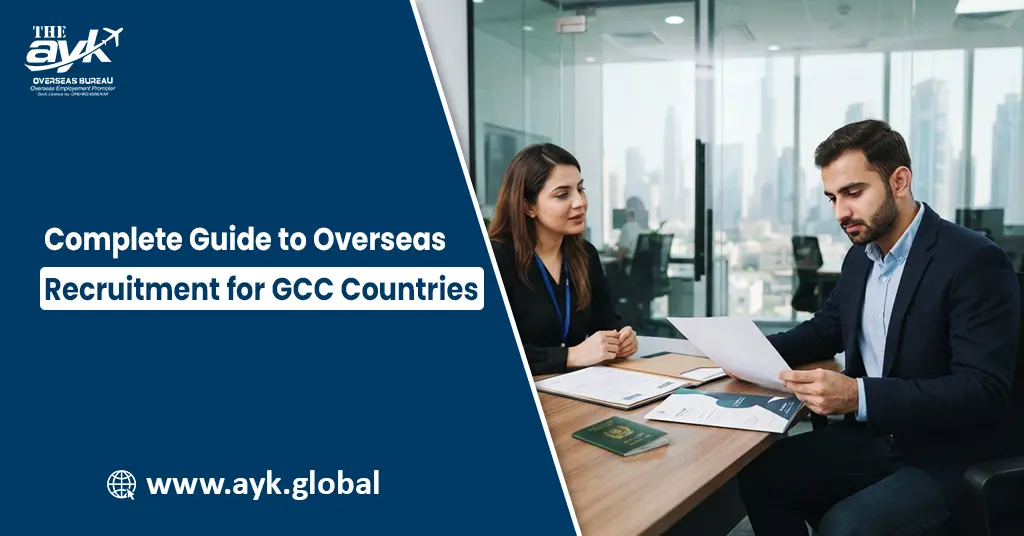
Complete Guide to Overseas Recruitment for GCC Countries
Published: July 02, 2026 | Views: 26
Introduction
Overseas recruitment for GCC countries has become one of the most important employment pathways for Pakistani job seekers in 2026. Countries like Saudi Arabia, UAE, Qatar, Kuwait, Oman, and Bahrain continue to rely heavily on foreign manpower to support their growing economies. With mega projects in construction, healthcare, energy, tourism, logistics, and technology, the demand for both skilled and unskilled workers remains consistently high. As a result, thousands of workers from Pakistan apply every month for overseas jobs through recruitment agencies and direct hiring channels.
However, understanding the overseas recruitment process is essential to avoid fraud, delays, and rejection. Many applicants fail because they lack proper knowledge about job applications, documentation, visa procedures, and verification steps. This complete guide explains everything about overseas recruitment for GCC countries, including how hiring works, which agencies are reliable, how to apply safely, and how to increase your chances of selection in 2026.
Understanding Overseas Recruitment Process
Overseas recruitment is the process through which companies in GCC countries hire foreign workers through licensed agencies or direct hiring platforms. Employers first identify manpower needs, then contact recruitment agencies in countries like Pakistan to find suitable candidates. These agencies screen applicants based on skills, experience, and job requirements before forwarding shortlisted candidates to employers for final selection.
Once a candidate is selected, the employer issues a job offer letter and starts the visa sponsorship process. This includes contract signing, medical tests, document verification, and visa approval. Understanding this process helps candidates avoid confusion and ensures they follow legal procedures instead of relying on unverified agents or fake job offers.
Role of Recruitment Agencies in Pakistan
Recruitment agencies play a key role in connecting Pakistani workers with GCC employers. These agencies are responsible for advertising job vacancies, collecting applications, conducting interviews, and forwarding selected candidates to foreign companies. Licensed agencies work under government regulations and are authorized to send workers abroad legally.
However, not all agencies are trustworthy. Some fake agents mislead job seekers by charging high fees or offering false job guarantees. That is why applicants must verify agency registration with the Bureau of Emigration & Overseas Employment before applying. Choosing a reliable agency ensures a safe and transparent recruitment process.
Direct Hiring vs Agency Hiring
Direct hiring means applying directly to GCC companies through official websites or job portals without any middleman. Many multinational companies in UAE, Saudi Arabia, and Qatar prefer direct recruitment for skilled professionals such as engineers, IT specialists, and healthcare workers. This method is more transparent and often faster because candidates communicate directly with employers.
On the other hand, agency hiring is more common for construction, labor, and semi-skilled jobs. Recruitment agencies handle large-scale hiring for multiple workers at once. While agency hiring is widely used, candidates must ensure they are dealing with licensed and verified recruiters to avoid scams and illegal job offers.
Required Documents for GCC Recruitment
Documentation is a critical part of the overseas recruitment process. Applicants usually need a valid passport, updated CV, educational certificates, experience letters, passport-sized photographs, and national identity documents. In many cases, documents must be attested by relevant authorities before they are accepted by GCC employers.
Medical fitness reports and police clearance certificates are also mandatory for most job categories. These documents ensure that candidates meet health and security requirements of the destination country. Proper preparation of documents increases approval chances and speeds up the recruitment process significantly.
Job Interview Process for GCC Countries
After initial screening, candidates are usually called for interviews either online or in person. Employers assess technical knowledge, communication skills, work experience, and professionalism during the interview. Skilled professionals may also face practical tests depending on their job category.
Preparing for interviews is extremely important because competition is high. Candidates should research the company, understand job requirements, and practice common interview questions. A confident and well-prepared candidate has a much higher chance of getting selected for a high-paying job in GCC countries.
Visa Processing and Sponsorship System
Once a candidate is selected, the employer becomes the sponsor and begins the visa process. This includes submitting employment contracts, applying for work permits, and completing government approvals in the destination country. The visa process varies slightly between Saudi Arabia, UAE, Qatar, Kuwait, Oman, and Bahrain.
Medical tests and biometrics are mandatory steps in most GCC countries. After approval, the worker receives an entry visa and can legally travel to the host country. Understanding sponsorship rules is important because workers are legally tied to their employer during the contract period.
Salary and Benefits in GCC Jobs
Salaries in GCC countries depend on job type, experience, and qualifications. Skilled professionals such as engineers, doctors, and IT experts earn higher salaries compared to labor and entry-level workers. However, even unskilled jobs offer stable income along with overtime opportunities.
Most employers also provide additional benefits such as free accommodation, transportation, medical insurance, annual leave, and end-of-service bonuses. These benefits significantly increase the overall value of employment and help workers save money for their families in Pakistan.
Common Recruitment Scams and How to Avoid Them
One of the biggest challenges in overseas recruitment is the presence of fake agents and scams. Some fraudsters offer fake job letters, demand high advance payments, or promise guaranteed visas without any official process. These scams can result in financial loss and legal problems for job seekers.
To avoid scams, applicants should only use licensed recruitment agencies and verify job offers directly with employers. Never pay large amounts of money without official documentation. Checking agency registration and reading reviews can also help ensure safe recruitment.
Tips to Get Selected for GCC Jobs
To increase chances of selection, candidates should improve their CV, gain relevant experience, and obtain professional certifications. Employers prefer candidates who have strong technical skills, good communication abilities, and a professional attitude. English language skills also play an important role in selection.
Applying to multiple trusted sources and staying consistent in job search efforts is also important. Candidates who regularly update their skills and follow proper recruitment channels are more likely to secure high-paying jobs in GCC countries.
Future of Overseas Recruitment in GCC (2026)
The future of overseas recruitment in GCC countries looks very strong due to continuous economic development and diversification projects. Saudi Arabia’s Vision 2030, UAE’s digital transformation, and Qatar’s infrastructure growth are creating millions of job opportunities for foreign workers.
In 2026 and beyond, demand for skilled professionals in IT, healthcare, engineering, and renewable energy will continue to rise. Workers who upgrade their skills and follow legal recruitment processes will have excellent opportunities for long-term international careers.
Conclusion
Overseas recruitment for GCC countries offers life-changing opportunities for Pakistani workers seeking better income and career growth. However, success depends on understanding the recruitment process, choosing trusted agencies, preparing proper documents, and improving skills. With the right approach, workers can secure high-paying jobs and build a stable future in the Gulf region.
 Minimum Salary in Gulf Countries for Pakistani Workers
 Top HR Trends Shaping Global Recruitment in 2026
 Hire Pakistani Workers for Singapore, A Complete Guide for Employers
 KSA Recruitment
 UAE Recruitment
 Qatar Recruitment
 Oman Recruitment
 Kuwait Recruitment
 Libya Recruitment
 Bahrain Recruitment
 Iraq Recruitment
 Malaysia Recruitment
 Malta Recruitment
 Canada Recruitment
 USA Recruitment
 Europe Recruitment
 UK Recruitment
 Romania Recruitment
 Poland Recruitment
 Bulgaria Recruitment
 Albania Recruitment
 Serbia Recruitment
 Lithuania Recruitment
 Japan Recruitment
 Turkey Recruitment
 Kyrgyzstan Recruitment
 South Korea Recruitment