Complete Hiring Guide for Manufacturing Companies in the GCC
Published: July 03, 2026 | Views: 13
Introduction
Manufacturing companies across GCC countries—including Saudi Arabia, United Arab Emirates, Qatar, Kuwait, Oman, and Bahrain—play a vital role in economic diversification and industrial development. These companies operate in sectors such as food processing, steel production, chemical manufacturing, automotive assembly, construction materials, and consumer goods.
As industrial expansion accelerates, the demand for skilled, semi-skilled, and unskilled manpower continues to rise. Manufacturing operations require a stable and efficient workforce capable of handling production lines, machinery, quality control systems, and maintenance tasks.
However, hiring for manufacturing companies in the GCC is not a simple task. It requires structured workforce planning, proper screening, compliance with labor laws, and effective recruitment strategies. This guide provides a complete overview of how manufacturing companies can hire efficiently and build a reliable workforce.
1. Workforce Planning and Industrial Requirement Analysis
The first and most important step in manufacturing recruitment is detailed workforce planning. Companies must clearly define how many workers are required, what skills are needed, and how workforce distribution will align with production goals.
Without proper planning, manufacturing plants may face labor shortages or overstaffing, which directly affects productivity and cost efficiency. Workforce planning should also consider shift systems, production targets, and seasonal demand fluctuations.
Key planning elements include:
- Total manpower requirement
- Skill categories (skilled, semi-skilled, unskilled)
- Shift schedules and working hours
- Production targets and timelines
- Safety and compliance needs
2. Job Role Definition and Skill Specification
Clear job descriptions are essential for successful hiring in manufacturing companies. Each role must be defined based on production requirements, machinery type, and operational complexity.
For example, machine operators, quality control inspectors, packaging staff, and maintenance technicians all require different skill sets. Proper job definition helps recruitment agencies source the right candidates and reduces hiring mismatches.
Key job specifications include:
- Role responsibilities
- Required experience level
- Technical skills
- Machine or system knowledge
- Safety and operational standards
3. Sourcing Skilled Manufacturing Workers
Sourcing is a critical stage in manufacturing recruitment. GCC companies typically rely on licensed recruitment agencies to access large databases of pre-screened workers from countries such as Pakistan, India, Bangladesh, Nepal, Sri Lanka, and Egypt.
Pakistan remains one of the strongest sources due to its large industrial workforce and experience in overseas employment. Agencies ensure that candidates are selected based on experience, skill level, and suitability for factory environments.
Benefits of proper sourcing include:
- Faster hiring cycles
- Access to experienced workers
- Better skill matching
- Reduced recruitment risks
4. Candidate Screening and Shortlisting Process
Screening is a critical step in manufacturing recruitment because it ensures that only suitable candidates move forward in the hiring pipeline. GCC manufacturing companies must carefully evaluate experience, physical fitness, discipline, and ability to work in shift-based environments.
Screening typically includes CV review, verification of previous factory or industrial experience, and basic interviews. This helps eliminate unqualified candidates early and ensures better workforce efficiency on the production floor.
Key screening factors include:
- Previous manufacturing or factory experience
- Ability to work in shifts (day/night rotations)
- Physical stamina and endurance
- Discipline and attendance record
- Basic technical understanding of machinery or processes
5. Trade Testing and Practical Evaluation
Trade testing plays an important role in manufacturing recruitment, especially for semi-skilled and skilled roles. It ensures that candidates can perform real production tasks before being hired.
Candidates may be tested on machine operation, assembly line work, packaging speed, or quality control tasks depending on job requirements. This step helps reduce errors, improve production efficiency, and ensure workforce reliability.
Benefits of trade testing:
- Verification of practical skills
- Improved production quality
- Reduced operational errors
- Better workforce performance
6. Documentation and Compliance Verification
Proper documentation is essential for legal and smooth hiring in GCC manufacturing companies. Employers must ensure that all selected candidates have valid identity documents, work experience proof, and medical fitness clearance.
Incomplete or false documentation can lead to visa rejection and delays in workforce deployment. Recruitment agencies usually assist in verifying authenticity and ensuring compliance with GCC labor regulations.
Required documents include:
- Valid passport
- Previous employment proof
- Experience certificates (if available)
- Medical fitness report
- Employment contract
7. Visa Processing and Deployment Preparation
Once candidates are selected and documents are verified, the visa processing stage begins. Applications are submitted to GCC immigration authorities for approval.
Processing time depends on embassy workload and document accuracy. Any mismatch in job title or experience can delay approval. Licensed recruitment agencies help streamline this process for faster and more reliable deployment.
After visa approval, travel arrangements and deployment planning are completed in coordination with employers.
8. Onboarding and Factory Integration
Onboarding is essential for ensuring that workers adapt quickly to manufacturing environments. It includes safety training, job orientation, shift scheduling, and introduction to production systems.
Workers are trained on machine handling, workplace discipline, and safety procedures before starting actual production work. This improves efficiency and reduces operational risks.
Key onboarding benefits:
- Faster productivity
- Improved safety compliance
- Better understanding of processes
- Smooth team integration
9. Cost Optimization in Manufacturing Recruitment
Manufacturing recruitment costs can be controlled through efficient planning and structured hiring strategies. Using licensed recruitment agencies, bulk hiring systems, and pre-screened worker databases reduces overall costs.
Trade testing also helps minimize waste by ensuring that only qualified workers are selected, preventing productivity losses and repeated hiring cycles.
Cost-saving strategies include:
- Bulk recruitment planning
- Pre-screened manpower databases
- Efficient trade testing systems
- Reduced turnover rates
10. Retention Strategies for Manufacturing Workers
Retaining skilled manufacturing workers is essential for maintaining production stability. High turnover can disrupt operations and increase recruitment costs significantly.
Employers can improve retention by offering competitive salaries, safe working conditions, overtime opportunities, and stable job assignments. Workers who feel secure and valued are more likely to stay longer.
Key retention strategies include:
- Competitive salary packages
- Safe working environment
- Timely wage payments
- Stable shift scheduling
- Incentive programs
Conclusion
Hiring for manufacturing companies in the GCC requires structured workforce planning, sourcing, screening, trade testing, documentation, visa processing, onboarding, and retention strategies. Each step ensures that only skilled and reliable workers are deployed for industrial operations.
By following these best practices, GCC manufacturing companies can improve productivity, reduce costs, and maintain a stable and efficient workforce.
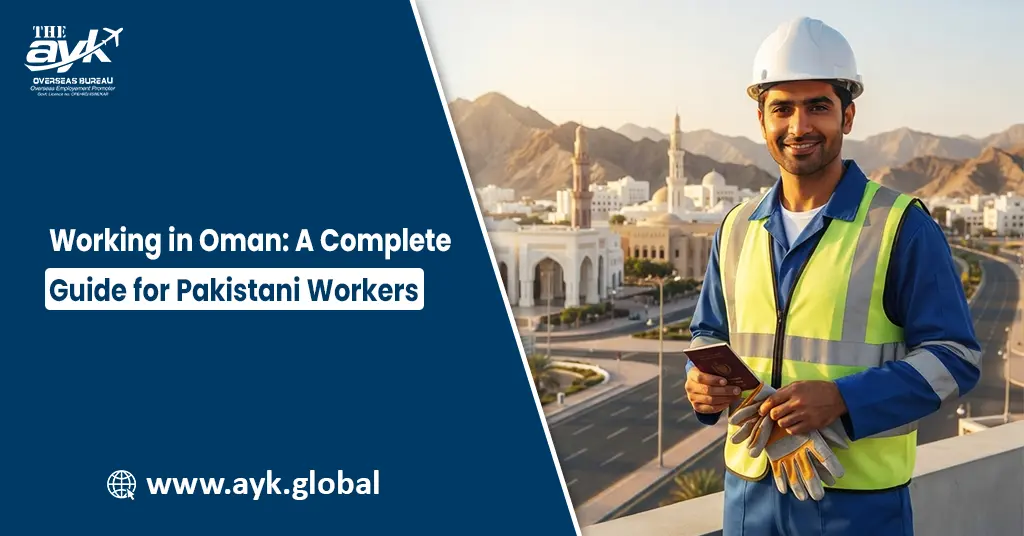 Working in Oman: A Complete Guide for Pakistani Workers
 Industries That Benefit Most from Manpower Agencies
 KSA Recruitment
 UAE Recruitment
 Qatar Recruitment
 Oman Recruitment
 Kuwait Recruitment
 Libya Recruitment
 Bahrain Recruitment
 Iraq Recruitment
 Malaysia Recruitment
 Malta Recruitment
 Canada Recruitment
 USA Recruitment
 Europe Recruitment
 UK Recruitment
 Romania Recruitment
 Poland Recruitment
 Bulgaria Recruitment
 Albania Recruitment
 Serbia Recruitment
 Lithuania Recruitment
 Japan Recruitment
 Turkey Recruitment
 Kyrgyzstan Recruitment
 South Korea Recruitment