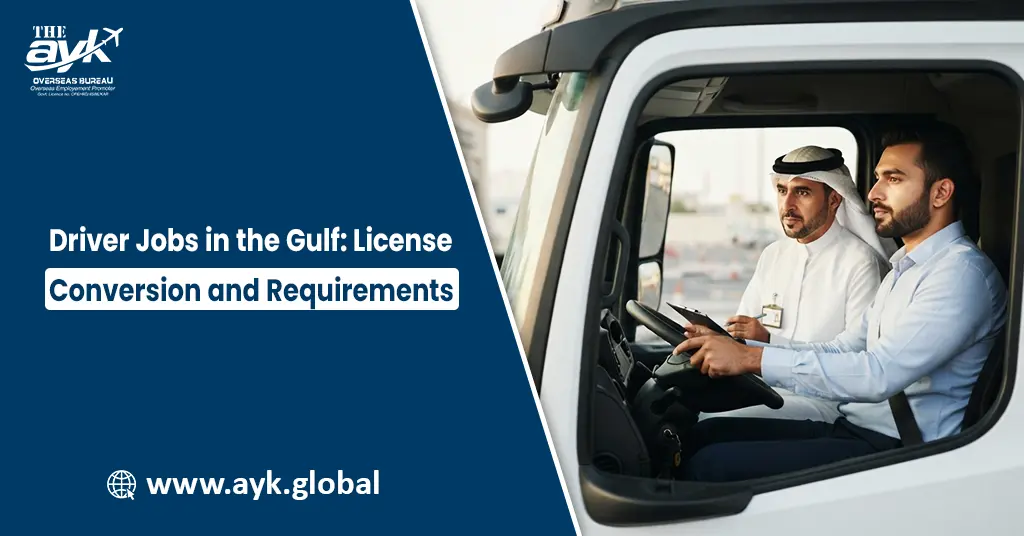
Driver Jobs in the Gulf: License Conversion and Requirements
Published: July 01, 2026 | Views: 12
Introduction
Driver jobs across Gulf countries represent one of the more consistently available employment categories for Pakistani workers, with sustained demand across commercial truck driving, private car driving, delivery services, and various other transportation roles that the region's substantial logistics, construction, and service sectors continuously require. Understanding the specific license conversion requirements and regulatory considerations relevant to driving professionally in Gulf countries helps workers approach this particular employment category with proper preparation.
This guide examines driver job opportunities across Gulf countries and the specific licensing requirements workers must understand before pursuing these positions. AYK Overseas Recruitment & HR Manpower Agency, recognized as one of Pakistan's top manpower agencies, helps candidates understand these specific requirements, ensuring properly prepared drivers access these genuine employment opportunities through legitimate channels.
Understanding Gulf Countries' License Recognition Policies
Gulf countries maintain specific policies regarding which foreign driving licenses they recognize and under what conditions Pakistani license holders can legally drive within their jurisdiction, with requirements varying somewhat between different countries regarding license conversion, local testing, and various documentation procedures. Workers should research specific license recognition policies relevant to their particular target destination rather than assuming uniform policies apply across all Gulf countries.
This destination-specific research helps workers understand exactly what steps they must complete before legally driving professionally within their target country, avoiding the potentially serious legal complications that driving without properly recognized or converted licensing creates for workers who assume their Pakistani license automatically authorizes professional driving throughout the Gulf region.
Pakistani License Categories and Their Gulf Equivalents
Pakistani driving licenses cover various vehicle categories including motorcycles, private vehicles, and various commercial vehicle classes, and workers should understand how their specific Pakistani license category relates to the equivalent Gulf country license classification for the type of vehicle they intend to drive professionally. This category equivalency understanding helps ensure license conversion processes address the appropriate vehicle class relevant to their intended employment.
Workers should carry their original Pakistani driving license alongside any additional documentation demonstrating their driving history and experience, recognizing that establishing a credible driving record sometimes supports smoother license conversion processes compared to presenting simply the license document without supporting evidence of actual driving experience.
Light Vehicle Driver Opportunities
Light vehicle driving opportunities, including private car driving for families, corporate car service, and various other light vehicle roles, represent accessible entry points for drivers with standard vehicle experience and appropriate license categories. These positions typically require less specialized experience compared to heavy vehicle categories, making them more accessible for workers without extensive commercial driving background.
Workers interested in light vehicle driving should research specific employer requirements relevant to their target position category, including whether particular experience with specific vehicle types, GPS navigation systems, or customer service orientation carries particular weight within their intended employment context.
Heavy Vehicle and Truck Driving Opportunities
Heavy vehicle and commercial truck driving represents one of the more consistently well-compensated driver employment categories across the Gulf region, reflecting the specialized skills and experience these positions require alongside the critical logistical role commercial truck transportation plays within the region's substantial construction and logistics sectors. Workers with relevant heavy vehicle experience and appropriate license categories should research these particular opportunities.
Workers pursuing heavy vehicle positions should ensure their experience is properly documented through whatever available evidence best demonstrates their practical capability, recognizing that employers in this category particularly value workers whose stated experience can be credibly verified rather than simply claimed without supporting documentation.
Bus and Passenger Vehicle Driver Roles
Bus driving and passenger vehicle transportation roles require particular consideration given the passenger safety responsibilities these positions involve, with employers typically placing significant emphasis on driving record cleanliness, accident-free history, and overall safety orientation when evaluating candidates for these passenger transportation positions. Workers interested in this category should be prepared to demonstrate particularly strong safety-focused driving credentials.
Workers should research specific licensing requirements relevant to passenger vehicle operations in their target destination, since these categories sometimes involve additional testing or certification requirements beyond standard private vehicle license conversion due to the heightened safety considerations passenger transportation specifically involves.
License Conversion Process Steps
License conversion processes typically involve submitting your original Pakistani license alongside various supporting documentation to relevant traffic authority offices, potentially completing local driving tests or knowledge examinations, and paying applicable processing fees before receiving recognition to drive legally within your destination country. Workers should research the specific current conversion process steps relevant to their particular destination before arrival.
Workers should plan for the potential time required to complete this conversion process after arrival, potentially including any temporary limitations on professional driving during this conversion completion period, ensuring their employment arrangements properly accommodate this processing timeline rather than expecting immediate authorization to begin driving professionally upon arrival.
Building a Strong Driving Record and Documentation
Workers seeking driver employment should invest in building and properly documenting their driving record before departure, including obtaining formal clearance documentation from relevant Pakistani authorities confirming their driving history, and addressing any record concerns that might complicate their license application or employment prospects within their target Gulf destination. This record preparation represents important advance work supporting smoother driving employment access.
Workers should also consider obtaining reference letters from previous employers specifically addressing their driving performance where this prior driving experience exists, recognizing that employer-specific performance references sometimes carry meaningful weight alongside formal license and record documentation when employers evaluate driver candidates.
Safe Driving as a Career Foundation
Workers pursuing driver careers in the Gulf should understand safe, reliable driving as their fundamental professional foundation rather than simply a licensing requirement, given that their actual driving behavior throughout their employment period directly determines both their continued employment prospects and their broader professional reputation within the transportation employment community. This safety orientation should reflect genuine professional commitment rather than simply compliance with stated requirements.
Workers should approach any Gulf driving role with appropriate respect for both local traffic regulations and the genuine responsibility toward other road users and any passengers or cargo they might be transporting, recognizing this safety-first orientation as representing genuine professional integrity rather than simply legal compliance.
How AYK Overseas Helps Drivers Navigate These Requirements
As a government-licensed international recruitment and HR manpower firm with offices in Karachi and Islamabad, AYK Overseas Recruitment & HR Manpower Agency helps driver candidates understand specific license conversion requirements relevant to their target destination and vehicle category, ensuring properly prepared workers access these employment opportunities through legitimate channels. Being recognized as one of Pakistan's top manpower agencies, we provide specific guidance regarding documentation requirements and conversion processes relevant to various Gulf driving employment categories.
Our team helps driver candidates prepare appropriate documentation and understand realistic timelines for license conversion processes relevant to their specific target destination. This thorough preparation support has helped AYK Overseas Recruitment & HR Manpower Agency successfully connect qualified driver candidates with genuine Gulf employment opportunities.
Conclusion
Driver jobs across Gulf countries offer genuine, varied employment opportunities across light vehicle, heavy vehicle, and passenger transportation categories, though accessing these opportunities requires understanding and properly completing destination-specific license conversion requirements before legally driving professionally. Workers who research these requirements, prepare appropriate documentation, and demonstrate genuine safety-first driving orientation are well positioned to access these consistently available employment opportunities throughout the Gulf region.
 Welder Jobs in Europe with Work Visa Support
 Hire Pakistani Workers for Singapore, A Complete Guide for Employers
 Latest GCC Jobs for Skilled and Unskilled Workers in 2026
 KSA Recruitment
 UAE Recruitment
 Qatar Recruitment
 Oman Recruitment
 Kuwait Recruitment
 Libya Recruitment
 Bahrain Recruitment
 Iraq Recruitment
 Malaysia Recruitment
 Malta Recruitment
 Canada Recruitment
 USA Recruitment
 Europe Recruitment
 UK Recruitment
 Romania Recruitment
 Poland Recruitment
 Bulgaria Recruitment
 Albania Recruitment
 Serbia Recruitment
 Lithuania Recruitment
 Japan Recruitment
 Turkey Recruitment
 Kyrgyzstan Recruitment
 South Korea Recruitment