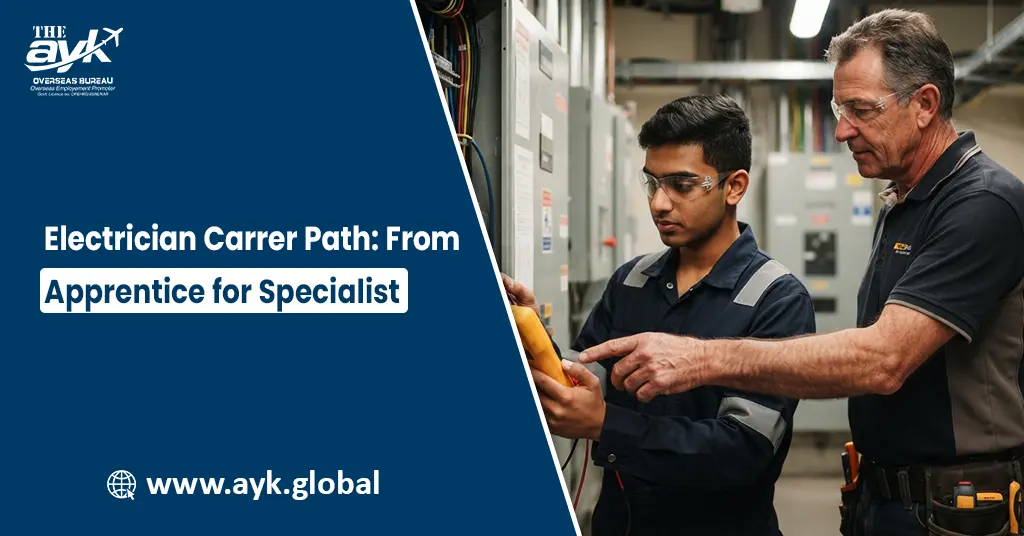
Electrician Career Path From Apprentice to Specialist
Published: July 01, 2026 | Views: 14
Introduction
Electrical trade work represents one of the most consistently in-demand skilled categories across Gulf construction and maintenance sectors, offering Pakistani electricians a genuine career pathway with meaningful advancement potential from entry-level apprentice positions through specialist and supervisory roles that command considerably stronger compensation. Understanding this career progression pathway helps ambitious electricians approach their overseas employment with deliberate long-term development planning rather than simply accepting whatever immediate opportunity presents itself without considering how it positions them for future advancement.
This guide examines the electrician career pathway across Gulf employment contexts, helping electrical workers understand how to deliberately develop their career from initial positions toward higher-value specialist and supervisory opportunities. AYK Overseas Recruitment & HR Manpower Agency, recognized as one of Pakistan's top manpower agencies, helps electrician candidates access appropriate opportunities aligned with their current skill level and career development goals.
Understanding Entry-Level Electrical Work in Gulf Construction
Entry-level electrical work in Gulf construction environments typically involves basic wiring, cable installation, conduit work, and various other foundational electrical tasks under supervision of more experienced electricians, providing important practical experience within Gulf-specific construction contexts that builds progressively toward more independent and specialized work capability. Workers entering at this level should view this foundational experience as genuinely valuable career development even when individual tasks seem relatively straightforward.
Workers should approach entry-level Gulf electrical work with genuine learning orientation rather than simply performing assigned tasks mechanically, actively developing their understanding of Gulf-specific electrical standards, materials, and practices that sometimes differ from Pakistani domestic electrical conventions. This active learning approach helps workers progress more quickly through initial experience stages toward independent capability recognition.
Relevant Certifications for Electricians
Electricians should understand which specific certifications carry genuine weight within Gulf employment contexts, including various internationally recognized electrical certifications and potentially country-specific electrical licensing requirements that workers must understand relevant to their target destination. These certifications provide important documented proof of competency that significantly affects both initial placement opportunities and subsequent advancement potential.
Workers should research specific certification requirements and preferences relevant to their target destination country and intended work category, investing in obtaining genuinely relevant credentials rather than pursuing generic certifications that might not specifically align with Gulf employer expectations and regulatory requirements. This targeted certification investment helps maximize the actual employment and advancement value these credentials provide.
Developing Specialization Within Electrical Trade
As general electrical competency develops, electricians should consider pursuing particular specialization areas that carry stronger demand and compensation within Gulf employment contexts, including industrial electrical systems, control panel installation, automation systems, or various other specialty areas that command premium positioning compared to general electrical work capability. This specialization development transforms general electrical experience into distinctive, premium-valued expertise.
Workers should research which specific electrical specializations carry strongest demand within their target employment sector and country, recognizing meaningful variation between different Gulf markets regarding which particular electrical specializations command most significant competitive advantage and compensation premium. This market-specific research helps workers direct their specialization development toward genuinely valuable expertise areas.
High-Voltage and Industrial Electrical Work
High-voltage electrical work and industrial electrical system expertise represents a particularly well-compensated specialization category within Gulf electrical employment, given both the specialized technical knowledge and the heightened safety requirements associated with these more demanding electrical work categories. Workers interested in this advancement pathway should pursue relevant training and certification specifically addressing these more specialized technical areas.
Workers should understand that accessing high-voltage and industrial electrical work typically requires building a foundation of general electrical experience before employers are willing to provide opportunity in these more demanding categories, making the initial experience stages important stepping stones rather than simply delays before reaching more desirable specialty work.
Building and Facilities Maintenance Electrical Roles
Building and facilities maintenance electrical roles offer somewhat different career pathway characteristics compared to project-based construction electrical work, typically providing more stable, consistent employment rather than the project-conclusion employment disruptions that characterize some construction sector roles. Workers interested in employment stability alongside career development should research these maintenance-focused electrical opportunities specifically.
Electricians in maintenance roles often develop broader troubleshooting and diagnostic expertise compared to new construction specialists, since maintenance work requires identifying and resolving existing electrical problems rather than simply installing new systems according to design specifications. This diagnostic expertise development can become a valuable and distinctive competency supporting further career advancement.
Supervisory and Foreman Advancement
Experienced electricians who combine strong technical competency with developing leadership capability become candidates for electrical foreman or supervisor positions, taking responsibility for coordinating teams of electrical workers and ensuring quality across larger electrical installation projects. This supervisory advancement represents meaningful career progression with corresponding compensation improvement reflecting expanded responsibility.
Workers interested in this supervisory pathway should deliberately develop their leadership communication and team coordination capabilities alongside their technical electrical skills, recognizing that supervisory advancement depends on this combined development rather than technical expertise alone. This deliberate combined development helps workers build genuinely comprehensive readiness for supervisory responsibility when advancement opportunities arise.
Continuing Education and Technical Updating
Electrical technology continues evolving with new systems, materials, and techniques regularly entering the construction and maintenance sectors, making ongoing education and technical updating an important professional responsibility for electricians seeking to maintain genuine current competency rather than relying on outdated knowledge that no longer accurately reflects industry best practices. This continuing education represents an important professional commitment beyond simply completing initial certification requirements.
Workers should identify relevant continuing education resources and technical updating opportunities within their overseas employment context, recognizing employers' generally positive view of workers who demonstrate genuine commitment to maintaining current technical knowledge as an indicator of professional seriousness and long-term value as employees.
Understanding Gulf Electrical Standards and Regulations
Gulf countries maintain specific electrical standards and regulatory frameworks that sometimes differ from Pakistani domestic electrical conventions, making understanding these destination-specific standards an important early priority for electricians beginning Gulf employment. Workers who develop familiarity with Gulf electrical standards more quickly generally demonstrate stronger initial performance and advancement potential compared to those who struggle to adapt to these different technical conventions.
Workers should proactively research destination-specific electrical standards before arrival where possible, and actively develop this regulatory familiarity throughout their initial employment period, viewing this knowledge as genuinely important professional competency rather than simply bureaucratic information of limited practical relevance to actual electrical work performance.
How AYK Overseas Supports Electrician Career Development
As a government-licensed international recruitment and HR manpower firm with offices in Karachi and Islamabad, AYK Overseas Recruitment & HR Manpower Agency helps electrician candidates access Gulf employment opportunities appropriately aligned with their current skill level and career development goals, from initial entry-level positions through more advanced specialist roles for experienced workers. Being recognized as one of Pakistan's top manpower agencies, we understand the specific competency expectations Gulf employers maintain across different electrical employment levels.
Our team helps electrician candidates identify appropriate opportunities for their current skill level while providing guidance regarding the development pathways supporting eventual advancement toward more senior and specialized positions. This career-development-aware placement approach has helped AYK Overseas Recruitment & HR Manpower Agency support electricians in building genuinely progressive Gulf careers rather than simply accessing immediate employment without consideration of longer-term advancement trajectory.
Conclusion
The electrician career pathway across Gulf employment offers genuine advancement from entry-level construction wiring through specialized technical work and eventual supervisory responsibilities, supported by appropriate certification, deliberate specialization development, and continued technical education throughout a progressively developing career. Electricians who approach their Gulf employment with this long-term career development perspective, deliberately building toward progressively more advanced positioning, are well positioned to achieve meaningful career advancement that significantly improves their professional standing and compensation over time.
 Employer-Focused Global Hospitality Staffing & International Hiring Guide
 KSA Recruitment
 UAE Recruitment
 Qatar Recruitment
 Oman Recruitment
 Kuwait Recruitment
 Libya Recruitment
 Bahrain Recruitment
 Iraq Recruitment
 Malaysia Recruitment
 Malta Recruitment
 Canada Recruitment
 USA Recruitment
 Europe Recruitment
 UK Recruitment
 Romania Recruitment
 Poland Recruitment
 Bulgaria Recruitment
 Albania Recruitment
 Serbia Recruitment
 Lithuania Recruitment
 Japan Recruitment
 Turkey Recruitment
 Kyrgyzstan Recruitment
 South Korea Recruitment