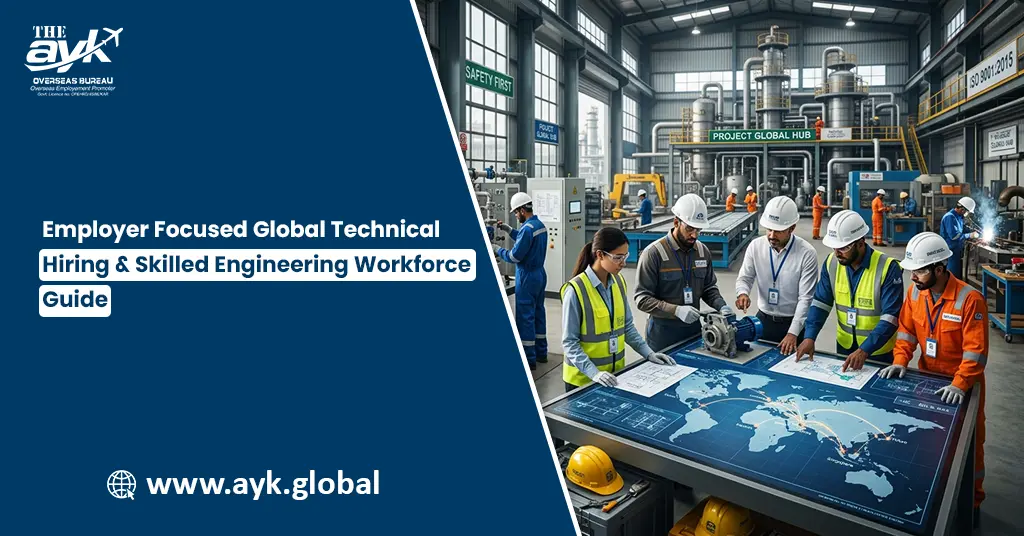
Employer-Focused Global Technical Hiring & Skilled Engineering Workforce Guide
Published: June 29, 2026 | Views: 20
Introduction: Why Engineering Recruitment is Critical for Global Projects
Engineering is the backbone of almost every major industry in the world, including construction, oil and gas, manufacturing, infrastructure, energy, and technology-driven industrial projects. As global projects become more complex and technologically advanced, the demand for highly skilled engineers continues to increase at an unprecedented rate.
International companies often face a shortage of qualified engineers in their local markets, especially for large-scale projects that require specialized expertise in civil, mechanical, electrical, structural, and industrial engineering. This shortage forces employers to look beyond borders and hire engineering talent from global recruitment markets.
Among these markets, Pakistan has emerged as a strong source of engineering professionals due to its large number of engineering graduates, practical industrial exposure, and experience working on international projects in the Gulf and other regions.
However, engineering recruitment is not a simple hiring process. It requires technical evaluation, certification verification, experience validation, and structured recruitment planning to ensure project success and operational efficiency.
Why International Companies Hire Engineers from Pakistan
Pakistan produces thousands of engineering graduates every year in disciplines such as civil engineering, mechanical engineering, electrical engineering, and industrial engineering. Many of these professionals gain practical experience in construction sites, manufacturing plants, and infrastructure projects early in their careers.
One of the strongest advantages of Pakistani engineers is their practical exposure. Many engineers work directly on-site rather than only in theoretical roles, which gives them strong problem-solving abilities and real-world technical understanding.
Another important factor is adaptability. Engineers from Pakistan are known for quickly adjusting to international work environments, project-based structures, and multicultural engineering teams.
Cost efficiency also plays a role, but in engineering recruitment, skill and experience are more important than cost. Companies prefer hiring engineers who can deliver high-quality technical output while maintaining project timelines and safety standards.
Key Challenges in Engineering Recruitment
Engineering recruitment is highly specialized and comes with strict challenges that employers must manage carefully.
One of the biggest challenges is technical verification. Employers must ensure that engineers actually possess the technical skills they claim, especially in complex fields like structural design, electrical systems, or mechanical operations.
Another challenge is certification and licensing. Many engineering roles require professional certifications or registrations depending on the country of employment. Employers must verify all academic and professional credentials before hiring.
Project experience validation is also critical. Engineering roles require specific industry experience, and mismatched hiring can lead to project delays, design errors, or safety risks.
Communication and coordination are also important, especially in multinational engineering teams where clear technical communication is essential for project success.
Strategic Recruitment Approach for Engineering Companies
A successful engineering recruitment strategy always begins with detailed workforce planning. Employers must define exactly what type of engineers are required, including specialization, experience level, and project role.
Engineering roles vary widely, from design engineers and site engineers to project managers, supervisors, and maintenance engineers. Each role requires different technical evaluation criteria.
Once planning is complete, companies must focus on competency-based hiring. This includes evaluating technical knowledge, software skills (such as AutoCAD or engineering simulation tools), and practical project experience.
At this stage, recruitment agencies play a vital role in sourcing pre-screened and qualified engineers who meet international project requirements.
In Pakistan, one of the trusted manpower providers is AYK Overseas Recruitment & HR Manpower Agency, which specializes in supplying skilled engineering professionals for international companies. The agency ensures proper screening, documentation verification, and recruitment coordination.
Importance of Technical Evaluation in Engineering Recruitment
Technical evaluation is the most critical part of engineering hiring. Unlike general labor recruitment, engineering roles require deep knowledge and problem-solving ability.
Candidates are often assessed on technical knowledge, past project experience, and practical application skills. In some cases, employers may also conduct technical interviews or assessments to evaluate real competency levels.
Without proper evaluation, companies risk hiring underqualified engineers, which can lead to project delays, structural errors, and financial losses.Advanced Technical Hiring Strategies, Project Workforce Planning, Cost Control & FAQs
Engineering recruitment at the international level is not just about filling vacancies—it is about building the technical backbone of large-scale projects. Whether it is infrastructure development, industrial construction, energy plants, or manufacturing expansion, engineering talent directly determines project success, safety, and profitability.
After understanding the foundation in Part 1, this section focuses on advanced engineering recruitment systems that help international companies build highly skilled, reliable, and project-ready engineering teams using global talent sources such as Pakistan.
Advanced Engineering Recruitment Strategy for Global Projects
Modern engineering recruitment is shifting from traditional hiring to project-based workforce planning. Instead of hiring engineers randomly when a vacancy appears, companies now plan engineering staffing according to project phases such as design, execution, supervision, testing, and maintenance.
Each phase requires different expertise. For example, design engineers focus on planning and simulation, while site engineers handle on-ground execution, and project managers ensure coordination between technical teams and stakeholders.
Successful companies maintain a pre-screened engineering talent pipeline. This means they continuously evaluate and shortlist engineers even before actual project demand arises. When a project starts, they already have ready-to-deploy professionals available.
Another advanced approach is technical pre-onboarding. Engineers are briefed about project scope, engineering standards, safety requirements, and reporting structures before deployment. This reduces learning time and improves project efficiency.
Project-Based Engineering Workforce Planning
Engineering recruitment is highly dependent on project timelines. Large infrastructure or industrial projects often last months or years, and workforce requirements change at every stage.
During initial phases, companies require design engineers, planners, and structural analysts. In execution phases, civil engineers, mechanical engineers, and electrical engineers become critical. During final phases, quality control engineers and maintenance specialists are required.
This makes workforce forecasting extremely important. Companies must analyze project scope and estimate engineering requirements in advance to avoid delays and cost overruns.
Proper planning ensures that the right engineers are available at the right time, which improves efficiency and reduces project risks.
Technical Skills and Competency Evaluation
In engineering recruitment, technical competency is more important than anything else. Employers must ensure that engineers not only have academic qualifications but also practical experience in real-world projects.
Evaluation often includes assessment of technical knowledge, software proficiency (such as AutoCAD, MATLAB, Primavera, or structural analysis tools), and understanding of engineering standards.
Experience verification is equally important. Employers must confirm whether engineers have worked on similar projects, handled relevant responsibilities, and delivered measurable results.
Without proper competency evaluation, companies risk hiring engineers who may struggle to meet project requirements, leading to delays and cost escalation.
Cost Optimization in Engineering Recruitment
Engineering projects involve significant financial investment, and manpower costs form a major part of overall budgets. However, cost optimization should never compromise technical quality or safety.
One effective strategy is hiring multi-skilled engineers who can handle multiple responsibilities. For example, engineers with both design and site experience reduce the need for additional supervisory staff.
Another strategy is reducing turnover. When engineers leave mid-project, companies face delays, re-training costs, and productivity loss. Retention strategies such as proper onboarding and clear role expectations help reduce this risk.
Working with professional recruitment agencies also helps reduce hidden costs. Agencies manage sourcing, screening, documentation, and deployment, which prevents delays and recruitment errors.
Common Mistakes in Engineering Recruitment
One of the biggest mistakes companies make is relying only on academic qualifications without evaluating real project experience. Engineering is a practical field, and theoretical knowledge alone is not enough.
Another mistake is ignoring specialization alignment. Hiring a mechanical engineer for a structural role or an electrical engineer for civil execution can lead to performance issues and project inefficiencies.
Poor onboarding is also a major issue. Engineers who are not properly briefed about project standards, safety rules, and reporting systems often face difficulties adapting to new environments.
Some companies also depend on unverified recruitment sources, which increases the risk of mismatched or underqualified candidates. This is why structured manpower partners like AYK Overseas Recruitment & HR Manpower Agency are critical for quality assurance.
Long-Term Engineering Workforce Strategy
Successful international companies treat engineering recruitment as a long-term strategic investment rather than a short-term hiring process.
Long-term workforce planning allows companies to anticipate future project needs, expansion plans, and technical requirements. This ensures that engineering talent is always available when needed.
By building long-term pipelines, companies reduce emergency hiring pressure and improve consistency in technical project execution.
Long-term planning also improves team stability, which is essential for complex engineering projects where coordination and continuity are critical.
Technology in Engineering Recruitment
Technology is transforming how engineering professionals are recruited globally. Digital platforms allow employers to maintain talent databases, track candidate skills, and manage hiring pipelines efficiently.
Virtual technical interviews are now widely used to assess engineering knowledge, software skills, and problem-solving ability before final selection.
Automation in documentation, visa processing, and onboarding has significantly improved efficiency and reduced delays in international engineering recruitment.
These systems also improve coordination between employers and recruitment agencies, making global hiring more structured and transparent.
Role of AYK Overseas Recruitment & HR Manpower Agency
In global engineering recruitment, professional manpower agencies play a vital role in ensuring quality, compliance, and efficiency.
AYK Overseas Recruitment & HR Manpower Agency provides complete engineering recruitment solutions for international companies by sourcing highly skilled engineers from Pakistan. The agency focuses on technical screening coordination, documentation verification, experience validation, and deployment management.
For international employers, working with a structured recruitment partner reduces hiring risks, improves candidate quality, and ensures smooth project execution.
Conclusion of Full Guide
Engineering recruitment services for international companies require a highly structured, technical, and strategic approach. Employers must focus on project-based planning, competency evaluation, specialization alignment, and collaboration with trusted recruitment partners.
Companies that invest in proper engineering recruitment systems achieve better project outcomes, reduced technical errors, and stronger operational efficiency.
Country-Based Engineering Recruitment Strategy
Successful international companies diversify their engineering recruitment sources to ensure access to the best talent.
Pakistan is a strong source of civil, mechanical, and electrical engineers with practical field experience. India also provides a large pool of engineering professionals, while other regions contribute specialized technical experts depending on project requirements.
By sourcing engineers from multiple countries, companies reduce dependency risks and ensure consistent availability of technical talent for global projects.
Role of Recruitment Agencies in Engineering Staffing
Recruitment agencies play an essential role in global engineering hiring by bridging the gap between employers and qualified professionals.
A professional manpower agency handles candidate sourcing, technical screening coordination, documentation verification, visa processing, and deployment support. This ensures that employers receive qualified and job-ready engineers.
A trusted agency like AYK Overseas Recruitment & HR Manpower Agency connects international companies with skilled Pakistani engineers and ensures smooth, compliant, and efficient recruitment processes.
 Benefits of Outsourcing Recruitment to a Manpower Agency
 KSA Recruitment
 UAE Recruitment
 Qatar Recruitment
 Oman Recruitment
 Kuwait Recruitment
 Libya Recruitment
 Bahrain Recruitment
 Iraq Recruitment
 Malaysia Recruitment
 Malta Recruitment
 Canada Recruitment
 USA Recruitment
 Europe Recruitment
 UK Recruitment
 Romania Recruitment
 Poland Recruitment
 Bulgaria Recruitment
 Albania Recruitment
 Serbia Recruitment
 Lithuania Recruitment
 Japan Recruitment
 Turkey Recruitment
 Kyrgyzstan Recruitment
 South Korea Recruitment