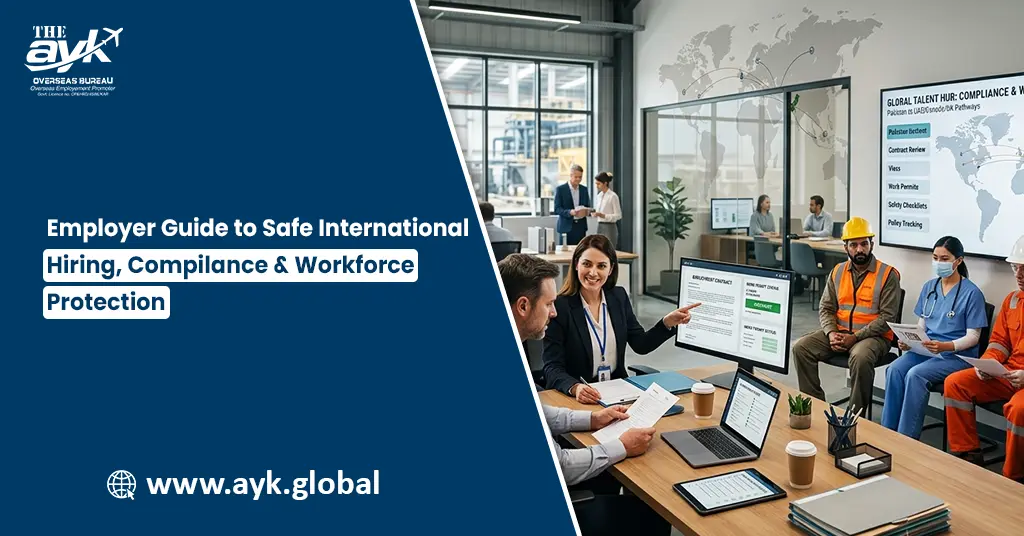
Employer Guide to Safe International Hiring, Compliance & Workforce Protection
Published: June 29, 2026 | Views: 16
Introduction: Why Recruitment Licensing Matters in Global Hiring
In international recruitment, the difference between a licensed recruitment agency and an unregulated recruiter can determine whether a hiring process is safe, compliant, and successful or risky and unreliable. Many employers underestimate this difference until they face issues such as candidate fraud, documentation errors, or failed deployments.
A licensed recruitment agency operates under government approval and follows strict legal, ethical, and procedural standards. On the other hand, unregulated recruiters often work without official authorization, which increases risks for both employers and candidates.
As global hiring becomes more complex and regulated, understanding this difference is essential for any company hiring overseas talent in industries such as construction, healthcare, engineering, logistics, hospitality, and oil and gas.
Why Licensing is Critical in Overseas Recruitment
Licensing in recruitment is not just a formality it is a legal framework that ensures accountability, transparency, and protection for employers and job seekers. Licensed agencies are required to follow government rules related to candidate sourcing, documentation, visa processing, and ethical recruitment practices.
This ensures that employers receive verified candidates and that workers are not exploited or misled during the hiring process. It also creates a clear legal responsibility structure in case of disputes or issues during employment.
Without licensing, there is no regulatory oversight, which means employers have limited protection if something goes wrong during recruitment or deployment.
Core Difference in Operational Standards
Licensed recruitment agencies follow structured operational systems that include candidate screening, skill verification, documentation checks, and compliance procedures. Every step is documented and traceable.
Unregulated recruiters often operate informally, without proper verification systems or standardized processes. This can lead to inconsistent candidate quality and unreliable hiring outcomes.
In licensed systems, employers receive pre-verified candidates who meet job requirements. In unregulated systems, employers often have to re-verify everything themselves, increasing time and risk.
Legal Accountability and Employer Protection
One of the most important differences is legal accountability. Licensed recruitment agencies are registered with government authorities and are legally responsible for their recruitment activities.
This means employers have a legal channel for complaints, dispute resolution, and accountability if any issue arises during recruitment or deployment.
Unlicensed recruiters do not offer this protection. If problems occur, employers may have no legal recourse, leading to financial loss or project disruption.
Candidate Verification and Quality Assurance
Licensed agencies follow strict candidate verification processes. This includes checking academic qualifications, work experience, professional certifications, and identity documentation.
They also conduct skill testing and pre-screening before presenting candidates to employers. This ensures that only qualified and job-ready candidates are selected.
Unregulated recruiters may skip or partially perform these steps, resulting in poor-quality candidates or misrepresentation of skills and experience.
Role of Recruitment Agencies in Employer Confidence
Employers working with licensed agencies benefit from higher confidence and reduced hiring risk. Structured processes ensure transparency, consistency, and reliability in every recruitment stage.
Agencies like AYK Overseas Recruitment & HR Manpower Agency follow structured recruitment systems designed to support international employers with verified and job-ready manpower from Pakistan.
This structured approach helps employers focus on operations while the agency handles sourcing, verification, and deployment coordination.
Risks of Working with Unlicensed Recruiters
Working with unregulated recruiters can expose employers to several risks. One major risk is candidate fraud, where qualifications or experience are misrepresented.
Another risk is visa or documentation issues due to improper processing or incomplete compliance procedures. This can lead to delays or even rejection of deployment.
There is also a higher chance of workforce instability, as unverified candidates may leave jobs early or fail to meet performance expectations.
In some cases, employers may also face legal or compliance issues depending on destination country regulations.
Importance of Structured Recruitment Systems
Structured recruitment systems ensure that every stage of hiring is controlled and documented. From sourcing to deployment, each step is managed according to international standards.
This includes clear job descriptions, skill matching, verification checks, and transparent communication between employers and agencies.
Structured systems reduce uncertainty and improve overall hiring success rates in global recruitment.
Compliance Systems, Employer Risk Control, Cost Impact & Safe Hiring Framework
In international recruitment, the difference between licensed recruitment agencies and unregulated recruiters becomes most visible when problems arise. Hiring mistakes in overseas staffing are not just administrative issues they can directly affect project timelines, legal compliance, workforce safety, and financial stability.
After understanding the fundamentals in Part 1, this section explains the deeper operational, legal, and financial differences that employers must understand before choosing a recruitment partner.
International Compliance Standards in Licensed Recruitment
Licensed recruitment agencies operate under strict government and international labor regulations. These rules ensure ethical recruitment practices, transparent candidate sourcing, and proper documentation handling.
Compliance includes following legal procedures for candidate selection, visa processing, employment contracts, and deployment approvals. Each stage is monitored to ensure that both employers and employees are protected.
Unregulated recruiters, on the other hand, often bypass or ignore these compliance systems. This can lead to incomplete documentation, improper visa processing, and non-compliance with destination country labor laws.
For employers, this difference is critical because non-compliance can result in legal penalties, project delays, or even restrictions on future hiring.
Employer Risk Management in Recruitment Selection
One of the biggest advantages of working with licensed agencies is structured risk management. These agencies evaluate candidates carefully before presenting them to employers, reducing the chances of hiring mismatches.
Risk management includes verifying identity, experience, qualifications, and job suitability. It also involves screening for behavioral reliability, communication skills, and adaptability to international work environments.
Unregulated recruiters often skip these structured checks, which increases the risk of hiring underqualified or misrepresented candidates.
In industries such as construction, healthcare, engineering, logistics, and oil and gas, these risks can directly impact safety and operational performance.
Financial Impact of Unregulated Recruitment
Choosing unlicensed recruiters may seem cost-effective initially, but it often leads to higher long-term expenses. Poor hiring decisions can result in frequent replacements, training costs, project delays, and operational inefficiencies.
When a wrong candidate is hired, employers must restart the recruitment process, which doubles both time and financial investment. In large-scale projects, even small hiring errors can lead to significant financial losses.
Licensed recruitment agencies reduce these risks by ensuring proper candidate verification and job-role matching from the beginning.
Quality Assurance in Candidate Selection
Licensed agencies implement multi-layer quality checks before recommending candidates. These include document verification, skill testing, reference checks, and structured interviews.
This ensures that candidates are not only qualified on paper but also capable of performing in real working environments.
Unregulated recruiters may rely only on basic CV screening, which increases the chances of mismatch between job requirements and actual candidate ability.
Quality assurance systems are one of the key reasons why licensed agencies are preferred for international recruitment.
Workforce Stability and Long-Term Performance
Workforce stability is another major difference between licensed and unregulated recruitment systems. Properly verified candidates are more likely to remain in their jobs longer because expectations are clearly defined during recruitment.
Licensed agencies focus on aligning job roles with candidate experience, which improves retention and reduces turnover rates.
Unregulated recruitment often results in mismatched placements, leading to early resignations and unstable workforce performance.
For employers, this directly affects productivity, especially in long-term projects.
Role of Professional Recruitment Agencies in Global Hiring
Professional recruitment agencies act as structured workforce partners for international employers. They manage sourcing, screening, verification, documentation, and deployment in a systematic way.
A trusted agency ensures transparency, accountability, and consistency throughout the recruitment process.
In Pakistan, AYK Overseas Recruitment & HR Manpower Agency provides structured and compliant recruitment solutions for international employers, ensuring that only verified and job-ready candidates are deployed.
This reduces employer workload and increases hiring efficiency across multiple industries.
Common Problems in Unlicensed Recruitment Systems
Unlicensed recruitment systems often create several operational problems for employers. One major issue is inconsistent candidate quality, where applicants may not match job requirements.
Another problem is documentation errors, which can delay visa approvals or cause rejection of applications.
There is also a higher risk of communication gaps, as unregulated recruiters may not follow proper coordination procedures between employers and candidates.
These issues often lead to project delays and increased hiring costs.
Building a Safe Global Hiring Strategy
A safe international hiring strategy always starts with choosing the right recruitment partner. Employers must prioritize licensed, structured, and transparent agencies that follow legal and ethical recruitment practices.
Clear job descriptions, proper skill requirements, and structured screening processes must be established before hiring begins.
Employers should also ensure that recruitment agencies provide full verification support and maintain communication throughout the hiring process.
This approach reduces risk and improves overall workforce quality in international operations.
Conclusion of Full Guide
The difference between licensed recruitment agencies and unregulated recruiters is fundamental in global hiring. Licensed agencies provide structure, compliance, verification, and accountability, while unregulated recruiters often operate without oversight or standardized systems.
Employers who choose licensed recruitment partners significantly reduce risk, improve workforce quality, and ensure long-term operational success.
 Hire Pakistani Workers for Peru, A Complete Guide for Employers
 Why UK Employers Depend on Overseas Recruitment
 Complete Guide to International Manpower Supply for GCC Companies
 KSA Recruitment
 UAE Recruitment
 Qatar Recruitment
 Oman Recruitment
 Kuwait Recruitment
 Libya Recruitment
 Bahrain Recruitment
 Iraq Recruitment
 Malaysia Recruitment
 Malta Recruitment
 Canada Recruitment
 USA Recruitment
 Europe Recruitment
 UK Recruitment
 Romania Recruitment
 Poland Recruitment
 Bulgaria Recruitment
 Albania Recruitment
 Serbia Recruitment
 Lithuania Recruitment
 Japan Recruitment
 Turkey Recruitment
 Kyrgyzstan Recruitment
 South Korea Recruitment