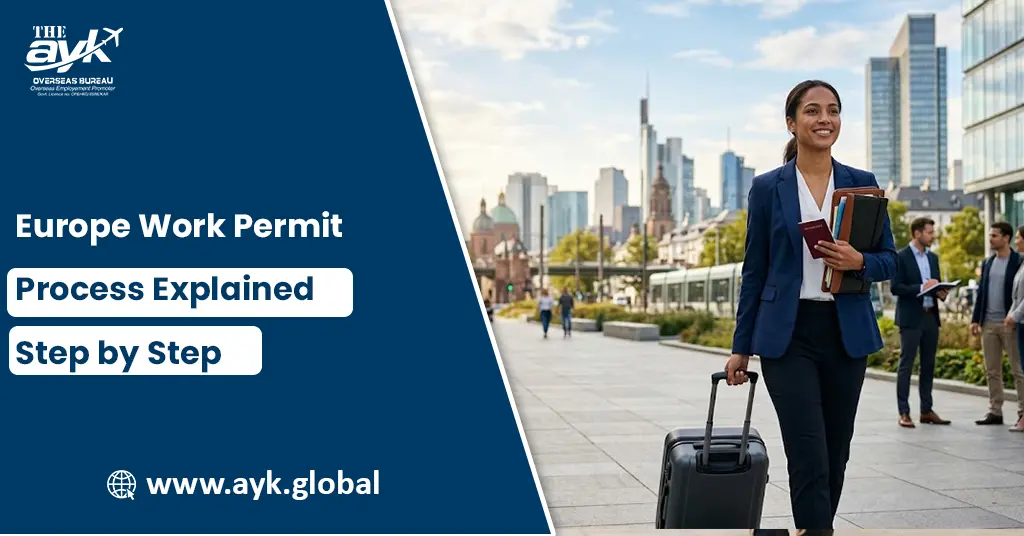
Europe Work Permit Process Explained Step by Step
Published: July 06, 2026 | Views: 6
Europe Work Permit Process Explained Step by Step
The Europe work permit process in 2026 is a structured legal system designed to allow foreign workers to live and work in European countries under official employment contracts. Countries such as Germany, Poland, Netherlands, Czech Republic, Italy, Spain, and France follow strict but organized procedures to ensure that only qualified and verified workers enter their labor market. For skilled and semi-skilled workers from countries like Pakistan, India, Bangladesh, and Nepal, the work permit process usually begins after securing a job offer from a European employer. The entire system is based on employer sponsorship, meaning a company in Europe must officially hire you before you can apply for a work permit. This process ensures transparency, legal employment, and protection for both employer and worker. Understanding each step is important to avoid delays, rejection, or fraud. This guide explains the Europe work permit process step by step in 2026, including job search, documentation, visa application, approval, and arrival procedures.
1. Step 1: Finding a Job Offer from a European Employer
The first and most important step in the Europe work permit process is securing a valid job offer from a registered employer in Europe. Without a confirmed job offer, most countries do not allow work permit applications. Job offers can be obtained through recruitment agencies, online job portals, company websites, or direct employer applications. Employers in Europe actively hire foreign workers in sectors such as construction, manufacturing, logistics, healthcare, hospitality, engineering, and agriculture due to ongoing labor shortages. Once selected, the employer provides an official employment contract that includes job title, salary, working hours, benefits, and contract duration. This document is essential for starting the work permit process. In many cases, employers also specify whether they will sponsor the visa or assist with relocation. A genuine job offer is the foundation of the entire process, and applicants must ensure it comes from a verified and licensed employer to avoid scams or fake job offers.
2. Step 2: Document Preparation and Verification
After receiving a job offer, the next step is preparing all required documents for the work permit application. These documents typically include a valid passport, employment contract, educational certificates, work experience letters, medical fitness certificate, and police clearance certificate. Some countries may also require CV, photographs, and proof of accommodation. Educational and experience documents may need translation into English or the local language depending on the destination country. In some cases, degree verification or attestation is required to confirm authenticity. The employer or recruitment agency often guides applicants in organizing and submitting documents correctly. It is very important that all information matches across documents, including name, date of birth, and qualifications. Any mismatch can delay or reject the application. Proper documentation ensures smooth processing and increases the chances of approval for the Europe work permit.
3. Step 3: Employer Submits Work Permit Application
In most European countries, the employer plays a major role in applying for the work permit. After selecting the candidate and signing the employment contract, the employer submits the work permit application to the local labor authority or immigration department. This application includes details about the job position, company information, and justification for hiring a foreign worker instead of a local candidate. Authorities review whether the employer is eligible to hire foreign workers and whether the job meets labor market requirements. In many cases, governments prioritize local workers first, but due to labor shortages in sectors like construction, logistics, and healthcare, foreign hiring is often approved. Once the application is submitted, the processing time may vary depending on the country and job category. If approved, the worker is allowed to proceed to the visa application stage.
4. Step 4: Visa Application Submission at Embassy
After the work permit is approved, the next step is applying for a work visa at the European embassy or visa application center. The applicant must submit all required documents, including the approved work permit, job contract, passport, medical certificate, police clearance, and visa application form. In some cases, biometric data such as fingerprints and photographs are also collected. The visa interview may include basic questions about job role, employer, qualifications, and travel purpose. Embassy officials verify all documents to ensure authenticity and eligibility. Some countries also require appointment scheduling and online application submission before visiting the embassy. This step is critical because final visa approval depends on document verification and interview performance. If everything is correct, the application moves to the approval stage.
5. Step 5: Visa Processing and Approval Decision
After submitting the work visa application, the embassy or consulate begins the processing stage. During this period, immigration officers carefully review all documents, including the work permit approval, employment contract, educational certificates, medical reports, and police clearance certificate. They also verify the employer’s legitimacy and the need for foreign workers in that specific job position. In some cases, additional documents or clarifications may be requested, which can slightly delay the process. The processing time varies depending on the country, job category, and workload of the embassy, usually ranging from a few weeks to several months. If everything is found correct and genuine, the visa is approved and stamped in the applicant’s passport. This approval allows the worker to legally enter the European country for employment. However, any false information, missing documents, or inconsistencies can lead to rejection of the application.
6. Step 6: Travel Arrangements and Entry to Europe
Once the visa is approved, the applicant can make travel arrangements to the destination country in Europe. In many cases, the employer or recruitment agency assists with flight bookings and arrival instructions. Before traveling, workers must ensure they carry all important documents, including passport, visa, employment contract, and supporting papers. Upon arrival at the airport in Europe, immigration officers may ask basic questions regarding job details, employer information, and accommodation arrangements. After clearance, the worker is officially allowed to enter the country and begin employment. Some employers arrange airport pickup and temporary accommodation for new workers. It is important to follow all entry rules and report to the employer as instructed. This step marks the successful completion of the international migration process and the beginning of legal employment in Europe.
7. Step 7: Registration and Work Permit Activation in Host Country
After arriving in Europe, workers are often required to complete local registration procedures. This may include registering with local authorities, obtaining a residence permit card, and completing health insurance enrollment. In many countries, the work permit becomes fully active only after these registrations are completed. Employers usually guide workers through this process and may arrange appointments with government offices. Workers may also need to open a local bank account for salary payments and complete tax registration. These steps are important for legal employment and access to public services. Failure to complete registration can lead to legal issues or delays in salary processing. Once all formalities are completed, the worker is fully integrated into the workplace and can start their job officially under European labor laws.
8. Step 8: Working Conditions and Legal Rights in Europe
After completing the work permit process, workers in Europe are protected under strict labor laws that ensure fair wages, safe working conditions, and legal rights. Employees are entitled to receive their agreed salary, overtime pay, paid leave, and health insurance benefits as per contract. Workplace safety regulations are strictly enforced, especially in industries like construction, manufacturing, and logistics. Workers also have the right to change employers in some countries after fulfilling contract conditions, depending on visa type. Labor authorities monitor companies to prevent exploitation or illegal employment practices. Understanding these rights is important for long-term job stability and career growth. Workers should always follow legal procedures and report any workplace issues to relevant authorities if necessary.
9. Step 9: Common Challenges in Work Permit Process
Although the Europe work permit process is well-structured, applicants may face certain challenges. One major issue is delays in visa processing due to high application volumes or incomplete documentation. Another challenge is fraud from fake recruitment agents who offer false job promises. Language barriers can also create difficulties during interviews or workplace communication after arrival. Some applicants may struggle with document verification or degree recognition requirements. In certain cases, job offers may be withdrawn if employer needs change. However, these challenges can be minimized by applying through verified employers, preparing complete documents, and following official procedures. Proper guidance and patience are essential for successful completion of the process.
10. Step 10: Final Thoughts on Europe Work Permit Process
The Europe work permit process in 2026 is a structured and legal pathway for skilled and semi-skilled workers to secure employment abroad. It involves multiple steps including job offer, document preparation, employer sponsorship, visa application, approval, and travel. While the process may seem complex, it becomes manageable when followed step by step with proper documentation and verified employers. Europe continues to offer strong job opportunities due to labor shortages in key industries such as construction, manufacturing, logistics, healthcare, and engineering. With proper planning and awareness, workers can successfully complete the work permit process and build a stable career in Europe. Choosing genuine agencies and employers is the key to avoiding fraud and ensuring a smooth journey.
 How to Prepare Your CV for GCC Employers
 Why Multinational Companies Are Hiring More Pakistanis
 Public Sector vs Private Sector Jobs in the Gulf
 KSA Recruitment
 UAE Recruitment
 Qatar Recruitment
 Oman Recruitment
 Kuwait Recruitment
 Libya Recruitment
 Bahrain Recruitment
 Iraq Recruitment
 Malaysia Recruitment
 Malta Recruitment
 Canada Recruitment
 USA Recruitment
 Europe Recruitment
 UK Recruitment
 Romania Recruitment
 Poland Recruitment
 Bulgaria Recruitment
 Albania Recruitment
 Serbia Recruitment
 Lithuania Recruitment
 Japan Recruitment
 Turkey Recruitment
 Kyrgyzstan Recruitment
 South Korea Recruitment