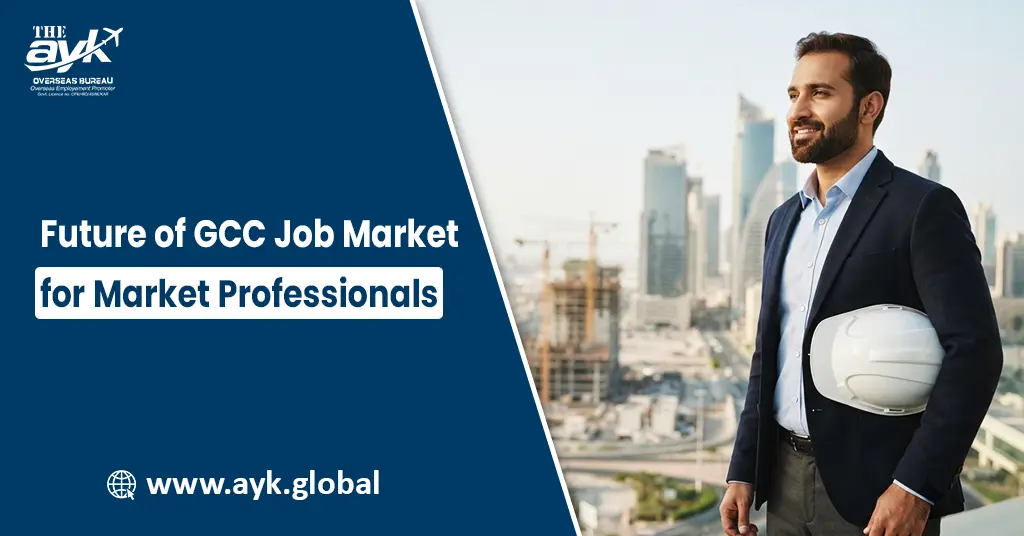
Future of GCC Job Market for Pakistani Professionals
Published: July 02, 2026 | Views: 92
The future of the GCC job market for Pakistani professionals is one of the most important topics for anyone planning an international career in 2026 and beyond. The Gulf Cooperation Council (GCC) countries—including Saudi Arabia, United Arab Emirates (UAE), Qatar, Kuwait, Oman, and Bahrain—are undergoing massive economic transformation. These changes are reshaping the labor market, creating new opportunities while also changing the nature of traditional jobs.
For Pakistani professionals, the GCC region has always been a major destination for employment due to higher salaries, tax-free income, and strong demand for skilled labor. However, the future job market is evolving rapidly with new technologies, automation, nationalization policies, mega infrastructure projects, and diversification away from oil-based economies.
Understanding these trends is essential for Pakistani job seekers who want to secure long-term careers in the Gulf region. This guide provides a detailed, long-term outlook on the GCC job market, including opportunities, challenges, and future growth sectors for Pakistani professionals.
1. Economic Transformation in GCC Countries
One of the biggest factors shaping the future job market in GCC countries is economic diversification. Traditionally, GCC economies relied heavily on oil and gas revenues. However, countries like Saudi Arabia and UAE are now investing heavily in non-oil sectors such as tourism, technology, healthcare, logistics, renewable energy, and manufacturing.
Saudi Arabia’s Vision 2030 and UAE’s long-term development strategies are key drivers of this transformation. These national plans aim to reduce dependency on oil and build sustainable, knowledge-based economies.
For Pakistani professionals, this shift means more job opportunities in modern industries such as IT, engineering, renewable energy, finance, and smart city development. The demand is no longer limited to traditional labor jobs but is expanding into highly skilled professional roles.
2. Growing Demand for Skilled Professionals
The future GCC job market will increasingly depend on skilled professionals rather than only unskilled labor. Pakistani engineers, IT specialists, healthcare professionals, accountants, and project managers will see rising demand.
Large-scale infrastructure projects, smart cities, and digital transformation initiatives require highly trained professionals who can manage complex systems and advanced technologies.
For example, Saudi Arabia’s NEOM project and UAE’s smart city initiatives are creating thousands of high-skilled jobs. Pakistani professionals who upgrade their skills and gain certifications will have strong opportunities in these sectors.
3. Impact of Automation and Artificial Intelligence
Automation and artificial intelligence (AI) are significantly changing the GCC job market. Many repetitive and manual tasks are being replaced by machines, robotics, and smart systems.
This shift will reduce some low-skilled job opportunities but will increase demand for technical roles such as machine operators, automation technicians, IT support engineers, cybersecurity experts, and data analysts.
Pakistani professionals who adapt to these changes by learning modern technologies will remain highly competitive in the GCC job market. Those who fail to upgrade their skills may face challenges in the long term.
4. Future of Construction and Infrastructure Jobs
Construction will remain one of the strongest employment sectors in GCC countries. Mega projects such as smart cities, airports, stadiums, highways, and commercial developments will continue to require large workforces.
However, the nature of construction jobs will evolve. More focus will be placed on skilled technicians, engineers, safety officers, and project managers rather than only general labor.
Pakistani workers will continue to play a major role in this sector, especially in skilled trades like welding, electrical work, plumbing, HVAC, and mechanical maintenance.
5. Growth of IT and Digital Economy
The IT sector is expected to be one of the fastest-growing job markets in GCC countries. Governments are investing heavily in digital transformation, cybersecurity, artificial intelligence, cloud computing, and software development.
Pakistani IT professionals have strong potential in this sector due to their growing expertise in software engineering, programming, and digital services.
Jobs such as software developers, network engineers, cybersecurity analysts, data scientists, and AI specialists will see high demand in the coming years.
This shift represents a major opportunity for educated Pakistani youth to enter high-paying professional careers in the Gulf region.
6. Healthcare Expansion and Medical Jobs
Healthcare is another rapidly expanding sector in GCC countries. Due to population growth and advanced healthcare systems, there is increasing demand for doctors, nurses, pharmacists, lab technicians, and healthcare administrators.
Pakistani healthcare professionals are already widely employed in GCC hospitals and clinics due to their strong education and clinical experience.
In the future, demand for specialized medical professionals such as surgeons, radiologists, and healthcare IT specialists will increase further.
This sector offers stable employment, high salaries, and long-term career growth.
7. Renewable Energy and Green Jobs
GCC countries are investing heavily in renewable energy projects such as solar power, wind energy, and sustainable infrastructure.
Saudi Arabia and UAE are leading the region in green energy development. This shift will create new job opportunities for engineers, environmental specialists, project managers, and technicians.
Pakistani professionals who specialize in environmental science, electrical engineering, and renewable energy technologies will benefit greatly from this emerging sector.
8. Changes in Labor Laws and Saudization Policies
One important factor affecting the GCC job market is the implementation of nationalization policies such as Saudization, Emiratization, and Qatarization. These policies aim to increase employment opportunities for local citizens.
As a result, some jobs that were previously available to foreign workers are now being reserved for nationals. However, this does not eliminate opportunities for Pakistanis; instead, it shifts demand toward more skilled and specialized roles.
Pakistani professionals who focus on high-skill jobs will continue to find strong opportunities in the GCC market.
9. Salary Trends and Future Earnings
Salaries in GCC countries are expected to remain competitive, especially for skilled professionals. However, salary structures will become more performance-based and skill-oriented.
Highly skilled professionals in IT, engineering, healthcare, and finance will see increasing salary packages, while low-skilled jobs may experience slower growth.
Pakistani workers who continuously improve their skills and gain certifications will be able to earn significantly higher incomes in the future GCC job market.
10. Role of Pakistani Workforce in Future GCC Economy
Pakistani workers will continue to play a vital role in the GCC economy. Their contribution in construction, engineering, healthcare, logistics, and services sectors will remain important.
However, the focus will shift from low-skilled labor to skilled and semi-skilled roles. This means training, education, and certification will become more important for long-term success.
Pakistan’s strong labor export relationship with GCC countries will continue to grow, supported by recruitment agencies and government cooperation.
11. Opportunities for Fresh Graduates
Fresh graduates from Pakistan will have increasing opportunities in GCC countries, especially in corporate, IT, and technical fields.
Internship programs, trainee positions, and entry-level roles will help young professionals build international experience.
However, competition will also increase, so graduates will need strong communication skills, technical knowledge, and professional certifications to succeed.
12. Challenges in Future GCC Job Market
While opportunities are growing, there are also challenges in the GCC job market. These include increased competition, automation, stricter visa regulations, and nationalization policies.
Pakistani professionals will need to continuously upgrade their skills, adapt to new technologies, and stay informed about market trends to remain competitive.
Conclusion
The future of the GCC job market for Pakistani professionals is full of opportunities but also requires adaptation and skill development. While traditional labor jobs will continue to exist, the biggest growth will be in skilled, technical, and professional sectors such as IT, engineering, healthcare, and renewable energy.
Pakistani professionals who invest in education, certifications, and modern skills will have excellent career prospects in Saudi Arabia, UAE, Qatar, Kuwait, Oman, and Bahrain.
The Gulf region will remain a key destination for Pakistani workers, but success in the future job market will depend on preparation, adaptability, and continuous learning.
 GCC Jobs with Free Visa and Accommodation – What You Need to Know
 GCC Airport Jobs for Pakistani Workers
 European Work Visa and Job Opportunities for Pakistani Professionals
 KSA Recruitment
 UAE Recruitment
 Qatar Recruitment
 Oman Recruitment
 Kuwait Recruitment
 Libya Recruitment
 Bahrain Recruitment
 Iraq Recruitment
 Malaysia Recruitment
 Malta Recruitment
 Canada Recruitment
 USA Recruitment
 Europe Recruitment
 UK Recruitment
 Romania Recruitment
 Poland Recruitment
 Bulgaria Recruitment
 Albania Recruitment
 Serbia Recruitment
 Lithuania Recruitment
 Japan Recruitment
 Turkey Recruitment
 Kyrgyzstan Recruitment
 South Korea Recruitment