
GCC Work Visa Process for Pakistani Job Seekers
Published: July 02, 2026 | Views: 140
The GCC work visa process for Pakistani job seekers is an essential pathway for those who want to legally work in Saudi Arabia, United Arab Emirates (UAE), Qatar, Kuwait, Oman, and Bahrain. In 2026, GCC countries continue to offer thousands of job opportunities due to ongoing infrastructure development, industrial expansion, tourism growth, and digital transformation. However, no foreign worker can legally work in these countries without a valid employer-sponsored work visa.
Understanding the full visa process is very important because many applicants face delays or rejection due to missing documents, wrong procedures, or reliance on unverified agents. The GCC work visa system is completely employer-driven, meaning the company hiring you is responsible for initiating and completing most of the legal steps. This guide explains the complete GCC work visa process for Pakistani workers in a simple and detailed way.
Job Offer and Employment Contract
The first step in the GCC work visa process is receiving a valid job offer from a registered employer. Without a formal job offer, no visa process can begin because all GCC work visas are sponsor-based. Once selected, the employer sends an official offer letter that includes job title, salary, working hours, benefits, accommodation details, and contract duration.
After the offer is accepted, both parties sign an employment contract. This contract is a legally binding document that defines your rights and responsibilities as a worker. It is very important to carefully read every clause before signing because this document will be used throughout your employment period in the GCC country.
Employer Starts Visa Sponsorship Process
Once the contract is signed, the employer becomes your official sponsor and starts the visa processing in the destination country. This includes applying for visa approval from government authorities, obtaining work permit authorization, and reserving a visa quota for your position.
In most GCC countries, foreign workers cannot apply for a work visa independently. The employer handles the entire sponsorship process through government portals. This system ensures that workers are only employed under legal companies and protects the labor market from unauthorized employment.
Document Preparation and Attestation
After visa approval begins, the worker must prepare and submit all required documents. These usually include a valid passport, educational certificates, experience letters, CV, passport-sized photographs, and national identity documents. For skilled jobs, additional certifications or licenses may also be required.
Many documents must be attested by relevant authorities in Pakistan such as HEC, Ministry of Foreign Affairs, and sometimes the embassy of the destination country. Document attestation confirms authenticity and is a mandatory step before final visa stamping.
Medical Examination and Fitness Test
A medical test is a compulsory requirement for all GCC work visas. The purpose of this test is to ensure that the applicant is medically fit to work in the destination country. Medical screening usually includes blood tests, chest X-rays, and general health checks conducted at approved medical centers.
If a candidate fails the medical test, the visa process is usually stopped. That is why maintaining good health and completing medical requirements from authorized centers is extremely important. Only approved medical reports are accepted by GCC immigration authorities.
Visa Stamping and Government Approval
Once documents and medical reports are approved, the visa is sent for final stamping by the embassy or immigration department. This is one of the most critical steps in the process because it officially converts your job offer into a legal work visa.
During this stage, government authorities verify all details including employer authorization, job category, and applicant background. Once approved, the visa is stamped on the passport, allowing the worker to legally travel to the GCC country for employment.
Biometric Registration and Entry Permit
In some GCC countries, biometric registration is required before or after arrival. This includes fingerprint scanning, facial recognition, and identity verification. Countries like Saudi Arabia, UAE, and Qatar use biometric systems to maintain security and track foreign workers.
After final approval, an entry permit is issued, which allows the worker to travel. This permit has a limited validity period, so workers must travel within the specified time or revalidate their application if needed.
Arrival and Work Permit Activation
After arriving in the GCC country, the worker must complete final procedures such as residency permit registration, local medical tests (if required), and issuance of work ID or labor card. This step officially activates the employment status under the sponsoring company.
At this stage, the worker becomes fully registered in the country’s labor system and can start working legally. Employers often assist in completing these procedures to ensure compliance with government regulations.
Common Mistakes to Avoid
Many Pakistani job seekers face problems in the GCC visa process due to avoidable mistakes. These include submitting incomplete documents, using fake agents, paying unnecessary fees, or failing medical tests. Another common mistake is accepting job offers without verifying employer authenticity.
To avoid issues, applicants should always use licensed recruitment agencies, verify job offers directly with employers, and ensure all paperwork is properly completed. Careful preparation significantly increases the chances of successful visa approval.
Conclusion
The GCC work visa process for Pakistani job seekers in 2026 is structured, employer-driven, and legally regulated. It includes job offer confirmation, employer sponsorship, document attestation, medical testing, visa stamping, and final entry approval. Understanding each step helps candidates avoid scams, delays, and rejection.
With proper preparation and legal application channels, Pakistani workers can successfully secure employment in GCC countries and build strong international careers with high salaries and long-term stability.
 Recruitment Agency in Pakistan for Iraq, Complete Employer Guide 2026
 Writing Professional Emails as an Overseas Worker
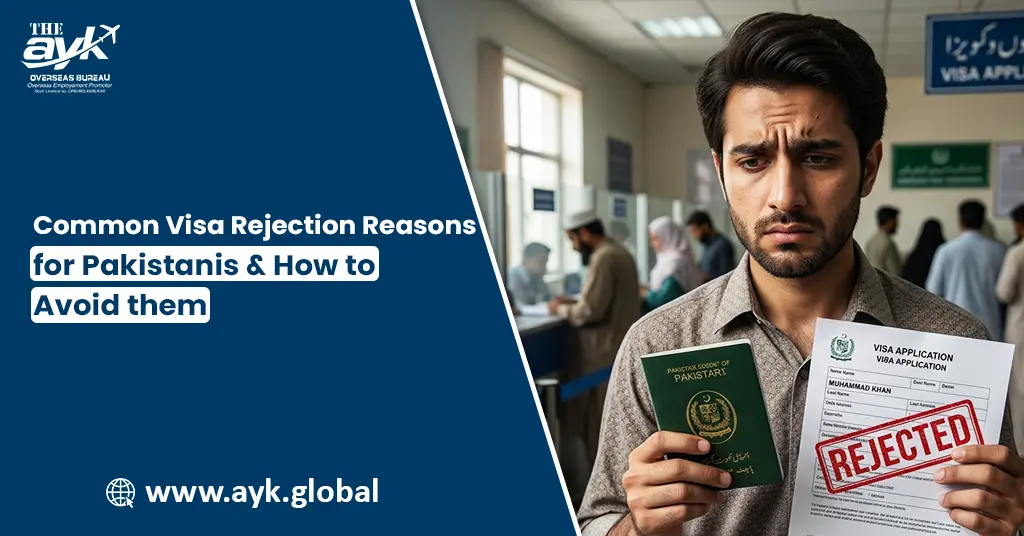 Common Visa Rejection Reasons for Pakistanis & How to Avoid Them
 KSA Recruitment
 UAE Recruitment
 Qatar Recruitment
 Oman Recruitment
 Kuwait Recruitment
 Libya Recruitment
 Bahrain Recruitment
 Iraq Recruitment
 Malaysia Recruitment
 Malta Recruitment
 Canada Recruitment
 USA Recruitment
 Europe Recruitment
 UK Recruitment
 Romania Recruitment
 Poland Recruitment
 Bulgaria Recruitment
 Albania Recruitment
 Serbia Recruitment
 Lithuania Recruitment
 Japan Recruitment
 Turkey Recruitment
 Kyrgyzstan Recruitment
 South Korea Recruitment