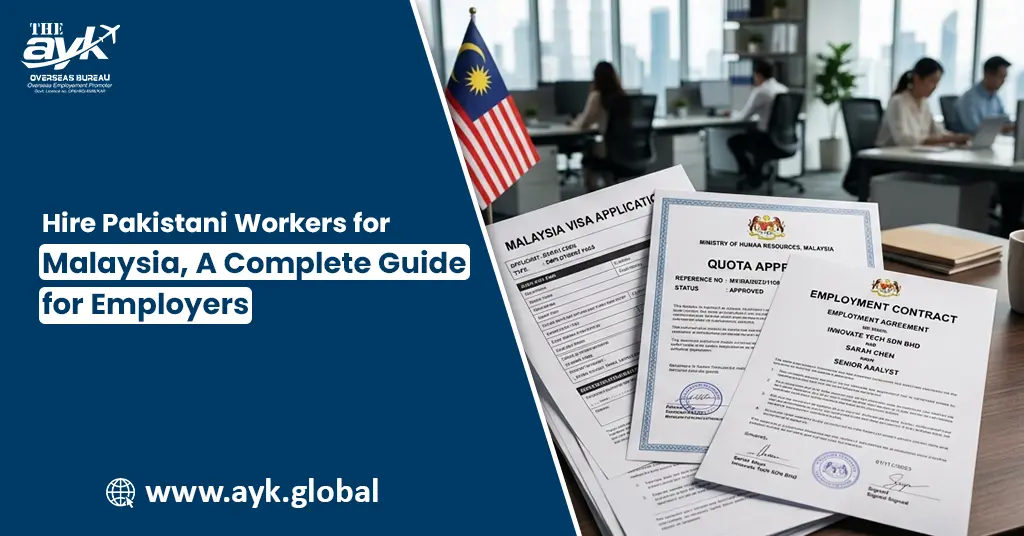
Hire Pakistani Workers for Malaysia, A Complete Guide for Employers
Running a business in Malaysia today requires more than just managing operations, it requires building a workforce that can sustain growth, maintain consistency, and adapt to increasing demand across industries such as manufacturing, construction, plantations, logistics, and service sectors. While many companies are able to recruit workers initially, the real challenge begins after hiring, when businesses struggle to maintain a stable, reliable, and productive workforce over time. This issue is not limited to a single sector, it is a widespread challenge that affects both small and large enterprises across the country.
In practical terms, employers often experience a recurring cycle. Workers are hired, trained, and deployed, but after a certain period, some leave, others fail to maintain performance, and the overall workforce becomes inconsistent. This leads to repeated hiring, increased training costs, operational disruptions, and reduced productivity. Instead of focusing on growth and efficiency, businesses are forced to allocate time and resources to managing workforce instability. Over time, this cycle becomes one of the biggest barriers to long-term business success.
These challenges are particularly common in roles that involve physical effort, structured routines, and long working hours. While such roles are essential for maintaining daily operations, they are becoming increasingly difficult to sustain through local hiring alone. Workforce preferences are shifting, and many workers are moving toward roles that offer flexibility or less demanding conditions. This creates a gap in industries that rely on discipline, consistency, and manual work.
As a result, many employers in Malaysia are turning toward international recruitment as a practical and long-term solution. By expanding beyond local hiring, businesses gain access to a wider pool of workers who are better suited to the demands of the job and more committed to long-term employment. AYK Overseas Recruitment & HR Manpower Agency supports this transition by connecting employers with Pakistani workers who are selected based on real job requirements, ensuring better performance, higher retention, and improved operational stability.
Why Workforce Challenges Are Increasing in Malaysia
Workforce challenges in Malaysia are becoming more visible due to a combination of economic growth and changing labor dynamics. As industries expand, the demand for manpower continues to increase, particularly in sectors that rely heavily on physical labor and structured workflows. However, the supply of workers willing to take on such roles is not growing at the same pace.
In manufacturing, production lines require consistent manpower to maintain output and meet delivery schedules. In construction, projects depend on steady labor to meet strict deadlines. In plantations and agriculture, timing is critical, and delays in manpower availability can directly impact productivity. Logistics operations require continuous movement of goods, while service industries depend on consistent staffing to maintain customer satisfaction.
At the same time, workforce expectations are changing. Many individuals are seeking jobs that offer better work-life balance or less physically demanding conditions. This creates a mismatch between job requirements and workforce preferences, making it difficult for employers to maintain stability through local hiring alone.
These factors combine to create a situation where businesses are constantly trying to manage workforce shortages, high turnover, and inconsistent performance. Without a stable workforce, operations become unpredictable, and long-term planning becomes more difficult.
Why Employers in Malaysia Are Turning to Pakistani Workers
For many employers in Malaysia, Pakistani workers provide a practical and effective solution to workforce challenges. This approach is not about replacing local workers, but about strengthening operations where manpower shortages exist.
One of the key reasons is experience. Many workers from Pakistan have backgrounds in industries that involve physical labor, structured routines, and disciplined workflows. This makes it easier for them to adapt to similar roles in Malaysia, reducing training time and improving productivity.
Consistency is another important factor. Workers who are familiar with routine-based environments are more likely to maintain performance over long periods. This helps businesses reduce disruptions and maintain efficiency.
Commitment also plays a major role. Employers are not just looking for workers who can perform tasks temporarily, they need individuals who are willing to stay and contribute over time. Workers seeking international opportunities often bring this level of dedication, which helps reduce turnover and improve workforce stability.
Industries in Malaysia That Benefit Most from International Hiring
Different industries in Malaysia benefit from international recruitment in different ways, but the overall objective remains the same, improving workforce stability and operational efficiency.
Manufacturing and factory operations rely on consistent manpower to maintain production lines. Construction projects depend on steady labor to meet deadlines and ensure timely completion. Plantation and agriculture sectors require workforce availability during critical periods such as planting and harvesting. Logistics operations depend on continuous workflow to maintain supply chain efficiency, while hospitality and service industries require reliable staff to maintain service standards.
In all these industries, the need is not just for workers, but for workers who can handle the demands of the job and maintain performance over time.
How the Hiring Process Works in a Practical Way
For employers in Malaysia, international hiring may seem complex at first, but it becomes much more manageable when handled in a structured and organized way.
The process begins with clearly defining workforce requirements. This includes job roles, working conditions, and performance expectations. Once these details are established, candidates are sourced and screened to ensure they match the requirements.
After selection, the process moves into documentation and approvals. While this stage involves multiple steps, it becomes smoother when managed by an experienced recruitment partner like AYK Overseas Recruitment & HR Manpower Agency.
By the time workers are ready for deployment, most of the administrative work has already been completed, allowing employers to focus on integrating them into their operations.
Understanding the Legal Side Without Overcomplicating It
For employers in Malaysia, hiring foreign workers involves a structured legal process that may appear complex at first, but becomes manageable when handled correctly. The system is designed to regulate workforce inflow, ensure compliance with labor laws, and maintain proper documentation for both employers and workers. While there are multiple steps involved, the key to success lies in following a clear process and avoiding shortcuts.
Everything begins with defining the job role and preparing a formal employment offer that clearly outlines responsibilities, working conditions, wages, and expectations. This step is important because it sets the foundation for the entire recruitment process. Once the role is defined, employers move into documentation and approval stages, which may involve coordination with relevant authorities. These steps ensure that the hiring process is compliant and properly aligned with regulatory requirements.
After approvals are secured, the process continues with visa arrangements and final deployment. Although this stage requires coordination, most of the complexity can be handled efficiently when working with an experienced recruitment partner. For employers, the key is to focus on defining workforce requirements accurately while relying on a structured system to manage technical aspects. When each stage is handled properly, the entire process becomes predictable and efficient, reducing delays and minimizing risks.
Common Hiring Challenges and How Businesses Overcome Them
Employers across Malaysia face several workforce challenges that extend beyond the initial hiring stage. These challenges are often linked to retention, consistency, and the ability to maintain productivity over time.
One of the most common issues is high turnover. Workers may leave after a short period, forcing businesses to restart the hiring process repeatedly. This not only increases costs but also disrupts daily operations and reduces efficiency.
Another major challenge is inconsistent performance. Some workers may not be suited for physically demanding or routine-based roles, which affects productivity and creates gaps in workflow. In industries such as manufacturing, construction, logistics, agriculture, and hospitality, even small inefficiencies can have a significant impact on overall operations.
Timing also plays a critical role. In plantation and agriculture sectors, delays can affect planting and harvesting cycles. In construction, workforce shortages can slow down project progress. In logistics, manpower gaps can disrupt supply chains, while in hospitality, staffing issues can directly impact service quality.
Businesses that adopt international recruitment as part of a long-term strategy often find that these challenges become easier to manage. By selecting workers based on suitability and planning workforce needs in advance, they can build a system that is more stable, reliable, and efficient.
How a Structured Recruitment Approach Improves Results
The effectiveness of hiring depends largely on how well the process is managed. A structured recruitment approach focuses on understanding job requirements in detail, selecting candidates based on real-world suitability, and managing each stage efficiently.
For employers in Malaysia, this approach leads to significantly better outcomes. Workers who are selected based on their ability to handle actual job conditions are more likely to perform consistently after deployment. This reduces the chances of mismatch and improves overall productivity.
Another important advantage is process efficiency. When documentation and approvals are handled in an organized way, delays are minimized. This allows businesses to plan workforce requirements more effectively and avoid last-minute disruptions.
Over time, a structured approach creates predictability in hiring. Instead of dealing with uncertainty and repeated workforce issues, employers can focus on long-term growth and operational stability.
Long Term Benefits of Hiring Pakistani Workers for Malaysian Businesses
While the immediate goal of hiring is to fill positions, the long-term benefits have a much greater impact on business performance. Employers in Malaysia who adopt international recruitment often experience improvements in stability, efficiency, and overall workflow.
A consistent workforce reduces the need for repeated hiring and training, saving both time and resources. It also allows businesses to focus more on operations rather than managing staffing issues.
Flexibility is another key advantage. Businesses can scale their workforce based on demand, increasing manpower during peak periods or maintaining a steady team for ongoing operations.
Consistency also improves teamwork. Workers who stay longer become familiar with processes and with each other, which improves coordination and reduces errors.
Choosing the Right Recruitment Partner Matters
For employers in Malaysia, selecting the right recruitment partner is one of the most important decisions in the hiring process. A reliable agency does more than provide candidates, it understands the nature of the work, the expectations of the employer, and the practical challenges of international hiring.
AYK Overseas Recruitment & HR Manpower Agency focuses on delivering workforce solutions that align with real business needs. By carefully evaluating requirements and matching them with suitable candidates, the agency helps ensure better hiring outcomes.
Clear communication is also a key factor. When expectations, timelines, and requirements are clearly defined from the beginning, the entire process becomes more efficient and easier to manage.
Practical Tips Before Starting the Hiring Process
Before starting the hiring process, employers in Malaysia should clearly define their workforce requirements. This includes job roles, working conditions, schedules, and performance expectations.
Planning ahead is essential. Waiting until there is an urgent shortage often leads to rushed decisions and delays. Starting early allows enough time for proper candidate selection and documentation processing.
Once workers are deployed, clear communication helps them adapt quickly. Explaining routines, expectations, and responsibilities ensures that workers can perform consistently from the beginning.
Building a Workforce That Supports Long Term Growth
In Malaysia, companies are not only looking for employees but are also forming teams to ensure the sustainability of operations. As local recruitment proves to be essential, it might not be sufficient to cater to increasing demands.
Recruitment from abroad becomes an effective tool to link organizations with those ready for the role and willing to sustain their level of performance.
AYK Overseas Recruitment & HR Manpower Agency comes to your aid with a step-by-step procedure. With appropriate screening of candidates and proper process management, AYK ensures organizations go beyond merely solving their recruitment problems
Frequently Asked Questions
Hire Pakistani Workers for Malaysia, A Complete Guide for Employers Running a business in Malaysia today requires more than just managing operations, it requires building a workforce that can sustain growth, maintain consistency, and adapt to increasing demand across industries such as manufacturing, construction, plantations, logistics, and service sectors. While many companies are able to recruit workers initially, the real challenge begins after hiring, when businesses struggle to maintain a stable, reliable, and productive workforce over time. This issue is not limited to a single sector, it is a widespread challenge that affects both small and large enterprises across the country. In practical terms, employers often experience a recurring cycle. Workers are hired, trained, and deployed, but after a certain period, some leave, others fail to maintain performance, and the overall workforce becomes inconsistent. This leads to repeated hiring, increased training costs, operational disruptions, and reduced productivity. Instead of focusing on growth and efficiency, businesses are forced to allocate time and resources to managing workforce instability. Over time, this cycle becomes one of the biggest barriers to long-term business success. These challenges are particularly common in roles that involve physical effort, structured routines, and long working hours. While such roles are essential for maintaining daily operations, they are becoming increasingly difficult to sustain through local hiring alone. Workforce preferences are shifting, and many workers are moving toward roles that offer flexibility or less demanding conditions. This creates a gap in industries that rely on discipline, consistency, and manual work. As a result, many employers in Malaysia are turning toward international recruitment as a practical and long-term solution. By expanding beyond local hiring, businesses gain access to a wider pool of workers who are better suited to the demands of the job and more committed to long-term employment. AYK Overseas Recruitment & HR Manpower Agency supports this transition by connecting employers with Pakistani workers who are selected based on real job requirements, ensuring better performance, higher retention, and improved operational stability. Why Workforce Challenges Are Increasing in Malaysia Workforce challenges in Malaysia are becoming more visible due to a combination of economic growth and changing labor dynamics. As industries expand, the demand for manpower continues to increase, particularly in sectors that rely heavily on physical labor and structured workflows. However, the supply of workers willing to take on such roles is not growing at the same pace. In manufacturing, production lines require consistent manpower to maintain output and meet delivery schedules. In construction, projects depend on steady labor to meet strict deadlines. In plantations and agriculture, timing is critical, and delays in manpower availability can directly impact productivity. Logistics operations require continuous movement of goods, while service industries depend on consistent staffing to maintain customer satisfaction. At the same time, workforce expectations are changing. Many individuals are seeking jobs that offer better work-life balance or less physically demanding conditions. This creates a mismatch between job requirements and workforce preferences, making it difficult for employers to maintain stability through local hiring alone. These factors combine to create a situation where businesses are constantly trying to manage workforce shortages, high turnover, and inconsistent performance. Without a stable workforce, operations become unpredictable, and long-term planning becomes more difficult. Why Employers in Malaysia Are Turning to Pakistani Workers For many employers in Malaysia, Pakistani workers provide a practical and effective solution to workforce challenges. This approach is not about replacing local workers, but about strengthening operations where manpower shortages exist. One of the key reasons is experience. Many workers from Pakistan have backgrounds in industries that involve physical labor, structured routines, and disciplined workflows. This makes it easier for them to adapt to similar roles in Malaysia, reducing training time and improving productivity. Consistency is another important factor. Workers who are familiar with routine-based environments are more likely to maintain performance over long periods. This helps businesses reduce disruptions and maintain efficiency. Commitment also plays a major role. Employers are not just looking for workers who can perform tasks temporarily, they need individuals who are willing to stay and contribute over time. Workers seeking international opportunities often bring this level of dedication, which helps reduce turnover and improve workforce stability. Industries in Malaysia That Benefit Most from International Hiring Different industries in Malaysia benefit from international recruitment in different ways, but the overall objective remains the same, improving workforce stability and operational efficiency. Manufacturing and factory operations rely on consistent manpower to maintain production lines. Construction projects depend on steady labor to meet deadlines and ensure timely completion. Plantation and agriculture sectors require workforce availability during critical periods such as planting and harvesting. Logistics operations depend on continuous workflow to maintain supply chain efficiency, while hospitality and service industries require reliable staff to maintain service standards. In all these industries, the need is not just for workers, but for workers who can handle the demands of the job and maintain performance over time. How the Hiring Process Works in a Practical Way For employers in Malaysia, international hiring may seem complex at first, but it becomes much more manageable when handled in a structured and organized way. The process begins with clearly defining workforce requirements. This includes job roles, working conditions, and performance expectations. Once these details are established, candidates are sourced and screened to ensure they match the requirements. After selection, the process moves into documentation and approvals. While this stage involves multiple steps, it becomes smoother when managed by an experienced recruitment partner like AYK Overseas Recruitment & HR Manpower Agency. By the time workers are ready for deployment, most of the administrative work has already been completed, allowing employers to focus on integrating them into their operations. Understanding the Legal Side Without Overcomplicating It For employers in Malaysia, hiring foreign workers involves a structured legal process that may appear complex at first, but becomes manageable when handled correctly. The system is designed to regulate workforce inflow, ensure compliance with labor laws, and maintain proper documentation for both employers and workers. While there are multiple steps involved, the key to success lies in following a clear process and avoiding shortcuts. Everything begins with defining the job role and preparing a formal employment offer that clearly outlines responsibilities, working conditions, wages, and expectations. This step is important because it sets the foundation for the entire recruitment process. Once the role is defined, employers move into documentation and approval stages, which may involve coordination with relevant authorities. These steps ensure that the hiring process is compliant and properly aligned with regulatory requirements. After approvals are secured, the process continues with visa arrangements and final deployment. Although this stage requires coordination, most of the complexity can be handled efficiently when working with an experienced recruitment partner. For employers, the key is to focus on defining workforce requirements accurately while relying on a structured system to manage technical aspects. When each stage is handled properly, the entire process becomes predictable and efficient, reducing delays and minimizing risks. Common Hiring Challenges and How Businesses Overcome Them Employers across Malaysia face several workforce challenges that extend beyond the initial hiring stage. These challenges are often linked to retention, consistency, and the ability to maintain productivity over time. One of the most common issues is high turnover. Workers may leave after a short period, forcing businesses to restart the hiring process repeatedly. This not only increases costs but also disrupts daily operations and reduces efficiency. Another major challenge is inconsistent performance. Some workers may not be suited for physically demanding or routine-based roles, which affects productivity and creates gaps in workflow. In industries such as manufacturing, construction, logistics, agriculture, and hospitality, even small inefficiencies can have a significant impact on overall operations. Timing also plays a critical role. In plantation and agriculture sectors, delays can affect planting and harvesting cycles. In construction, workforce shortages can slow down project progress. In logistics, manpower gaps can disrupt supply chains, while in hospitality, staffing issues can directly impact service quality. Businesses that adopt international recruitment as part of a long-term strategy often find that these challenges become easier to manage. By selecting workers based on suitability and planning workforce needs in advance, they can build a system that is more stable, reliable, and efficient. How a Structured Recruitment Approach Improves Results The effectiveness of hiring depends largely on how well the process is managed. A structured recruitment approach focuses on understanding job requirements in detail, selecting candidates based on real-world suitability, and managing each stage efficiently. For employers in Malaysia, this approach leads to significantly better outcomes. Workers who are selected based on their ability to handle actual job conditions are more likely to perform consistently after deployment. This reduces the chances of mismatch and improves overall productivity. Another important advantage is process efficiency. When documentation and approvals are handled in an organized way, delays are minimized. This allows businesses to plan workforce requirements more effectively and avoid last-minute disruptions. Over time, a structured approach creates predictability in hiring. Instead of dealing with uncertainty and repeated workforce issues, employers can focus on long-term growth and operational stability. Long Term Benefits of Hiring Pakistani Workers for Malaysian Businesses While the immediate goal of hiring is to fill positions, the long-term benefits have a much greater impact on business performance. Employers in Malaysia who adopt international recruitment often experience improvements in stability, efficiency, and overall workflow. A consistent workforce reduces the need for repeated hiring and training, saving both time and resources. It also allows businesses to focus more on operations rather than managing staffing issues. Flexibility is another key advantage. Businesses can scale their workforce based on demand, increasing manpower during peak periods or maintaining a steady team for ongoing operations. Consistency also improves teamwork. Workers who stay longer become familiar with processes and with each other, which improves coordination and reduces errors. Choosing the Right Recruitment Partner Matters For employers in Malaysia, selecting the right recruitment partner is one of the most important decisions in the hiring process. A reliable agency does more than provide candidates, it understands the nature of the work, the expectations of the employer, and the practical challenges of international hiring. AYK Overseas Recruitment & HR Manpower Agency focuses on delivering workforce solutions that align with real business needs. By carefully evaluating requirements and matching them with suitable candidates, the agency helps ensure better hiring outcomes. Clear communication is also a key factor. When expectations, timelines, and requirements are clearly defined from the beginning, the entire process becomes more efficient and easier to manage. Practical Tips Before Starting the Hiring Process Before starting the hiring process, employers in Malaysia should clearly define their workforce requirements. This includes job roles, working conditions, schedules, and performance expectations. Planning ahead is essential. Waiting until there is an urgent shortage often leads to rushed decisions and delays. Starting early allows enough time for proper candidate selection and documentation processing. Once workers are deployed, clear communication helps them adapt quickly. Explaining routines, expectations, and responsibilities ensures that workers can perform consistently from the beginning. Building a Workforce That Supports Long Term Growth In Malaysia, companies are not only looking for employees but are also forming teams to ensure the sustainability of operations. As local recruitment proves to be essential, it might not be sufficient to cater to increasing demands. Recruitment from abroad becomes an effective tool to link organizations with those ready for the role and willing to sustain their level of performance. AYK Overseas Recruitment & HR Manpower Agency comes to your aid with a step-by-step procedure. With appropriate screening of candidates and proper process management, AYK ensures organizations go beyond merely solving their recruitment problems
+
By defining requirements and working with AYK Overseas Recruitment.
Is the hiring process complicated?
+
It becomes manageable with a structured approach.
Which industries benefit the most?
+
Manufacturing, construction, logistics, plantation, and hospitality.
Does international hiring improve stability?
+
Yes, it reduces turnover and improves consistency.
How long does the process take?
+
A few weeks to a couple of months.
 How BEOE Protects Pakistani Overseas Workers
 Top Recruitment Agency in Pakistan for Lithuania Employers, Complete Hiring Guide
 Logistics and Supply Chain Jobs in Europe
 KSA Recruitment
 UAE Recruitment
 Qatar Recruitment
 Oman Recruitment
 Kuwait Recruitment
 Libya Recruitment
 Bahrain Recruitment
 Iraq Recruitment
 Malaysia Recruitment
 Malta Recruitment
 Canada Recruitment
 USA Recruitment
 Europe Recruitment
 UK Recruitment
 Romania Recruitment
 Poland Recruitment
 Bulgaria Recruitment
 Albania Recruitment
 Serbia Recruitment
 Lithuania Recruitment
 Japan Recruitment
 Turkey Recruitment
 Kyrgyzstan Recruitment
 South Korea Recruitment