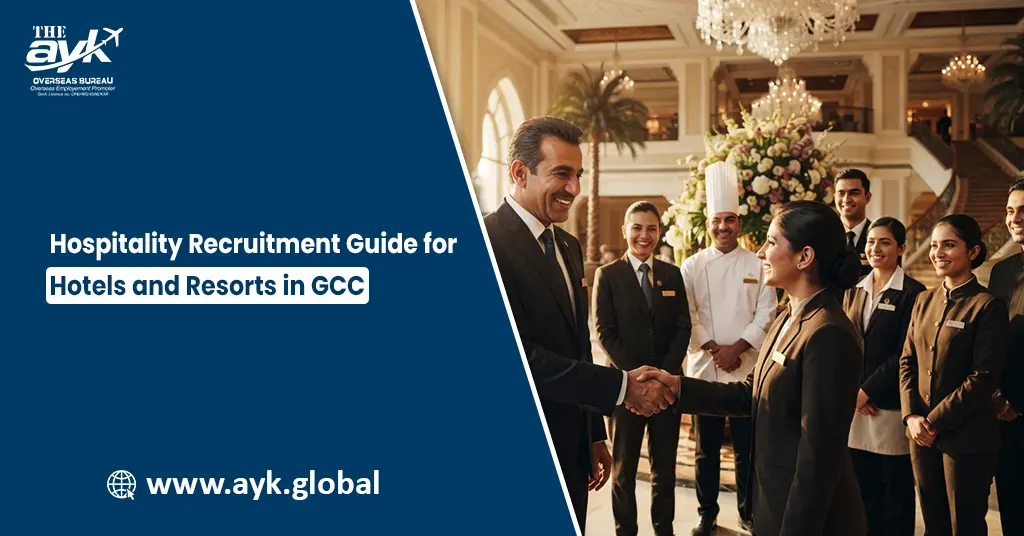
Hospitality Recruitment Guide for Hotels and Resorts in GCC
Published: July 03, 2026 | Views: 13
Introduction
The hospitality industry in GCC countries—including Saudi Arabia, United Arab Emirates, Qatar, Kuwait, Oman, and Bahrain—is one of the fastest-growing sectors due to rising tourism, luxury developments, international events, and mega projects like smart cities and entertainment hubs.
Hotels, resorts, and serviced apartments require a large workforce to maintain world-class guest experiences. From front office staff to housekeeping, kitchen teams, and management roles, hospitality recruitment is essential for operational success.
However, hiring hospitality staff for GCC hotels and resorts requires structured recruitment processes, proper skill assessment, and strong focus on customer service standards. This guide explains a complete hospitality recruitment approach for GCC employers.
1. Workforce Planning and Hospitality Staffing Requirements
The first step in hospitality recruitment is detailed workforce planning. Hotels and resorts must identify staffing requirements based on occupancy levels, seasonal demand, service standards, and operational departments.
Each department requires specific roles, and staffing must be aligned with guest service expectations and international hospitality standards.
Key staffing areas include:
- Front office and reception staff
- Housekeeping teams
- Food and beverage service staff
- Kitchen and culinary staff
- Hotel management and supervisory roles
Proper planning ensures smooth guest experiences and efficient hotel operations.
2. Sourcing Skilled Hospitality Professionals
Sourcing is a critical step in hospitality recruitment. GCC hotels and resorts often rely on licensed recruitment agencies to hire experienced professionals from countries such as the Philippines, India, Pakistan, Nepal, Bangladesh, and Sri Lanka.
Candidates with prior hotel or resort experience are highly preferred due to their familiarity with customer service standards and international hospitality systems.
Benefits of proper sourcing include:
- Access to experienced hospitality staff
- Faster recruitment cycles
- Better cultural adaptability
- Improved guest service quality
3. Screening and Customer Service Evaluation
Unlike technical jobs, hospitality recruitment focuses heavily on communication skills, personality, and customer service attitude. Screening involves interviews, communication tests, and behavioral assessments.
Employers evaluate how candidates handle guest interactions, complaints, teamwork, and service delivery under pressure.
Key screening factors include:
- Communication and language skills
- Customer service attitude
- Grooming and presentation
- Problem-solving ability
- Experience in hotel environments
4. Training and Skill Development for Hospitality Staff
Training is a core part of hospitality recruitment because guest satisfaction in GCC hotels and resorts depends heavily on service quality. Even experienced staff must be trained according to the hotel’s brand standards and service protocols.
Training programs focus on communication, grooming, guest handling, and operational procedures such as housekeeping standards, food safety, and front desk management. Many GCC hotels also provide orientation on cultural sensitivity and luxury service expectations.
Key training areas include:
- Customer service excellence
- Housekeeping standards and hygiene protocols
- Front office and reservation systems
- Food safety and restaurant service etiquette
- Cultural awareness and guest handling
5. Documentation and Visa Processing
After selection and training, documentation verification is required for GCC visa processing. Employers must ensure all candidates have valid passports, experience certificates, and medical fitness reports.
Hospitality recruitment also requires compliance with GCC labor regulations, and visa processing is usually handled through licensed recruitment agencies to ensure accuracy and speed.
Required documents include:
- Valid passport
- Employment experience certificates
- Educational qualifications (if required)
- Medical fitness report
- Employment contract
6. Onboarding and Hotel Integration
Once hospitality staff arrive in GCC countries, onboarding ensures smooth integration into hotel or resort operations. This includes orientation about brand standards, departmental roles, and guest service expectations.
Employees are introduced to supervisors, team structures, and operational workflows. Proper onboarding helps maintain consistent service quality from day one.
Benefits of onboarding:
- Faster adaptation to hotel environment
- Improved service consistency
- Better teamwork and coordination
- Reduced operational errors
7. Cost Optimization in Hospitality Recruitment
Hospitality recruitment costs can be controlled through structured hiring processes and long-term partnerships with recruitment agencies. Bulk hiring during peak tourism seasons also helps reduce per-candidate costs.
Hotels can further reduce expenses by hiring experienced professionals who require minimal training and adapt quickly to service standards.
Cost-saving strategies include:
- Bulk seasonal hiring
- Pre-screened candidate pools
- Hiring experienced hospitality staff
- Efficient visa processing systems
8. Retention Strategies for Hospitality Staff
Retention is essential in the hospitality industry due to high turnover rates globally. GCC hotels and resorts must focus on employee satisfaction, career growth, and positive work environments.
Providing fair wages, accommodation, training opportunities, and recognition programs helps improve employee loyalty and service consistency.
Key retention strategies include:
- Competitive salary packages
- Staff accommodation and benefits
- Career advancement opportunities
- Performance-based incentives
- Positive work culture
Conclusion
Hospitality recruitment for GCC hotels and resorts requires structured planning, strong screening, proper training, documentation, onboarding, and retention strategies. Each step ensures high-quality guest service and smooth hotel operations.
By following best practices, GCC hospitality businesses can build a skilled and service-oriented workforce that enhances guest satisfaction and brand reputation.
 Best Recruitment Agency in Peshawar, Complete Hiring Guide for Employers
 Recruitment Checklist for GCC Companies Hiring Overseas Workers
 KSA Recruitment
 UAE Recruitment
 Qatar Recruitment
 Oman Recruitment
 Kuwait Recruitment
 Libya Recruitment
 Bahrain Recruitment
 Iraq Recruitment
 Malaysia Recruitment
 Malta Recruitment
 Canada Recruitment
 USA Recruitment
 Europe Recruitment
 UK Recruitment
 Romania Recruitment
 Poland Recruitment
 Bulgaria Recruitment
 Albania Recruitment
 Serbia Recruitment
 Lithuania Recruitment
 Japan Recruitment
 Turkey Recruitment
 Kyrgyzstan Recruitment
 South Korea Recruitment