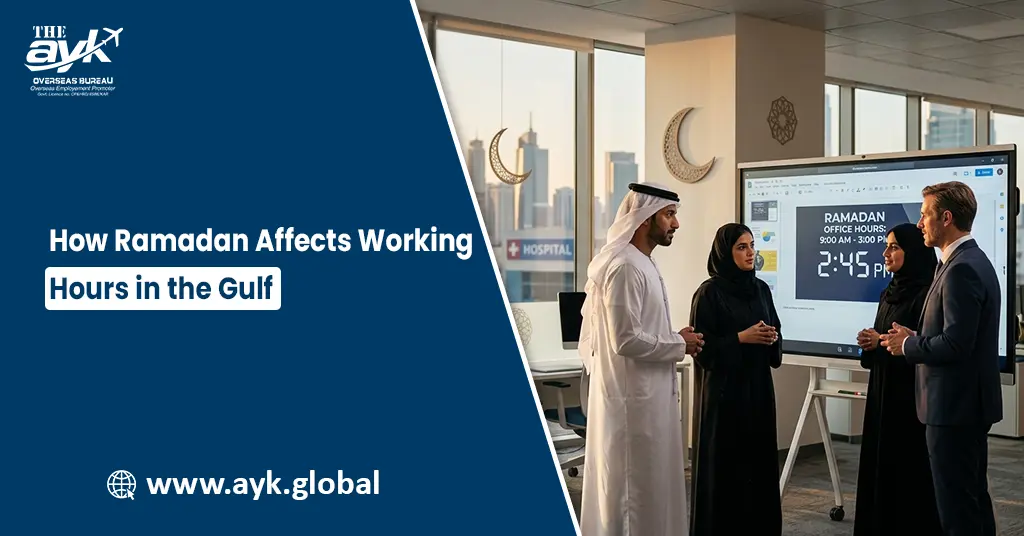
How Ramadan Affects Working Hours in the Gulf
Published: June 30, 2026 | Views: 18
Introduction
Ramadan, the Islamic holy month of fasting, significantly affects working hours and broader workplace patterns across Gulf countries, with most destinations implementing specific regulatory adjustments that overseas workers should understand before experiencing their first Ramadan period within their overseas employment. Understanding these adjustments helps workers properly anticipate and adapt to this significant annual workplace adjustment period that affects virtually every employment sector across the region.
This guide examines how Ramadan typically affects working hours and broader workplace expectations across major Gulf destinations, helping Pakistani workers properly prepare for this important annual period. AYK Overseas Recruitment & HR Manpower Agency, recognized as one of Pakistan's top manpower agencies, ensures candidates understand these seasonal adjustments before departure, helping workers approach their first Ramadan experience with appropriate preparation and understanding.
Legally Mandated Reduced Working Hours
Most Gulf countries implement legally mandated reductions in standard working hours during Ramadan, typically reducing standard daily working hours by approximately two hours compared to normal working periods throughout the rest of the year. This legal requirement applies broadly across most employment sectors, reflecting recognition of the physical demands that daytime fasting creates for workers throughout this holy month.
Workers should understand the specific reduced working hour requirements applicable to their particular destination country and employment category, recognizing this represents a legal requirement rather than simply employer discretion or optional accommodation. Employers who fail to properly implement these legally required reduced working hours during Ramadan are violating applicable labor regulations, providing workers grounds for formal complaint if this requirement is not properly honored.
Adjusted Daily Schedules and Shift Patterns
Beyond simply reducing total working hours, many employers adjust specific daily schedules during Ramadan, sometimes shifting start and end times to better accommodate fasting workers' needs, particularly regarding avoiding the most physically demanding midday heat periods when fasting without water intake becomes particularly challenging. These schedule adjustments vary between different employers and sectors based on their specific operational requirements and practical considerations.
Workers should understand their specific employer's particular Ramadan schedule adjustments, recognizing these patterns might differ somewhat from generic assumptions about uniform Gulf-wide Ramadan scheduling. This specific schedule understanding helps workers properly plan their daily routines and personal time management throughout this adjusted working period.
Considerations for Non-Muslim Workers
Workers who are not observing Ramadan fasting should understand that while reduced working hours generally apply broadly regardless of individual religious observance, certain workplace behavior expectations, including refraining from eating or drinking in public areas during daytime hours, typically apply to all workers regardless of personal religious practice as a matter of cultural respect and sometimes legal requirement.
Non-Muslim workers should research specific expectations relevant to their particular destination country regarding these public behavior considerations, ensuring appropriate cultural sensitivity throughout the Ramadan period even if they personally are not observing the fast. This cultural awareness helps workers navigate this significant cultural period respectfully while still understanding their own rights regarding personal practices in appropriate private settings.
Impact on Construction and Outdoor Work Sectors
Construction and various outdoor work sectors often experience particularly significant Ramadan-related adjustments, given the combination of physically demanding work and fasting-related considerations creating heightened health and safety concerns during this period. Many Gulf countries implement additional specific protections for outdoor workers during Ramadan, sometimes combined with existing summer heat protection regulations depending on when Ramadan falls within the annual calendar.
Workers in construction or outdoor employment categories should understand these specific sector protections applicable during Ramadan, recognizing these additional considerations as important worker protection measures rather than simply general scheduling adjustments. This sector-specific understanding helps construction and outdoor workers properly anticipate the particular Ramadan-related accommodations relevant to their physically demanding work categories.
Retail and Hospitality Sector Schedule Variations
Interestingly, retail and hospitality sectors sometimes experience different Ramadan-related patterns compared to other employment categories, given that many businesses within these sectors actually experience increased evening activity during Ramadan as families gather for evening meals following the daily fast, sometimes requiring extended evening operating hours despite the general daytime working hour reductions applicable elsewhere.
Workers within retail or hospitality sectors should understand these potentially different scheduling patterns relevant to their specific industry, recognizing that Ramadan's effect on their particular work schedule might differ from generic assumptions based on construction or office-based employment patterns. This sector-specific understanding helps retail and hospitality workers properly anticipate their actual Ramadan working schedule expectations.
Workplace Productivity Expectations During Ramadan
Workers should understand that while reduced working hours represent legal requirements, broader workplace culture during Ramadan often involves somewhat adjusted productivity expectations and pace, reflecting general recognition of the physical demands fasting creates throughout the workday. This cultural understanding helps workers appropriately calibrate their own expectations and pace during this period rather than assuming identical productivity demands compared to non-Ramadan periods.
Workers should still maintain professional performance standards throughout Ramadan while understanding this general cultural context regarding somewhat adjusted pace expectations, recognizing the distinction between maintaining genuine professional commitment versus assuming completely unchanged demands identical to non-Ramadan working periods. This balanced understanding helps workers navigate Ramadan professionally while appropriately adapting to this culturally significant period.
Eid Holiday Considerations Following Ramadan
Workers should understand that Eid al-Fitr, the celebration marking the conclusion of Ramadan, typically involves official holiday periods across Gulf countries, providing workers important rest and celebration time following the month-long fasting period. Workers should understand the specific holiday duration applicable to their particular destination country and employer, properly planning their personal arrangements around this significant celebration period.
Workers should also understand that this Eid holiday period sometimes provides opportunities for brief family visits home if travel logistics and contract terms allow, making advance planning regarding this potential travel opportunity valuable for workers hoping to potentially use this holiday period for family connection if circumstances permit.
Preparing for Your First Ramadan Working Experience
Workers experiencing their first Ramadan while working overseas should approach this period with appropriate preparation and openness to learning, recognizing this represents both a significant cultural experience and a practical workplace adjustment period requiring some adaptation. Workers should consider discussing Ramadan expectations with colleagues or supervisors who can provide specific guidance relevant to their particular workplace.
Workers should also consider how Ramadan might personally affect them even if they are not observing the fast themselves, recognizing that broader workplace rhythm changes and reduced operating hours affect virtually everyone within Gulf workplaces during this period regardless of individual religious observance. This broader awareness helps workers properly anticipate and adapt to this significant annual workplace period.
How AYK Overseas Helps You Prepare for Ramadan
As a government-licensed international recruitment and HR manpower firm with offices in Karachi and Islamabad, AYK Overseas Recruitment & HR Manpower Agency ensures candidates understand Ramadan-related working hour adjustments and cultural considerations before departure, helping workers approach their first overseas Ramadan experience with appropriate preparation. Being recognized as one of Pakistan's top manpower agencies, we believe this cultural and practical preparation represents an important component of overall candidate readiness.
Our team provides guidance regarding specific Ramadan-related expectations relevant to candidates' particular destination country and employment sector, ensuring informed preparation for this significant annual period. This thorough preparation has helped AYK Overseas Recruitment & HR Manpower Agency support candidates in successfully navigating their Ramadan experience throughout their overseas employment journey.
Conclusion
Ramadan significantly affects working hours and broader workplace patterns across Gulf countries, with legally mandated reduced hours, sector-specific adjustments, and important cultural considerations that overseas workers should properly understand and prepare for before their first experience with this significant annual period. Workers who approach Ramadan with appropriate preparation and cultural awareness are well positioned to navigate this important workplace adjustment period successfully throughout their overseas employment journey.
 How to Recruit Qualified Civil Engineers for GCC Infrastructure Projects
 How to Choose a Reliable Overseas Recruitment Agency for GCC Jobs
 Step-by-Step Overseas Job Process from Pakistan – AYK Overseas Recruitment Guide
 KSA Recruitment
 UAE Recruitment
 Qatar Recruitment
 Oman Recruitment
 Kuwait Recruitment
 Libya Recruitment
 Bahrain Recruitment
 Iraq Recruitment
 Malaysia Recruitment
 Malta Recruitment
 Canada Recruitment
 USA Recruitment
 Europe Recruitment
 UK Recruitment
 Romania Recruitment
 Poland Recruitment
 Bulgaria Recruitment
 Albania Recruitment
 Serbia Recruitment
 Lithuania Recruitment
 Japan Recruitment
 Turkey Recruitment
 Kyrgyzstan Recruitment
 South Korea Recruitment