
How to Choose the Right Recruitment Agency for Overseas Hiring
Published: June 22, 2026 | Views: 100
The global workforce landscape has changed dramatically over the past decade. Across industries such as construction, healthcare, oil and gas, logistics, hospitality, manufacturing, facilities management, and engineering, employers are facing increasing challenges in sourcing qualified talent locally. Labor shortages, rising competition for skilled workers, and expanding business operations have encouraged companies to look beyond domestic markets and explore international recruitment opportunities.
Overseas recruitment has become one of the most effective solutions for employers seeking reliable manpower. Through international hiring, companies gain access to larger talent pools, specialized workforce categories, and flexible recruitment options that support business growth. However, successful overseas recruitment depends heavily on choosing the right recruitment agency. The agency serves as the bridge between employers and potential candidates, making its role critical in determining recruitment outcomes.
Selecting the wrong recruitment partner can lead to hiring delays, poor candidate quality, compliance issues, increased recruitment costs, and operational disruptions. On the other hand, choosing a professional and experienced recruitment agency can streamline hiring processes, improve workforce quality, reduce risks, and support long-term workforce planning. This guide explains how employers can evaluate recruitment agencies effectively and select a partner that aligns with their hiring goals.
1. Understand Your Workforce Requirements Before Choosing a Recruitment Agency
Many employers begin searching for recruitment agencies without first establishing a clear understanding of their workforce requirements. This often creates confusion during the recruitment process because agencies cannot effectively source candidates without knowing exactly what the employer needs. Before contacting any recruitment company, organizations should carefully evaluate their workforce objectives, project timelines, staffing levels, technical requirements, and operational goals. A construction contractor seeking 300 workers for a large infrastructure project will have very different recruitment needs compared to a healthcare provider looking for specialized nursing staff.
Workforce planning is one of the most important foundations of successful recruitment. Employers should identify specific job titles, required qualifications, years of experience, technical competencies, salary expectations, and deployment schedules. These details help recruitment agencies develop targeted sourcing strategies and ensure that candidates meet employer expectations. Organizations that invest time in workforce planning typically experience fewer recruitment delays and higher candidate quality because hiring requirements are clearly communicated from the beginning.
International recruitment introduces additional complexities such as visa processing, documentation requirements, mobilization timelines, and compliance obligations. Without clear workforce planning, these processes can become inefficient and costly. Professional recruitment agencies often begin engagements with detailed workforce consultations to understand employer requirements thoroughly. Agencies such as AYK Overseas Recruitment & HR Manpower Agency (License No. GL-4586-KAR) work closely with employers to define workforce objectives before launching recruitment campaigns. This structured approach helps improve hiring outcomes and supports efficient workforce deployment.
Why Workforce Planning Matters
Effective workforce planning allows employers to align recruitment activities with business objectives. Instead of reacting to staffing shortages after they occur, organizations can proactively identify workforce needs and develop hiring strategies accordingly. This approach reduces operational disruptions and improves workforce stability.
Workforce planning also improves communication between employers and recruitment agencies. When hiring requirements are clearly documented, agencies can source candidates more accurately and reduce the likelihood of presenting unsuitable applicants. This improves recruitment efficiency and saves valuable time.
Organizations that prioritize workforce planning often achieve stronger long-term recruitment outcomes. By understanding workforce requirements in advance, employers can make informed hiring decisions and build more effective workforce strategies.
2. Verify Licensing, Compliance, and Legal Credentials
One of the first steps in evaluating any recruitment agency is verifying its legal status and compliance credentials. A legitimate recruitment agency should possess all required licenses, registrations, and authorizations necessary to conduct overseas recruitment activities. Employers should never assume that an agency is compliant simply because it has an established website or marketing presence. Proper verification helps reduce legal risks and protects organizations from potential recruitment complications.
Licensed recruitment agencies are generally subject to government regulations and industry standards. These requirements often include compliance with labor laws, recruitment guidelines, candidate protection measures, and ethical business practices. Agencies that operate within regulated frameworks are typically more accountable and transparent in their operations. Employers benefit from greater confidence knowing that recruitment activities are being conducted professionally and legally.
Compliance becomes even more important when recruiting internationally. Different countries have unique labor regulations, immigration requirements, and employment standards. Recruitment agencies must understand these regulations and ensure that hiring processes comply with applicable laws. Employers should request copies of agency licenses, certifications, and relevant documentation during the evaluation process. Conducting due diligence early helps avoid legal disputes, hiring delays, and compliance issues later in the recruitment cycle.
Importance of Compliance in International Recruitment
Compliance protects both employers and candidates throughout the recruitment process. Agencies that follow proper procedures help reduce risks associated with documentation errors, visa processing problems, and contractual disputes.
Employers should also evaluate whether agencies maintain ethical recruitment practices. Transparent fee structures, clear communication, and professional candidate management are indicators of a compliant and trustworthy recruitment partner.
A recruitment agency's commitment to compliance often reflects its overall professionalism. Employers should view licensing and legal verification as essential steps when selecting an overseas recruitment partner.
3. Evaluate Industry-Specific Recruitment Experience
Recruitment expertise varies significantly across industries. While some agencies may excel at sourcing construction workers, they may have limited experience recruiting healthcare professionals or technical specialists. Employers should therefore assess whether a recruitment agency possesses experience within their specific industry. Industry knowledge enables agencies to understand job requirements, candidate expectations, workforce trends, and operational challenges more effectively.
For example, recruiting welders for an oil and gas shutdown project requires different expertise than recruiting nurses for a healthcare facility. Technical recruitment often involves trade testing, certification verification, and specialized screening procedures. Healthcare recruitment may require credential validation, licensing checks, and clinical experience assessments. Agencies with industry-specific experience are generally better equipped to manage these requirements and deliver suitable candidates.
Industry expertise also contributes to stronger candidate evaluation. Experienced recruiters understand the competencies, qualifications, and attributes necessary for success within specific roles. This enables them to identify candidates more accurately and improve hiring outcomes. Employers should request examples of previous recruitment projects, industry references, and case studies to evaluate an agency's experience. Demonstrated success within a relevant sector is often a strong indicator of future recruitment performance.
Benefits of Industry Knowledge
Industry-specific recruiters understand workforce challenges and hiring trends within their sectors. This knowledge helps them source candidates more effectively and anticipate employer needs.
Agencies with specialized expertise often maintain stronger candidate networks within their industries. Access to qualified talent pools improves recruitment speed and candidate quality.
Employers should prioritize agencies that demonstrate a clear understanding of their operational environment. Industry knowledge can significantly improve recruitment outcomes and workforce performance.
4. Assess the Agency's Candidate Network and Talent Pool
A recruitment agency's effectiveness depends heavily on the strength of its candidate network. Employers should evaluate whether an agency has access to a large and diverse talent pool capable of meeting workforce requirements. Agencies with extensive candidate databases and sourcing capabilities are generally better positioned to respond quickly to recruitment requests and deliver qualified candidates.
Candidate networks are built through years of relationship development, marketing efforts, workforce engagement, and recruitment activity. Agencies that actively maintain talent pools can often source candidates more efficiently because they already have access to pre-screened professionals. This becomes particularly important for employers with urgent staffing needs or large-scale recruitment campaigns.
The quality of a candidate network is equally important as its size. Employers should inquire about how candidates are sourced, screened, and maintained within the agency's database. Strong candidate networks often include professionals with diverse backgrounds, varying experience levels, and specialized skill sets. Access to high-quality talent pools enables recruitment agencies to provide employers with greater flexibility and stronger hiring options.
Evaluating Candidate Availability
Employers should ask agencies about candidate availability across different workforce categories. Understanding sourcing capabilities helps determine whether the agency can meet current and future recruitment needs.
Large candidate networks also support scalability. Whether an employer requires ten workers or several hundred, agencies with extensive talent pools can generally accommodate varying recruitment volumes more effectively.
A strong candidate network reflects an agency's long-term commitment to workforce development and recruitment excellence. It is an important factor when selecting an overseas recruitment partner.
5. Review Candidate Screening and Selection Processes
Candidate screening is one of the most critical functions performed by recruitment agencies. Effective screening helps identify qualified candidates while eliminating applicants who do not meet employer requirements. Employers should evaluate how agencies assess qualifications, experience, communication skills, technical competencies, and employment readiness before presenting candidates.
Professional recruitment agencies typically implement structured screening procedures that include application reviews, interviews, background checks, credential verification, and reference validation. These processes help ensure that only suitable candidates progress through the recruitment pipeline. Thorough screening reduces hiring risks and improves workforce quality.
Employers should also assess how agencies tailor screening procedures to different roles and industries. Technical positions may require practical assessments, while customer-facing roles may emphasize communication skills and interpersonal abilities. A recruitment agency's ability to customize screening methods demonstrates professionalism and commitment to quality. Organizations that prioritize robust candidate evaluation generally achieve stronger hiring outcomes and lower turnover rates.
Why Screening Improves Recruitment Outcomes
Comprehensive screening helps employers avoid costly hiring mistakes. By identifying potential issues early, agencies reduce the likelihood of unsuitable placements.
Screening also improves workforce quality by ensuring candidates meet both technical and behavioral requirements. Better candidate alignment contributes to stronger job performance and retention.
Employers should view candidate screening as a quality assurance process. Agencies that invest in thorough evaluation procedures often deliver more successful recruitment outcomes.
6. Understand Trade Testing and Skills Verification Methods
For many workforce categories, practical skills are more important than resumes or academic qualifications. Employers recruiting welders, electricians, plumbers, HVAC technicians, equipment operators, fabricators, and other skilled workers should evaluate whether a recruitment agency conducts trade testing and skills verification.
Trade testing provides direct evidence of a candidate's technical abilities. Instead of relying solely on self-reported experience, employers gain confidence that workers can perform required tasks effectively. Practical assessments may include equipment operation tests, technical demonstrations, hands-on evaluations, or competency-based exercises depending on the role.
Skills verification also supports workforce quality and productivity. Workers who possess verified competencies often require less training, integrate more quickly into operations, and contribute more effectively from the beginning. Recruitment agencies that emphasize trade testing demonstrate a commitment to workforce quality and employer satisfaction. This approach reduces hiring risks and helps ensure that candidates meet operational expectations.
Value of Skills Verification
Skills verification provides objective evidence of workforce capability. Employers gain greater confidence in candidate suitability and technical competence.
Trade-tested workers often perform more effectively because their abilities have been evaluated before deployment. This contributes to stronger productivity and operational outcomes.
Agencies that prioritize skills verification help employers reduce recruitment risks and improve workforce quality. It remains one of the most valuable components of professional recruitment services.
7. Evaluate Recruitment Timelines and Deployment Capabilities
One of the most important factors employers often overlook when selecting a recruitment agency is deployment capability. A recruitment agency may have an impressive website, a large database, and strong marketing materials, but if it cannot deliver workers within the required timeframe, it may not be the right partner for your business. In industries such as construction, oil and gas, healthcare, hospitality, logistics, and manufacturing, workforce delays can directly impact project schedules, productivity levels, and client commitments.
Before selecting a recruitment agency, employers should understand the agency's average recruitment and mobilization timelines. Questions should be asked regarding candidate sourcing duration, interview scheduling, documentation processing, medical examinations, visa procedures, and travel arrangements. Understanding these timelines helps employers set realistic expectations and plan workforce requirements more effectively. Agencies that provide clear recruitment schedules often demonstrate stronger operational management and greater professionalism.
Deployment capability becomes even more critical when large workforce volumes are involved. Recruiting ten workers is very different from mobilizing hundreds of employees for a major infrastructure or industrial project. Employers should evaluate whether the agency has experience managing large-scale recruitment campaigns and delivering workers within strict deadlines. Recruitment agencies with established systems, dedicated recruitment teams, and strong candidate pipelines are usually better equipped to support urgent workforce requirements.
Many successful GCC employers prioritize recruitment partners that can consistently meet deployment deadlines. Fast and organized mobilization not only supports project continuity but also provides a competitive advantage in industries where workforce availability directly affects business performance. Choosing an agency with proven deployment capabilities can significantly improve recruitment outcomes and reduce operational risks.
Why Deployment Speed Matters
Project delays often result in financial losses, contractual penalties, and productivity challenges. Fast workforce deployment helps employers maintain schedules and operational momentum.
Recruitment agencies with efficient mobilization processes are generally more reliable because they understand the importance of workforce readiness and project timelines.
Employers should view deployment capability as a critical evaluation criterion rather than focusing solely on candidate sourcing.
8. Assess Communication Standards and Transparency
Communication plays a central role in every successful recruitment partnership. Employers rely on recruitment agencies to provide updates, share candidate information, coordinate interviews, and manage documentation throughout the hiring process. Poor communication can create misunderstandings, delays, and frustration, ultimately affecting recruitment outcomes.
Professional recruitment agencies maintain regular communication with employers from the initial consultation through candidate deployment. They provide updates on sourcing activities, candidate availability, screening progress, documentation status, and mobilization timelines. Transparent communication helps employers make informed decisions and maintain confidence in the recruitment process.
Transparency is equally important when discussing recruitment challenges. No recruitment project is completely free of obstacles. Candidate shortages, documentation delays, visa processing issues, and market fluctuations can occur. Trustworthy recruitment agencies communicate these challenges openly rather than making unrealistic promises. Honest communication allows employers to adjust plans proactively and avoid unexpected surprises.
Employers should also evaluate responsiveness during the agency selection process. Agencies that respond quickly, answer questions thoroughly, and provide detailed information often demonstrate stronger customer service standards. Communication quality during initial discussions frequently reflects how the agency will perform throughout the recruitment partnership.
Characteristics of Strong Communication
Professional agencies maintain regular contact and provide clear progress updates throughout recruitment projects.
Transparent communication builds trust and helps employers make informed workforce decisions.
Recruitment partners that prioritize communication often develop stronger long-term relationships with clients and deliver more consistent results.
9. Review Employer References and Recruitment Track Record
Past performance is one of the most reliable indicators of future success. Employers should always evaluate a recruitment agency's track record before making a final decision. Understanding how the agency has performed for previous clients provides valuable insight into its capabilities, reliability, and industry expertise.
A reputable recruitment agency should be willing to share references, case studies, client testimonials, or examples of successful recruitment projects. These materials help employers assess the agency's experience and determine whether it has successfully handled similar workforce requirements in the past. For example, a construction company seeking 500 workers may prefer an agency with proven experience supporting large-scale infrastructure projects.
Employer references can also provide insight into communication standards, candidate quality, deployment timelines, and overall customer satisfaction. Speaking directly with previous clients often reveals valuable information that may not be apparent through marketing materials alone. Organizations that consistently receive positive feedback from employers are generally more trustworthy recruitment partners.
Track record evaluation should also include industry specialization. Agencies with extensive experience within a specific sector often possess stronger candidate networks, better market knowledge, and more effective recruitment processes. Employers should prioritize agencies that demonstrate relevant expertise and a history of successful workforce placements.
Importance of Client References
Client references provide independent validation of an agency's performance and capabilities.
Successful recruitment projects demonstrate practical experience and workforce delivery competence.
Employers should consider track record analysis a key component of the agency selection process.
10. Compare Cost Against Long-Term Value
Many organizations focus heavily on recruitment fees when evaluating agencies. While budget considerations are important, choosing a recruitment agency based solely on cost can be a costly mistake. The lowest-priced agency is not always the most effective, and poor recruitment outcomes often generate expenses that exceed initial savings.
Employers should evaluate recruitment agencies based on overall value rather than simply comparing fees. Value includes candidate quality, screening processes, deployment speed, communication standards, industry expertise, compliance management, and post-placement support. Agencies that invest in these areas often produce stronger hiring outcomes and better long-term workforce performance.
Poor recruitment decisions can result in high turnover rates, productivity losses, retraining expenses, project delays, and operational disruptions. These indirect costs often exceed recruitment fees significantly. By prioritizing workforce quality and recruitment effectiveness, employers can achieve stronger returns on investment and reduce long-term hiring risks.
A strategic recruitment partnership should be viewed as an investment in workforce success rather than a short-term expense. Employers that focus on value often build stronger teams and improve overall business performance.
Understanding Recruitment ROI
Recruitment return on investment extends beyond hiring costs and includes productivity, retention, and workforce quality outcomes.
Higher-quality recruitment often produces long-term financial benefits through improved operational performance.
Employers should evaluate recruitment partners based on total value rather than price alone.
11. Build Long-Term Recruitment Partnerships
Many employers approach recruitment as a transactional activity. They engage an agency when vacancies arise and end the relationship once positions are filled. While this approach may work for occasional hiring needs, organizations with ongoing workforce requirements often benefit from long-term recruitment partnerships.
Long-term recruitment relationships provide several advantages. Agencies become familiar with employer expectations, organizational culture, workforce requirements, and operational objectives. This knowledge improves candidate matching and reduces recruitment timelines because the agency already understands the employer's hiring criteria.
Recruitment partnerships also support workforce planning. Instead of reacting to staffing shortages, employers can work proactively with recruitment agencies to forecast future workforce needs and develop hiring strategies. This approach improves workforce stability and helps organizations manage growth more effectively.
AYK Overseas Recruitment & HR Manpower Agency (License No. GL-4586-KAR) works with many employers through long-term recruitment relationships, helping organizations maintain reliable access to skilled manpower across multiple industries. These partnerships often result in stronger workforce quality, faster hiring processes, and improved business outcomes.
Benefits of Long-Term Partnerships
Long-term relationships improve recruitment efficiency because agencies understand employer requirements more thoroughly.
Partnerships support strategic workforce planning and reduce hiring risks.
Employers that invest in recruitment relationships often achieve stronger long-term workforce outcomes.
12. The Right Recruitment Agency Creates Competitive Advantage
In today's global economy, workforce quality has become a major competitive differentiator. Organizations that attract and retain talented employees are often better positioned to achieve growth, improve productivity, and outperform competitors. Recruitment agencies play an important role in helping employers build these workforce advantages.
The right recruitment agency does much more than fill vacancies. It supports workforce planning, talent acquisition, compliance management, candidate evaluation, and deployment activities. By providing access to qualified talent and efficient recruitment processes, agencies contribute directly to business success.
Companies operating in highly competitive industries often face significant workforce challenges. Labor shortages, technical skill gaps, and rapid business expansion can create hiring pressures that internal HR teams may struggle to manage alone. Professional recruitment agencies help organizations overcome these challenges and maintain workforce readiness.
Ultimately, selecting the right recruitment partner is a strategic business decision. Employers that invest time in evaluating agencies carefully often experience stronger hiring outcomes, improved workforce quality, and greater operational success. A recruitment agency should be viewed as a long-term workforce partner capable of supporting business objectives and organizational growth.
Recruitment as a Strategic Business Function
Recruitment influences productivity, project success, workforce stability, and organizational growth.
Professional recruitment agencies help employers access talent more effectively and manage workforce challenges.
The right recruitment partner can provide lasting competitive advantages that support long-term business success.
Conclusion
Choosing the right recruitment agency is one of the most important decisions employers can make when pursuing overseas hiring strategies. Recruitment agencies influence candidate quality, hiring efficiency, workforce stability, and long-term business performance. Organizations that evaluate agencies carefully and prioritize professionalism, compliance, communication, industry expertise, and workforce quality are more likely to achieve successful recruitment outcomes.
International recruitment presents significant opportunities for employers seeking access to skilled talent and workforce flexibility. However, these opportunities can only be fully realized through partnerships with experienced and reliable recruitment providers. By selecting the right agency, employers can reduce hiring risks, improve workforce quality, and support long-term organizational growth.
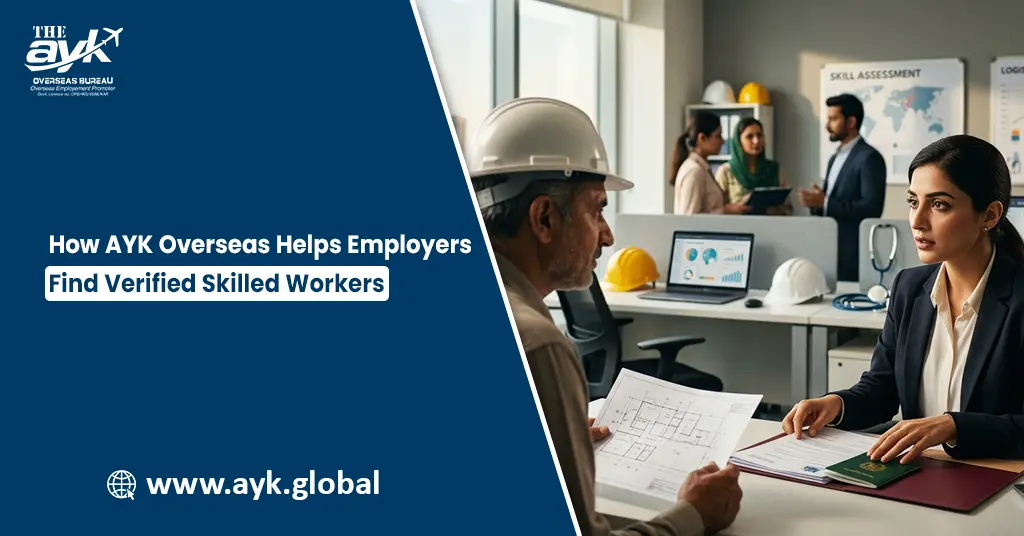 How AYK Overseas Helps Employers Find Verified Skilled Workers
 BEST RECRUITMENT AGENCY FOR ENGLAND IN PAKISTAN
 Mechanical Technician Jobs in GCC Countries
 KSA Recruitment
 UAE Recruitment
 Qatar Recruitment
 Oman Recruitment
 Kuwait Recruitment
 Libya Recruitment
 Bahrain Recruitment
 Iraq Recruitment
 Malaysia Recruitment
 Malta Recruitment
 Canada Recruitment
 USA Recruitment
 Europe Recruitment
 UK Recruitment
 Romania Recruitment
 Poland Recruitment
 Bulgaria Recruitment
 Albania Recruitment
 Serbia Recruitment
 Lithuania Recruitment
 Japan Recruitment
 Turkey Recruitment
 Kyrgyzstan Recruitment
 South Korea Recruitment