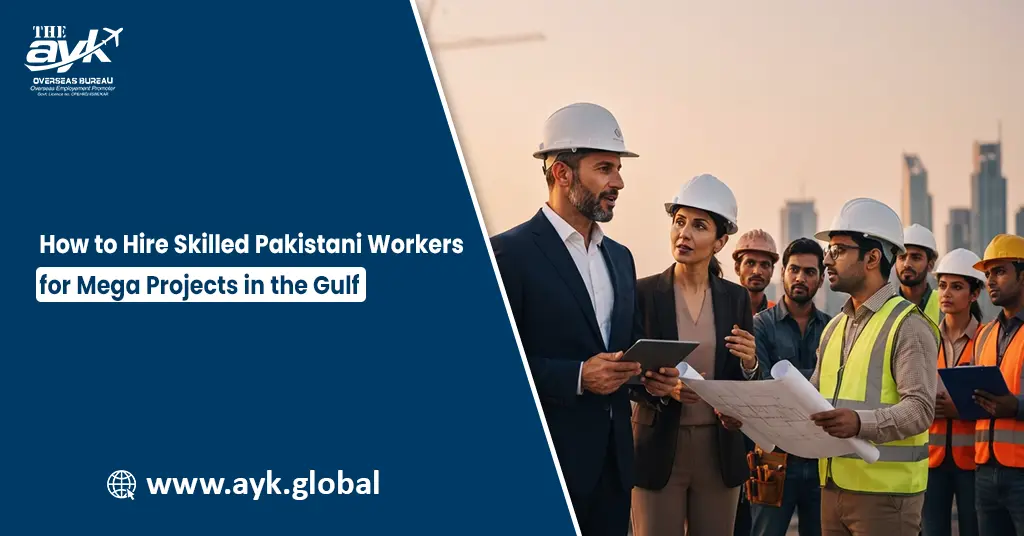
How to Hire Skilled Pakistani Workers for Mega Projects in the Gulf
Published: July 03, 2026 | Views: 14
Introduction
Hiring skilled Pakistani workers for mega projects is not a simple task; it requires structured planning, legal compliance, proper sourcing channels, and efficient coordination with recruitment agencies. From identifying workforce needs to final deployment, every step must be carefully managed to ensure the right candidates are selected and mobilized on time. This guide explains how GCC employers can effectively hire skilled Pakistani workers for mega projects in a systematic and cost-efficient way.
1. Understanding Project Workforce Requirements
The first step in hiring skilled Pakistani workers is to clearly define the manpower requirements of the mega project. Employers must analyze the project scope, timelines, technical requirements, and different phases of construction or operation. Without proper workforce planning, companies may face delays, cost overruns, or skill mismatches that can negatively impact project execution.
A detailed manpower plan should include job roles, skill levels, number of workers required, and expected duration of employment. For example, large construction projects may require electricians, welders, masons, steel fixers, plumbers, HVAC technicians, and heavy equipment operators. Clearly defining these roles ensures that recruitment efforts are focused and efficient.
2. Identifying Reliable Recruitment Channels in Pakistan
To hire skilled Pakistani workers, GCC employers must work with reliable recruitment channels such as licensed manpower agencies, overseas employment promoters, and certified recruitment firms in Pakistan. These agencies specialize in sourcing skilled, semi-skilled, and unskilled workers for international projects.
Pakistan has a well-established recruitment ecosystem with access to technical training institutes, vocational centers, and large talent pools across different industries. By partnering with trusted agencies, employers can quickly access pre-screened candidates who are ready for international deployment, reducing hiring time and improving workforce quality.
3. Using Pre-Screened Skilled Talent Pools
One of the most effective hiring strategies is using pre-screened talent pools maintained by recruitment agencies. These databases include candidates who have already been evaluated for skills, experience, documentation, and sometimes even trade-tested for specific roles.
This approach significantly reduces recruitment time because employers do not need to start the process from scratch. Instead, they can immediately access qualified electricians, welders, plumbers, drivers, machine operators, and engineers who are already prepared for GCC job requirements. This ensures faster mobilization for mega projects with tight deadlines.
4. Conducting Technical Trade Testing and Skill Verification
For mega projects, technical accuracy and skill quality are extremely important. Therefore, trade testing is a critical step in hiring Pakistani workers. Employers or recruitment agencies conduct practical skill assessments to verify candidates’ abilities in real working conditions.
Skilled workers such as welders, electricians, plumbers, fabricators, and heavy equipment operators must demonstrate their technical competence before selection. This ensures that only job-ready and experienced workers are deployed, reducing project risks, improving safety, and increasing productivity on-site.
5. Managing Documentation and Legal Compliance
Proper documentation is essential for hiring Pakistani workers for Gulf mega projects. Employers must ensure that all selected candidates have valid passports, verified educational and technical certificates, experience letters, and employment contracts that comply with GCC labor laws.
Recruitment agencies assist in document verification and ensure that all paperwork meets both Pakistani export regulations and GCC immigration requirements. This step reduces the risk of visa rejection, legal complications, and delays in worker deployment.
Common documents include:
- Valid Passport
- Educational Certificates
- Technical Trade Certificates
- Experience Letters
- Medical Fitness Reports
- Employment Contract
- Visa Approval Documents
6. Coordinating Interviews and Final Selection
After screening and trade testing, shortlisted candidates are presented for final interviews. These interviews may be conducted by GCC employers in person or online depending on logistics and project urgency. Employers assess communication skills, technical knowledge, experience, and overall suitability for the role.
Final selection ensures that only the most qualified and experienced Pakistani workers are chosen for deployment. This stage is critical because it directly impacts project efficiency, workforce stability, and long-term performance in mega projects.
7. Visa Processing and Work Permit Approval
After final selection of skilled Pakistani workers, the next critical stage is visa processing and work permit approval. This step is managed in coordination with GCC immigration authorities and involves submitting all verified documents to obtain legal permission for employment. Each Gulf country has its own visa regulations, approval timelines, and documentation standards, which must be followed carefully to avoid delays or rejections.
Recruitment agencies play a key role in handling this process by ensuring that all applications are correctly filled, properly supported with documents, and submitted within required timelines. Any mismatch in job titles, passport details, or experience records can result in delays. Once the work visa is approved, candidates are officially authorized to travel and begin employment procedures in the Gulf.
8. Medical Testing and Fitness Certification
Medical fitness is a mandatory requirement for all Pakistani workers being deployed to Gulf mega projects. Candidates must undergo medical examinations at approved health centers to ensure they meet GCC health standards. These tests typically include blood tests, chest X-rays, general physical examinations, and screenings for infectious diseases.
This step ensures that only physically fit workers are deployed to demanding environments such as construction sites, oil fields, and industrial zones. Medical clearance helps protect workplace safety, reduce health risks, and ensure compliance with immigration requirements. Any candidate failing the medical test is replaced before final deployment.
9. Travel Arrangements and Workforce Mobilization
Once visa and medical approvals are completed, travel arrangements are organized. This includes booking airline tickets, arranging airport transfers, and scheduling arrivals according to project requirements. Proper coordination ensures smooth and timely deployment of workers to Gulf countries without unnecessary delays.
Pre-departure briefing sessions are also conducted to prepare workers for their new environment. These sessions include information about workplace rules, safety procedures, accommodation details, cultural expectations, and job responsibilities. This preparation helps workers adjust quickly upon arrival and improves productivity from day one.
Key orientation points include:
- Safety regulations and site rules
- Job responsibilities and reporting structure
- Accommodation and transport arrangements
- Cultural and workplace behavior
- Emergency procedures
10. Onboarding and Site Deployment in GCC Projects
Upon arrival in GCC countries, workers go through onboarding procedures before joining their assigned project sites. This includes document verification, medical confirmation, safety induction, and assignment of job roles. Employers or site supervisors ensure that workers are properly settled and understand their responsibilities clearly.
Proper onboarding helps reduce confusion, improves workforce integration, and ensures that workers become productive quickly. In mega projects where timelines are strict, efficient deployment is essential for maintaining workflow continuity and achieving project milestones on schedule.
11. Cost Optimization in Hiring Pakistani Workers
Hiring skilled Pakistani manpower for Gulf mega projects can be optimized through strategic planning and bulk recruitment. Instead of hiring individually, employers often use bulk hiring methods to reduce cost per hire and streamline administrative processes. This approach also reduces visa processing, documentation, and logistics costs.
Long-term partnerships with licensed recruitment agencies further reduce expenses by ensuring faster sourcing and fewer hiring errors. Efficient workforce planning, reduced turnover, and proper skill matching also help minimize hidden recruitment costs while maintaining high-quality workforce standards.
12. Ensuring Long-Term Workforce Retention and Performance
Retention is a key factor in the success of mega projects. Skilled Pakistani workers are more likely to stay longer when they are matched correctly with job roles, provided with safe working conditions, and offered fair compensation. Retention reduces repeated recruitment costs and improves project efficiency.
Employers can further improve retention by providing clear career growth opportunities, proper accommodation, regular salary payments, and a supportive work environment. A stable workforce ensures better productivity, fewer disruptions, and consistent progress in large-scale Gulf projects.
Conclusion
Hiring skilled Pakistani workers for mega projects in the Gulf requires a well-structured and systematic approach that includes sourcing, trade testing, documentation, visa processing, medical clearance, mobilization, and onboarding. When managed properly, this process ensures high-quality manpower, reduced recruitment risks, and improved project efficiency.
.webp) Apply Now: Latest Overseas Jobs for Pakistani Workers (Updated by AYK Overseas)
Apply Now: Latest Overseas Jobs for Pakistani Workers (Updated by AYK Overseas)
 Top Recruitment Challenges Faced by HR Departments in 2026
 Hire Pakistani Workers for Czech Republic – Complete Employer Guide
 KSA Recruitment
 UAE Recruitment
 Qatar Recruitment
 Oman Recruitment
 Kuwait Recruitment
 Libya Recruitment
 Bahrain Recruitment
 Iraq Recruitment
 Malaysia Recruitment
 Malta Recruitment
 Canada Recruitment
 USA Recruitment
 Europe Recruitment
 UK Recruitment
 Romania Recruitment
 Poland Recruitment
 Bulgaria Recruitment
 Albania Recruitment
 Serbia Recruitment
 Lithuania Recruitment
 Japan Recruitment
 Turkey Recruitment
 Kyrgyzstan Recruitment
 South Korea Recruitment