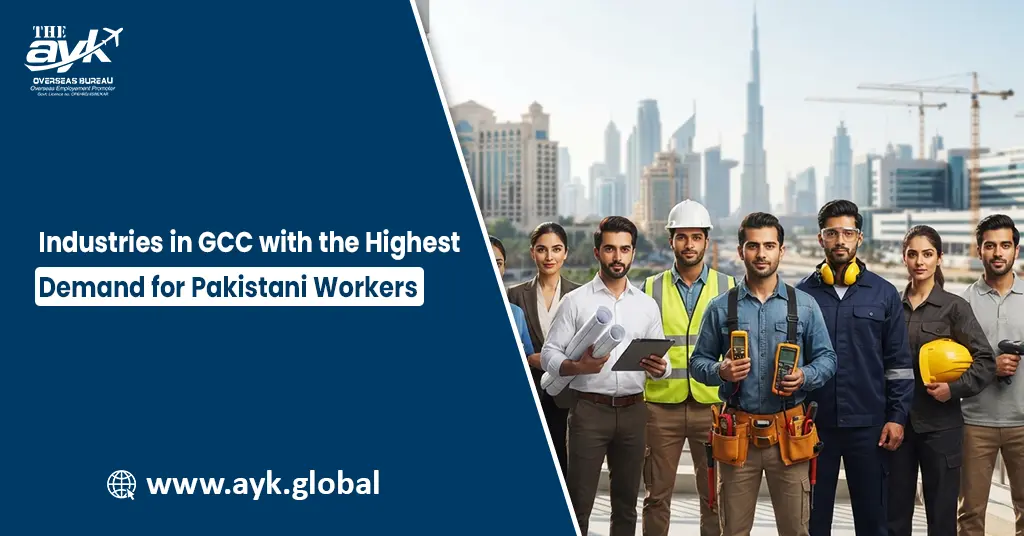
Industries in GCC with the Highest Demand for Pakistani Workers
Published: July 03, 2026 | Views: 12
The Gulf Cooperation Council (GCC) countries—including Saudi Arabia, United Arab Emirates, Qatar, Kuwait, Oman, and Bahrain—are among the fastest-growing economies in the world. Massive investments in infrastructure, energy, construction, industrial development, and tourism have created a continuous demand for foreign manpower. Among all labor-supplying countries, Pakistan remains one of the top sources of skilled, semi-skilled, and unskilled workers for GCC industries.
Pakistani workers are widely recognized for their technical expertise, adaptability, discipline, and strong work ethic. These qualities make them highly suitable for demanding project environments in the Gulf. As GCC nations continue to expand mega projects, the demand for Pakistani manpower across multiple industries continues to grow rapidly.
This guide explores the key industries in GCC with the highest demand for Pakistani workers and explains why they are preferred in these sectors.
Construction and Infrastructure Industry
The construction and infrastructure sector is the largest employer of Pakistani workers in GCC countries. Mega projects such as smart cities, highways, bridges, airports, residential towers, and industrial zones require thousands of skilled and unskilled laborers.
Pakistani workers are highly valued in this sector due to their experience in construction activities such as masonry, steel fixing, carpentry, plumbing, electrical work, and general labor. Their ability to work under tough environmental conditions and meet strict deadlines makes them essential for large-scale infrastructure development projects.
Key roles include:
- Masons and bricklayers
- Steel fixers
- Carpenters
- Electricians
- Plumbers
- General laborers
Oil & Gas Industry
The oil & gas industry in GCC countries is one of the most technically advanced and high-paying sectors. Countries like Saudi Arabia, UAE, and Qatar heavily rely on skilled foreign workers for exploration, drilling, refinery operations, and maintenance activities.
Pakistani workers are commonly employed in mechanical, electrical, and technical support roles due to their strong industrial training background. Their ability to work in challenging and hazardous environments makes them a valuable workforce in oil fields and refinery operations.
Common roles include:
- Pipe fitters
- Welders
- Mechanical technicians
- Electrical technicians
- Rig workers
- Maintenance helpers
Manufacturing and Industrial Sector
The manufacturing sector in GCC countries is expanding rapidly due to industrial diversification policies. Factories producing construction materials, food products, chemicals, and consumer goods require a large workforce for production and maintenance operations.
Pakistani workers are widely employed in assembly lines, machine operation, quality control, and factory maintenance. Their experience in industrial environments and technical training makes them suitable for repetitive and precision-based tasks.
Common roles include:
- Machine operators
- Assembly line workers
- Forklift operators
- Quality control assistants
- Maintenance technicians
Logistics and Transportation Industry
The logistics and transportation sector in GCC countries is growing rapidly due to expanding trade, e-commerce, and industrial development. Major ports, airports, warehouses, and distribution centers require a large workforce to manage goods movement efficiently.
Pakistani workers are widely employed in this sector due to their experience in driving, warehouse operations, loading/unloading, and inventory handling. Their ability to work in fast-paced environments makes them a reliable workforce for logistics companies across Saudi Arabia, UAE, and other GCC states.
Common roles include:
- Heavy truck drivers
- Forklift operators
- Warehouse assistants
- Delivery drivers
- Inventory handlers
Facility Management and Maintenance Services
Facility management is another major sector where Pakistani workers are in high demand. This includes maintenance of residential buildings, commercial complexes, hospitals, hotels, and industrial facilities. GCC countries depend heavily on foreign manpower to maintain infrastructure efficiency and cleanliness standards.
Pakistani workers are preferred due to their technical skills in electrical systems, plumbing, HVAC maintenance, cleaning services, and general repair work. Their practical experience and adaptability make them suitable for long-term maintenance roles.
Common roles include:
- Electricians
- Plumbers
- HVAC technicians
- Cleaners and janitors
- Maintenance helpers
Hospitality and Support Services
The hospitality sector in GCC countries, especially in UAE, Qatar, and Saudi Arabia, is expanding due to tourism growth, events, and luxury development projects. Hotels, restaurants, and event management companies require a large support workforce for smooth operations.
Pakistani workers are commonly hired for housekeeping, kitchen assistance, cleaning services, and customer support roles. Their discipline, service attitude, and ability to work in diverse environments make them suitable for hospitality operations.
Common roles include:
- Housekeeping staff
- Kitchen helpers
- Restaurant support staff
- Cleaners
- Catering assistants
Healthcare Support and Auxiliary Services
While highly specialized medical roles require professional certifications, GCC healthcare facilities also hire Pakistani workers for support and auxiliary services. Hospitals and clinics require trained assistants to maintain smooth daily operations.
Pakistani workers are often employed in non-medical support roles such as hospital cleaning, patient assistance, and facility maintenance. Their reliability and ability to follow strict hygiene standards make them valuable in healthcare environments.
Common roles include:
- Hospital cleaners
- Patient attendants
- Maintenance staff
- Support assistants
Why GCC Employers Prefer Pakistani Workers
Pakistani workers are preferred across GCC industries for several important reasons. Their strong technical training, experience in international labor markets, and ability to adapt to harsh working conditions make them highly valuable.
Additionally, they are known for their discipline, teamwork, and willingness to work in demanding environments. Competitive wage expectations compared to other labor markets also make them a cost-effective choice for large-scale recruitment.
Key reasons include:
- Strong technical skills
- Experience in GCC projects
- Adaptability to tough environments
- Cost-effective workforce
- High availability of skilled labor
Future Demand Trends for Pakistani Workers in GCC
The demand for Pakistani workers in GCC countries is expected to remain strong in the coming years. With ongoing mega projects such as smart cities, tourism developments, renewable energy initiatives, and industrial expansion, the need for skilled manpower will continue to grow.
Digital transformation in recruitment, increased trade testing, and stricter compliance systems will further improve workforce quality. Pakistani workers who upgrade their technical skills and certifications will have even more opportunities in future GCC labor markets.
Conclusion
Pakistani workers play a vital role in the growth and development of GCC economies. From construction and oil & gas to logistics, hospitality, and facility management, their contribution is essential for the success of large-scale projects across the Gulf region.
Their skills, reliability, and adaptability ensure consistent demand across multiple industries, making them one of the most important workforce groups in GCC labor markets. As development continues across the region, this demand is expected to grow even further in the coming years.
 How to Choose the Right Overseas Recruitment Agency for Your Business
 The Role of Trade Testing in Overseas Recruitment Success
 How to Send Remittances Safely and Affordably
 KSA Recruitment
 UAE Recruitment
 Qatar Recruitment
 Oman Recruitment
 Kuwait Recruitment
 Libya Recruitment
 Bahrain Recruitment
 Iraq Recruitment
 Malaysia Recruitment
 Malta Recruitment
 Canada Recruitment
 USA Recruitment
 Europe Recruitment
 UK Recruitment
 Romania Recruitment
 Poland Recruitment
 Bulgaria Recruitment
 Albania Recruitment
 Serbia Recruitment
 Lithuania Recruitment
 Japan Recruitment
 Turkey Recruitment
 Kyrgyzstan Recruitment
 South Korea Recruitment