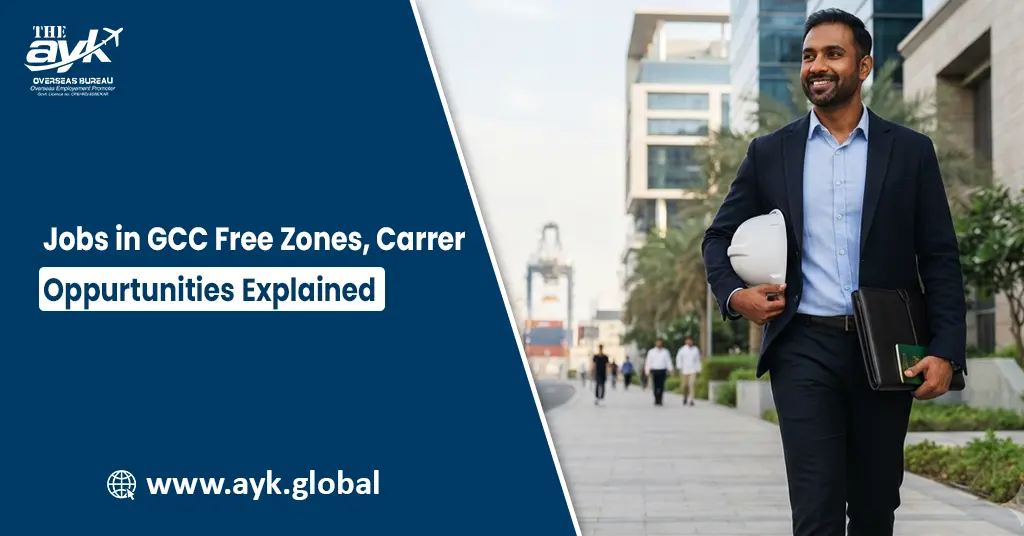
Jobs in GCC Free Zones, Career Opportunities Explained
Published: July 02, 2026 | Views: 10
Introduction
GCC free zones are special economic areas established in countries like the United Arab Emirates (UAE), Saudi Arabia, Oman, Qatar, Bahrain, and Kuwait to attract foreign investment, international companies, and skilled workers. These zones operate under different business and labor regulations compared to mainland markets, offering more flexible employment structures, tax benefits, and simplified hiring processes.
In 2026, GCC free zones are becoming one of the fastest-growing job markets for Pakistani workers due to rapid expansion in logistics, trade, manufacturing, IT, aviation, and service industries. Many multinational companies prefer hiring employees through free zones because of easier visa procedures and business-friendly policies.
For Pakistani job seekers, understanding how free zones work is important because they offer both high-skilled and entry-level job opportunities with competitive salaries and stable contracts.
What Are GCC Free Zones?
GCC free zones are designated economic areas where foreign companies can operate with special privileges. These zones are designed to attract international businesses by offering benefits such as 100% foreign ownership, tax exemptions, and simplified recruitment processes.
Each GCC country has its own free zones. For example, UAE has multiple free zones like Dubai Multi Commodities Centre (DMCC), Jebel Ali Free Zone (JAFZA), and Dubai Airport Free Zone. Saudi Arabia is also developing special economic zones under Vision 2030.
These zones function independently from standard labor markets, allowing companies more flexibility in hiring foreign workers.
Why Free Zone Jobs Are Growing in GCC
Free zone jobs are increasing rapidly due to globalization, trade expansion, and industrial diversification in GCC economies. Countries like UAE and Saudi Arabia are focusing on reducing dependence on oil and expanding logistics, technology, and manufacturing sectors.
Free zones attract multinational companies that require a skilled workforce in areas such as supply chain management, IT services, warehousing, customer support, and engineering.
This growth creates thousands of job opportunities for foreign workers, including Pakistanis who are experienced in technical, labor, and service roles.
Types of Jobs in GCC Free Zones
GCC free zones offer a wide range of job opportunities across different sectors. The most common categories include:
- Logistics and warehouse jobs
- Manufacturing and production jobs
- IT and digital services
- Administrative and office support jobs
- Customer service and call center jobs
- Engineering and technical jobs
- Aviation and airport-related services
Entry-level workers can find jobs in warehouses and logistics, while skilled professionals can apply for engineering, IT, and managerial roles.
Logistics and Warehouse Jobs
Logistics is one of the largest employment sectors in GCC free zones. Companies involved in import-export, shipping, and distribution hire thousands of workers for daily operations.
Job roles include:
- Warehouse assistants
- Inventory controllers
- Forklift operators
- Packing and sorting staff
- Dispatch coordinators
These jobs are physically demanding but offer stable income, overtime opportunities, and long-term contracts.
Many Pakistani workers are employed in this sector due to their experience in manual labor and warehouse operations.
Manufacturing and Industrial Jobs
Manufacturing industries in free zones produce goods such as electronics, food products, construction materials, and consumer goods.
Common job roles include:
- Machine operators
- Production line workers
- Quality control assistants
- Maintenance technicians
These jobs require discipline, attention to detail, and sometimes technical training.
Manufacturing jobs offer steady employment and are less affected by seasonal fluctuations.
IT and Digital Jobs in Free Zones
Free zones in UAE and other GCC countries are also becoming hubs for technology companies and startups. This creates demand for IT professionals.
Job roles include:
- Software developers
- Data entry operators
- IT support technicians
- Digital marketing assistants
- Cybersecurity support staff
These jobs require technical knowledge and computer skills.
Skilled IT professionals receive higher salaries and better career growth opportunities.
Administrative and Office Jobs
Free zones also offer administrative and clerical positions in multinational companies.
Job roles include:
- Office assistants
- HR assistants
- Document controllers
- Receptionists
- Data entry clerks
These roles require basic English communication skills and computer knowledge.
They are suitable for educated Pakistani workers looking for professional office experience.
Salary and Benefits in Free Zone Jobs
Salaries in GCC free zones vary depending on job type and experience level.
Typical benefits include:
- Tax-free income
- Free accommodation (in many cases)
- Transport facilities
- Medical insurance
- Overtime pay
- End-of-service benefits
Skilled workers and professionals earn higher salaries compared to entry-level workers.
Free zone jobs are financially attractive due to additional company-provided benefits.
Work Environment in Free Zones
Free zones offer a modern and structured work environment. Companies follow international standards in operations, safety, and employee management.
Workers are expected to follow:
- Strict working hours
- Professional behavior
- Safety regulations
- Performance standards
The work environment is more organized compared to traditional labor sectors, especially in logistics and corporate offices.
Visa and Hiring Process for Free Zone Jobs
Hiring in free zones is usually handled by companies or licensed recruitment agencies. The process includes:
- Job application and interview
- Employer selection
- Work permit approval
- Visa processing
- Medical testing
- Travel arrangements
Free zone visas are legally approved and linked to specific employers.
Workers must ensure they apply through verified agencies to avoid fraud.
Career Growth in Free Zones
Free zone jobs offer strong career growth opportunities. Workers can start in entry-level positions and gradually move into supervisory or managerial roles.
Career progression includes:
- Team leader
- Supervisor
- Department coordinator
- Operations manager
Experience in GCC free zones is highly valued internationally, especially in logistics, IT, and industrial sectors.
Conclusion
GCC free zones offer excellent career opportunities for Pakistani workers in 2026. With growing industries in logistics, manufacturing, IT, and services, these zones provide stable employment, competitive salaries, and long-term career growth.
For job seekers, free zones represent a modern and structured employment environment with strong benefits and international exposure.
By applying through trusted recruitment channels and improving relevant skills, Pakistani workers can build successful careers in GCC free zones.
 BEST RECRUITMENT AGENCY IN PAKISTAN FOR FINLAND
 How to Recruit Certified Technical Workers from Pakistan
 KSA Recruitment
 UAE Recruitment
 Qatar Recruitment
 Oman Recruitment
 Kuwait Recruitment
 Libya Recruitment
 Bahrain Recruitment
 Iraq Recruitment
 Malaysia Recruitment
 Malta Recruitment
 Canada Recruitment
 USA Recruitment
 Europe Recruitment
 UK Recruitment
 Romania Recruitment
 Poland Recruitment
 Bulgaria Recruitment
 Albania Recruitment
 Serbia Recruitment
 Lithuania Recruitment
 Japan Recruitment
 Turkey Recruitment
 Kyrgyzstan Recruitment
 South Korea Recruitment