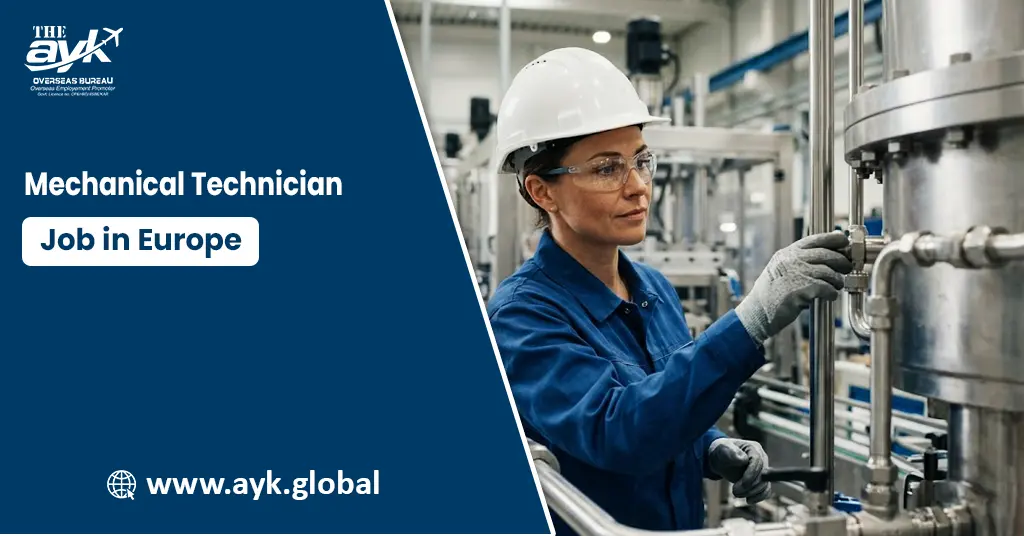
Mechanical Technician Jobs in Europe
Published: July 06, 2026 | Views: 6
Mechanical Technician Jobs in Europe
Mechanical technician jobs in Europe are highly in demand in 2026 due to rapid industrial growth, manufacturing expansion, automotive production, energy projects, and heavy engineering development across the continent. Countries such as Germany, Netherlands, Belgium, Poland, Czech Republic, Austria, Sweden, and Norway are actively hiring skilled mechanical technicians from abroad because of ongoing shortages of trained local professionals. Mechanical technicians are responsible for installing, maintaining, troubleshooting, and repairing mechanical systems, machinery, and industrial equipment. These jobs are essential in factories, power plants, construction sites, automotive industries, and oil and gas facilities. For international workers, including Pakistani skilled professionals, mechanical technician jobs offer stable income, legal employment contracts, overtime pay, and long-term career growth opportunities. Many employers also provide visa sponsorship or work permit support to attract qualified workers. However, applicants must meet technical qualifications, hands-on experience requirements, and safety standards. This guide explains mechanical technician jobs in Europe, including salaries, requirements, hiring process, and future scope.
Why Mechanical Technician Jobs Are in High Demand in Europe
Mechanical technician jobs are in high demand across Europe due to industrial expansion, advanced manufacturing systems, and increasing reliance on automated machinery. Many European countries are heavily investing in production facilities, transportation systems, renewable energy projects, and infrastructure development, all of which require skilled mechanical technicians. Another major reason is the shortage of trained local workers, as many experienced technicians are retiring while fewer young people are entering technical trades. Countries like Germany and the Netherlands have strong industrial bases that depend on continuous maintenance and operation of complex machinery. Mechanical technicians are essential for ensuring smooth operation of machines, reducing downtime, and maintaining productivity in industries. Additionally, the rise of electric vehicles, smart factories, and energy-efficient systems has further increased demand for skilled technicians. To fill this gap, European employers are actively recruiting foreign skilled workers and offering visa support programs, making this profession highly valuable for international job seekers.
Types of Mechanical Technician Jobs in Europe
Europe offers a wide variety of mechanical technician job opportunities depending on industry and specialization. Industrial mechanical technicians work in factories and manufacturing plants, maintaining and repairing production machinery. Automotive technicians specialize in vehicle systems, including engines, transmissions, and mechanical components in car manufacturing or repair workshops. Maintenance technicians are responsible for regular inspection and servicing of machines in industries and commercial facilities. HVAC mechanical technicians work with heating, ventilation, and air conditioning systems in residential and commercial buildings. Heavy equipment technicians handle construction machinery such as cranes, bulldozers, and excavators. Power plant technicians maintain mechanical systems used in electricity generation facilities. Some technicians also specialize in robotics and automated systems in modern smart factories. Each role requires different technical skills and experience, but all involve hands-on mechanical work and problem-solving abilities. Employers often provide additional training to align foreign workers with European industrial standards and safety regulations.
Salary and Benefits for Mechanical Technicians in Europe
Mechanical technicians in Europe earn competitive salaries depending on country, experience level, and industry specialization. Skilled technicians generally receive higher pay due to technical expertise and responsibility in maintaining critical machinery. In addition to monthly salaries, workers often receive overtime pay, shift allowances, and performance-based bonuses. Many employers provide additional benefits such as free or subsidized accommodation, transportation, and meal allowances for foreign workers. Health insurance, pension contributions, and paid annual leave are included under European labor laws. Experienced technicians working in industries such as oil and gas, automotive manufacturing, or power plants can earn significantly higher incomes. With experience, mechanical technicians can progress to senior technician roles, supervisors, or maintenance engineers, increasing their earning potential. Some companies also provide training programs in advanced machinery and automation systems. These financial and career benefits make mechanical technician jobs one of the most stable and rewarding skilled professions in Europe.
Requirements for Mechanical Technician Jobs in Europe
To work as a mechanical technician in Europe, foreign applicants must meet certain technical and legal requirements. A diploma or vocational training in mechanical engineering or a related technical field is usually required. Most employers also expect practical experience in machinery maintenance, repair, or industrial operations. Knowledge of mechanical systems, tools, and diagnostic equipment is essential. In many countries, foreign qualifications must be verified or recognized before employment approval. Basic communication skills in English or the local language are often required for workplace instructions and safety procedures. A valid passport, medical fitness certificate, and police clearance certificate are necessary for visa processing. Some employers may require additional certifications or technical assessments depending on the job role. Safety awareness and problem-solving skills are highly valued. Meeting these requirements ensures eligibility for legal employment, visa sponsorship, and long-term career opportunities in Europe’s mechanical industry.
Hiring Process for Mechanical Technician Jobs in Europe
The hiring process for mechanical technician jobs in Europe is structured and focuses on technical skills and hands-on experience. It begins with preparing a professional CV that highlights mechanical training, certifications, tools knowledge, and previous industrial experience. Applicants then apply through manufacturing companies, engineering firms, maintenance contractors, and licensed recruitment agencies. Shortlisted candidates may be invited for interviews or technical assessments to evaluate their understanding of mechanical systems, troubleshooting ability, and safety procedures. If selected, the employer issues a formal job offer or employment contract, which is required for visa processing. In many cases, employers also provide visa sponsorship or work permit assistance. Applicants must submit documents such as passport, experience certificates, medical fitness report, and police clearance to the embassy. After approval, the candidate can travel to Europe and begin legal employment in industrial plants, factories, or engineering projects.
Best Countries for Mechanical Technician Jobs in Europe
Several European countries offer strong opportunities for mechanical technicians due to industrial growth and skill shortages. Germany is one of the top destinations, offering high salaries, advanced technology, and strong demand in manufacturing and automotive industries. The Netherlands and Belgium also provide excellent opportunities in industrial maintenance and engineering sectors. Poland and Czech Republic offer increasing job openings with relatively easier visa processes for foreign workers. Sweden, Norway, and Denmark are known for high wages and modern industrial systems, especially in energy and automation sectors. Austria and Finland also have steady demand for skilled mechanical technicians in factories and infrastructure projects. Each country has different language requirements, certification rules, and salary structures, so applicants should choose based on their skills and long-term goals. Selecting the right country increases the chances of securing stable employment with visa support and long-term career growth opportunities.
Common Challenges in Mechanical Technician Jobs in Europe
Mechanical technician jobs in Europe offer strong career opportunities but also come with certain challenges for foreign workers. One of the main challenges is working with advanced machinery and technology that may require additional training and adaptation. Language barriers can also create difficulties in understanding technical instructions, safety guidelines, and communication with team members. In some countries, foreign qualifications must be recognized or validated before starting work, which can take time. The job can also be physically demanding, involving heavy equipment, long hours, and working in industrial environments such as factories or power plants. Strict safety regulations must be followed at all times, as mechanical work involves potential risks. Weather conditions can also affect outdoor maintenance or installation tasks. However, most employers provide training, supervision, and safety equipment to help workers adjust. With experience, these challenges become easier to manage, allowing technicians to build successful careers in Europe.
Tips to Get Mechanical Technician Jobs in Europe Easily
Getting mechanical technician jobs in Europe requires proper preparation, technical knowledge, and a strong application strategy. Applicants should ensure their mechanical diploma or vocational training is complete and supported with experience certificates. A professional CV highlighting machine maintenance, repair experience, and technical skills increases selection chances. Applying through verified companies, official job portals, and licensed recruitment agencies helps avoid fraud and fake job offers. Learning basic English or the local language improves communication and workplace efficiency. Candidates should also gain knowledge of European industrial standards and safety procedures before applying. Avoid paying large fees to unverified agents without confirmed job contracts. Keeping important documents such as passport, medical certificate, and police clearance ready speeds up the process. Consistent applications to multiple genuine employers improve chances of selection. With proper preparation and experience, skilled mechanical technicians can secure stable and well-paying jobs in Europe.
Future Scope of Mechanical Technician Jobs in Europe
The future of mechanical technician jobs in Europe is very strong due to ongoing industrial expansion, automation, and technological development. European countries are heavily investing in advanced manufacturing, renewable energy systems, electric vehicles, and smart factory automation, all of which require skilled mechanical technicians. Despite increasing automation, human technicians will remain essential for maintenance, troubleshooting, and system optimization tasks. The shortage of skilled labor is expected to continue as older workers retire and fewer young people enter technical fields. This ensures long-term job stability and strong demand for foreign skilled workers. Governments are also expected to maintain skilled migration programs and visa sponsorship opportunities to fill labor gaps. Technicians with advanced skills in robotics, automation, or industrial systems will have even better career prospects. Overall, mechanical technician jobs offer excellent long-term growth, stability, and international employment opportunities in Europe.
Final Thoughts on Mechanical Technician Jobs in Europe for Skilled Workers
Mechanical technician jobs in Europe provide excellent opportunities for skilled workers seeking stable income, technical career growth, and legal employment. With strong demand in countries like Germany, Netherlands, Belgium, Poland, Sweden, and Norway, qualified technicians can find jobs in manufacturing, automotive, energy, and industrial sectors. However, success depends on proper technical qualifications, hands-on experience, and meeting safety and language requirements. Applicants should always apply through verified employers or licensed recruitment agencies to avoid scams. Although the job can be technically demanding and physically challenging, it offers high salaries, overtime benefits, and long-term career stability. With experience, mechanical technicians can move into supervisory or engineering support roles. Overall, mechanical technician jobs in Europe are a highly rewarding and secure career path for skilled international workers who are disciplined, trained, and ready to work in modern industrial environments.
 Understanding GCC Employment Contracts Before You Sign
 A complete guide for Al Asimah businesses and institutions considering Pakistani manpower recruitment
 Benefits of Working in GCC Countries for Pakistani Professionals
 KSA Recruitment
 UAE Recruitment
 Qatar Recruitment
 Oman Recruitment
 Kuwait Recruitment
 Libya Recruitment
 Bahrain Recruitment
 Iraq Recruitment
 Malaysia Recruitment
 Malta Recruitment
 Canada Recruitment
 USA Recruitment
 Europe Recruitment
 UK Recruitment
 Romania Recruitment
 Poland Recruitment
 Bulgaria Recruitment
 Albania Recruitment
 Serbia Recruitment
 Lithuania Recruitment
 Japan Recruitment
 Turkey Recruitment
 Kyrgyzstan Recruitment
 South Korea Recruitment