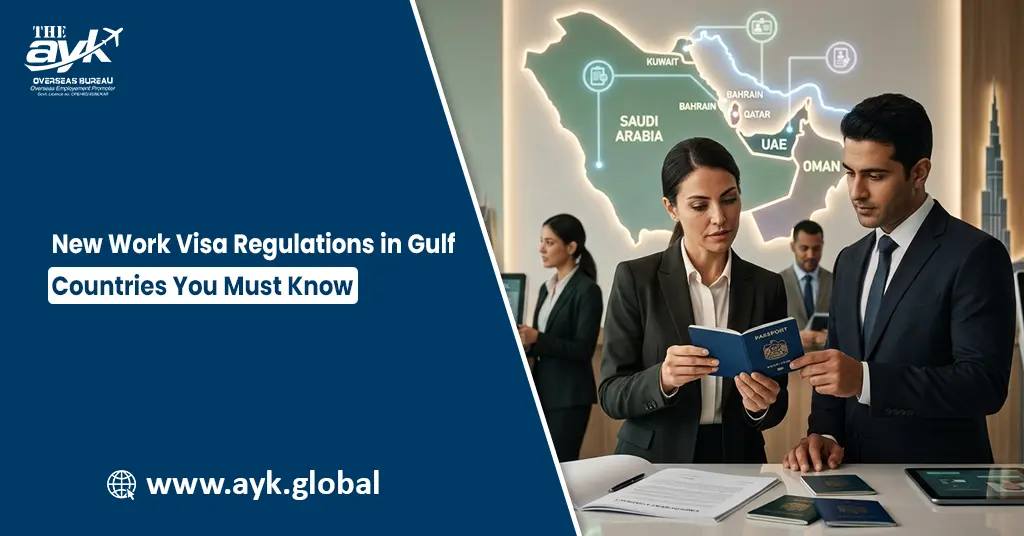
New Work Visa Regulations in Gulf Countries You Must Know
Published: June 30, 2026 | Views: 102
Introduction
Work visa regulations across Gulf countries have undergone meaningful updates heading into 2026, reflecting broader efforts by regional governments to improve worker protections, streamline documentation processes, and tighten oversight of recruitment channels feeding overseas labor into their economies. For Pakistani job seekers, staying current with these regulatory changes is essential, since outdated assumptions about visa requirements can lead to costly delays, rejected applications, or in worse cases, exposure to fraudulent recruitment schemes that exploit confusion around changing rules.
These regulatory updates generally represent positive developments for workers, even though they have introduced new procedural steps that candidates must navigate correctly to avoid complications. AYK Overseas Recruitment & HR Manpower Agency, recognized as one of Pakistan's top manpower agencies, continuously monitors these visa regulation changes across every major Gulf destination to ensure candidates applying through our agency benefit from accurate, current guidance rather than outdated information circulating through informal channels.
Increased Digital Documentation Requirements
Nearly every Gulf country has moved toward requiring digital submission of visa application documentation, replacing traditional paper-based processes with centralized online portals that require properly formatted scanned copies of passports, certificates, and other supporting paperwork. This shift has significantly improved processing transparency and traceability, but it has also raised the bar for documentation quality, since poorly scanned or improperly formatted files can result in immediate rejection or processing delays.
Workers preparing to apply for Gulf work visas in 2026 need to ensure their documentation meets these updated digital standards, including clear, properly cropped scans and files saved in formats specifically accepted by each country's visa processing system. Agencies experienced with these digital requirements can help candidates avoid the common mistake of submitting documentation that technically exists but fails to meet the specific technical standards required for successful digital processing.
Enhanced Medical Testing and Health Screening Protocols
Most Gulf countries have updated their medical testing requirements for incoming overseas workers, often requiring testing through specifically approved centers both in Pakistan before departure and sometimes again upon arrival in the destination country. These enhanced protocols reflect ongoing public health priorities and are generally non-negotiable requirements that must be completed exactly according to current specifications to avoid visa rejection.
Workers must verify that their chosen medical testing center holds current approval status with both Pakistani emigration authorities and the relevant Gulf country's health department, since results from non-approved facilities are simply not accepted regardless of their actual medical accuracy. This verification step has become increasingly important as testing center approval lists are updated periodically, making it essential to confirm current approval status rather than relying on outdated information from previous years.
Stricter Employer Verification Requirements
Gulf countries have tightened requirements around employer verification before visa applications can proceed, requiring more thorough documentation proving the sponsoring employer's legal registration, business legitimacy, and in some cases, financial capacity to support the number of workers they are seeking to hire. This stricter verification process aims to reduce instances of fraudulent job offers and ensure that workers are only matched with genuinely legitimate employment opportunities.
For job seekers, this means that working with an agency capable of properly verifying employer legitimacy before submitting any application has become more important than ever, since informal or poorly verified employer relationships are increasingly unable to successfully process visa applications under these tightened standards. This shift ultimately benefits workers significantly, even though it can occasionally slow down processing for legitimate applications that require additional employer-side documentation.
Updated Wage Protection and Contract Disclosure Rules
Several Gulf countries have introduced updated requirements mandating clearer disclosure of salary structures, working hours, and contract terms as part of the visa application process itself, rather than leaving these details to be clarified only after a worker's arrival. This integration of contract transparency requirements directly into the visa process represents a significant improvement in worker protection, ensuring employment terms are documented and verifiable before a worker commits to relocating.
Workers should expect to review and acknowledge detailed contract terms as part of their visa application paperwork, providing an important opportunity to identify any concerning terms before proceeding further in the process. Agencies that properly explain these contract disclosures to candidates, rather than simply asking for signatures without explanation, are providing a genuinely valuable service that helps prevent disputes after a worker has already relocated.
Changes to Visa Validity and Renewal Procedures
Several Gulf nations have adjusted their visa validity periods and renewal procedures, with some countries extending initial visa terms while streamlining renewal processes to reduce the administrative burden on both workers and employers managing ongoing employment relationships. These changes generally aim to reduce the frequency of disruptive renewal processes that previously required workers to navigate repeated bureaucratic procedures during their employment period.
Understanding the specific validity period and renewal requirements applicable to your particular visa category and destination country has become increasingly important, since these details vary considerably between different Gulf nations and even between different visa categories within the same country. Workers should confirm these specifics clearly with their employer and recruitment agency before finalizing their visa application to avoid confusion later in their employment period.
Tightened Oversight of Recruitment Agency Licensing
Gulf countries have continued strengthening their oversight of recruitment agencies operating within their visa sponsorship systems, requiring agencies to maintain verified licensing status and demonstrate ongoing compliance with current regulations to continue facilitating worker placements. This tightened oversight has made it increasingly difficult for unlicensed or non-compliant agencies to successfully process visa applications, effectively pushing fraudulent operators further out of the legitimate recruitment pipeline.
For Pakistani workers, this regulatory tightening reinforces the importance of verifying that any agency assisting with a Gulf work visa application maintains current, valid licensing in both Pakistan and the destination country. Working with a properly licensed and compliant agency has become not just advisable but increasingly necessary, since informal intermediaries are facing growing restrictions on their ability to successfully navigate these tightened visa processing requirements.
Family Sponsorship Eligibility Updates
Several Gulf countries have adjusted their family sponsorship eligibility criteria, typically tied to specific salary thresholds and job categories, affecting which overseas workers can bring family members to join them during their employment period. These updates generally reflect each country's broader population and housing planning considerations, balancing economic labor needs with infrastructure capacity for accompanying family members.
Workers interested in eventual family sponsorship should research the specific current eligibility criteria for their intended destination and job category early in their planning process, since these thresholds and requirements can change periodically based on each country's evolving policy priorities. An experienced agency can help clarify current family sponsorship eligibility based on a candidate's specific job offer and salary level before they commit to a particular position.
What These Regulatory Changes Mean for Job Seekers
These collective visa regulation updates across the Gulf region generally represent a positive shift toward greater worker protection, transparency, and process reliability, even though they have introduced additional documentation and verification steps that candidates must navigate carefully. Job seekers who approach the visa application process with thorough preparation and accurate, current information are far better positioned to avoid the delays and complications that can arise from outdated assumptions about how the process works.
Staying informed about these ongoing regulatory developments, rather than relying on advice based on previous years' requirements, has become essential for anyone serious about successfully securing Gulf employment in 2026. Partnering with an agency that demonstrates clear, current knowledge of these visa regulation changes provides significant peace of mind throughout what can otherwise be a confusing and intimidating bureaucratic process.
How AYK Overseas Keeps You Compliant with Current Visa Regulations
As a government-licensed international recruitment and HR manpower firm with offices in Karachi and Islamabad, AYK Overseas Recruitment & HR Manpower Agency dedicates significant resources to tracking visa regulation changes across every major Gulf destination we serve. Being recognized as one of Pakistan's top manpower agencies, we consider staying current with these evolving requirements an essential part of providing genuinely reliable service to our candidates.
Our team manages complete documentation preparation, employer and medical center verification, and ongoing application tracking, ensuring every candidate applying through AYK Overseas Recruitment & HR Manpower Agency benefits from accurate, up-to-date guidance throughout their visa application journey. This commitment to staying current has helped us maintain consistently strong visa approval outcomes for workers heading to destinations across the Gulf region.
Conclusion
Gulf work visa regulations are continuing to evolve in 2026, introducing changes around digital documentation, medical testing protocols, employer verification, and contract transparency that collectively aim to improve worker protection and process reliability. Pakistani job seekers who stay informed about these regulatory updates and partner with a properly licensed, knowledgeable agency are best positioned to navigate this evolving landscape successfully and secure legitimate, well-protected overseas employment opportunities.
 Best Recruitment Agency in Pakistan for Europe Jobs – AYK Overseas Complete Guide
 Why Europe Is Becoming the Top Destination for Pakistani Job Seekers
 KSA Recruitment
 UAE Recruitment
 Qatar Recruitment
 Oman Recruitment
 Kuwait Recruitment
 Libya Recruitment
 Bahrain Recruitment
 Iraq Recruitment
 Malaysia Recruitment
 Malta Recruitment
 Canada Recruitment
 USA Recruitment
 Europe Recruitment
 UK Recruitment
 Romania Recruitment
 Poland Recruitment
 Bulgaria Recruitment
 Albania Recruitment
 Serbia Recruitment
 Lithuania Recruitment
 Japan Recruitment
 Turkey Recruitment
 Kyrgyzstan Recruitment
 South Korea Recruitment