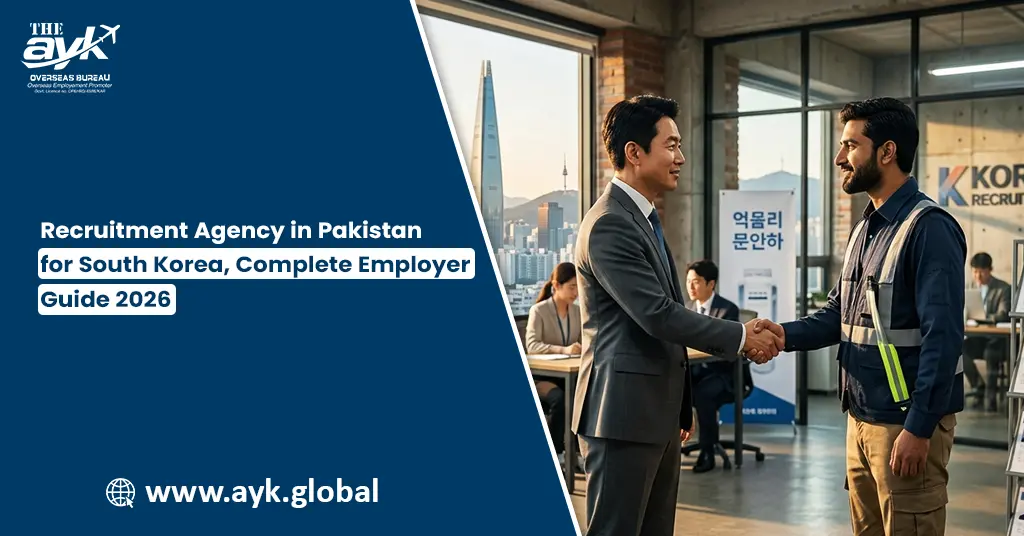
Recruitment Agency in Pakistan for South Korea, Complete Employer Guide 2026
Published: June 20, 2026 | Views: 3
Recruitment Agency in Pakistan for South Korea, Complete Employer Guide 2026
South Korea is among the fastest-growing industrialized countries in Asia due to the fast expansion in various sectors including manufacturing, shipbuilding, automobile manufacturing, logistics, warehousing, construction, food processing, electronics manufacturing, agriculture, facility management, and industrial engineering. Industrial development, exportation, international trade operations, infrastructure development, smart manufacturing, transportation, and increasing business activities are continuously generating robust labor demands in the country. Companies within South Korea today need reliable manpower that can sustain industrial productivity, warehousing, exportation activities, technical processes, transportation systems, quality customer service, and sustainable labor forces.
The majority of industries in South Korea today have been experiencing critical labor force issues since the domestic labor force supply is no longer adequate to meet the rapid growth of their industrial and business operations. Various factories, shipyards, logistics operations, warehouses, food processing facilities, construction sites, engineering systems, agricultural activities, and operational maintenance facilities all need reliable labor force systems that can maintain repetitive processes, technical procedures, industrial continuity, hygienic systems, warehouse productivity, and physically challenging operational activities. Due to these labor force issues, overseas recruitment has emerged as one of the most effective labor solutions for companies within South Korea.
Employers in South Korea find Pakistani labor to be a much preferred manpower choice because most of these workers have prior experience of being able to work in an organized working environment with appropriate discipline, flexibility, technological competency, physical capacity, operational reliability, and team skills. Workers recruited from Pakistan are generally found in all sorts of industries such as manufacturing, construction, logistics, shipbuilding, car manufacturing, food processing, farming, warehousing, and other operations-related industries because they can adapt well to structured industrial systems without compromising on productivity and continuity.
AYK Overseas Recruitment & HR Manpower Agency offers professional overseas recruitment services to Korean businesses by recruiting dependable manpower from Pakistan. The organization is involved in sourcing and screening of manpower, conducting technical evaluations, documentations, conducting appropriate recruitment methods, and deploying manpower according to the requirements of the organizations.
Why Korean Employers Prefer Pakistani Workers
Korean employers increasingly recruit Pakistani workers because industries throughout South Korea require stable manpower capable of maintaining industrial productivity, technical workflows, warehouse continuity, manufacturing systems, export operations, logistics procedures, food production continuity, agricultural operations, and long-term workforce reliability. Pakistani workers are often preferred because many already possess practical experience within industries currently facing manpower shortages throughout South Korea.
Manufacturing industries recruit Pakistani workers because many already understand industrial production systems, assembly procedures, packaging workflows, warehouse coordination systems, machinery operations, and repetitive operational environments. Shipbuilding and engineering sectors also recruit Pakistani manpower because workers often possess practical experience in welding systems, fabrication operations, steel structures, industrial maintenance activities, and technically demanding project environments.
Construction industries benefit because many Pakistani workers already possess experience in infrastructure projects, fabrication systems, plumbing activities, electrical installation procedures, maintenance operations, and heavy industrial construction systems. Logistics and warehousing businesses recruit Pakistani manpower because workers often understand inventory systems, warehouse workflows, loading procedures, dispatch operations, packaging activities, and transportation support systems.
Food processing industries, automotive production environments, agriculture systems, and facility management sectors also recruit Pakistani manpower because workers are often capable of maintaining operational discipline, teamwork continuity, technical productivity, hygiene systems, warehouse efficiency, and physically demanding workflows despite long operational hours.
Another major reason Korean employers prefer Pakistani manpower is workforce reliability and operational flexibility. Many industries require workers capable of maintaining repetitive operational systems, rotating shifts, technically demanding activities, industrial productivity standards, physically intensive environments, and long operational schedules. Pakistani workers often adapt effectively to these operational conditions while maintaining workplace discipline and operational continuity.
Industries in South Korea with Highest Demand for Foreign Workers
Several industries throughout South Korea now depend heavily on overseas recruitment because workforce shortages directly affect operational continuity and long-term industrial productivity. Manufacturing and industrial production sectors remain among the largest recruiters of foreign manpower because factories, industrial facilities, machinery systems, automotive production environments, electronics manufacturing systems, and assembly operations require technically capable workers capable of maintaining industrial continuity and repetitive operational workflows.
Shipbuilding and heavy engineering sectors also recruit large numbers of foreign workers because shipyards, offshore systems, industrial developments, engineering operations, fabrication systems, and infrastructure projects require dependable manpower capable of supporting technically demanding industrial activities and physically intensive project environments.
Construction and infrastructure sectors increasingly depend on overseas recruitment because transportation systems, industrial projects, modernization operations, commercial developments, smart city systems, and infrastructure activities require stable manpower capable of supporting technically organized project systems and operational continuity.
Logistics and warehousing sectors continue increasing overseas recruitment because warehouses, transportation systems, industrial supply chain operations, inventory management systems, dispatch environments, and distribution centers require dependable manpower capable of maintaining warehouse continuity, transportation productivity, export systems, and operational logistics efficiency.
Food processing industries, automotive manufacturing systems, agriculture operations, facility management services, operational maintenance sectors, and industrial support systems are also increasingly dependent on foreign manpower recruitment throughout South Korea.
Why Overseas Recruitment Is Important for South Korea
Overseas recruitment has become extremely important for South Korea because workforce shortages continue affecting industrial productivity, export continuity, warehouse systems, transportation operations, manufacturing productivity, infrastructure development, logistics continuity, food production systems, shipbuilding operations, automotive systems, and long-term business stability throughout the country. Many businesses cannot maintain operational continuity or industrial productivity without stable manpower support from overseas recruitment systems.
Manufacturing industries experience production delays and operational disruptions when technically capable workers are unavailable. Shipbuilding and engineering industries experience project delays and industrial continuity problems when technically skilled manpower becomes insufficient for demanding operational systems. Construction industries experience infrastructure delays and productivity problems when dependable operational workers are unavailable for physically intensive project environments.
Logistics businesses struggle to maintain warehouse continuity, inventory systems, dispatch operations, transportation workflows, and supply chain productivity without dependable manpower support. Food processing industries experience hygiene continuity problems and operational inefficiencies when stable production manpower becomes insufficient. Automotive industries also experience operational disruptions because workforce shortages directly affect machinery systems, technical workflows, industrial continuity, and manufacturing productivity.
Agriculture operations and facility management sectors also experience operational disruptions because manpower shortages directly affect harvesting continuity, operational hygiene systems, sanitation workflows, maintenance activities, customer satisfaction, and long-term operational productivity. Proper overseas recruitment systems help employers solve these workforce shortages by providing dependable manpower capable of maintaining operational continuity, industrial productivity, technical workflows, warehouse systems, transportation continuity, manufacturing productivity, and long-term business stability.
How AYK Overseas Supports Employers in South Korea
AYK Overseas Recruitment & HR Manpower Agency follows a professional recruitment process specifically designed to support Korean employers with dependable manpower sourcing solutions across multiple industries. The recruitment process begins with understanding employer requirements in detail, including workforce numbers, technical categories, industrial systems, accommodation arrangements, workplace conditions, shift requirements, safety standards, and industry-specific manpower needs.
Candidates are sourced and screened according to practical operational experience, technical capability, workforce discipline, adaptability, operational reliability, physical suitability, punctuality standards, and workflow understanding before being shortlisted for employers. Depending on employer requirements, the agency may also coordinate interviews, trade testing, technical evaluations, operational assessments, or industrial reviews before final workforce selection.
After worker approval, AYK Overseas supports documentation coordination, visa guidance, medical procedures, deployment preparation, and workforce communication systems. Workers are informed clearly about workplace responsibilities, accommodation arrangements, operational procedures, industrial systems, workplace expectations, safety requirements, and employment conditions before deployment. This improves workforce adaptation after arrival while helping employers maintain workforce continuity and operational stability.
Benefits of Hiring Pakistani Workers in South Korea
South Korean businesses increasingly benefit from hiring Pakistani workers because many workers already possess practical operational experience within industries currently facing serious manpower shortages throughout the country. Pakistani workers are often valued for workforce discipline, adaptability, technical understanding, physical capability, teamwork continuity, punctuality, and long-term operational reliability. Employers across manufacturing, shipbuilding, construction, logistics, warehousing, food processing, automotive production, agriculture, facility management systems, and industrial maintenance sectors frequently recruit Pakistani manpower because workers are capable of maintaining productivity within demanding operational environments.
Manufacturing companies benefit because many Pakistani workers already understand industrial production systems, machine support procedures, packaging workflows, warehouse coordination systems, assembly operations, and repetitive industrial environments. Shipbuilding and engineering industries benefit because many workers adapt effectively to technically demanding fabrication systems, welding procedures, industrial maintenance operations, steel structure projects, and offshore engineering environments.
Construction industries benefit because workers often possess practical experience in infrastructure systems, fabrication procedures, electrical installations, plumbing operations, maintenance activities, and technically intensive project environments. Logistics and warehousing businesses also benefit because many workers already understand inventory systems, warehouse workflows, packaging operations, loading procedures, dispatch activities, and transportation support systems.
Food processing industries benefit because workers often possess practical experience in hygiene systems, seafood handling procedures, packaging operations, repetitive manufacturing workflows, and industrial cleanliness standards. Automotive industries and facility management businesses also benefit because workers often understand machinery systems, maintenance procedures, sanitation operations, operational cleanliness activities, and repetitive industrial workflows.
Another major advantage is workforce continuity. Many Korean industries require workers capable of maintaining productivity despite rotating shifts, repetitive operational systems, physically demanding environments, technically organized workflows, and long operational schedules. Stable workforce continuity helps businesses reduce operational disruptions while improving long-term productivity and workforce efficiency.
Common Recruitment Mistakes Employers Make in South Korea
Many businesses in South Korea experience workforce instability not because overseas recruitment is ineffective, but because recruitment procedures are often managed without proper workforce planning, operational evaluations, or structured screening systems. One of the most common mistakes employers make is focusing only on filling vacancies quickly instead of evaluating long-term workforce suitability, technical capability, operational discipline, adaptability, punctuality standards, and workplace reliability.
Workers recruited without proper evaluation may temporarily solve manpower shortages, but later create operational disruptions, productivity losses, technical inefficiencies, customer service problems, hygiene issues, communication difficulties, and increased employee turnover. Another major mistake is relying on unofficial recruitment channels or unverified manpower suppliers that do not follow organized legal recruitment procedures and transparent workforce management systems.
Businesses using unstable recruitment systems may experience incomplete documentation, immigration compliance problems, unstable workforce deployment, visa delays, operational disruptions, or manpower arriving without the practical capability required for technically demanding environments. Poor communication before deployment is another serious problem because workers who are not properly informed about workplace conditions, accommodation arrangements, operational responsibilities, industrial procedures, safety requirements, and employment expectations may struggle to adapt after arrival.
AYK Overseas Recruitment & HR Manpower Agency helps employers avoid these problems through organized workforce screening systems, technical evaluations, operational assessments, transparent communication procedures, and legal recruitment coordination designed to improve workforce continuity and long-term operational stability.
How Korean Companies Can Reduce Workforce Turnover
Workforce turnover remains one of the biggest operational challenges affecting businesses throughout South Korea, especially within manufacturing, shipbuilding, logistics, warehousing, food processing, automotive production, construction, agriculture, industrial maintenance systems, and facility management sectors. Frequent manpower replacement increases operational costs, recruitment delays, training expenses, productivity losses, warehouse disruptions, technical inefficiencies, customer service instability, hygiene problems, and long-term business inefficiency.
Reducing workforce turnover requires businesses to focus not only on recruitment speed, but also on workforce suitability and operational continuity. One of the most effective ways to improve workforce stability is by recruiting workers who clearly understand workplace responsibilities and operational expectations before deployment. Workers who are properly informed about accommodation systems, operational environments, industrial procedures, technical workflows, hygiene standards, shift structures, workplace responsibilities, salaries, and company expectations are generally more likely to adapt successfully and maintain long-term employment continuity.
Proper workforce screening is also extremely important because operational suitability directly affects workforce stability. Workers who possess practical experience, technical capability, operational discipline, adaptability, punctuality standards, and physical suitability are generally more capable of maintaining productivity and operational continuity over long periods.
Workplace management after deployment also plays a major role in workforce stability. Organized operational systems, fair communication procedures, stable accommodation arrangements, supportive management environments, safety-focused workplaces, and clear operational expectations help businesses improve workforce satisfaction and long-term operational continuity.
Future of Overseas Recruitment in South Korea
The future of overseas recruitment in South Korea is expected to remain extremely strong because workforce shortages continue affecting multiple industries across the country. Industrial growth, export expansion, manufacturing development, warehouse systems, transportation operations, shipbuilding activity, automotive production, engineering systems, food production environments, construction projects, and facility management operations continue increasing workforce requirements throughout South Korea’s economy.
Manufacturing and industrial production sectors are expected to continue depending heavily on foreign manpower because factories, assembly operations, packaging systems, machinery environments, and warehouse systems require large operational teams capable of maintaining industrial continuity and production productivity. Shipbuilding and heavy engineering industries will also continue requiring stable overseas manpower because offshore operations, steel fabrication systems, marine engineering environments, and industrial projects depend heavily on technically skilled manpower support.
Construction sectors are expected to continue recruiting foreign manpower because infrastructure projects, transportation systems, industrial developments, modernization activities, and engineering systems depend heavily on technically organized workforce continuity. Logistics and warehousing sectors are also expected to maintain strong foreign manpower demand because inventory systems, transportation continuity, warehouse workflows, dispatch operations, and industrial supply chain systems require dependable manpower support.
Food processing industries, automotive systems, agriculture operations, and facility management sectors are also expected to remain heavily dependent on overseas recruitment systems for long-term operational continuity and industrial productivity.
Long-Term Workforce Planning for Korean Businesses
Many businesses throughout South Korea now understand that workforce recruitment is no longer simply a short-term operational requirement. Long-term workforce planning has become extremely important because manpower shortages are expected to continue affecting industrial productivity, export operations, warehouse continuity, transportation systems, infrastructure development, manufacturing systems, automotive production continuity, food production operations, and commercial efficiency for many years.
Businesses that depend only on emergency hiring often experience operational instability, repeated staffing shortages, inconsistent productivity, warehouse disruptions, technical inefficiencies, hygiene issues, project delays, and increased recruitment costs. Long-term workforce planning allows businesses to build stable manpower pipelines capable of supporting future industrial growth, operational expansion, warehouse continuity, transportation systems, export productivity, industrial systems, and long-term manufacturing efficiency.
Building strong relationships with professional overseas recruitment agencies also helps employers maintain consistent access to dependable manpower over long periods. Businesses that establish organized recruitment systems now are generally better prepared to maintain operational continuity, industrial productivity, warehouse efficiency, export systems, transportation continuity, and long-term business growth despite future manpower shortages.
AYK Overseas Recruitment & HR Manpower Agency supports long-term workforce planning for Korean employers through dependable manpower sourcing systems, organized workforce screening procedures, technical evaluations, operational coordination, and transparent recruitment management systems designed to improve workforce continuity and operational efficiency.
Why AYK Overseas Is a Trusted Recruitment Partner for South Korea
AYK Overseas Recruitment & HR Manpower Agency has built a strong reputation by helping employers in South Korea recruit dependable Pakistani manpower through professional and transparent overseas recruitment systems. The agency understands that workforce quality directly affects industrial productivity, operational continuity, warehouse systems, export operations, manufacturing efficiency, project stability, technical systems, sanitation continuity, and long-term business growth.
One of the agency’s major strengths is its focus on workforce suitability and operational stability. Workers are screened according to practical operational experience, technical capability, workforce discipline, adaptability, physical suitability, punctuality standards, and industry-specific workflow understanding before being recommended to employers.
AYK Overseas also supports manpower sourcing, workforce evaluations, interviews, trade testing, operational assessments, documentation coordination, visa guidance, deployment preparation, and workforce communication systems. Workers are informed clearly about workplace responsibilities, accommodation arrangements, industrial systems, safety procedures, operational workflows, and employment conditions before deployment. This improves workforce adaptation after arrival while helping employers maintain operational continuity and long-term workforce stability.
Through organized recruitment systems, dependable manpower sourcing solutions, and transparent workforce coordination, AYK Overseas continues helping Korean employers reduce recruitment risks while improving workforce continuity and operational productivity.
Building Workforce Stability in South Korea
The increasing number of industries and commerce in South Korea has continued to create high demand for workers in various industries such as manufacturing, shipbuilding, logistics, warehousing, construction, food processing, automotive manufacturing, agriculture, facility management systems, and industrial engineering. Worker shortages have been identified as one of the most critical obstacles that have been hindering the efficiency of industrial productivity, warehousing operations, export services, transportation, manufacturing processes, operational sanitation, project continuity, and business expansion in the country.
International recruitment is, therefore, becoming a key factor in ensuring workforce sustainability for businesses. This notwithstanding, effective international recruitment cannot be achieved through quick-fix measures of merely meeting job demands. Companies must ensure that there is effective recruiting system for quality workers and sustained industrial development.
The reason why the Pakistani labor force can be considered an important source of manpower is due to its operational knowledge, labor discipline, technical expertise, adaptability, punctuality, and reliability. The use of organized and transparent recruitment systems by companies allows them to improve their productivity and ensure operational efficiency.
AYK Overseas Recruitment & HR Manpower Agency offers Korean employers overseas recruitment services by providing reliable manpower sourced from Pakistan. This agency helps Korean firms to develop their operations by offering quality recruitment services, including the legal recruitment process, labor screening, technical assessment, documentation process, and deployment services.
 Why Gaziantep Is Becoming a Top Destination for International Recruitment and Skilled Pakistani Manpower
 Hire Pakistani Workers for Taiwan, A Complete Guide for Employers
 Thailands Growing Demand for Foreign Workers
 KSA Recruitment
 UAE Recruitment
 Qatar Recruitment
 Oman Recruitment
 Kuwait Recruitment
 Libya Recruitment
 Bahrain Recruitment
 Iraq Recruitment
 Malaysia Recruitment
 Malta Recruitment
 Canada Recruitment
 USA Recruitment
 Europe Recruitment
 UK Recruitment
 Romania Recruitment
 Poland Recruitment
 Bulgaria Recruitment
 Albania Recruitment
 Serbia Recruitment
 Lithuania Recruitment
 Japan Recruitment
 Turkey Recruitment
 Kyrgyzstan Recruitment
 South Korea Recruitment