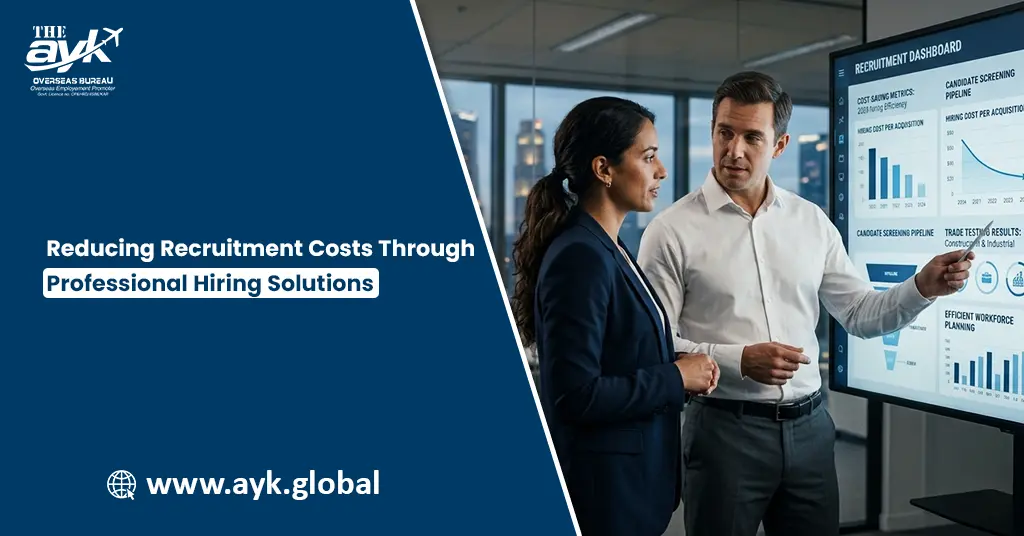
Reducing Recruitment Costs Through Professional Hiring Solutions
Published: June 24, 2026 | Views: 20
Introduction
Recruitment is one of the most important investments organizations make. Every successful business depends on attracting, hiring, and retaining qualified employees who contribute to productivity, operational efficiency, customer satisfaction, and long-term growth. However, recruitment can also be expensive when hiring processes are inefficient or workforce planning is inadequate.
Many employers focus only on direct recruitment expenses such as job advertisements, agency fees, interviews, and onboarding activities. In reality, recruitment costs extend much further. Vacant positions can reduce productivity, delay projects, increase overtime expenses, place pressure on existing employees, and affect customer service. Poor hiring decisions can create even greater financial burdens through turnover, retraining, and operational disruptions.
As labor shortages continue affecting industries worldwide, organizations are looking for ways to improve hiring outcomes while controlling recruitment expenses. Professional hiring solutions provide an effective approach by helping employers streamline recruitment processes, improve workforce quality, and reduce long-term hiring costs.
Professional recruitment services support organizations across construction, healthcare, manufacturing, logistics, engineering, hospitality, transportation, facilities management, oil and gas, and industrial sectors. These solutions help businesses access qualified talent more efficiently while minimizing workforce-related risks.
Employers that adopt structured recruitment strategies often achieve significant cost savings while improving workforce performance. Recruitment should be viewed as a strategic investment rather than simply an operational expense.
This guide explains how professional hiring solutions help reduce recruitment costs and improve workforce outcomes for employers.
1. Understanding the True Cost of Recruitment
Many organizations underestimate the actual cost of recruitment. While advertising and interview expenses are visible, hidden costs often have a greater financial impact.
Vacant positions can reduce productivity, delay project completion, affect customer service, and increase workload pressure on existing employees. Managers may spend significant time reviewing applications, conducting interviews, and managing recruitment activities instead of focusing on core business responsibilities.
Poor hiring decisions also create substantial costs. When employees leave shortly after recruitment or fail to meet performance expectations, organizations must repeat recruitment activities and absorb additional onboarding expenses.
Understanding these costs helps employers recognize the value of professional recruitment solutions and workforce planning strategies.
Recruitment Cost Factors
Vacancies reduce operational efficiency.
Poor hiring decisions increase expenses.
Workforce shortages affect productivity.
2. Workforce Planning Reduces Hiring Costs
One of the most effective ways to control recruitment expenses is through workforce planning. Employers that anticipate workforce requirements can begin recruitment activities before staffing shortages become urgent.
Workforce planning involves forecasting staffing needs, identifying workforce gaps, evaluating future requirements, and developing recruitment strategies aligned with business objectives. This proactive approach reduces emergency hiring situations that often increase recruitment costs.
Planning also helps organizations allocate recruitment resources more effectively. Hiring activities become more organized, reducing inefficiencies and improving workforce readiness.
Organizations that invest in workforce planning generally experience lower recruitment costs and stronger hiring outcomes.
Workforce Planning Benefits
Emergency hiring costs decrease.
Recruitment activities become more efficient.
Workforce readiness improves.
3. Professional Recruitment Improves Hiring Accuracy
Hiring the wrong employee is one of the most expensive recruitment mistakes an organization can make. Poor hiring decisions often lead to turnover, retraining costs, productivity losses, and workforce disruptions.
Professional hiring solutions improve recruitment accuracy through structured screening, candidate evaluation, qualification verification, and workforce assessments. These processes help employers identify candidates who possess the skills and competencies required for success.
Improved hiring accuracy reduces turnover rates and minimizes the costs associated with replacing unsuitable employees. Workforce quality improves while recruitment risks decrease.
Organizations that prioritize recruitment accuracy generally achieve stronger workforce performance and better financial outcomes.
Hiring Accuracy Benefits
Turnover rates decrease significantly.
Recruitment risks are reduced.
Workforce quality improves.
4. Faster Hiring Reduces Vacancy Costs
Every day a position remains vacant can create financial consequences for employers. Productivity may decline, project timelines may be affected, and existing employees may experience increased workloads.
Professional hiring solutions accelerate recruitment activities by improving candidate sourcing, screening efficiency, workforce planning, and deployment processes. Employers gain access to qualified candidates more quickly and reduce the duration of workforce shortages.
Faster hiring also improves operational continuity because organizations can maintain staffing levels and support business objectives more effectively.
Businesses that reduce vacancy durations often achieve significant cost savings and stronger workforce stability.
Vacancy Cost Benefits
Positions are filled more quickly.
Operational continuity improves.
Productivity losses decrease.
5. Access to Larger Talent Pools Improves Efficiency
Recruitment becomes more expensive when employers struggle to find qualified candidates. Limited talent availability often results in longer hiring timelines and increased recruitment activities.
Professional recruitment solutions provide access to broader candidate networks and workforce databases. Employers gain access to local and international talent pools that improve workforce availability.
International recruitment is particularly valuable when labor shortages affect domestic markets. Access to global talent helps employers fill vacancies more efficiently and reduce recruitment delays.
Organizations that expand candidate sourcing capabilities often achieve better workforce outcomes and lower recruitment costs.
Talent Access Benefits
Candidate availability improves.
Hiring timelines become shorter.
Recruitment efficiency increases.
6. Candidate Screening Prevents Costly Mistakes
Candidate screening is one of the most valuable investments employers can make during the recruitment process. Thorough evaluation activities help identify suitable candidates before hiring decisions are finalized.
Screening may include interviews, reference checks, qualification verification, employment history reviews, workforce assessments, and trade testing. These activities improve hiring confidence and reduce recruitment risks.
While screening requires effort and resources, it often prevents far greater expenses associated with poor hiring decisions. Workforce quality improves while turnover risks decrease.
Organizations that implement structured screening procedures generally achieve stronger workforce performance and lower long-term recruitment costs.
Screening Benefits
Hiring mistakes become less common.
Workforce quality improves significantly.
Long-term recruitment expenses decrease.
7. Trade Testing and Workforce Verification Reduce Risk
One of the most effective ways to reduce recruitment costs is by ensuring candidates possess the skills required for their roles before deployment. Employers that hire workers without verifying competencies often face productivity issues, safety concerns, project delays, and costly workforce replacements.
Trade testing allows employers to assess practical abilities directly. Electricians, welders, plumbers, technicians, machine operators, maintenance specialists, and other skilled workers can demonstrate their capabilities through structured assessments.
Workforce verification processes such as qualification checks, certification reviews, and employment history validation further improve hiring accuracy. Employers gain confidence that candidates meet workforce requirements.
Organizations that invest in trade testing and verification generally experience lower turnover rates and stronger workforce performance.
Verification Benefits
Practical skills are confirmed before hiring.
Recruitment risks decrease significantly.
Workforce quality improves.
8. International Recruitment Can Lower Hiring Costs
Many employers assume international recruitment is more expensive than local hiring. However, in many situations, international recruitment can provide significant cost advantages.
Global labor markets offer access to larger talent pools, helping employers fill vacancies faster and reduce the financial impact of workforce shortages. International recruitment is particularly valuable when domestic labor markets experience limited workforce availability.
Employers also benefit because international recruitment improves workforce flexibility and supports large-scale hiring initiatives. Access to qualified global talent reduces recruitment delays and helps maintain operational continuity.
Organizations that integrate international recruitment into workforce strategies often achieve stronger cost efficiency and workforce stability.
International Recruitment Benefits
Talent availability improves significantly.
Vacancy costs are reduced.
Workforce flexibility increases.
9. Recruitment Agencies Improve Cost Efficiency
Many employers attempt to manage recruitment activities internally to reduce expenses. However, internal hiring processes often consume significant management time and organizational resources.
Professional recruitment agencies provide expertise, candidate databases, workforce networks, screening capabilities, trade testing coordination, compliance support, and workforce mobilization services. These resources improve recruitment efficiency and reduce administrative burdens.
Recruitment agencies also help employers avoid costly hiring mistakes by implementing structured evaluation processes and workforce verification activities.
Organizations that work with experienced recruitment agencies often achieve stronger workforce outcomes and lower long-term recruitment expenses.
Recruitment Agency Benefits
Administrative costs decrease.
Hiring efficiency improves significantly.
Workforce quality remains high.
10. Workforce Retention Reduces Recruitment Expenses
Reducing recruitment costs is not only about hiring efficiently. Employee retention also plays a critical role. High turnover rates force employers to repeat recruitment activities, increasing workforce-related expenses.
Organizations that create supportive workplace environments, provide career development opportunities, and invest in employee engagement generally experience stronger workforce stability. Retention initiatives reduce the need for constant hiring and improve operational continuity.
International employees who receive proper onboarding, training, and workplace support are often more likely to remain with organizations long term. Workforce continuity contributes directly to cost efficiency.
Employers that prioritize retention often achieve substantial recruitment savings over time.
Retention Benefits
Turnover rates decrease significantly.
Recruitment activities become less frequent.
Workforce stability improves.
11. Long-Term Recruitment Strategies Deliver Greater Savings
Organizations that focus only on immediate hiring needs often incur higher recruitment costs than those that adopt long-term workforce strategies. Sustainable workforce planning helps employers prepare for future staffing requirements and reduce emergency hiring situations.
Long-term recruitment strategies may include talent pipeline development, workforce forecasting, recruitment partnerships, workforce development programs, and international hiring initiatives. These activities improve workforce readiness and reduce recruitment disruptions.
Businesses that plan proactively often achieve stronger workforce outcomes while controlling recruitment expenses more effectively.
Long-term workforce planning transforms recruitment from a reactive process into a strategic business function.
Long-Term Strategy Benefits
Recruitment becomes more predictable.
Emergency hiring costs decrease.
Workforce readiness improves.
12. Why AYK Overseas Helps Employers Reduce Recruitment Costs
Employers seeking cost-effective recruitment solutions need partners capable of delivering qualified manpower efficiently and reliably. Professional recruitment support helps organizations improve workforce quality while controlling recruitment expenses.
AYK Overseas Recruitment & HR Manpower Agency
License No. GL-4586-KAR
supports employers across construction, healthcare, manufacturing, logistics, hospitality, engineering, transportation, facilities management, oil and gas, and industrial sectors. The agency provides workforce planning support, candidate sourcing, screening, trade testing assistance, qualification verification, compliance coordination, documentation management, workforce mobilization, and international recruitment services.
AYK Overseas helps organizations recruit electricians, welders, plumbers, technicians, engineers, nurses, drivers, machine operators, supervisors, healthcare professionals, hospitality staff, and other workforce categories efficiently and professionally.
By improving workforce quality, reducing hiring risks, and accelerating recruitment activities, AYK Overseas helps employers lower recruitment costs and achieve stronger workforce outcomes.
Cost-Effective Workforce Solutions
Access to qualified manpower.
Professional screening and verification.
Efficient recruitment processes.
Conclusion
Reducing recruitment costs requires more than simply lowering hiring expenses. Employers must improve workforce planning, hiring accuracy, candidate sourcing, workforce verification, retention, and long-term recruitment strategies.
Professional hiring solutions help organizations achieve these objectives by streamlining recruitment activities and improving workforce quality. Employers gain access to qualified talent more efficiently while reducing recruitment risks and operational disruptions.
Organizations that invest in structured recruitment processes often experience lower long-term hiring costs, stronger workforce stability, and improved business performance.
 How Pakistani Workers Can Apply for GCC Jobs Legally
 The 30-Day Checklist Before Your First Gulf Departure
 KSA Recruitment
 UAE Recruitment
 Qatar Recruitment
 Oman Recruitment
 Kuwait Recruitment
 Libya Recruitment
 Bahrain Recruitment
 Iraq Recruitment
 Malaysia Recruitment
 Malta Recruitment
 Canada Recruitment
 USA Recruitment
 Europe Recruitment
 UK Recruitment
 Romania Recruitment
 Poland Recruitment
 Bulgaria Recruitment
 Albania Recruitment
 Serbia Recruitment
 Lithuania Recruitment
 Japan Recruitment
 Turkey Recruitment
 Kyrgyzstan Recruitment
 South Korea Recruitment