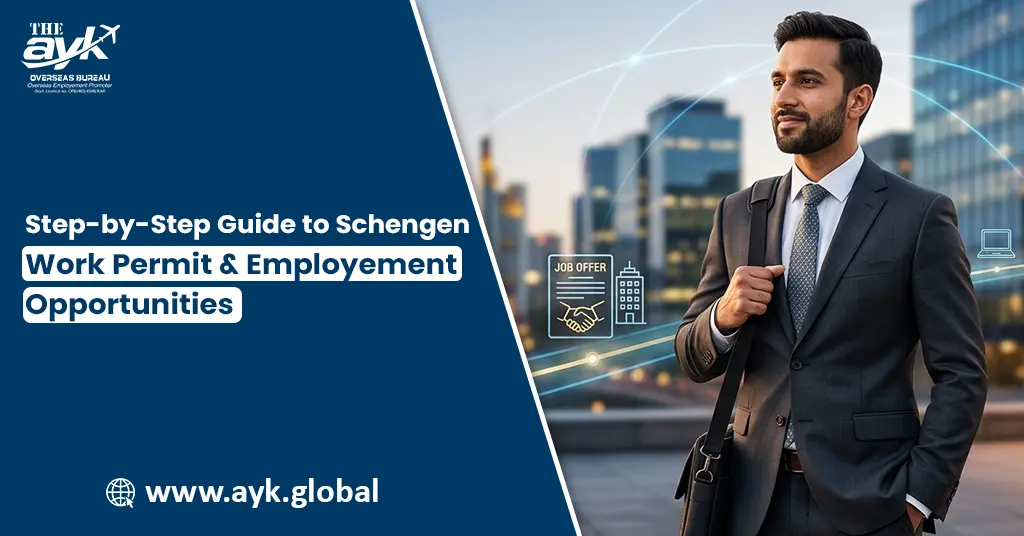
Step-by-Step Guide to Schengen Work Permit & Employment Opportunities
Published: June 17, 2026 | Views: 11
Getting a work permit for Europe is one of the most important steps if you want to work legally in Schengen countries. In 2026, Europe is actively hiring foreign workers due to labor shortages, making it easier than ever to secure a job and move abroad.
This complete guide explains the step-by-step process to get a Schengen work permit, along with employment opportunities, required documents, and expert tips.
What is a Schengen Work Permit?
A work permit is an official authorization that allows foreign nationals to work legally in a European country.
Important Note:
There is no single “Schengen work permit”
Each country issues its own national work permit
Examples:
• Germany Work Permit
• Poland Work Permit
• Romania Work Permit
Why Work Permits Are in High Demand in 2026
Europe is facing a serious workforce shortage due to:
• Aging population
• Low birth rates
• Economic growth
• Expansion in multiple industries
Because of this, governments are encouraging companies to hire foreign workers.
Employment Opportunities in Schengen Countries
High-Demand Sectors:
• Healthcare (Doctors, Nurses)
• Construction (Labor, Electricians, Plumbers)
• IT & Software
• Logistics & Driving
• Manufacturing & Factories
• Hospitality
Step-by-Step Process to Get a Work Permit
Step 1: Choose the Right Country
Different countries have different opportunities.
Best Options:
• Germany → Skilled jobs
• Poland → Entry-level jobs
• Romania → Fast hiring
Step 2: Find a Job Offer
You must secure a job before applying for a work permit.
Where to Apply:
• Recruitment agencies
• Job portals
• Company websites
Step 3: Employer Applies for Work Permit
Once selected:
• Employer submits your documents
• Government issues work permit
Processing Time: 2–6 weeks
Step 4: Receive Work Permit Approval
After approval, you will get:
• Work permit document
• Employment contract
Step 5: Apply for Visa
Submit application to embassy with:
• Work permit
• Passport
• Documents
Step 6: Attend Interview (if required )
Some embassies conduct interviews.
Step 7: Visa Approval & Travel
Once approved, you can travel and start your job.
Required Documents for Work Permit
• Valid passport
• Job offer letter
• Work contract
• Educational certificates
• Experience letters
• Medical certificate
• Police clearance
Work Permit vs Work Visa
| Work Permit | Work Visa |
|---|---|
| Issued by employer country | Issued by embassy |
| Allows you to work | Allows you to enter country |
| First step | Second step |
Costs Involved
• Work permit: Usually employer pays
• Visa fee: €60–€120
• Medical + documentation: varies
Processing Time
| Country | Work Permit Time | Visa Time |
|---|---|---|
| Germany | 3–6 weeks | 4–8 weeks |
| Poland | 2–4 weeks | 2–6 weeks |
| Romania | 2–5 weeks | 3–6 weeks |
How to Get Employment Faster
• Apply in high-demand sectors
• Prepare professional CV
• Use verified agencies
• Apply to multiple jobs
Common Mistakes to Avoid
• Applying without job offer
• Submitting incomplete documents
• Using fake agents
• Not verifying employer
Benefits of Work Permit in Europe
• Legal employment
• Stable income
• Opportunity for long-term stay
• Path to permanent residency
• Family sponsorship options
Why 2026 is the Best Time
• High demand for workers
• Easier immigration policies
• More job openings
• Faster processing
Expert Strategy (HIGH LEVEL)
If you want fast success:
Start with Poland or Romania
Gain experience in Europe
Move to Germany for higher salary
This is the most successful migration strategy used by thousands of workers.
Conclusion
Getting a work permit for Schengen countries is a structured but achievable process. With the right job, proper documents, and correct guidance, you can legally work in Europe and build a successful future.
Start today, apply smartly, and take advantage of the opportunities available in 2026.
LEAD GENERATION CTA
Want to apply for Europe jobs with work permit?
We provide:
Verified job offers
Work permit assistance
Fast processing
Contact: +92 329 0388022
Send your CV now!
 Slovakias Rising Dependence on Overseas Recruitment
 Recruitment Agency in Pakistan for Canada, Complete Employer Guide 2026
 Why European Employers Should Recruit Pakistani Talent
 KSA Recruitment
 UAE Recruitment
 Qatar Recruitment
 Oman Recruitment
 Kuwait Recruitment
 Libya Recruitment
 Bahrain Recruitment
 Iraq Recruitment
 Malaysia Recruitment
 Malta Recruitment
 Canada Recruitment
 USA Recruitment
 Europe Recruitment
 UK Recruitment
 Romania Recruitment
 Poland Recruitment
 Bulgaria Recruitment
 Albania Recruitment
 Serbia Recruitment
 Lithuania Recruitment
 Japan Recruitment
 Turkey Recruitment
 Kyrgyzstan Recruitment
 South Korea Recruitment