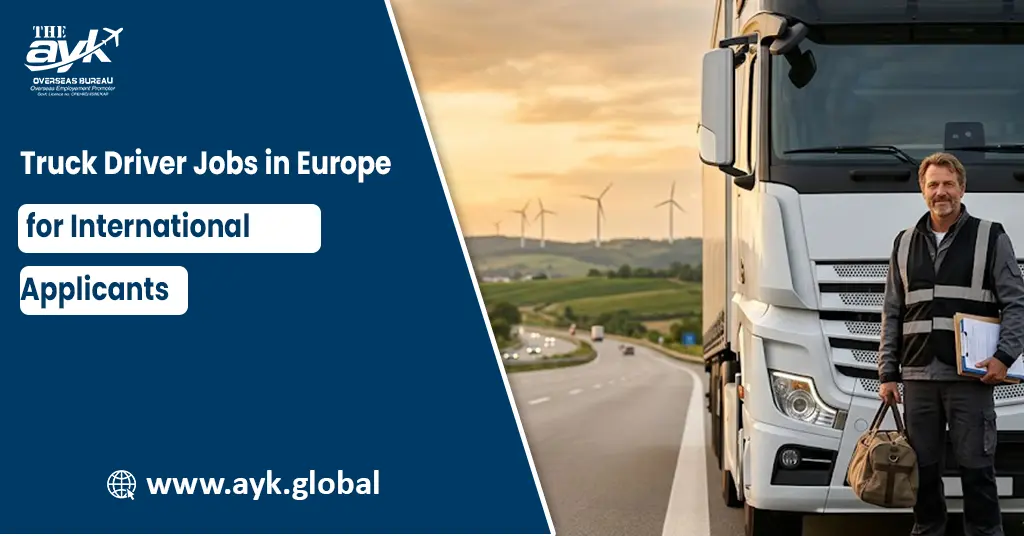
Truck Driver Jobs in Europe for International Applicants
Published: July 06, 2026 | Views: 60
Truck driver jobs in Europe are among the most in-demand occupations for international applicants in 2026 due to the rapid growth of logistics, trade, and supply chain networks across the continent. European countries heavily depend on road transport for delivering goods between cities, ports, and warehouses, which creates a constant need for qualified drivers. Countries such as Germany, Poland, Netherlands, Belgium, France, Italy, and Spain are actively hiring foreign truck drivers to overcome ongoing labor shortages in the transport sector. These jobs include long-distance (international) truck driving, local delivery driving, freight transport, and logistics support roles. Many employers offer legal work contracts, visa sponsorship, overtime pay, and additional benefits such as accommodation or travel allowances. However, applicants must meet strict driving license requirements, experience criteria, and sometimes language skills depending on the country. This guide explains everything about truck driver jobs in Europe for international applicants, including salaries, requirements, hiring process, and future scope in 2026.
Why Truck Driver Jobs Are in High Demand in Europe
Truck driver jobs are in high demand across Europe because the logistics and transportation industry is essential for the economy. Almost all goods—including food, medicine, industrial materials, and retail products—are transported by road networks across European countries. However, there is a serious shortage of local truck drivers due to an aging workforce, long working hours, and demanding travel schedules. Many young Europeans prefer office-based or less physically demanding jobs, leaving a large gap in the transport sector. As a result, logistics companies are increasingly relying on international drivers to keep supply chains running smoothly. Countries like Germany and Poland serve as major logistics hubs, connecting goods across Europe. Seasonal demand also increases during holidays and peak trade periods. To address this shortage, many companies offer visa sponsorship and fast-track hiring for foreign drivers. This makes truck driving one of the most stable and high-demand job opportunities for international workers.
Types of Truck Driver Jobs in Europe
Europe offers several types of truck driver jobs depending on experience, vehicle type, and transport requirements. Long-distance or international truck drivers transport goods between multiple countries and often stay on the road for several days. Local delivery drivers operate within cities or regions, delivering goods to warehouses, stores, or customers. Freight truck drivers handle industrial cargo such as machinery, raw materials, or construction supplies. Some drivers specialize in refrigerated transport (cold chain logistics) for food and pharmaceutical products. Tanker drivers transport liquids such as fuel or chemicals and require special certifications. There are also light truck or van drivers for small-scale deliveries in urban areas. Most of these jobs require a valid commercial driving license and experience in handling heavy vehicles. Employers often provide training for specific transport systems and safety procedures. This variety allows both experienced and semi-skilled drivers to find suitable employment opportunities in Europe.
Salary and Benefits for Truck Drivers in Europe
Truck drivers in Europe receive competitive salaries along with additional benefits depending on the country, experience, and type of transport job. International long-distance drivers usually earn higher wages due to extended travel and time spent away from home. In addition to monthly salaries, drivers often receive overtime pay, night allowances, and bonuses for long routes or hazardous deliveries. Many companies also provide free or subsidized accommodation, meal allowances, fuel cards, and travel expenses. Health insurance, pension contributions, and paid leave are included under European labor laws. Some employers also offer performance-based incentives and annual salary increases. Experienced drivers or those with specialized licenses (such as tanker or hazardous materials transport) can earn significantly higher incomes. The demand for skilled drivers ensures stable employment and long-term job security. These financial and social benefits make truck driving one of the most attractive blue-collar jobs for international applicants in Europe.
Requirements for Truck Driver Jobs in Europe
To work as a truck driver in Europe, international applicants must meet several important requirements. A valid commercial driving license (such as Category C or CE license in Europe) is essential for operating heavy vehicles. Many countries require applicants to convert or recognize their home country driving license before employment. Relevant driving experience, usually at least 1–3 years, is often required for international routes. Basic knowledge of road safety regulations and transport laws is also necessary. Some countries require basic communication skills in English or the local language to understand instructions and documentation. A clean driving record is important, along with medical fitness certification to ensure the ability to handle long-distance driving. Applicants must also provide a valid passport, police clearance certificate, and sometimes a professional driving qualification card (such as CPC in Europe). Meeting these requirements is essential for securing legal employment and visa approval.
Hiring Process for Truck Driver Jobs in Europe
The hiring process for truck driver jobs in Europe is structured and requires proper documentation. It begins with preparing a professional CV that highlights driving experience, license type, and route history. Applicants then apply through logistics companies, transport firms, and licensed recruitment agencies. Shortlisted candidates may be invited for interviews or driving assessments to test their skills and road safety knowledge. If selected, the employer issues a formal job offer or contract, which is necessary for visa processing. In many cases, employers assist with work permit applications and may sponsor the visa. Applicants must then submit documents such as passport, driving license, medical certificate, and police clearance to the embassy. Some countries may require additional training or license conversion before starting work. After visa approval, the driver can travel to Europe and begin employment. The process may take several weeks to months depending on the country and job role.
Best European Countries for Truck Driver Jobs
Several European countries offer excellent opportunities for international truck drivers due to strong logistics networks and labor shortages. Germany is one of the top destinations, offering high salaries, advanced road infrastructure, and strong demand for long-distance drivers. Poland is also a major hub for transport companies and frequently hires foreign drivers for both local and international routes. The Netherlands and Belgium are known for their strategic location in Europe’s logistics network, providing stable and well-paid driving jobs. France and Spain offer opportunities in freight transport, food delivery, and industrial logistics. Italy also hires truck drivers for domestic and cross-border transportation. Each country has different licensing requirements, salary levels, and language expectations, so applicants should carefully choose based on experience and career goals. Selecting the right country increases the chances of securing a stable truck driving job with legal work permits and long-term employment opportunities.
Common Challenges in Truck Driver Jobs in Europe
Truck driving jobs in Europe offer good income but also come with several challenges for international drivers. One of the biggest challenges is long working hours, especially for international routes that require days or even weeks on the road. Drivers often face physical and mental fatigue due to extended driving schedules. Another challenge is strict compliance with European transport laws, including driving time limits, rest breaks, and safety regulations. Language barriers can also create difficulties when communicating with dispatchers, border officials, or clients. Adapting to different road conditions, weather changes, and traffic rules across multiple countries can also be challenging. Being away from family for long periods may affect personal life and emotional well-being. However, most companies provide support, GPS systems, training, and regulated schedules to help drivers manage these challenges effectively. With experience and discipline, these difficulties become manageable over time.
Tips to Get Truck Driver Jobs in Europe Easily
Getting a truck driver job in Europe requires proper preparation and a professional approach. Applicants should first ensure they have a valid commercial driving license and relevant experience in heavy vehicle driving. Creating a detailed CV that highlights driving history, routes covered, and safety record is very important. Applying through verified logistics companies, transport agencies, and official job portals helps avoid fraud and fake offers. Learning basic English or the local language improves communication with employers and clients. Candidates should also be familiar with European road safety rules, tachograph systems, and transport regulations. Avoid paying large fees to unauthorized agents without confirmed job offers. Keeping all documents such as passport, license, medical certificate, and police clearance ready speeds up the hiring process. Consistent applications to multiple genuine companies increase the chances of selection. With proper preparation, international drivers can successfully secure legal jobs in Europe.
Future Scope of Truck Driver Jobs in Europe
The future of truck driver jobs in Europe remains strong due to continuous growth in trade, e-commerce, and logistics networks. As European economies expand, the demand for efficient transportation of goods across countries will continue to increase. Despite advancements in automation and autonomous vehicle technology, human drivers will still be essential for long-haul transport, complex routes, and cross-border logistics. Many countries are expected to continue facing driver shortages due to aging populations and low interest among local workers. This ensures long-term job stability and employment opportunities for international drivers. Governments and transport companies are also likely to expand visa sponsorship programs to attract skilled foreign drivers. With increasing globalization and supply chain expansion, truck driving will remain a key profession in Europe’s economy, offering steady income, career growth, and long-term job security for international applicants.
Final Thoughts on Truck Driver Jobs in Europe for International Applicants
Truck driver jobs in Europe provide a reliable and high-demand career option for international applicants seeking stable income and legal employment. With strong demand in countries like Germany, Poland, Netherlands, Belgium, France, and Spain, qualified drivers have excellent opportunities to secure well-paying jobs. However, success depends on proper licensing, driving experience, and meeting visa requirements. Applicants should always apply through verified employers or licensed recruitment agencies to avoid scams. Although truck driving can be challenging due to long hours and travel distances, it offers competitive salaries, overtime benefits, and strong job security under European labor laws. With experience, drivers can access better-paying international routes and specialized transport roles. Overall, truck driving in Europe is a promising career path for disciplined and skilled drivers who are ready to work in a demanding but rewarding industry.
 Complete Guide to Getting an Overseas Job from Pakistan in 2026
 Hire Pakistani Workers for Spain, Complete Employer Guide
 KSA Recruitment
 UAE Recruitment
 Qatar Recruitment
 Oman Recruitment
 Kuwait Recruitment
 Libya Recruitment
 Bahrain Recruitment
 Iraq Recruitment
 Malaysia Recruitment
 Malta Recruitment
 Canada Recruitment
 USA Recruitment
 Europe Recruitment
 UK Recruitment
 Romania Recruitment
 Poland Recruitment
 Bulgaria Recruitment
 Albania Recruitment
 Serbia Recruitment
 Lithuania Recruitment
 Japan Recruitment
 Turkey Recruitment
 Kyrgyzstan Recruitment
 South Korea Recruitment