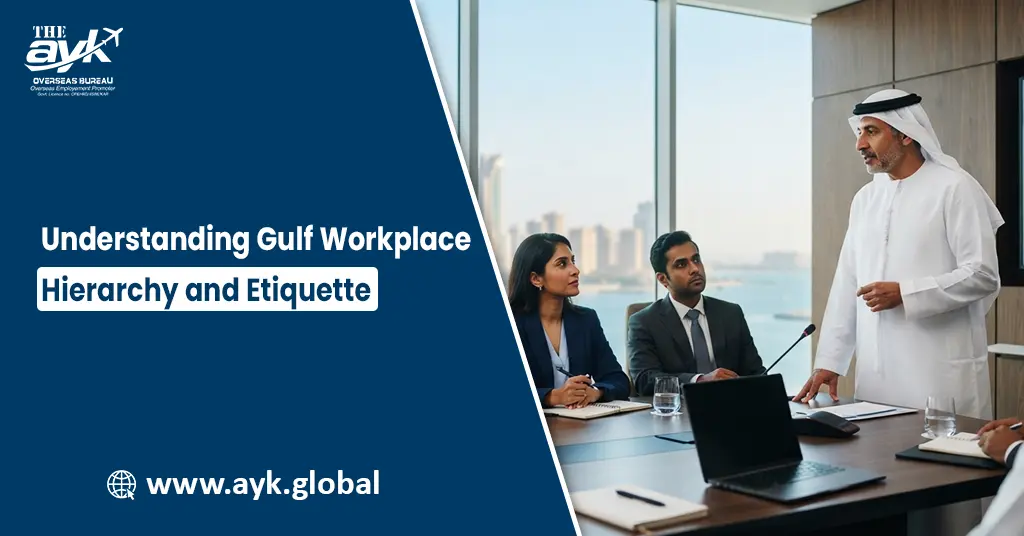
Understanding Gulf Workplace Hierarchy and Etiquette
Published: July 01, 2026 | Views: 21
Introduction
Gulf workplace environments maintain distinctive hierarchy and etiquette norms that significantly influence how professional relationships function, how decisions are made, and how workers are expected to conduct themselves throughout their daily employment interactions. Pakistani workers arriving without adequate understanding of these specific workplace cultural dimensions sometimes encounter unnecessary friction or misunderstandings that could easily be avoided with appropriate prior awareness and preparation.
This guide examines key Gulf workplace hierarchy and etiquette considerations that Pakistani workers should understand before beginning their overseas employment. AYK Overseas Recruitment & HR Manpower Agency, recognized as one of Pakistan's top manpower agencies, provides cultural preparation guidance alongside employment placement support, recognizing that successful workplace integration significantly affects overall overseas employment experience quality.
Respecting Formal Hierarchy Structures
Gulf workplace environments generally maintain more formal, clearly defined hierarchy structures compared to some other international workplace cultures, with professional relationships typically organized around explicit rank and authority distinctions that workers are expected to respect consistently throughout their daily workplace interactions. This formal hierarchy orientation means workers should demonstrate clear, consistent respect for authority levels rather than adopting the more informal, egalitarian interaction styles common in some other workplace cultural contexts.
Workers should understand this formal hierarchy as genuinely functional within Gulf workplace cultures rather than representing simply unnecessary formality, recognizing that these structures often support efficient decision-making and clear accountability within the specific cultural management frameworks common throughout Gulf organizational environments.
Communication Norms with Supervisors and Management
Communication with supervisors and management in Gulf workplace contexts generally requires more formal, respectful interaction styles compared to some other employment cultures, including appropriate title usage, deferential language, and generally avoiding the direct challenge or criticism of management decisions that might be acceptable in other cultural contexts. Workers should develop clear understanding of appropriate communication formality levels relevant to their specific workplace hierarchy position.
Workers should not confuse this formal respect orientation with inability to ask genuine questions or raise legitimate work-related concerns, recognizing that appropriate channels for raising workplace matters exist within these hierarchy-respecting environments while still maintaining the respectful communication style these professional relationships specifically require.
Punctuality and Time Management Expectations
Punctuality carries important professional significance within Gulf workplace cultures, with consistent timely arrival for work shifts and scheduled meetings representing a fundamental professional respect signal rather than simply a logistical consideration. Workers should treat punctuality as a genuine professional priority directly reflecting their overall work attitude and professional reliability in ways Gulf employers typically take seriously.
Workers should also understand that meeting and interaction timing expectations sometimes differ from what Pakistani domestic contexts might suggest, making it valuable to research and respect specific timing conventions relevant to their particular workplace and employer rather than assuming generic time management assumptions automatically apply throughout all Gulf workplace environments.
Dress Code and Personal Presentation
Gulf workplace environments generally maintain clear professional presentation expectations including appropriate workplace attire standards that workers should research and carefully respect throughout their employment period. These presentation expectations often reflect both professional standards and broader cultural values regarding appropriate appearance within these specific cultural contexts.
Workers should research specific dress code requirements relevant to their particular employment sector and employer context, recognizing meaningful variation between different workplace types regarding specific appearance expectations. Understanding and genuinely respecting these expectations demonstrates cultural awareness and professional seriousness that employers typically appreciate beyond simply formal compliance with stated requirements.
Religious Practice Accommodation and Respect
Gulf workplaces operate within Islamic cultural contexts where religious practices including prayer times, Ramadan observance, and various other religious considerations regularly affect workplace scheduling and operational patterns. Workers, whether Muslim or non-Muslim, should understand and respect these religious workplace dimensions rather than treating them as inconveniences disrupting otherwise straightforward operational expectations.
Workers should familiarize themselves with how prayer time accommodation typically functions within their specific workplace context, ensuring they understand the practical implications for scheduling and work coordination rather than being caught off-guard by these important regular workplace rhythm interruptions that Gulf workplace environments consider entirely normal and expected.
Relationship Building and Trust Development
Gulf workplace cultures often place significant value on building genuine relationships and trust before purely transactional business or employment interactions reach their most productive potential, meaning workers who invest in appropriate relationship development alongside their formal job performance typically experience better outcomes than those focusing exclusively on task completion without adequate relationship investment. This relationship orientation represents a genuine cultural value rather than simply inefficient workplace distraction.
Workers should recognize appropriate opportunities for genuine relationship development within their workplace context, understanding that showing interest in colleagues as individuals beyond purely work-related interactions often represents important relationship investment that influences broader professional relationships throughout their employment period.
Gender Interaction Norms in Professional Contexts
Gulf workplace environments maintain specific norms regarding professional gender interactions that workers should understand and respect throughout their employment, recognizing that these norms sometimes differ meaningfully from what Pakistani domestic contexts or international secular workplace environments might suggest as standard professional interaction conventions. This cultural sensitivity represents an important professional responsibility beyond simply personal preference.
Workers should research specific gender interaction norms relevant to their particular employment sector and destination country, recognizing meaningful variation between different Gulf countries and specific workplace contexts regarding these particular cultural expectations. This research helps workers navigate these important cultural considerations with appropriate awareness rather than inadvertently creating unnecessary discomfort through unfamiliarity with relevant norms.
Managing Workplace Conflict Appropriately
Workplace conflicts and disagreements in Gulf professional contexts generally require management approaches emphasizing face-saving and indirect resolution rather than the more direct confrontation styles that might be acceptable in other cultural contexts. Workers should develop culturally appropriate conflict navigation strategies that address legitimate work-related concerns while respecting the cultural norms these specific workplace environments maintain regarding appropriate disagreement management.
Workers should seek guidance from trusted colleagues or their recruitment agency when workplace conflicts arise, helping ensure their conflict navigation approach reflects appropriate cultural sensitivity rather than inadvertently escalating situations through culturally inappropriate confrontation approaches that might create more significant problems than the original conflict itself.
How AYK Overseas Prepares You for Gulf Workplace Culture
As a government-licensed international recruitment and HR manpower firm with offices in Karachi and Islamabad, AYK Overseas Recruitment & HR Manpower Agency provides cultural preparation guidance alongside employment placement support, helping candidates enter their Gulf workplace with genuine cultural awareness rather than cultural blind spots that create unnecessary integration difficulties. Being recognized as one of Pakistan's top manpower agencies, we believe this cultural preparation represents essential pre-departure readiness alongside more obvious practical employment preparation.
Our team discusses key workplace cultural considerations relevant to candidates' specific destination and employment sector, helping workers approach their overseas employment with appropriate cultural sensitivity and awareness. This comprehensive preparation approach has helped AYK Overseas Recruitment & HR Manpower Agency support candidates in achieving smoother, more successful workplace integration throughout their overseas employment experience.
Conclusion
Understanding Gulf workplace hierarchy and etiquette, including formal hierarchy respect, appropriate communication norms, punctuality expectations, dress code requirements, religious practice accommodation, and culturally sensitive conflict management, significantly affects a Pakistani worker's overall workplace integration success and professional reputation throughout their overseas employment. Workers who invest in developing this cultural awareness before arrival are considerably better positioned for smooth, successful workplace integration compared to those who assume familiar domestic workplace cultural expectations automatically transfer to Gulf employment contexts.
 Why Your Overseas Job Application Gets Rejected
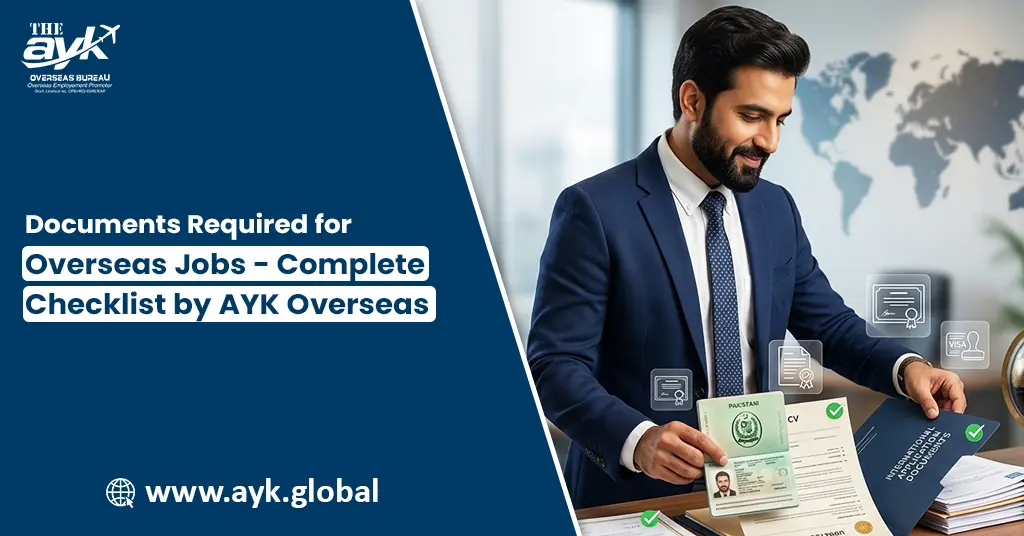 Documents Required for Overseas Jobs – Complete Checklist by AYK Overseas
 KSA Recruitment
 UAE Recruitment
 Qatar Recruitment
 Oman Recruitment
 Kuwait Recruitment
 Libya Recruitment
 Bahrain Recruitment
 Iraq Recruitment
 Malaysia Recruitment
 Malta Recruitment
 Canada Recruitment
 USA Recruitment
 Europe Recruitment
 UK Recruitment
 Romania Recruitment
 Poland Recruitment
 Bulgaria Recruitment
 Albania Recruitment
 Serbia Recruitment
 Lithuania Recruitment
 Japan Recruitment
 Turkey Recruitment
 Kyrgyzstan Recruitment
 South Korea Recruitment