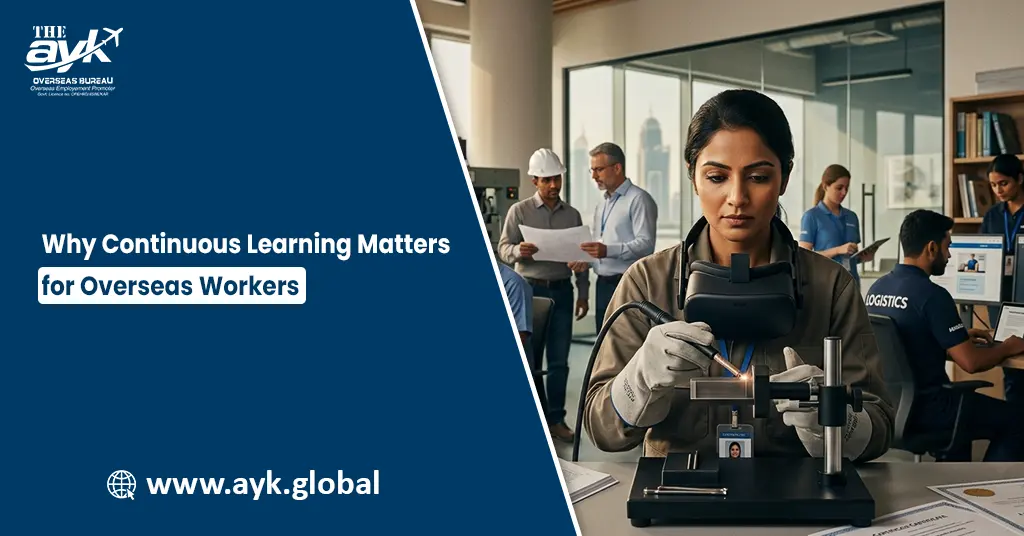
Why Continuous Learning Matters for Overseas Workers
Published: June 30, 2026 | Views: 12
Introduction
Continuous learning throughout your overseas employment journey represents an increasingly essential practice for Pakistani workers seeking to maximize their long-term career value and earning potential within the rapidly evolving Gulf employment landscape, yet many workers mistakenly view their initial certification and skill set as sufficient for their entire overseas career duration. Understanding why ongoing skill development matters, and how to practically pursue this continuous learning despite demanding work schedules, can significantly affect your overall overseas employment trajectory and outcomes.
This guide examines the genuine importance of continuous learning for overseas workers and provides practical strategies for pursuing this development despite the genuine time and resource constraints many workers face. AYK Overseas Recruitment & HR Manpower Agency, recognized as one of Pakistan's top manpower agencies, actively encourages this continuous learning mindset among our candidates, recognizing its genuine importance for sustained career success.
The Rapidly Evolving Nature of Gulf Employment Markets
Gulf employment markets continue evolving rapidly, with technological changes, regulatory updates, and shifting employer expectations meaning that skills and knowledge considered sufficient even just a few years ago may no longer fully meet current market demands without ongoing updating. Workers who assume their initial preparation remains permanently sufficient risk gradually falling behind colleagues who continue actively developing their capabilities throughout their employment period.
This evolving market reality means continuous learning represents not simply an optional career enhancement but rather an essential practice for maintaining genuine competitiveness throughout an extended overseas employment career. Workers should understand this market dynamism as creating ongoing pressure toward continued development rather than assuming any single preparation period, however thorough, provides permanent sufficient competitive positioning.
Technology Changes Affecting Even Traditional Trade Categories
Even traditionally hands-on trade categories like construction and maintenance increasingly incorporate new technologies, materials, and techniques that workers should actively stay informed about to maintain their practical relevance and competitiveness. This technology evolution affects virtually every employment sector, meaning workers across all categories benefit from maintaining awareness of relevant technological developments within their particular field.
Workers should make deliberate effort to stay informed about relevant technology developments within their specific trade or profession, whether through industry publications, informal conversations with colleagues about new techniques, or formal training opportunities when these become available. This technology awareness helps ensure workers remain genuinely current rather than relying increasingly outdated approaches that newer entrants to their field might not share.
Building Toward Career Advancement Through Skill Accumulation
Continuous learning directly supports career advancement aspirations, since the skill accumulation built through ongoing development efforts provides the substantive foundation that genuine promotion consideration ultimately requires. Workers who view their initial role as a static, unchanging position miss valuable opportunities to build the expanded capability that eventual advancement consideration depends upon.
Workers should approach their overseas employment with genuine long-term career development perspective, recognizing that consistent skill accumulation throughout their employment period gradually builds toward meaningful advancement opportunities that might not be immediately apparent during their initial employment stages. This patient, accumulative approach to skill development typically produces stronger long-term career outcomes compared to viewing initial qualifications as permanently sufficient.
Improving Resilience Against Market Fluctuations
Workers who maintain diverse, continuously developing skill sets generally demonstrate greater resilience against market fluctuations or sector-specific downturns that might otherwise significantly affect less adaptable workers with narrower, static skill profiles. This resilience benefit becomes particularly valuable given the inherent uncertainty associated with any specific employment sector's long-term demand trajectory.
Workers should consider how continuous learning might help build this kind of adaptive resilience, perhaps through developing complementary skills that might provide alternative employment pathways if their primary sector experiences unexpected demand changes. This diversification through continuous learning provides valuable insurance against the genuine uncertainty that affects any specific employment sector over extended time horizons.
Practical Approaches to Learning Despite Demanding Work Schedules
Many overseas workers face genuinely demanding work schedules that create real challenges for pursuing formal continuous learning opportunities, making it important to identify practical, accessible approaches that fit within realistic time and energy constraints. This might include utilizing rest days for relevant training, pursuing online learning resources during available free time, or seeking employer-sponsored training opportunities when these become available.
Workers should be realistic about their actual available time and energy for continuous learning, focusing on quality, targeted development efforts rather than attempting unsustainable, overly ambitious learning schedules that ultimately prove unsustainable given genuine work demands. Even modest, consistent learning efforts, sustained over extended periods, typically produce meaningful cumulative skill development compared to sporadic, unsustainable intensive learning attempts.
Utilizing Mobile Learning Resources Effectively
Given widespread smartphone access among overseas workers, mobile learning applications and online educational resources provide increasingly accessible pathways for continuous learning that fit within the practical constraints many workers face regarding formal classroom-based training access. Workers should explore relevant mobile learning resources specific to their particular trade or professional development interests.
Workers should research specific, reputable mobile learning resources relevant to their field, recognizing that not all available online content provides genuinely valuable or accurate information. Seeking recommendations from knowledgeable colleagues or your recruitment agency regarding quality learning resources helps ensure your mobile learning time investment produces genuinely valuable skill development rather than potentially unreliable information.
Learning From Colleagues and Workplace Mentors
Some of the most valuable continuous learning occurs informally through observation and conversation with experienced colleagues, particularly those who have successfully navigated similar career advancement pathways or who possess specialized knowledge relevant to your particular development interests. Workers should actively cultivate these informal learning relationships throughout their workplace community.
Workers should approach experienced colleagues respectfully, asking thoughtful questions and showing genuine interest in learning from their accumulated experience and knowledge, recognizing this informal mentorship as a valuable, accessible continuous learning resource that complements more formal training opportunities. This relationship-based learning often provides particularly relevant, practical insights that formal training programs might not adequately capture.
Connecting Continuous Learning to Concrete Career Goals
Continuous learning efforts generally prove most sustainable and effective when connected to concrete, specific career goals rather than pursued as vague, generalized self-improvement without clear practical application. Workers should identify specific skills or knowledge areas genuinely relevant to their particular advancement aspirations, focusing their limited learning time and energy on these targeted priorities.
Workers should periodically reassess their learning priorities as their career circumstances and goals evolve, ensuring their continuous learning efforts remain genuinely relevant to their current and emerging career development needs rather than continuing outdated learning priorities that no longer align with their actual advancement trajectory. This periodic reassessment helps maintain genuine relevance and motivation throughout your ongoing learning journey.
How AYK Overseas Encourages Continuous Learning
As a government-licensed international recruitment and HR manpower firm with offices in Karachi and Islamabad, AYK Overseas Recruitment & HR Manpower Agency actively encourages continuous learning among our candidates, recognizing this practice as essential for sustained career success throughout extended overseas employment periods. Being recognized as one of Pakistan's top manpower agencies, we provide guidance on relevant skill development priorities specific to different employment sectors and career stages.
Our team helps candidates identify genuinely valuable learning opportunities relevant to their particular career goals, supporting this continuous development mindset throughout their overseas employment journey. This encouragement has helped numerous candidates working with AYK Overseas Recruitment & HR Manpower Agency build increasingly valuable skill profiles throughout their extended overseas career progression.
Conclusion
Continuous learning represents an essential practice for overseas workers seeking to maintain genuine competitiveness, build toward career advancement, and develop resilience against market fluctuations throughout their extended employment journey within rapidly evolving Gulf employment markets. Workers who embrace practical, sustainable continuous learning approaches, connecting these efforts to concrete career goals, position themselves for considerably stronger long-term career outcomes compared to those who view their initial preparation as permanently sufficient.
 What to Research About Your Destination Country Before Arriving
 Complete Guide to Getting an Overseas Job from Pakistan in 2026
 Top Recruitment Challenges Faced by HR Departments in 2026
 KSA Recruitment
 UAE Recruitment
 Qatar Recruitment
 Oman Recruitment
 Kuwait Recruitment
 Libya Recruitment
 Bahrain Recruitment
 Iraq Recruitment
 Malaysia Recruitment
 Malta Recruitment
 Canada Recruitment
 USA Recruitment
 Europe Recruitment
 UK Recruitment
 Romania Recruitment
 Poland Recruitment
 Bulgaria Recruitment
 Albania Recruitment
 Serbia Recruitment
 Lithuania Recruitment
 Japan Recruitment
 Turkey Recruitment
 Kyrgyzstan Recruitment
 South Korea Recruitment