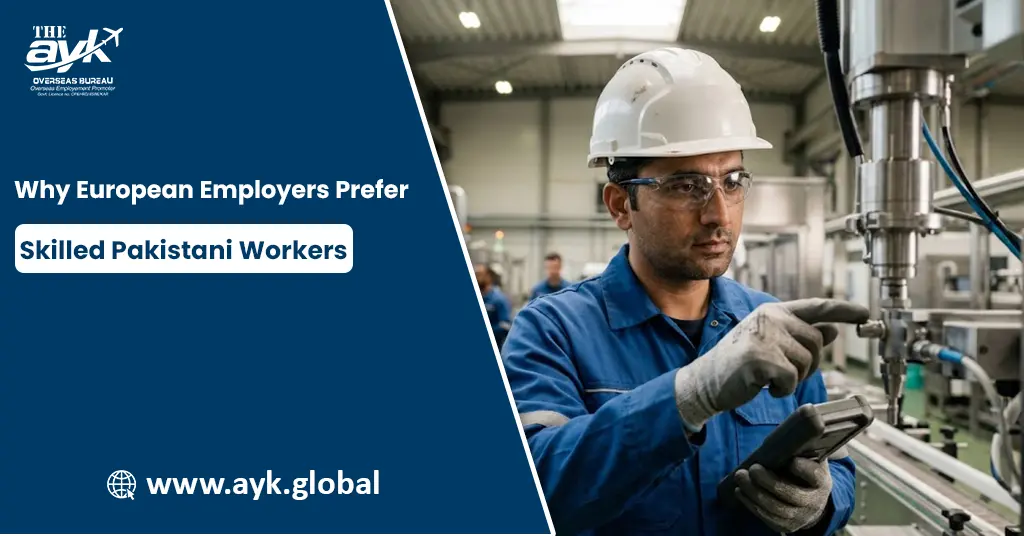
Why European Employers Prefer Skilled Pakistani Workers
Published: July 06, 2026 | Views: 13
In 2026, European employers are increasingly hiring skilled workers from Pakistan due to strong demand for labor in construction, healthcare, manufacturing, logistics, and technical industries. Countries such as Germany, Netherlands, Poland, Italy, Spain, France, and Sweden are actively recruiting foreign talent to fill workforce gaps caused by aging populations and declining local labor participation in manual and technical jobs. Skilled Pakistani workers are considered valuable because they are often experienced in trade-based work, adaptable to challenging environments, and willing to work in physically demanding roles. Many employers also find Pakistani workers reliable, hardworking, and cost-effective compared to local labor shortages. This growing trend has created more job opportunities for Pakistanis in Europe across both skilled and semi-skilled sectors. This guide explains in detail why European employers prefer skilled Pakistani workers in 2026.
Strong Technical and Trade Skills
One of the main reasons European employers prefer skilled Pakistani workers is their strong technical and trade skills. Many workers from Pakistan have experience in construction, electrical work, welding, plumbing, mechanical repairs, and factory operations. These skills are often gained through hands-on experience, vocational training, or apprenticeships. European industries value workers who can perform tasks efficiently without requiring extensive training. Skilled Pakistani workers are often already familiar with practical job requirements, making them suitable for immediate employment. Employers appreciate their ability to handle tools, machinery, and technical tasks in demanding environments. This reduces training costs and increases productivity for companies. As a result, Pakistani skilled workers are frequently hired in industries facing labor shortages across Europe.
Willingness to Work in Demand Sectors
European employers prefer Pakistani workers because they are willing to work in sectors where local workers are less available. Jobs in construction, agriculture, cleaning, logistics, and manufacturing often involve hard physical labor and long working hours. Many local workers in Europe avoid such roles, creating a gap in the labor market. Skilled Pakistani workers are often more open to these job types due to better earning opportunities and career growth abroad. This willingness makes them highly valuable to employers who need reliable workers to maintain operations. Their flexibility in accepting different job roles also increases their chances of employment. This adaptability is a key reason why Pakistani workers are in high demand across Europe.
Cost-Effective and Productive Workforce
Another important reason European employers prefer skilled Pakistani workers is cost-effectiveness combined with productivity. Hiring foreign skilled workers often helps companies manage labor costs while maintaining efficiency. Pakistani workers are known for their dedication, discipline, and strong work ethic. Employers benefit from hiring workers who can perform tasks effectively without requiring high supervision or extensive training. In industries such as construction and manufacturing, productivity plays a major role in project success. Skilled Pakistani workers often deliver consistent performance, making them a valuable asset to employers. This balance of affordability and efficiency makes them attractive candidates for European companies facing workforce shortages.
Experience in Physical and Field Work
Many skilled Pakistani workers have prior experience in physically demanding jobs, which makes them suitable for European industries. In Pakistan, workers often gain experience in construction sites, workshops, factories, and maintenance fields before applying abroad. This background helps them quickly adapt to similar job environments in Europe. Employers prefer candidates who are already familiar with tools, safety practices, and fieldwork conditions. Experience in handling real-world job challenges reduces training time and increases workplace efficiency. This practical exposure is one of the key reasons Pakistani workers are frequently selected for skilled roles in Europe.
Adaptability and Quick Learning Ability
European employers value Pakistani workers because of their adaptability and willingness to learn new skills. When working in a new country, employees must adjust to different work cultures, technologies, and safety standards. Skilled Pakistani workers often demonstrate the ability to learn quickly and adapt to new environments. Employers appreciate workers who can follow instructions, improve performance over time, and integrate into multicultural teams. This adaptability is especially important in Europe’s diverse workplaces where teamwork and communication are essential. Workers who can adjust easily are more likely to receive long-term contracts and job extensions.
Reliability and Strong Work Ethics
One of the key reasons European employers prefer skilled Pakistani workers is their reliability and strong work ethic. Many employers report that Pakistani workers are consistent in attendance, committed to completing tasks, and willing to put in extra effort when required. In industries like construction, logistics, and manufacturing, reliability is very important because project deadlines must be met. Skilled Pakistani workers are often seen as dependable employees who take responsibility seriously. This helps companies reduce workforce instability and maintain productivity. Employers also value their disciplined approach to work, especially in physically demanding environments. This reputation for reliability increases trust and makes Pakistani workers a preferred choice for long-term employment opportunities in Europe.
Experience in Team-Based Work Environments
European workplaces rely heavily on teamwork, especially in sectors such as construction, factory production, and logistics operations. Skilled Pakistani workers are often experienced in working in group settings where coordination and cooperation are essential. Employers appreciate workers who can follow instructions from supervisors and collaborate effectively with team members. Good teamwork helps improve efficiency, reduce errors, and maintain workplace safety. Pakistani workers who demonstrate respect, communication, and coordination skills are often highly valued. This ability to work in teams makes them suitable for multinational work environments where employees come from different countries and cultures. As a result, they are frequently selected for roles requiring strong collaboration skills.
Demand Due to Labor Shortages in Europe
Another major reason European employers prefer skilled Pakistani workers is the ongoing labor shortage across multiple industries. Many European countries are facing aging populations and declining interest in manual and technical jobs among local workers. This has created significant gaps in sectors such as construction, healthcare support, manufacturing, and skilled trades. To fill these gaps, employers actively recruit foreign workers, including those from Pakistan. Skilled Pakistani workers help meet urgent labor demands and ensure that projects and services continue without delays. This structural shortage in Europe has increased opportunities for international workers and strengthened demand for skilled Pakistani professionals.
Visa Sponsorship and Recruitment Support
Many European employers are willing to provide visa sponsorship for skilled Pakistani workers due to high demand in their industries. Employers often support the recruitment process by offering job contracts, assisting with documentation, and guiding candidates through visa applications. This makes it easier for skilled workers to legally move and work in Europe. Recruitment agencies also play a role in connecting Pakistani candidates with verified employers. The availability of sponsorship opportunities increases the attractiveness of Pakistani workers because it simplifies the hiring process for both employers and employees. This mutual benefit strengthens hiring preferences across European job markets.
Final Thoughts on Why European Employers Prefer Skilled Pakistani Workers
Skilled Pakistani workers are highly valued in Europe due to their technical abilities, strong work ethic, adaptability, and willingness to work in demanding industries. European employers continue to face labor shortages, which increases reliance on foreign skilled workers. Pakistani professionals are often seen as reliable, hardworking, and capable of performing tasks efficiently with minimal training. Combined with visa sponsorship opportunities and strong demand across various sectors, this makes Europe a promising destination for skilled workers from Pakistan. With proper training, certification, and preparation, Pakistani workers can build successful long-term careers in Europe.
 Best Recruitment Agency in Karachi, Complete Hiring Guide for Employers
 KSA Recruitment
 UAE Recruitment
 Qatar Recruitment
 Oman Recruitment
 Kuwait Recruitment
 Libya Recruitment
 Bahrain Recruitment
 Iraq Recruitment
 Malaysia Recruitment
 Malta Recruitment
 Canada Recruitment
 USA Recruitment
 Europe Recruitment
 UK Recruitment
 Romania Recruitment
 Poland Recruitment
 Bulgaria Recruitment
 Albania Recruitment
 Serbia Recruitment
 Lithuania Recruitment
 Japan Recruitment
 Turkey Recruitment
 Kyrgyzstan Recruitment
 South Korea Recruitment