Why Overseas Recruitment Is Growing Worldwide
Published: June 23, 2026 | Views: 26
Introduction
Overseas recruitment has transformed from a niche workforce strategy into a global business necessity. Across industries such as construction, healthcare, manufacturing, logistics, hospitality, facilities management, engineering, transportation, and oil and gas, employers are increasingly looking beyond their local labor markets to secure qualified talent. What was once considered an optional recruitment approach has now become a critical workforce solution for companies facing labor shortages, rapid expansion, and increasing competition for skilled professionals.
The growth of overseas recruitment is being driven by several interconnected factors. Aging populations in developed economies, declining labor force participation rates, large-scale infrastructure investments, healthcare workforce shortages, and globalization have created significant talent gaps. At the same time, technological advances and improved international mobility have made cross-border recruitment more efficient and accessible than ever before.
For employers, overseas recruitment provides access to larger talent pools, greater workforce flexibility, and opportunities to address staffing challenges that local labor markets cannot solve. Professional recruitment agencies help facilitate this process by connecting employers with qualified candidates and managing complex international hiring requirements.
This guide explores the key reasons why overseas recruitment is growing worldwide and why international hiring has become an essential workforce strategy for modern organizations.
1. Global Labor Shortages Are Increasing Across Industries
One of the most important factors driving overseas recruitment is the growing shortage of workers in many parts of the world. Employers across multiple industries are struggling to find qualified candidates locally, even when offering competitive compensation packages and career opportunities.
Labor shortages affect both skilled and unskilled workforce categories. Construction companies often struggle to recruit tradespeople, healthcare providers face nursing shortages, logistics companies need drivers and warehouse personnel, and manufacturers require technical specialists. These workforce gaps create operational challenges that can limit growth and reduce productivity.
Several demographic trends contribute to these shortages. Aging populations, declining birth rates, and changing workforce preferences have reduced labor availability in many developed economies. As older workers retire, employers frequently find it difficult to replace them with younger talent.
Overseas recruitment helps address these challenges by expanding access to international labor markets. Employers gain access to larger pools of candidates and can fill critical positions more effectively than relying solely on local recruitment efforts.
Why Labor Shortages Matter
Workforce shortages affect productivity and business growth.
Many industries cannot meet staffing needs through local hiring alone.
International recruitment provides access to additional talent sources.
2. Globalization Has Changed Workforce Strategies
Globalization has fundamentally transformed how organizations operate. Businesses now compete, collaborate, and expand across international markets more than ever before. As companies grow globally, their workforce strategies must evolve accordingly.
International business operations often require diverse talent with different experiences, skills, and cultural perspectives. Employers increasingly recognize that workforce diversity contributes to innovation, problem-solving, and organizational adaptability. Overseas recruitment helps organizations access this broader range of talent.
Globalization has also increased competition for skilled professionals. Organizations are no longer competing only with local employers for talent. Instead, companies must compete on a global scale. International recruitment provides access to candidates who may not be available within domestic labor markets.
As businesses continue expanding internationally, overseas recruitment will remain an important strategy for securing the workforce needed to support growth and competitiveness.
Workforce Globalization Benefits
Global talent improves workforce diversity and innovation.
International hiring supports business expansion.
Global recruitment increases access to specialized skills.
3. Major Infrastructure Projects Require Large Workforce Volumes
Governments and private organizations around the world are investing heavily in infrastructure development. Roads, airports, rail systems, energy projects, industrial facilities, hospitals, housing developments, and smart city initiatives all require substantial workforce resources.
Many countries simply do not have enough local workers available to support these large-scale projects. Construction labor shortages are particularly common in rapidly developing regions where infrastructure investment exceeds domestic workforce capacity.
Overseas recruitment provides a practical solution by allowing employers to source workers internationally. Construction companies can recruit electricians, plumbers, welders, masons, carpenters, machine operators, and laborers from countries with strong workforce availability.
Large projects often depend on international recruitment to meet staffing deadlines and maintain project schedules. Without access to overseas talent, many infrastructure initiatives would face significant delays and cost increases.
Infrastructure Drives Recruitment Demand
Large projects require significant workforce capacity.
Domestic labor markets often cannot meet demand.
International recruitment supports timely project completion.
4. Healthcare Workforce Shortages Continue to Expand
Healthcare is one of the fastest-growing sectors for international recruitment. Hospitals, clinics, long-term care facilities, and healthcare systems worldwide face persistent staffing shortages that affect patient care and operational performance.
Demand for healthcare professionals continues increasing due to population growth, aging demographics, and expanding healthcare services. At the same time, many countries struggle to train enough nurses, caregivers, technicians, and allied health professionals to meet workforce requirements.
International recruitment helps healthcare organizations access qualified professionals from global labor markets. Nurses, caregivers, medical technicians, and support staff frequently relocate internationally to pursue career opportunities and contribute to healthcare systems experiencing workforce shortages.
Healthcare recruitment agencies play a critical role by supporting credential verification, compliance management, and workforce mobilization activities. Their expertise helps employers navigate the complexities of international healthcare hiring.
Healthcare Hiring Challenges
Healthcare demand is growing faster than workforce supply.
Many countries face long-term staffing shortages.
International recruitment helps maintain healthcare service capacity.
5. Employers Need Specialized Skills That Are Difficult to Find Locally
Many organizations require technical expertise that is not readily available within local labor markets. Engineers, IT specialists, healthcare professionals, skilled tradespeople, and industrial technicians are often in short supply, creating recruitment challenges for employers.
Specialized workforce requirements are particularly common in industries experiencing technological change and rapid innovation. Organizations may need candidates with unique certifications, advanced technical knowledge, or industry-specific experience.
International recruitment expands access to these specialized skills. Employers can search globally for professionals who possess the qualifications needed to support complex projects and business objectives. This flexibility improves workforce quality and supports organizational competitiveness.
Recruitment agencies often maintain international talent networks that help employers identify specialized candidates more efficiently. These networks provide access to expertise that may be unavailable locally.
Why Specialized Talent Matters
Technical expertise supports innovation and operational success.
Global recruitment expands access to specialized professionals.
Organizations gain competitive advantages through talent acquisition.
6. International Mobility Has Become Easier
Advances in transportation, communication, and immigration processes have made international workforce mobility more practical than ever before. Workers are increasingly willing to relocate internationally in pursuit of career opportunities, better compensation, and professional development.
Technology has simplified many aspects of recruitment. Virtual interviews, digital documentation systems, online assessments, and workforce management platforms enable employers to recruit candidates across borders efficiently. Recruitment agencies leverage these tools to accelerate hiring processes and improve candidate experiences.
Governments have also introduced workforce mobility programs that support international hiring in sectors experiencing labor shortages. These initiatives help employers access talent while providing workers with legal pathways for employment.
Improved mobility contributes significantly to the growth of overseas recruitment by making cross-border employment more accessible and manageable for both employers and candidates.
Mobility Supports Recruitment Growth
Technology simplifies international hiring processes.
Workers are increasingly open to global career opportunities.
Improved mobility expands workforce availability.
7. GCC Countries Continue to Drive International Workforce Demand
The countries of the Gulf Cooperation Council (GCC), including Saudi Arabia, UAE, Qatar, Kuwait, Bahrain, and Oman, remain among the largest drivers of overseas recruitment worldwide. Massive infrastructure projects, industrial developments, healthcare expansion, tourism initiatives, logistics investments, and national development programs continue generating strong demand for international workers.
Saudi Arabia's Vision 2030, for example, has accelerated recruitment across construction, hospitality, healthcare, engineering, transportation, facilities management, and manufacturing sectors. Mega projects require thousands of workers with varying skill levels, from laborers and technicians to engineers and project managers.
Similarly, the UAE continues expanding its infrastructure, logistics, hospitality, and real estate sectors. Qatar, Kuwait, Oman, and Bahrain also depend heavily on international talent to support economic development and workforce requirements. Domestic labor markets alone are often insufficient to meet demand.
For employers operating within the GCC, overseas recruitment provides access to skilled manpower capable of supporting ambitious growth objectives. International hiring remains an essential workforce strategy throughout the region and is expected to continue growing for many years.
GCC Workforce Demand Trends
Economic diversification initiatives are increasing hiring needs.
Mega projects require large volumes of skilled and unskilled labor.
International recruitment supports long-term regional development.
8. Overseas Recruitment Helps Employers Control Workforce Costs
Another reason overseas recruitment continues growing is its ability to support cost-effective workforce planning. Employers must balance workforce quality with financial sustainability. In many cases, local labor shortages increase wage pressures and make recruitment more challenging.
International recruitment expands workforce options and allows employers to access larger labor markets. While workforce quality remains the primary consideration, broader talent availability can improve hiring flexibility and help organizations manage workforce expenses more effectively.
Cost efficiency should never be confused with low-cost hiring. Successful employers focus on securing qualified employees who contribute positively to productivity, quality standards, safety performance, and customer satisfaction. Overseas recruitment helps organizations achieve these objectives while maintaining workforce scalability.
Professional recruitment agencies play an important role by helping employers identify suitable candidates efficiently. Structured recruitment processes reduce hiring delays, improve workforce quality, and contribute to stronger financial outcomes over time.
Workforce Cost Benefits
Broader labor markets improve hiring flexibility.
Efficient recruitment reduces operational disruptions.
Quality workforce planning supports financial sustainability.
9. Demographic Changes Are Reshaping Labor Markets
Demographic trends are having a profound impact on workforce availability around the world. Many developed economies are experiencing aging populations and declining birth rates, resulting in shrinking labor forces and growing talent shortages.
As experienced workers retire, employers face increasing challenges replacing them. Younger workforce populations are often smaller and may not possess the skills or experience necessary to fill critical positions immediately. These demographic realities are affecting industries ranging from healthcare and construction to manufacturing and logistics.
At the same time, many developing countries continue producing large numbers of educated and skilled workers seeking international employment opportunities. Overseas recruitment helps connect these workforce resources with employers experiencing labor shortages.
Demographic trends are long-term in nature, which means international recruitment will likely remain an important workforce solution for decades. Employers that understand these shifts are better positioned to develop sustainable hiring strategies and maintain workforce stability.
Demographics and Recruitment
Aging populations reduce workforce availability.
Retirement trends increase hiring pressures.
International recruitment helps balance global labor supply and demand.
10. Recruitment Agencies Are Expanding Globally
The growth of overseas recruitment has been supported significantly by the expansion of professional recruitment agencies. These organizations serve as intermediaries between employers and international talent, simplifying recruitment processes and reducing hiring complexity.
Modern recruitment agencies provide far more than candidate sourcing. They support workforce planning, screening, trade testing, compliance management, documentation processing, visa coordination, workforce mobilization, and deployment activities. Their expertise enables employers to access global talent without building extensive internal recruitment infrastructure.
Agencies also invest heavily in technology, workforce databases, candidate networks, and market research. These investments improve recruitment efficiency and help employers respond quickly to changing workforce requirements. As labor markets become more competitive, professional recruitment support becomes increasingly valuable.
Organizations that partner with experienced recruitment agencies often gain access to broader talent pools and more reliable workforce solutions. This contributes directly to the continued growth of international recruitment worldwide.
Why Recruitment Agencies Matter
Agencies simplify complex international hiring processes.
Professional expertise improves recruitment outcomes.
Employers gain access to global talent more efficiently.
11. The Future of Workforce Mobility Is International
Workforce mobility is expected to become even more important in the coming years. Economic growth, technological change, globalization, and demographic trends will continue influencing labor markets and workforce availability. As a result, employers are likely to rely increasingly on international recruitment strategies.
Remote work has already demonstrated that talent can contribute across geographic boundaries. While many industries still require physical workforce deployment, global talent acquisition has become more accepted and widely practiced. Organizations are becoming more comfortable hiring internationally and integrating diverse workforce teams.
Governments are also adapting to changing workforce needs by introducing immigration pathways, workforce mobility programs, and labor agreements designed to support international employment. These initiatives make cross-border recruitment more accessible and efficient.
The future workforce will likely be more mobile, more diverse, and more international than ever before. Employers that embrace international recruitment will be better positioned to compete in evolving labor markets.
Future Workforce Trends
Global mobility will continue increasing.
International talent acquisition will become more common.
Workforce diversity will support organizational innovation.
12. Why Employers Need International Recruitment Partners
While international recruitment offers significant advantages, it also introduces complexity. Workforce planning, sourcing, screening, compliance management, visa processing, documentation requirements, mobilization activities, and onboarding procedures all require expertise and coordination.
Many employers lack the internal resources necessary to manage these responsibilities independently. Recruitment partners provide valuable support by guiding organizations through every stage of the international hiring process. Their knowledge reduces recruitment risks and improves workforce outcomes.
AYK Overseas Recruitment & HR Manpower Agency (License No. GL-4586-KAR) helps employers access skilled and unskilled manpower through structured international recruitment solutions. By combining workforce planning, candidate sourcing, trade testing support, documentation management, and mobilization expertise, professional agencies help employers build reliable workforce teams.
As overseas recruitment continues growing worldwide, partnerships with experienced recruitment providers will become increasingly important. Organizations that leverage professional support often achieve faster hiring, stronger workforce quality, and better long-term results.
The Value of Recruitment Partnerships
Professional support improves hiring efficiency.
Recruitment expertise reduces workforce risks.
Partnerships help employers navigate complex international recruitment processes.
Conclusion
Overseas recruitment is growing worldwide because employers increasingly need access to talent beyond their local labor markets. Labor shortages, demographic changes, globalization, infrastructure development, healthcare workforce demand, and economic expansion have all contributed to the rise of international hiring.
Organizations that embrace overseas recruitment gain access to larger talent pools, improved workforce flexibility, and opportunities to address staffing challenges more effectively. Professional recruitment agencies play a critical role by helping employers navigate complex international hiring requirements and achieve successful workforce outcomes.
As global workforce dynamics continue evolving, overseas recruitment will remain one of the most important strategies for organizations seeking sustainable growth, productivity, and competitiveness.
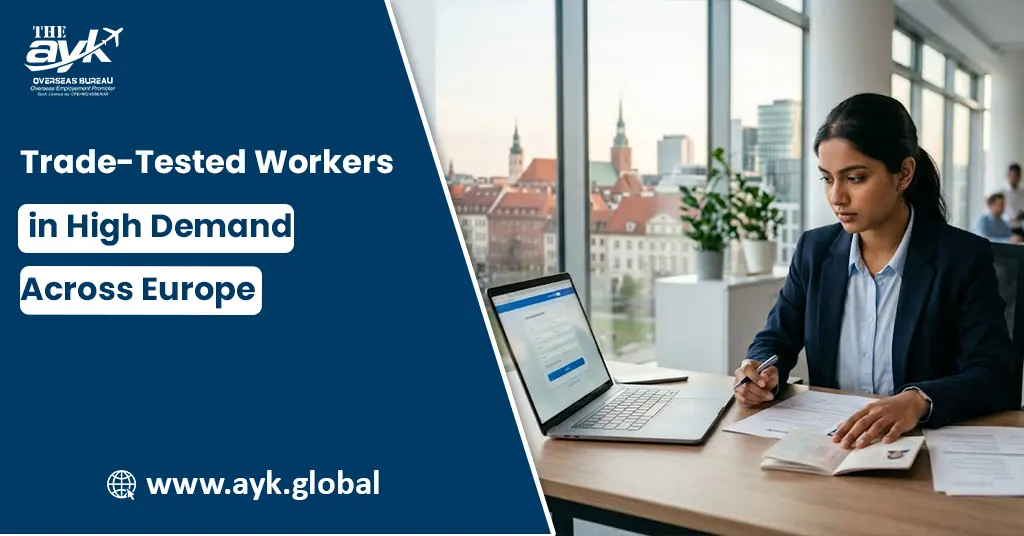 Trade-Tested Workers in High Demand Across Europe
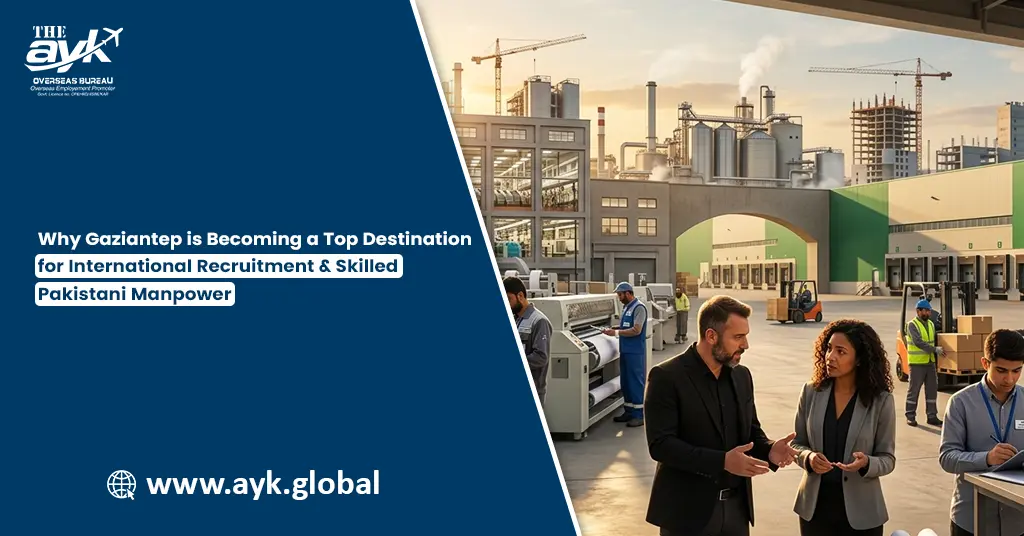 Why Gaziantep Is Becoming a Top Destination for International Recruitment and Skilled Pakistani Manpower
 Irelands Rapid Economic Growth and Workforce Pressure
 KSA Recruitment
 UAE Recruitment
 Qatar Recruitment
 Oman Recruitment
 Kuwait Recruitment
 Libya Recruitment
 Bahrain Recruitment
 Iraq Recruitment
 Malaysia Recruitment
 Malta Recruitment
 Canada Recruitment
 USA Recruitment
 Europe Recruitment
 UK Recruitment
 Romania Recruitment
 Poland Recruitment
 Bulgaria Recruitment
 Albania Recruitment
 Serbia Recruitment
 Lithuania Recruitment
 Japan Recruitment
 Turkey Recruitment
 Kyrgyzstan Recruitment
 South Korea Recruitment