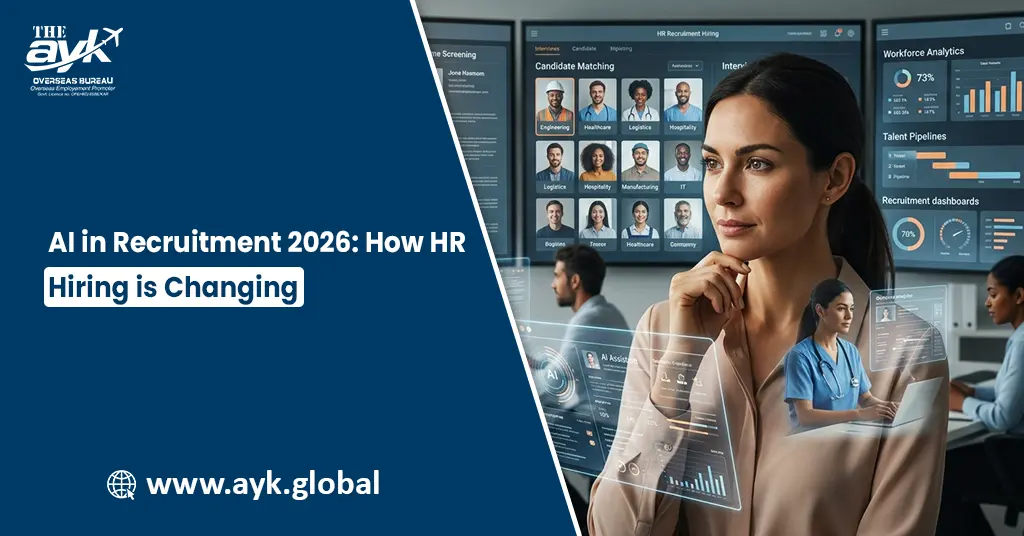
AI in Recruitment 2026: How HR Hiring Is Changing
Published: June 30, 2026 | Views: 26
Introduction
Artificial intelligence has moved from being an experimental tool in recruitment to becoming a core part of how HR departments and recruitment agencies operate across the global hiring landscape in 2026. From automated resume screening to AI-powered interview scheduling and candidate matching algorithms, the way employers find, evaluate, and select talent has fundamentally shifted, creating both new opportunities and new challenges for job seekers navigating this evolving recruitment environment.
For workers pursuing overseas employment opportunities, understanding how AI is reshaping recruitment practices has become increasingly important, since these technological changes directly affect how applications are reviewed, how quickly candidates receive responses, and what kind of documentation and presentation now performs best within these automated systems. AYK Overseas Recruitment & HR Manpower Agency, recognized as one of Pakistan's top manpower agencies, has been actively adapting our own processes to work effectively alongside these AI-driven recruitment trends while ensuring candidates are not disadvantaged by purely automated evaluation methods.
AI-Powered Resume Screening Becoming Standard Practice
Resume screening through AI-powered systems has become standard practice across many large employers and recruitment platforms, with algorithms scanning applications for specific keywords, qualifications, and experience patterns before a human recruiter ever reviews the candidate's materials. This shift has significantly sped up the initial screening process for employers handling large volumes of applications, but it has also created new challenges for candidates whose qualifications may not align precisely with the specific keyword patterns these systems are designed to detect.
Job seekers navigating this AI-screened landscape need to ensure their CVs and application materials use clear, industry-standard terminology that matches how their skills and experience are typically described within their target industry. Workers who present their qualifications using vague or unconventional language risk being filtered out by these automated systems before a human recruiter ever has the chance to recognize their genuine suitability for a position.
Automated Candidate Matching and Job Recommendation Systems
Many recruitment platforms now employ sophisticated matching algorithms that analyze candidate profiles against available job openings, automatically recommending positions based on skills, experience, location preferences, and various other data points collected throughout the application process. These automated matching systems have made it considerably easier for job seekers to discover relevant opportunities that might not have surfaced through traditional manual job searching methods.
However, these matching systems depend heavily on the quality and completeness of the data candidates provide during profile creation, meaning workers who invest time in thoroughly completing their profiles with accurate, detailed information generally receive more relevant job recommendations than those who provide minimal or vague details. Understanding how to optimize your profile information for these automated matching systems has become an increasingly valuable skill for job seekers navigating modern recruitment platforms.
AI-Driven Video Interview Analysis
Some employers and recruitment agencies have begun incorporating AI analysis into video interview processes, using algorithms to evaluate factors like communication clarity, response relevance, and various behavioral indicators alongside traditional human interviewer assessments. This technology remains somewhat controversial and is applied more selectively than resume screening, but its use continues growing across certain industries and larger employer organizations seeking to standardize their interview evaluation processes.
Candidates participating in these AI-analyzed interviews should focus on clear, direct communication and ensuring their responses directly address the questions being asked, since these systems generally perform better at evaluating structured, relevant responses compared to more tangential or rambling answers. While human judgment still plays a significant role in most hiring decisions, understanding that AI analysis may be occurring during video interviews can help candidates present themselves more effectively throughout this evaluation stage.
Chatbot-Based Initial Candidate Screening
Many recruitment platforms and larger employers now use chatbot systems for initial candidate screening, asking standardized questions about availability, basic qualifications, and preliminary fit before connecting candidates with human recruiters for more detailed evaluation. These chatbot interactions, while sometimes frustrating for candidates seeking immediate human connection, have significantly improved processing efficiency for handling large volumes of initial inquiries.
Job seekers should treat these chatbot interactions with the same seriousness as they would a human screening conversation, providing accurate, complete, and professional responses rather than dismissing the interaction as unimportant simply because it involves automated technology. Workers who engage thoughtfully with these initial automated screening steps generally progress more smoothly to subsequent stages involving human recruiter interaction.
Predictive Analytics for Workforce Planning
Beyond candidate-facing applications, AI has also transformed how employers and recruitment agencies approach workforce planning, using predictive analytics to forecast hiring needs, identify skill gaps, and anticipate future recruitment demands based on historical patterns and current market data. This predictive capability has allowed forward-thinking agencies and employers to proactively prepare for hiring needs rather than reacting only after positions become urgently vacant.
This shift toward predictive workforce planning has practical implications for job seekers as well, since agencies using these analytical tools can often identify emerging demand trends earlier, allowing them to guide candidates toward developing skills or certifications that align with anticipated future opportunities. Workers who partner with agencies leveraging this kind of forward-looking analysis may find themselves better positioned for emerging opportunities before they become widely advertised.
Concerns About Algorithmic Bias in Hiring
As AI plays an increasingly significant role in recruitment decisions, legitimate concerns have emerged regarding potential algorithmic bias, where automated systems might inadvertently disadvantage certain candidate groups based on patterns embedded in their training data rather than genuine merit-based evaluation. This concern has prompted growing scrutiny from labor authorities and human rights organizations regarding how these systems are designed and implemented across different recruitment contexts.
For overseas job seekers, this concern is particularly relevant given the additional complexity that nationality, educational background from different countries, and varying CV formatting conventions can introduce into how AI systems evaluate international candidates compared to local applicants. Working with an agency that understands these potential biases and helps candidates present their qualifications in formats that minimize these risks has become an increasingly valuable safeguard in this evolving recruitment landscape.
How Agencies Are Adapting Their Services to AI-Driven Recruitment
Recruitment agencies that have successfully adapted to this AI-driven recruitment landscape are increasingly offering candidates guidance on optimizing their application materials, profiles, and interview preparation specifically for these automated evaluation systems. This represents a meaningful evolution in the agency's traditional role, moving beyond simply connecting candidates with employers toward actively helping candidates navigate the technical realities of modern recruitment technology.
This adaptation has become particularly important for overseas recruitment specifically, since candidates applying from Pakistan often need additional guidance on how their qualifications, certifications, and experience should be presented to perform well within AI screening systems primarily designed around Western or Gulf-standard CV formatting conventions. Agencies that invest in understanding these technical nuances provide genuinely valuable support that purely informal recruitment channels simply cannot match.
Maintaining the Human Element Within AI-Driven Recruitment
Despite the growing role of AI throughout the recruitment process, human judgment, relationship building, and genuine understanding of candidate circumstances remain essential, particularly for overseas employment situations involving significant life decisions like international relocation. The most effective recruitment approaches in 2026 generally combine AI efficiency for initial screening and matching with genuine human oversight and support throughout the more consequential later stages of the recruitment process.
This balanced approach recognizes that while AI excels at processing large volumes of data efficiently, decisions involving overseas relocation, family considerations, and long-term career planning benefit significantly from human empathy and contextual understanding that current AI systems simply cannot fully replicate. Workers should seek out agencies that leverage AI tools for efficiency while maintaining genuine human support throughout the entire recruitment journey.
How AYK Overseas Balances AI Efficiency with Human Support
As a government-licensed international recruitment and HR manpower firm with offices in Karachi and Islamabad, AYK Overseas Recruitment & HR Manpower Agency has thoughtfully integrated AI-driven tools into our recruitment processes while maintaining the personal, human support that overseas job seekers genuinely need throughout their employment journey. Being recognized as one of Pakistan's top manpower agencies, we believe technology should enhance rather than replace the genuine human guidance candidates deserve during such significant life decisions.
Our team helps candidates optimize their application materials for modern AI screening systems while providing personalized guidance, contract review, and ongoing support that purely automated platforms cannot offer. This balanced approach has allowed AYK Overseas Recruitment & HR Manpower Agency to help candidates successfully navigate this evolving recruitment landscape without losing the personal attention that overseas employment decisions truly require.
Conclusion
Artificial intelligence has fundamentally transformed recruitment practices in 2026, from automated resume screening to predictive workforce analytics, creating both new opportunities and new challenges for job seekers navigating modern hiring processes. Workers who understand these technological shifts and partner with agencies that thoughtfully balance AI efficiency with genuine human support are best positioned to successfully navigate this evolving recruitment landscape and secure meaningful overseas employment opportunities.
 Are Gulf Jobs Only for Men? Breaking the Stereotype
 Top Tips for First-Time Overseas Job Applicants from Pakistan
 Workforce Solutions for Fast-Growing Companies
 KSA Recruitment
 UAE Recruitment
 Qatar Recruitment
 Oman Recruitment
 Kuwait Recruitment
 Libya Recruitment
 Bahrain Recruitment
 Iraq Recruitment
 Malaysia Recruitment
 Malta Recruitment
 Canada Recruitment
 USA Recruitment
 Europe Recruitment
 UK Recruitment
 Romania Recruitment
 Poland Recruitment
 Bulgaria Recruitment
 Albania Recruitment
 Serbia Recruitment
 Lithuania Recruitment
 Japan Recruitment
 Turkey Recruitment
 Kyrgyzstan Recruitment
 South Korea Recruitment