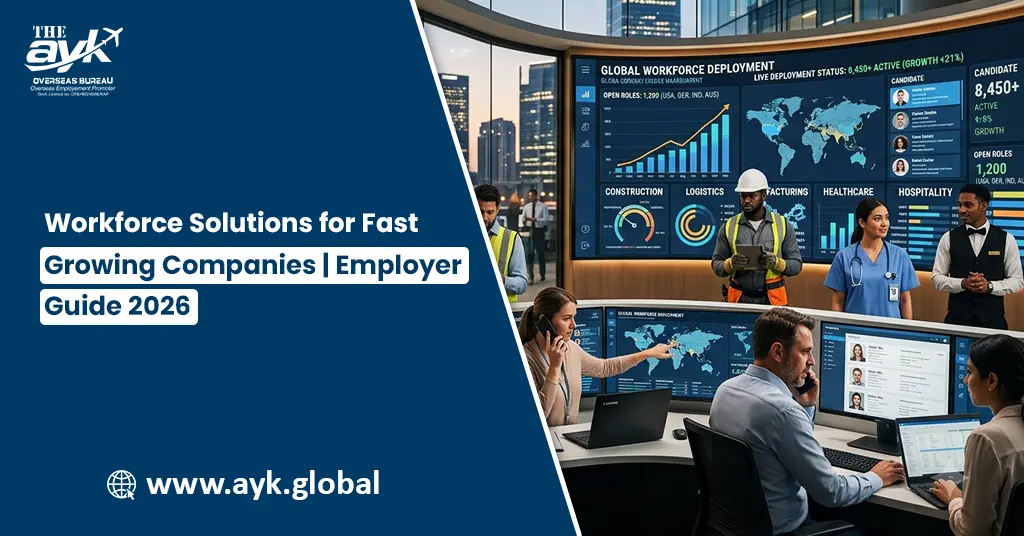
Workforce Solutions for Fast-Growing Companies
Published: June 23, 2026 | Views: 21
Growth is one of the most exciting phases in a company's journey. Increasing customer demand, expanding operations, new contracts, market expansion, and rising revenue all indicate business success. However, growth also creates challenges that many organizations underestimate. Among the most significant challenges is workforce availability.
Fast-growing companies often discover that hiring becomes more difficult as expansion accelerates. New projects require additional employees, customer expectations increase, operational complexity grows, and workforce demands evolve rapidly. Without effective workforce solutions, growth can become difficult to sustain.
Many businesses focus heavily on sales, operations, infrastructure, and technology during expansion while overlooking workforce planning. Yet workforce readiness is often the factor that determines whether growth initiatives succeed or fail. Organizations may have strong market opportunities but lack the manpower necessary to capitalize on them effectively.
Workforce solutions provide employers with the tools, strategies, and resources needed to scale efficiently. These solutions include workforce planning, manpower supply, recruitment partnerships, international hiring, employee development, workforce flexibility, and talent retention initiatives. Together, these approaches help organizations maintain growth momentum while controlling workforce-related risks.
Fast-growing businesses require workforce strategies that are proactive, scalable, and aligned with long-term objectives. Organizations that invest in workforce readiness are often better positioned to sustain growth and maintain competitive advantages.
This guide explores the workforce solutions that help fast-growing companies expand successfully while maintaining productivity, quality, and operational efficiency.
1. Growth Creates New Workforce Challenges
Business expansion changes workforce requirements significantly. Organizations that once operated with small teams may suddenly require dozens or hundreds of additional employees. Operational complexity increases, leadership structures evolve, and workforce coordination becomes more demanding.
Many employers underestimate how quickly workforce needs can change during growth periods. Recruitment processes that worked effectively for a small organization may become inadequate when hiring requirements increase substantially. Without scalable workforce solutions, staffing shortages often emerge.
Growth also affects workforce composition. Businesses may require new skill sets, specialized expertise, technical professionals, supervisors, and support staff. Workforce planning must evolve alongside business objectives to ensure staffing resources remain aligned with operational needs.
Recognizing workforce challenges early allows organizations to prepare effectively. Companies that anticipate staffing requirements are better positioned to maintain growth momentum and avoid operational disruptions.
Growth Challenges
Expansion increases workforce complexity.
Hiring needs often grow rapidly.
Scalable workforce solutions become essential.
2. Workforce Planning Supports Sustainable Expansion
One of the most important workforce solutions for growing companies is workforce planning. Expansion should never occur without understanding future staffing requirements. Workforce planning helps employers forecast hiring needs, identify skill gaps, and prepare recruitment strategies before shortages affect operations.
Strategic workforce planning aligns human resources with business objectives. Employers can determine how many employees will be needed, what skills are required, and when recruitment activities should begin. This proactive approach improves workforce readiness and reduces growth-related risks.
Workforce planning also supports budgeting and resource allocation. Organizations gain greater visibility into labor costs, training requirements, and workforce development needs. Better planning leads to more efficient decision-making throughout the growth process.
Companies that prioritize workforce planning generally experience smoother expansion and stronger operational performance. Workforce readiness becomes a growth enabler rather than a limitation.
Workforce Planning Benefits
Forecasting improves recruitment preparedness.
Planning supports business objectives.
Workforce readiness accelerates growth.
3. Rapid Hiring Is Essential During Expansion
Growth opportunities often emerge quickly. New contracts, project awards, market expansion initiatives, and customer demand increases may require immediate workforce support. Employers must therefore develop recruitment capabilities that can respond rapidly.
Traditional hiring processes are often too slow for fast-growing businesses. Sourcing candidates, conducting interviews, verifying qualifications, and onboarding employees can take weeks or months. During periods of expansion, these delays may affect business performance.
Rapid hiring solutions help organizations secure talent quickly while maintaining workforce quality. Professional recruitment agencies, manpower suppliers, and talent acquisition partners provide access to workforce resources that accelerate hiring timelines.
Employers that can recruit efficiently are better positioned to capitalize on growth opportunities. Workforce availability becomes a strategic advantage during expansion phases.
Hiring Speed Matters
Growth often requires immediate staffing support.
Recruitment delays can affect expansion plans.
Rapid hiring solutions improve workforce readiness.
4. Workforce Flexibility Supports Business Agility
Fast-growing companies operate in dynamic environments. Customer demand, project requirements, and market conditions may change rapidly. Workforce flexibility helps organizations adapt to these changes without disrupting operations.
Flexible workforce solutions include temporary staffing, project-based hiring, contract workers, and scalable manpower supply arrangements. These options allow employers to adjust workforce levels according to operational requirements.
Workforce flexibility is particularly valuable during uncertain growth periods because organizations can increase staffing when demand rises and adjust resources when requirements change. This reduces workforce-related risks and improves operational agility.
Employers that maintain flexible workforce structures are often better prepared to respond to opportunities and challenges. Adaptability becomes a key driver of growth success.
Flexibility Benefits
Flexible staffing improves responsiveness.
Scalable workforce models support expansion.
Adaptability strengthens business performance.
5. International Recruitment Expands Talent Access
Labor shortages are common during growth phases because workforce demand increases faster than talent availability. Many organizations struggle to recruit qualified employees through local labor markets alone.
International recruitment provides access to broader talent pools and helps employers address workforce shortages more effectively. Skilled professionals, technical specialists, tradespeople, healthcare workers, drivers, and support staff can often be sourced internationally when local recruitment options are limited.
Global talent access improves workforce flexibility and reduces dependence on local labor market conditions. Employers gain the ability to recruit employees with specialized skills and experience that support business objectives.
International recruitment has become an increasingly important workforce solution for fast-growing companies because it expands hiring opportunities and improves workforce availability.
International Recruitment Advantages
Global talent pools improve workforce access.
International hiring reduces staffing constraints.
Broader sourcing supports business growth.
6. Skilled Manpower Drives Operational Performance
Growth requires more than additional employees. Businesses need workers who possess the skills necessary to maintain productivity, quality, and operational efficiency. Skilled manpower is therefore a critical workforce solution for expanding organizations.
Technical specialists, experienced supervisors, skilled tradespeople, healthcare professionals, engineers, and operational experts often contribute disproportionately to business performance. Their expertise helps organizations execute projects effectively and maintain service standards during periods of growth.
Recruiting skilled manpower can be challenging because competition for talent remains intense across many industries. Employers that develop strong workforce acquisition strategies gain significant advantages.
Investing in workforce quality ensures that growth is supported by capable employees who contribute to long-term organizational success.
Skilled Workforce Benefits
Qualified employees improve productivity.
Workforce quality supports expansion.
Skilled manpower strengthens competitive advantages.
7. Employee Retention Becomes More Important During Growth
Many organizations focus heavily on recruitment during expansion but overlook employee retention. While attracting new employees is important, retaining experienced workers is equally critical for long-term growth. Losing key employees during a growth phase can create significant operational disruptions and increase recruitment costs.
Fast-growing companies often place additional pressure on existing teams. Employees may take on more responsibilities, work longer hours, and adapt to changing organizational structures. If these challenges are not managed effectively, workforce satisfaction may decline and turnover can increase.
Retention strategies help organizations protect valuable workforce knowledge and maintain stability during periods of rapid change. Competitive compensation, career development opportunities, employee recognition programs, and supportive leadership all contribute to stronger retention outcomes.
Employers that balance recruitment with retention are generally better positioned to sustain growth. Experienced employees provide continuity and help new workforce members integrate successfully into the organization.
Retention Benefits
Experienced employees support business continuity.
Lower turnover reduces recruitment costs.
Retention strengthens workforce stability.
8. Leadership Development Supports Expansion
Growth often requires stronger leadership structures. As organizations expand, management responsibilities increase and workforce coordination becomes more complex. Businesses therefore need leaders who can guide teams effectively and support organizational objectives.
Leadership development helps prepare employees for future management roles. Training programs, mentorship initiatives, project leadership opportunities, and succession planning activities all contribute to stronger leadership capability.
Internal leadership development offers significant advantages because existing employees already understand company culture, business processes, and organizational goals. Promoting from within often improves employee engagement and supports workforce stability.
Organizations that invest in leadership development create stronger foundations for growth. Effective leaders improve workforce performance, support employee engagement, and contribute to long-term business success.
Leadership Advantages
Strong leaders improve workforce performance.
Internal development supports succession planning.
Leadership capability supports sustainable growth.
9. Technology Improves Workforce Management
Technology has become an essential workforce solution for growing businesses. As workforce size increases, managing recruitment, onboarding, scheduling, communication, training, and performance tracking becomes more challenging. Technology helps employers streamline these activities and improve workforce efficiency.
Modern workforce management systems provide visibility into staffing levels, recruitment pipelines, employee performance, attendance, training progress, and workforce costs. This information supports better decision-making and improves operational control.
Technology also enhances recruitment efficiency. Applicant tracking systems, digital onboarding platforms, workforce analytics, and communication tools help employers manage hiring activities more effectively. Growing organizations benefit because administrative workloads are reduced.
Businesses that leverage workforce technology often experience stronger productivity and greater scalability. Technology supports expansion by improving workforce coordination and operational efficiency.
Technology Benefits
Digital tools improve workforce management.
Automation reduces administrative workloads.
Technology supports scalable growth.
10. Workforce Automation Supports Efficiency
Automation is increasingly influencing workforce strategies across industries. While automation does not replace the need for employees, it helps organizations improve efficiency and optimize workforce utilization.
Automated systems can perform repetitive tasks, process data, support communication activities, and improve operational workflows. Employees are then able to focus on higher-value responsibilities that require human expertise and decision-making.
For fast-growing companies, automation provides an opportunity to increase operational capacity without proportionally increasing workforce size. This improves productivity and supports cost management during expansion.
Successful organizations combine workforce talent with technological capabilities to achieve stronger business outcomes. Automation should be viewed as a workforce enhancement tool rather than a workforce replacement strategy.
Automation Advantages
Automation improves operational efficiency.
Employees can focus on higher-value activities.
Technology supports scalable growth models.
11. Recruitment Agency Partnerships Accelerate Growth
Professional recruitment agencies play a critical role in helping fast-growing companies overcome workforce challenges. Their expertise, talent networks, and sourcing capabilities provide access to workforce resources that many organizations cannot develop independently.
Recruitment agencies support candidate sourcing, workforce planning, screening, qualification verification, market analysis, and international recruitment initiatives. These services improve hiring efficiency and reduce recruitment risks.
Fast-growing businesses often benefit from agency partnerships because workforce requirements can change rapidly. Recruitment partners provide flexibility and scalability that support expansion objectives. Employers gain access to qualified candidates without increasing internal recruitment infrastructure significantly.
Organizations that build strong recruitment partnerships are often better prepared to manage workforce growth and maintain hiring momentum.
Recruitment Partnership Benefits
Agencies improve access to talent.
Professional sourcing accelerates recruitment.
Workforce partnerships support expansion goals.
12. Why AYK Overseas Supports Fast-Growing Companies
Business growth requires workforce partners capable of supporting expansion efficiently and reliably. Employers need recruitment solutions that provide workforce flexibility, talent access, compliance support, and international hiring expertise.
AYK Overseas Recruitment & HR Manpower Agency
License No. GL-4586-KAR
helps fast-growing companies address workforce challenges through manpower supply services, workforce planning support, international recruitment, candidate sourcing, screening, trade testing assistance, documentation management, compliance coordination, and workforce mobilization.
The agency supports industries including construction, healthcare, logistics, manufacturing, hospitality, facilities management, transportation, engineering, and oil and gas. By connecting employers with qualified workforce resources, AYK Overseas helps organizations maintain growth momentum and improve workforce readiness.
Fast-growing businesses require workforce solutions that are scalable, reliable, and aligned with long-term objectives. Professional recruitment partnerships contribute significantly to expansion success by ensuring talent availability when it is needed most.
Strategic Workforce Support
Reliable recruitment improves workforce readiness.
International hiring expands talent access.
Workforce partnerships support sustainable growth.
Conclusion
Fast-growing companies face unique workforce challenges that require proactive solutions. Workforce planning, rapid hiring, flexible staffing, international recruitment, employee retention, leadership development, technology adoption, and recruitment partnerships all contribute to successful expansion.
Organizations that prioritize workforce readiness are better equipped to capitalize on growth opportunities and maintain operational performance. Rather than reacting to staffing shortages after they occur, successful businesses develop workforce strategies that anticipate future needs and support long-term objectives.
As labor markets become increasingly competitive, workforce solutions will remain a critical component of sustainable business growth. Companies that invest in workforce planning and talent acquisition today will be better positioned to achieve success tomorrow.
 How Manpower Agencies Save Time and Hiring Costs
 How to Recruit Electricians, Plumbers and Technicians Efficiently
 How to Hire Skilled Workers for Construction Projects
 KSA Recruitment
 UAE Recruitment
 Qatar Recruitment
 Oman Recruitment
 Kuwait Recruitment
 Libya Recruitment
 Bahrain Recruitment
 Iraq Recruitment
 Malaysia Recruitment
 Malta Recruitment
 Canada Recruitment
 USA Recruitment
 Europe Recruitment
 UK Recruitment
 Romania Recruitment
 Poland Recruitment
 Bulgaria Recruitment
 Albania Recruitment
 Serbia Recruitment
 Lithuania Recruitment
 Japan Recruitment
 Turkey Recruitment
 Kyrgyzstan Recruitment
 South Korea Recruitment