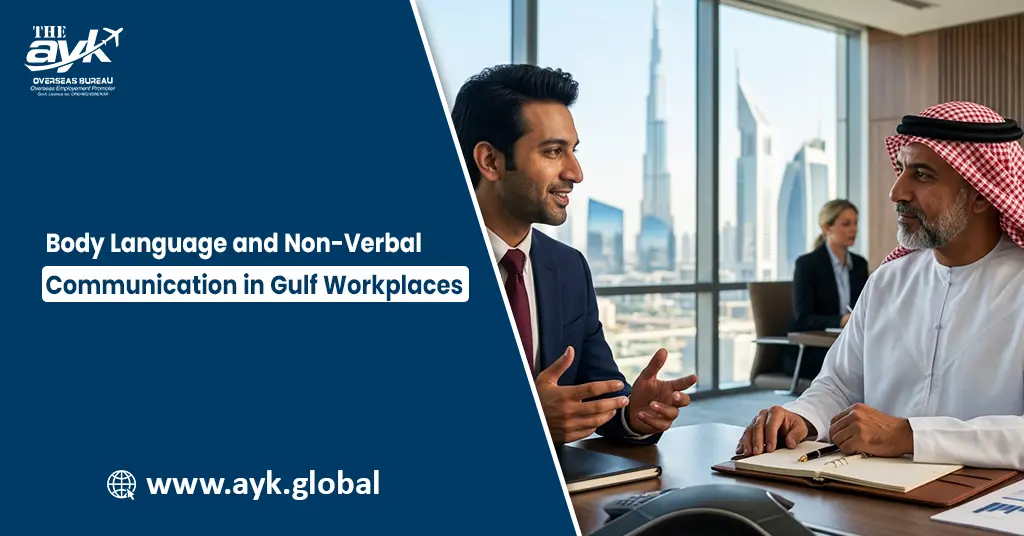
Body Language and Non-Verbal Communication in Gulf Workplaces
Published: July 01, 2026 | Views: 17
Introduction
Non-verbal communication carries enormous weight in Gulf workplace environments, where body language, physical gestures, eye contact patterns, and various other non-verbal signals communicate professional respect, cultural sensitivity, and interpersonal intentions in ways that spoken words alone cannot fully convey. Pakistani workers who understand these specific non-verbal communication norms navigate their Gulf workplace relationships considerably more smoothly compared to workers who inadvertently create misunderstanding or offense through non-verbal behaviors that seem completely natural within Pakistani cultural contexts but carry different meanings within Gulf professional environments.
This guide examines key body language and non-verbal communication considerations specifically relevant to Gulf workplace contexts. AYK Overseas Recruitment & HR Manpower Agency, recognized as one of Pakistan's top manpower agencies, includes cultural communication guidance within comprehensive pre-departure preparation, recognizing that non-verbal communication awareness significantly affects overall workplace integration success for Pakistani overseas workers.
Greetings and Physical Contact Norms
Physical greeting conventions vary meaningfully within Gulf workplace contexts depending on the specific cultural backgrounds involved, with some situations calling for traditional handshakes while others involve different greeting conventions, and important gender considerations affecting appropriate physical greeting behavior that Pakistani workers should understand clearly before their first workplace interactions. Understanding these greeting conventions helps workers make positive rather than inadvertently awkward first impressions during initial workplace relationship establishment.
Workers should understand that handshakes are generally appropriate between men of similar or different national backgrounds, while physical greetings with opposite gender colleagues require particular sensitivity to individual preferences and specific cultural or religious orientations that vary between different individuals and contexts. Allowing the other person to initiate physical greeting contact, rather than extending your hand first in all situations, represents a generally safe approach that shows appropriate awareness of these variable greeting conventions.
Eye Contact Patterns and Their Cultural Meanings
Eye contact carries different cultural meanings within Gulf professional contexts compared to Pakistani domestic workplace norms, with appropriate eye contact levels, duration, and directness varying between different cultural backgrounds and gender interaction contexts in ways that workers should understand to avoid either appearing disrespectful through insufficient eye contact or inappropriately intense through excessive direct eye contact with certain counterparts. This eye contact awareness helps workers communicate genuine attentiveness and respect through this important non-verbal channel.
Workers should develop sensitivity to individual response signals that indicate whether their current eye contact level feels comfortable or uncomfortable to specific counterparts, adjusting accordingly rather than applying a single eye contact formula across all Gulf workplace interactions regardless of individual and cultural variation. This responsive calibration represents genuine social awareness that builds professional relationship quality more effectively than rigid adherence to any single eye contact approach across all contexts.
Personal Space and Proximity Norms
Personal space preferences and acceptable interaction proximity vary between different cultural backgrounds in ways that sometimes create discomfort when workers from different proximity norms interact without awareness of these differences. Gulf workplace contexts sometimes involve closer physical proximity during conversation than some workers might find comfortable based on their own cultural background, while other specific contexts call for greater distance than casual Pakistani workplace interactions might involve.
Workers should develop awareness of personal space cues that signal whether their current interaction distance feels comfortable or uncomfortable to specific counterparts, developing the responsive spatial sensitivity that genuine cross-cultural communication comfort requires. This spatial awareness helps workers calibrate their interaction proximity appropriately across different Gulf workplace contexts rather than defaulting to single proximity norms that may not translate well across this culturally diverse workplace environment.
Hand Gestures and Their Cultural Significance
Various hand gestures carry specific cultural meanings within Gulf contexts that Pakistani workers should understand, recognizing that gestures considered completely innocent or positive within Pakistani cultural contexts sometimes carry negative or offensive connotations within Gulf cultural frameworks. This gesture awareness helps workers avoid inadvertently creating negative impressions through gestures whose cross-cultural implications they were simply unaware of rather than intending any disrespect.
Workers should be particularly careful about thumb-related gestures, certain pointing conventions, and various other hand movements that carry culture-specific meanings, defaulting toward minimal gesture usage when uncertain about specific gesture appropriateness rather than continuing to use culturally familiar gestures whose Gulf cultural meaning they have not specifically verified. This cautious gesture approach helps workers avoid the cultural communication missteps that innocent gesture unawareness sometimes creates.
Showing Respect Through Physical Orientation and Attention
Physical orientation and attention signals during workplace interactions communicate important respect and engagement messages within Gulf professional contexts, with appropriate facing toward conversation partners, avoiding distracting body movements, and various other attention signal behaviors demonstrating the genuine respect that Gulf professional relationships specifically value. Workers should develop awareness of how their physical orientation during workplace interactions communicates their engagement and respect levels to observant Gulf colleagues and supervisors.
Workers should particularly attend to avoiding behavior patterns that signal distraction or disrespect during interactions with supervisors, including checking phones during conversations, allowing attention to drift visibly toward other activities, and various other distraction signals that communicate inadequate respect for the specific person or conversation. This respectful attention signaling represents an important non-verbal respect channel that complements spoken communication throughout professional relationship development.
Dress and Appearance as Non-Verbal Communication
Dress and personal appearance represent powerful non-verbal communication channels within Gulf professional environments, with appropriate attire signaling professional seriousness, cultural respect, and workplace belonging in ways that transcend purely practical clothing function. Workers should understand their dress choices as genuinely communicative rather than simply functional, recognizing that appearance decisions continuously signal professional messages to Gulf workplace observers regardless of whether workers consciously intend this communication.
Workers should research specific appearance expectations relevant to their employment sector and employer context, ensuring their dress choices align with the professional respect signals these specific contexts require rather than simply meeting minimum stated dress code requirements without understanding the broader professional impression their appearance creates throughout their workplace interactions. This appearance awareness helps workers leverage dress as a positive professional communication tool rather than simply avoiding obvious dress code violations.
Posture and Physical Bearing Signals
Physical posture and bearing communicate important professional confidence and respect signals within Gulf workplace environments, with upright, attentive posture during work performance and professional interactions signaling genuine engagement and professional seriousness while slumped or inattentive posture communicates the opposite regardless of how competent the worker's actual task performance might be. Workers should develop awareness of their typical posture patterns and how these communicate professional messages throughout their daily workplace presence.
Workers should also understand the specific posture differences appropriate between different workplace contexts, including more formal, attentive bearing during supervisor interactions and instruction receipt compared to more relaxed working postures during solo task completion, recognizing that appropriate posture calibration across different contexts demonstrates genuine professional awareness rather than simply maintaining rigid formality regardless of contextual appropriateness.
Facial Expression and Emotional Regulation
Facial expressions and emotional display conventions differ somewhat between Gulf cultural contexts and Pakistani domestic norms, with Gulf professional environments generally expecting more restrained emotional expression during professional interactions compared to the more openly expressive communication styles common in Pakistani social contexts. Workers should develop appropriate emotional regulation and professional facial expression management that demonstrates professional composure valued within Gulf workplace environments.
Workers should particularly develop awareness of frustration or irritation expression management during workplace challenges, recognizing that visible emotional reactions to workplace difficulties communicate potential professional instability that damages professional reputation in ways that composed, professional responses to the same challenges do not. This emotional regulation capability represents an important professional communication skill that significantly affects overall workplace relationship quality throughout Gulf employment.
How AYK Overseas Prepares Candidates for Non-Verbal Communication
As a government-licensed international recruitment and HR manpower firm with offices in Karachi and Islamabad, AYK Overseas Recruitment & HR Manpower Agency provides cultural communication guidance including non-verbal communication awareness as part of comprehensive pre-departure preparation, recognizing that cultural communication competency significantly affects workplace integration success. Being recognized as one of Pakistan's top manpower agencies, we believe this cultural preparation dimension deserves genuine attention alongside more obvious practical employment preparation activities.
Our team discusses key non-verbal communication considerations relevant to candidates' specific destination countries and employment sectors, helping workers arrive with appropriate cross-cultural communication awareness that supports smoother initial workplace relationship establishment. This cultural preparation investment has helped AYK Overseas Recruitment & HR Manpower Agency support candidates in achieving more successful Gulf workplace integration throughout their overseas employment experience.
Conclusion
Understanding body language and non-verbal communication norms within Gulf workplace environments, including greeting conventions, eye contact patterns, personal space preferences, gesture appropriateness, and emotional expression calibration, significantly affects how Pakistani workers' professional conduct is perceived and received throughout their daily workplace interactions. Workers who develop this cross-cultural non-verbal communication awareness before departure are considerably better positioned for smooth, respectful workplace integration that builds the professional relationships their long-term Gulf employment success genuinely requires.
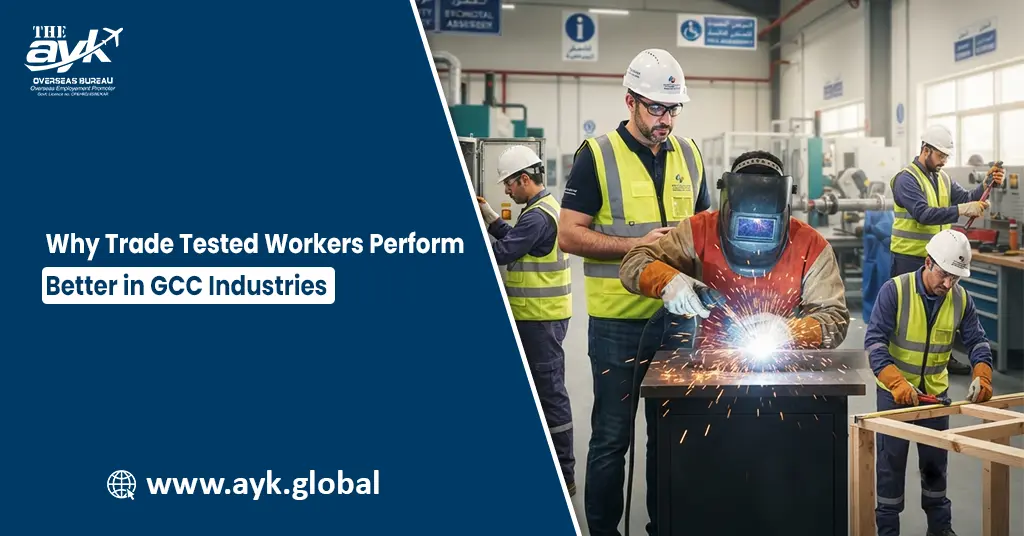 Why Trade-Tested Workers Perform Better in GCC Industries
 KSA Recruitment
 UAE Recruitment
 Qatar Recruitment
 Oman Recruitment
 Kuwait Recruitment
 Libya Recruitment
 Bahrain Recruitment
 Iraq Recruitment
 Malaysia Recruitment
 Malta Recruitment
 Canada Recruitment
 USA Recruitment
 Europe Recruitment
 UK Recruitment
 Romania Recruitment
 Poland Recruitment
 Bulgaria Recruitment
 Albania Recruitment
 Serbia Recruitment
 Lithuania Recruitment
 Japan Recruitment
 Turkey Recruitment
 Kyrgyzstan Recruitment
 South Korea Recruitment