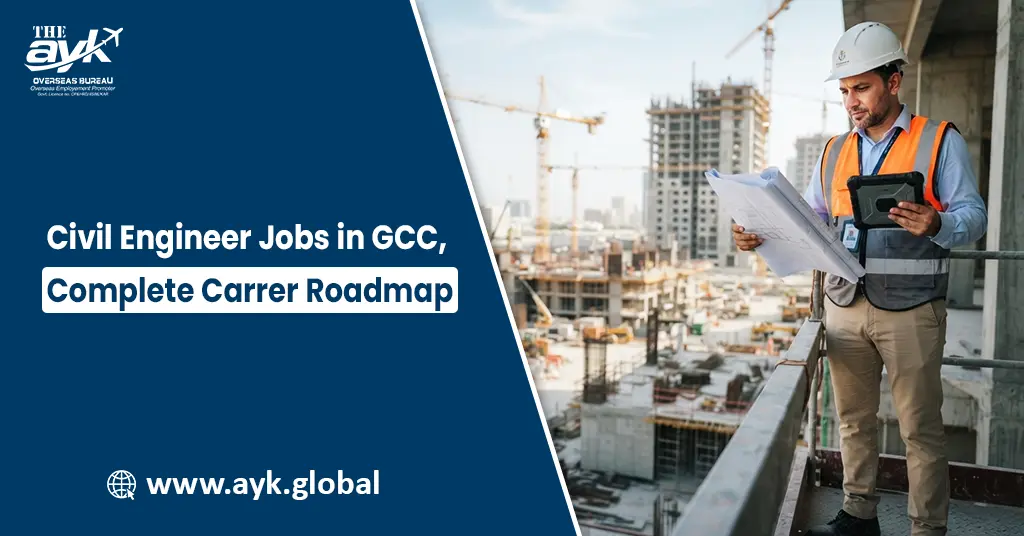
Civil Engineer Jobs in GCC, Complete Career Roadmap
Published: July 02, 2026 | Views: 97
Introduction
Civil engineer jobs in GCC countries are among the most prestigious, high-paying, and rapidly growing career opportunities for Pakistani professionals in 2026. Civil engineering plays a central role in the development of modern infrastructure across Saudi Arabia, United Arab Emirates (UAE), Qatar, Kuwait, Oman, and Bahrain. From skyscrapers, highways, bridges, airports, and metro systems to smart cities, residential communities, and mega industrial zones, civil engineers are the backbone of every construction project.
In recent years, GCC countries have launched massive development programs such as Saudi Vision 2030, UAE infrastructure expansion plans, Qatar National Vision, and large-scale urban development projects across the region. These initiatives have created an enormous demand for skilled civil engineers who can design, plan, manage, and supervise construction projects. Pakistani civil engineers are highly respected in GCC countries due to their strong academic background, technical skills, and hands-on experience in construction and project management.
Civil engineering careers in GCC countries offer tax-free salaries, excellent benefits, accommodation, transport, and long-term career stability. However, the profession is highly competitive and requires strong technical knowledge, leadership skills, and practical field experience. Understanding the complete career roadmap is essential for anyone planning to build a successful civil engineering career in the GCC region.
Types of Civil Engineer Jobs in GCC Countries
Civil engineering jobs in GCC countries are divided into several specialized roles depending on project requirements and technical expertise. The most common positions include site engineers, structural engineers, project engineers, planning engineers, quantity surveyors, and construction supervisors. Each role plays a critical part in different stages of construction projects.
Site engineers are responsible for managing daily construction activities on-site, ensuring that work is carried out according to design specifications and safety standards. Structural engineers focus on designing and analyzing building structures, ensuring they are strong, stable, and safe. Project engineers oversee entire construction projects, coordinating between clients, contractors, and engineering teams.
Planning engineers develop project timelines, schedules, and resource plans to ensure timely completion of construction projects. Quantity surveyors handle cost estimation, budgeting, and financial control of projects. Construction supervisors monitor on-site labor work, materials usage, and overall project progress to ensure efficiency and quality control.
Demand for Civil Engineers in GCC Countries
The demand for civil engineers in GCC countries is extremely high due to continuous infrastructure development and urban expansion. Saudi Arabia leads the region with massive mega-projects, including smart cities, industrial zones, and tourism developments under Vision 2030. UAE also has strong demand, especially in Dubai and Abu Dhabi, where luxury real estate, skyscrapers, and advanced infrastructure projects are continuously expanding.
Qatar requires civil engineers for stadiums, transportation systems, airports, and urban development projects. Kuwait has steady demand in housing projects, road networks, and government infrastructure. Oman focuses on port development, industrial zones, and residential construction, while Bahrain offers smaller but stable opportunities in commercial and residential projects.
The GCC construction industry is one of the fastest-growing sectors globally, and civil engineers are at the center of this growth. As cities expand vertically and horizontally, the need for skilled engineers continues to rise every year.
Salary Structure for Civil Engineers in GCC
Civil engineer salaries in GCC countries are among the highest in the engineering sector. Entry-level civil engineers typically earn competitive salaries, while experienced engineers and project managers earn significantly higher incomes. UAE and Qatar generally offer the highest salary packages due to advanced infrastructure projects and multinational companies.
In addition to basic salary, civil engineers often receive housing allowances, transport allowances, overtime pay, and performance bonuses. Many companies also provide annual increments, end-of-service benefits, and family accommodation packages for senior engineers.
Senior-level engineers working on large infrastructure projects such as highways, airports, or mega cities earn premium salaries due to their leadership responsibilities and technical expertise. Salary levels also depend on certifications, experience, and project complexity.
Skills Required for Civil Engineer Jobs
Civil engineering jobs in GCC countries require strong technical knowledge, analytical thinking, and project management skills. Engineers must understand structural design, construction materials, surveying, and soil mechanics. Knowledge of software tools such as AutoCAD, Civil 3D, Primavera, and SAP2000 is highly important.
Leadership and communication skills are essential because civil engineers manage teams, coordinate with contractors, and communicate with clients. Problem-solving skills are critical for handling construction challenges such as design changes, site issues, and project delays.
Time management and decision-making abilities are also important because construction projects operate under strict deadlines and budgets. Engineers must ensure that projects are completed safely, efficiently, and within financial limits.
Educational Requirements and Certifications
Civil engineer jobs in GCC countries typically require a bachelor’s degree in civil engineering or a related field. Higher qualifications such as master’s degrees or specialized certifications can improve career opportunities and salary packages.
Professional certifications such as PMP (Project Management Professional), AutoCAD certification, and safety certifications like NEBOSH are highly valued in GCC countries. These certifications demonstrate advanced knowledge and improve employability in competitive job markets.
Many employers also require previous site experience, especially for mid-level and senior positions. Fresh graduates may start as site engineers or junior engineers before moving into higher roles.
Recruitment Process for Civil Engineers in GCC
The recruitment process for civil engineer jobs in GCC countries is more structured compared to technical trade jobs. Candidates usually apply through engineering recruitment agencies, construction companies, or direct job portals. Shortlisted candidates are invited for technical interviews and HR interviews.
Technical interviews assess knowledge of construction methods, structural design, project management, and software tools. Some companies may also conduct practical assessments or ask candidates to present past project experience.
Once selected, candidates go through document verification, credential evaluation, medical tests, and visa processing. GCC employers offer work visas under sponsorship systems, ensuring legal employment and residency.
Job Opportunities in Different GCC Countries
Each GCC country offers strong civil engineering opportunities based on infrastructure development. Saudi Arabia leads with the largest number of mega-projects, including NEOM, industrial cities, and smart infrastructure developments. UAE offers world-class opportunities in skyscrapers, luxury developments, airports, and transportation systems.
Qatar provides strong demand due to stadiums, metro systems, and urban expansion projects. Kuwait has steady opportunities in government infrastructure and housing projects. Oman focuses on ports, highways, and industrial development, while Bahrain offers smaller but stable construction opportunities.
Overall, civil engineers are in high demand across all GCC countries due to continuous development and modernization.
Career Growth and Future Scope
Civil engineering careers in GCC countries offer excellent long-term growth opportunities. Engineers can start as site engineers and progress to senior engineer, project manager, construction manager, and eventually to director-level positions.
Specialization in areas such as structural engineering, project management, or transportation engineering can significantly increase career prospects. Engineers with international experience and advanced certifications have higher chances of securing top positions.
The future scope of civil engineering in GCC is extremely strong due to ongoing urban expansion, smart city development, and mega infrastructure projects. As long as construction continues, civil engineers will remain in high demand.
Conclusion
Civil engineer jobs in GCC countries provide excellent career opportunities for Pakistani professionals in 2026, offering high salaries, strong demand, and long-term career growth. With continuous infrastructure development across Saudi Arabia, UAE, Qatar, Kuwait, Oman, and Bahrain, civil engineers play a vital role in shaping modern cities and industrial systems.
Although the profession is competitive and demanding, it offers excellent financial rewards, career stability, and international exposure. Engineers who continuously improve their skills and gain experience can build highly successful careers in the GCC construction industry.
 The Future of Blue-Collar Jobs in Gulf Countries
 Plumber Jobs in the Gulf: Demand, Pay, and Career Path
 KSA Recruitment
 UAE Recruitment
 Qatar Recruitment
 Oman Recruitment
 Kuwait Recruitment
 Libya Recruitment
 Bahrain Recruitment
 Iraq Recruitment
 Malaysia Recruitment
 Malta Recruitment
 Canada Recruitment
 USA Recruitment
 Europe Recruitment
 UK Recruitment
 Romania Recruitment
 Poland Recruitment
 Bulgaria Recruitment
 Albania Recruitment
 Serbia Recruitment
 Lithuania Recruitment
 Japan Recruitment
 Turkey Recruitment
 Kyrgyzstan Recruitment
 South Korea Recruitment