
Common Reasons Pakistani Candidates Get Rejected for GCC Jobs
Published: July 02, 2026 | Views: 13
Introduction
Getting a job in GCC countries like Saudi Arabia, United Arab Emirates (UAE), Qatar, Kuwait, Oman, and Bahrain is a major goal for thousands of Pakistani job seekers in 2026. These countries offer attractive salaries, tax-free income, accommodation benefits, overtime opportunities, and long-term career growth in industries such as construction, oil and gas, engineering, healthcare, logistics, hospitality, and technical trades.
However, despite having strong demand for workers, many Pakistani candidates still get rejected during the recruitment process. The main reason is not always lack of opportunities, but failure to meet employer expectations or make mistakes during application, interview, documentation, or skill evaluation stages.
GCC employers are now more selective than ever before. They carefully evaluate CVs, conduct interviews, check experience, verify skills, and assess professionalism before hiring overseas workers. Even small mistakes can lead to rejection because competition is very high from countries like India, Nepal, Bangladesh, Philippines, and Egypt.
This detailed guide explains the most common reasons why Pakistani candidates get rejected for GCC jobs and how these mistakes can be avoided.
Poorly Structured or Unprofessional CV
One of the biggest reasons for rejection is a poorly prepared CV. Many candidates submit CVs that are unclear, unorganized, or not tailored for GCC job requirements.
Employers receive hundreds of applications daily, and they quickly reject CVs that:
- Contain too much irrelevant information
- Have poor formatting
- Lack clear job titles or experience details
- Include spelling or grammar mistakes
A GCC CV should be simple, professional, and focused on skills and experience. Many candidates fail because they treat CV writing casually, while employers expect a professional presentation that clearly shows job readiness.
A weak CV creates a negative first impression and often leads to immediate rejection before interview stage.
Lack of Relevant Skills for the Job
Another major reason for rejection is lack of job-specific skills. GCC employers hire based on practical ability rather than just education.
For example:
- An electrician must know wiring, installation, and troubleshooting
- A welder must understand MIG, TIG, and ARC welding
- An HVAC technician must handle cooling systems efficiently
- A driver must have proper road experience and safety knowledge
Many candidates apply for skilled jobs without proper training or hands-on experience. This leads to rejection during interviews or skill tests.
Employers prefer candidates who can perform tasks immediately without long training periods.
Insufficient Work Experience
Experience is a key factor in GCC hiring decisions. Most skilled jobs require at least 2–5 years of relevant experience.
Candidates with no experience or unrelated experience are often rejected because employers consider them high-risk hires.
Even if a candidate is technically skilled, lack of proven work history reduces confidence in their ability to handle real job conditions.
Experience shows reliability, consistency, and ability to work under pressure, which are highly valued in GCC industries.
Poor Interview Performance
Interview performance is one of the most critical stages of GCC recruitment. Many candidates get rejected because they cannot answer questions properly or lack confidence.
Common interview mistakes include:
- Weak communication skills
- Lack of job knowledge
- Nervous behavior
- Short or unclear answers
- Inability to explain experience
GCC employers prefer candidates who are confident, clear, and professional in communication.
Even skilled workers can get rejected if they fail to perform well in interviews.
Lack of Basic English Communication Skills
English is widely used in GCC workplaces because employees come from different countries. Basic communication is essential for safety and coordination.
Candidates with very weak English skills often struggle in interviews and are rejected because employers believe they may face difficulties in workplace communication.
Simple understanding of instructions and ability to respond clearly is often required even for labor and technical jobs.
Fake or Misleading Experience Information
Providing false information in CV or interview is another serious reason for rejection. Employers in GCC countries often verify experience through reference checks.
If a candidate exaggerates skills or provides fake job history, it can lead to immediate rejection and even blacklist from future opportunities.
Honesty is very important in GCC recruitment process.
Failure in Technical Skill Tests
For skilled jobs, employers often conduct practical skill tests. Many candidates fail because they lack real hands-on experience.
For example:
- Electricians may fail wiring tests
- Welders may fail joint quality tests
- Mechanics may struggle with equipment repair tasks
Skill tests are designed to verify real ability, and candidates without proper training are usually rejected at this stage.
Medical Test Failure
Medical fitness is mandatory for GCC employment visas. Candidates can be rejected if they fail medical tests due to:
- Infectious diseases
- Physical disability
- Health conditions unsuitable for job
Even after selection, medical failure can cancel job offers.
Maintaining good health is essential for overseas employment.
Incomplete or Incorrect Documentation
Documentation errors are a common reason for rejection. GCC employers require accurate documents including:
- Passport
- Educational certificates
- Experience letters
- Medical reports
Missing or incorrect documents delay visa processing or lead to rejection.
Proper documentation is critical for legal employment.
Unrealistic Salary Expectations
Some candidates demand salaries higher than market standards. Employers reject such candidates because salary expectations must match job role and experience.
GCC companies offer competitive but structured salary packages. Unrealistic expectations often result in rejection.
Lack of Professional Behavior
Professional behavior is highly important in GCC recruitment. Candidates who show disrespect, lack discipline, or behave unprofessionally are often rejected.
Employers prefer workers who are:
- Polite
- Disciplined
- Responsible
- Cooperative
Behavior during interview plays a major role in selection.
Applying Through Unverified Sources
Many candidates apply through fake agents or unverified job offers. This leads to rejection or fraud situations.
GCC employers prefer candidates from licensed manpower agencies and verified recruitment channels.
Unprofessional or fake sources reduce credibility.
Weak Understanding of Job Role
Candidates who do not fully understand job responsibilities often fail interviews.
Employers expect candidates to clearly know:
- Job duties
- Working conditions
- Required skills
Lack of job understanding shows poor preparation and leads to rejection.
Lack of Flexibility and Adaptability
GCC jobs often require long working hours, overtime, and multicultural teamwork.
Candidates who show unwillingness to adapt are often rejected.
Employers prefer flexible and adaptable workers.
Poor Physical Fitness
Many GCC jobs are physically demanding. Candidates who are not physically fit may fail medical checks or job performance expectations.
Physical fitness is especially important in construction, logistics, and industrial jobs.
Conclusion
Rejection in GCC job applications is often due to avoidable mistakes rather than lack of opportunity. Pakistani candidates are in high demand in Saudi Arabia, UAE, Qatar, Kuwait, Oman, and Bahrain, but success depends on proper preparation.
By improving CV quality, gaining relevant skills, preparing for interviews, maintaining documentation, and applying through legal channels, candidates can significantly increase their chances of selection.
Understanding these common rejection reasons helps job seekers avoid mistakes and build successful international careers.
 The True Cost of Choosing the Cheapest Recruitment Agent
 European Work Visa and Job Opportunities for Pakistani Professionals
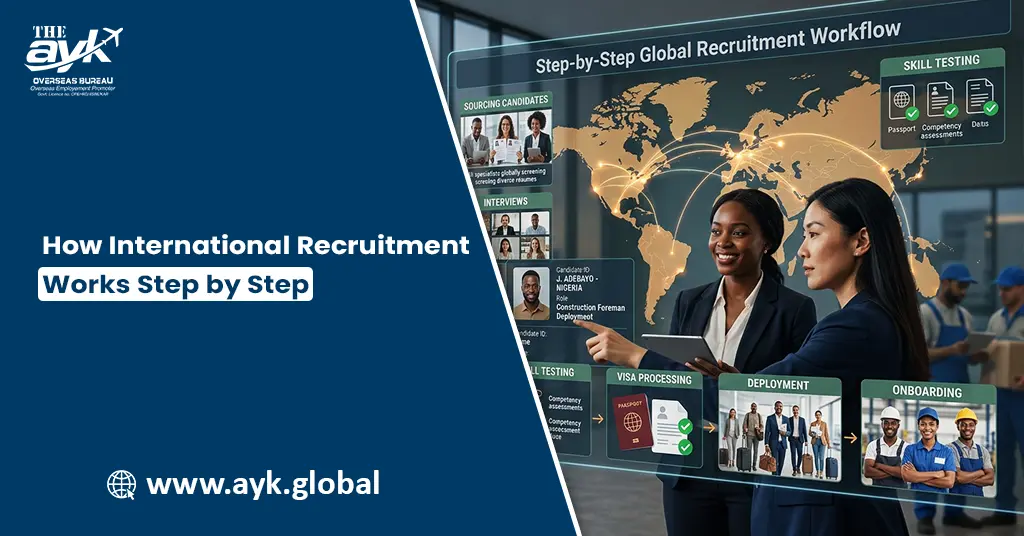 How International Recruitment Works Step by Step
 KSA Recruitment
 UAE Recruitment
 Qatar Recruitment
 Oman Recruitment
 Kuwait Recruitment
 Libya Recruitment
 Bahrain Recruitment
 Iraq Recruitment
 Malaysia Recruitment
 Malta Recruitment
 Canada Recruitment
 USA Recruitment
 Europe Recruitment
 UK Recruitment
 Romania Recruitment
 Poland Recruitment
 Bulgaria Recruitment
 Albania Recruitment
 Serbia Recruitment
 Lithuania Recruitment
 Japan Recruitment
 Turkey Recruitment
 Kyrgyzstan Recruitment
 South Korea Recruitment