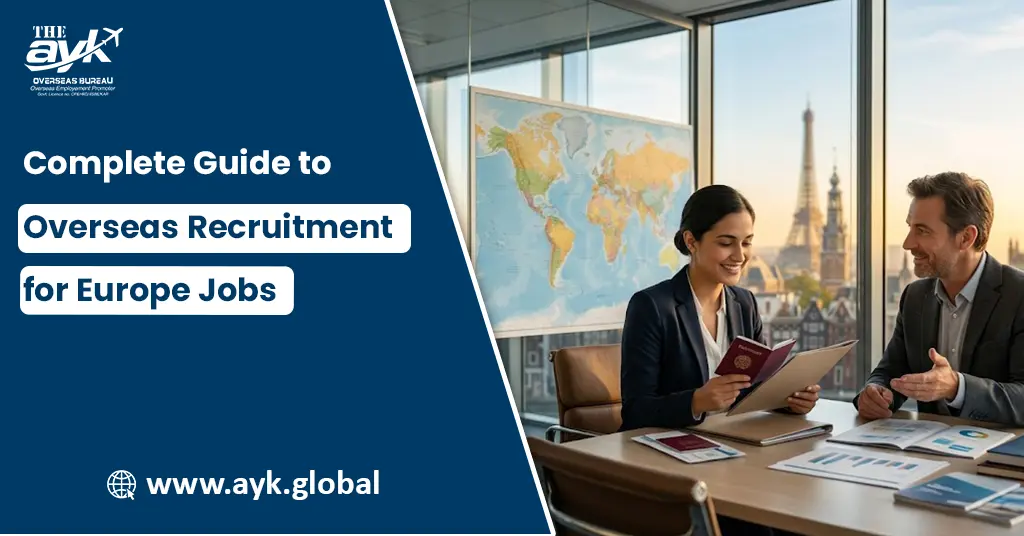
Complete Guide to Overseas Recruitment for Europe Jobs
Published: July 06, 2026 | Views: 9
Complete Guide to Overseas Recruitment for Europe Jobs
Overseas recruitment for Europe jobs in 2026 has become one of the most important pathways for foreign workers from countries like Pakistan, India, Bangladesh, Nepal, and others who are looking for better career opportunities abroad. Europe is facing continuous labor shortages in industries such as construction, healthcare, logistics, manufacturing, hospitality, and IT, which has increased demand for skilled and semi-skilled foreign workers. Overseas recruitment agencies play a major role in connecting international candidates with European employers who are willing to hire workers from outside the EU. These agencies help with job matching, documentation, interviews, and visa processing. However, understanding how the recruitment process works is essential to avoid fraud and increase chances of success. This guide explains the complete overseas recruitment process for Europe jobs in 2026.
What Is Overseas Recruitment for Europe Jobs?
Overseas recruitment refers to the process of hiring workers from one country to work in another country through licensed recruitment agencies or direct employer hiring. In the case of Europe jobs, recruitment agencies act as intermediaries between European employers and foreign job seekers. They identify job openings, screen candidates, and help match them with suitable positions based on skills and experience. Employers in Europe use these agencies to fill labor shortages quickly and efficiently. This process is especially common in industries that require large numbers of workers, such as construction, manufacturing, agriculture, and healthcare. Overseas recruitment ensures that both employers and employees follow legal hiring procedures.
Role of Recruitment Agencies in Europe Jobs
Recruitment agencies play a key role in the hiring process for Europe jobs. They help candidates find verified job opportunities and guide them through each step of employment. Agencies assist with CV preparation, interview scheduling, and document verification. They also coordinate with employers to ensure that job offers are legitimate and meet legal standards. In many cases, agencies help candidates understand visa requirements and required certifications. Reliable agencies only work with licensed European companies and provide transparent hiring processes. However, job seekers must be careful and verify the authenticity of agencies before making any payments or commitments.
Step-by-Step Overseas Recruitment Process
The overseas recruitment process for Europe jobs usually follows a structured sequence. First, candidates submit their CV and application to a recruitment agency or directly to an employer. Next, the agency shortlists candidates based on job requirements. After shortlisting, candidates may be invited for interviews, which are often conducted online. If selected, the employer issues a job offer or contract. The candidate then begins the visa application process with required documents such as passport, medical certificate, and police clearance. Once the visa is approved, the worker can travel to Europe and start employment. Each step must be completed carefully to avoid delays or rejection.
Requirements for Overseas Recruitment
To apply through overseas recruitment for Europe jobs, candidates must meet certain basic requirements. A valid passport is essential for international travel. Depending on the job type, employers may require educational qualifications, vocational training, or relevant work experience. Basic English communication skills are often needed for workplace coordination. Some countries also require medical fitness certificates and background checks. For skilled jobs, professional certifications may be necessary. Employers prefer candidates who are disciplined, hardworking, and willing to adapt to new environments. Meeting these requirements increases the chances of selection and visa approval.
Importance of Choosing Licensed Recruitment Agencies
Choosing a licensed recruitment agency is extremely important for securing safe and legal employment in Europe. Licensed agencies are authorized by government authorities and follow proper hiring regulations. They provide genuine job offers and verified employer connections. On the other hand, fake agencies often mislead candidates with false promises and charge high fees without providing real jobs. Verifying agency credentials, checking reviews, and confirming employer details can help avoid fraud. Trusted agencies ensure transparency throughout the recruitment process and protect candidates from scams. This step is critical for a successful overseas job application.
Common Mistakes in Overseas Recruitment Process
Many candidates make serious mistakes during the overseas recruitment process for Europe jobs. One of the most common mistakes is trusting unverified agents who promise guaranteed jobs or visas. Another mistake is submitting incomplete or incorrect documents, which can delay or reject applications. Some candidates also apply for jobs that do not match their skills or experience, reducing their chances of selection. Poor communication during interviews and lack of preparation can also negatively affect results. Additionally, not understanding visa requirements or ignoring official procedures can lead to legal issues. Avoiding these mistakes is very important for a smooth and successful recruitment process.
How to Identify Genuine Recruitment Agencies
Identifying genuine recruitment agencies is essential to avoid fraud and secure real job opportunities in Europe. A legitimate agency is usually registered with government authorities and has verifiable contact details, office address, and license number. Genuine agencies do not guarantee jobs without interviews or official selection processes. They also provide written contracts and transparent fee structures. Checking online reviews and past candidate experiences can help verify authenticity. Trusted agencies work directly with European employers and follow legal recruitment procedures. Candidates should always confirm job offers with official documentation before making any payments or commitments.
Visa and Documentation Process in Recruitment
The visa and documentation process is a key part of overseas recruitment for Europe jobs. After receiving a job offer, candidates must prepare required documents such as passport, employment contract, medical fitness certificate, and police clearance. Depending on the country, additional documents like educational certificates or skill assessments may be required. The employer or recruitment agency often guides the candidate through the visa application process. Applications are submitted to the respective embassy for approval. Processing times vary depending on the country and job type. Proper documentation is essential to avoid delays or rejection.
Benefits of Overseas Recruitment for Europe Jobs
Overseas recruitment offers many benefits for job seekers looking to work in Europe. It provides access to verified job opportunities that may not be available locally. Candidates receive professional guidance throughout the hiring process, including CV preparation, interviews, and visa assistance. Recruitment agencies also help ensure legal employment and reduce the risk of fraud. Workers can secure better salaries, stable jobs, and international career exposure. Many employers also provide accommodation, transportation, and other benefits. Overall, overseas recruitment simplifies the process of finding and securing jobs in Europe.
Final Thoughts on Overseas Recruitment for Europe Jobs
Overseas recruitment is one of the most effective ways to find legal and stable employment in Europe. However, success depends on proper planning, verified agencies, and correct documentation. Candidates must avoid scams, prepare professionally, and understand each step of the recruitment process. Europe offers excellent opportunities for skilled and semi-skilled workers, but competition is strong. With the right approach and awareness, job seekers can build successful international careers through overseas recruitment.
 Understanding Antalya Growing Demand for International Manpower
 Hire Pakistani Workers for Malaysia, A Complete Guide for Employers
 Europe Work Visa Guide for Pakistani Job Seekers
 KSA Recruitment
 UAE Recruitment
 Qatar Recruitment
 Oman Recruitment
 Kuwait Recruitment
 Libya Recruitment
 Bahrain Recruitment
 Iraq Recruitment
 Malaysia Recruitment
 Malta Recruitment
 Canada Recruitment
 USA Recruitment
 Europe Recruitment
 UK Recruitment
 Romania Recruitment
 Poland Recruitment
 Bulgaria Recruitment
 Albania Recruitment
 Serbia Recruitment
 Lithuania Recruitment
 Japan Recruitment
 Turkey Recruitment
 Kyrgyzstan Recruitment
 South Korea Recruitment