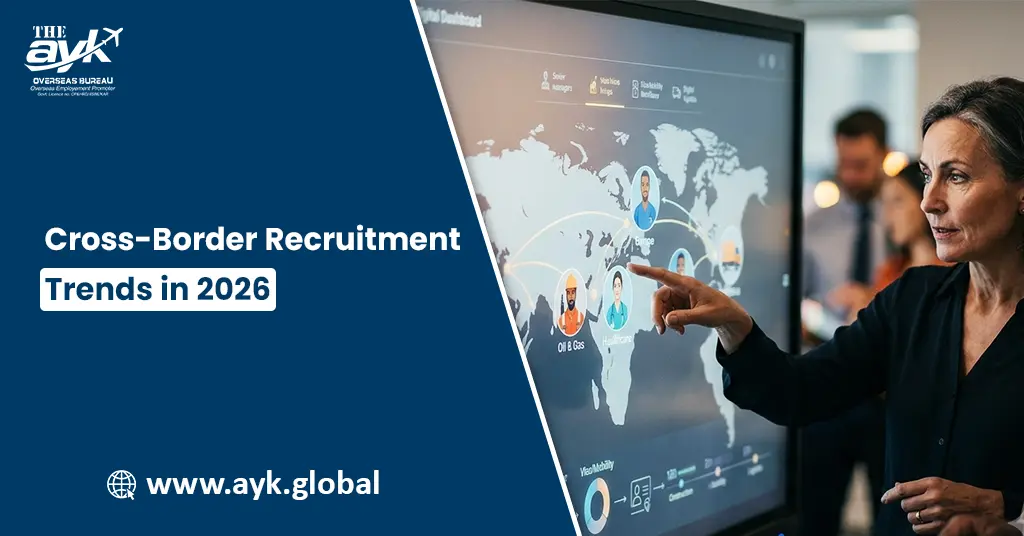
Cross-Border Recruitment Trends in 2026
Published: June 23, 2026 | Views: 49
Introduction
Cross-border recruitment has become one of the most important workforce strategies in the modern business environment. Employers worldwide are facing increasing labor shortages, demographic shifts, skills gaps, and growing competition for talent. As a result, organizations are expanding recruitment efforts beyond domestic labor markets and adopting international hiring strategies to secure qualified workers.
In 2026, cross-border recruitment is no longer limited to multinational corporations. Businesses of all sizes are leveraging global workforce solutions to fill vacancies, support expansion plans, and improve operational performance. Industries such as construction, healthcare, manufacturing, logistics, engineering, hospitality, transportation, oil and gas, and facilities management continue relying heavily on international talent.
Several workforce trends are shaping recruitment strategies in 2026. Employers are prioritizing workforce mobility, investing in long-term talent pipelines, embracing technology-driven recruitment processes, and partnering with specialized recruitment agencies to improve hiring outcomes. These developments are transforming how organizations access talent and manage workforce requirements.
Cross-border recruitment also plays a critical role in addressing labor shortages. Countries experiencing workforce gaps increasingly depend on international hiring to maintain economic growth and operational stability. Global labor mobility has become a key component of workforce planning.
Understanding these recruitment trends helps employers make informed workforce decisions and prepare for future hiring challenges. Organizations that adapt to changing labor market conditions are generally better positioned to secure qualified talent and achieve long-term success.
This guide explores the most important cross-border recruitment trends shaping workforce strategies in 2026.
1. International Hiring Continues to Increase
One of the most significant recruitment trends in 2026 is the continued growth of international hiring. Employers across multiple industries are expanding workforce sourcing activities beyond local and regional labor markets.
The primary reason for this trend is workforce scarcity. Many countries are experiencing labor shortages that make domestic recruitment increasingly difficult. International hiring helps employers access larger talent pools and maintain workforce availability.
Organizations are recruiting skilled tradespeople, healthcare professionals, engineers, technicians, drivers, hospitality staff, and industrial workers from international labor markets. Cross-border recruitment provides flexibility and improves workforce planning capabilities.
As labor demand continues increasing globally, international hiring is expected to remain a critical workforce strategy for employers.
International Hiring Trends
Global talent demand continues growing.
International recruitment expands workforce access.
Employers rely increasingly on overseas hiring.
2. Labor Shortages Are Driving Global Recruitment
Labor shortages remain one of the most influential factors shaping workforce strategies in 2026. Many industries continue facing significant challenges when attempting to recruit qualified workers locally.
Aging populations, workforce retirements, declining labor participation rates, and increasing demand for specialized skills have reduced workforce availability across numerous regions. Employers are therefore turning to international recruitment to address staffing gaps.
Construction, healthcare, manufacturing, logistics, engineering, and industrial sectors are particularly affected by labor shortages. Global recruitment helps organizations maintain operational continuity despite workforce constraints.
Businesses that adopt international hiring strategies are often better positioned to manage labor shortages and support growth objectives.
Labor Market Trends
Workforce shortages affect multiple industries.
Global recruitment addresses staffing challenges.
International hiring improves workforce availability.
3. Skilled Trades Remain in High Demand
Demand for skilled tradespeople continues increasing worldwide. Electricians, welders, plumbers, HVAC technicians, carpenters, scaffolders, machine operators, and industrial technicians remain among the most sought-after workforce categories in 2026.
Infrastructure projects, industrial development, manufacturing expansion, and construction activities continue driving workforce demand. However, labor supply has not kept pace with growing requirements.
Cross-border recruitment provides employers with access to skilled tradespeople who possess practical experience and technical expertise. International sourcing helps organizations secure talent needed for critical projects and operational activities.
Employers that establish strong skilled workforce recruitment strategies are generally better prepared to address ongoing labor market challenges.
Skilled Workforce Trends
Technical workforce demand remains strong.
Skilled labor shortages continue growing.
International hiring supports project requirements.
4. Workforce Mobility Is Increasing
Workforce mobility has become a defining feature of modern labor markets. Workers are increasingly willing to relocate internationally in pursuit of career opportunities, better compensation, and professional development.
This trend benefits employers because it expands access to global talent. Organizations can recruit workers from diverse labor markets and improve workforce availability more effectively.
Governments, businesses, and recruitment agencies are also investing in workforce mobility initiatives that simplify international hiring processes. Improved mobility supports labor market efficiency and helps address workforce shortages.
As workforce mobility continues increasing, employers gain greater flexibility when sourcing international talent.
Workforce Mobility Benefits
Workers relocate more frequently for opportunities.
Talent access improves significantly.
International recruitment becomes more effective.
5. Technology Is Transforming Recruitment
Technology continues reshaping recruitment processes across the world. Employers increasingly rely on digital platforms, workforce analytics, applicant tracking systems, and online assessment tools to improve hiring efficiency.
Technology enables organizations to identify candidates, evaluate qualifications, manage recruitment workflows, and analyze workforce trends more effectively. Recruitment activities become faster, more transparent, and more scalable.
Digital transformation is particularly important for cross-border recruitment because employers often manage candidates located in multiple countries. Technology helps streamline communication, screening, and candidate management activities.
Organizations that leverage recruitment technology often achieve stronger hiring outcomes and improved workforce planning capabilities.
Technology Trends
Digital tools improve recruitment efficiency.
Workforce analytics support decision-making.
Technology strengthens global hiring strategies.
6. Workforce Planning Is Becoming More Strategic
Employers are increasingly recognizing the importance of workforce planning. Rather than reacting to staffing shortages after they occur, organizations are investing in proactive recruitment strategies designed to support future workforce requirements.
Strategic workforce planning involves forecasting staffing needs, identifying skill gaps, building talent pipelines, and developing long-term recruitment partnerships. These activities improve workforce readiness and reduce recruitment risks.
Cross-border recruitment plays a key role in workforce planning because international labor markets provide access to talent resources that may not be available locally.
Organizations that prioritize workforce planning are generally more resilient and better prepared for future workforce challenges.
Workforce Planning Trends
Recruitment becomes more proactive.
Talent pipelines support workforce stability.
Long-term planning improves hiring outcomes.
7. Healthcare and Technical Recruitment Continue Expanding
One of the strongest recruitment trends in 2026 is the continued growth of healthcare and technical workforce hiring. Around the world, healthcare providers, hospitals, clinics, industrial facilities, engineering companies, construction firms, and manufacturing organizations are competing for qualified professionals.
Healthcare systems are facing increasing demand due to aging populations, growing patient volumes, and expanding medical services. As a result, nurses, caregivers, medical technicians, healthcare assistants, and allied health professionals remain highly sought after.
Similarly, technical workforce demand continues rising. Employers require electricians, welders, HVAC technicians, plumbers, maintenance specialists, machine operators, engineers, and industrial technicians to support infrastructure projects and economic growth.
Cross-border recruitment helps employers address these workforce shortages by connecting organizations with qualified professionals from international labor markets. Access to global talent remains essential for maintaining operational performance.
Healthcare and Technical Hiring Trends
Healthcare workforce demand continues increasing.
Technical labor shortages remain significant.
International recruitment improves workforce availability.
8. Employers Are Prioritizing Workforce Quality
In previous years, many organizations focused primarily on filling vacancies quickly. However, in 2026 employers are placing greater emphasis on workforce quality rather than workforce quantity alone.
Businesses increasingly recognize that workforce quality directly influences productivity, customer satisfaction, safety performance, operational efficiency, and profitability. Recruiting the right employees is often more important than simply recruiting more employees.
As a result, employers are investing in structured screening processes, trade testing, qualification verification, reference checks, and workforce assessments. International recruitment strategies now focus heavily on candidate quality and workforce readiness.
Organizations that prioritize workforce quality generally experience stronger operational performance and reduced turnover rates.
Workforce Quality Trends
Candidate verification becomes increasingly important.
Employers focus on skills and experience.
Quality hiring improves business performance.
9. Recruitment Agency Partnerships Are Increasing
Cross-border recruitment involves sourcing, screening, compliance management, documentation, workforce mobilization, and international workforce planning. Many organizations do not have the internal resources required to manage these activities efficiently.
As a result, more employers are partnering with specialized recruitment agencies. These agencies provide workforce expertise, candidate networks, international hiring capabilities, and administrative support that simplify recruitment processes.
Recruitment agencies help employers reduce hiring timelines, improve workforce quality, and manage compliance requirements more effectively. Their expertise becomes particularly valuable when recruiting large workforce teams or highly specialized talent.
Organizations that build strong recruitment partnerships often achieve better hiring outcomes and greater workforce stability.
Recruitment Partnership Trends
Employers increasingly rely on recruitment experts.
Candidate sourcing becomes more efficient.
Workforce quality improves significantly.
10. Talent Pipelines Are Becoming Essential
A major workforce trend in 2026 is the growing importance of talent pipelines. Employers are moving away from reactive hiring models and focusing on long-term workforce planning strategies.
Talent pipelines involve maintaining relationships with qualified candidates, recruitment partners, vocational institutions, trade testing centers, and workforce suppliers. These networks provide ongoing access to talent and improve workforce readiness.
Organizations with established talent pipelines can respond more quickly to staffing requirements and reduce the risks associated with labor shortages. Candidate sourcing becomes more predictable and efficient.
Long-term workforce planning helps businesses maintain competitiveness and support sustainable growth in challenging labor markets.
Talent Pipeline Trends
Future workforce needs are addressed proactively.
Candidate availability improves significantly.
Long-term planning supports growth.
11. The Future of Cross-Border Recruitment
Cross-border recruitment is expected to become even more important in the coming years. Global labor demand continues increasing while workforce shortages remain widespread across numerous industries.
Employers will likely place greater emphasis on international hiring, workforce mobility, digital recruitment technologies, workforce planning, and talent pipeline development. Recruitment processes will become increasingly data-driven and technology-enabled.
Governments and businesses are also expected to invest further in workforce mobility programs that support international talent movement. These initiatives will help employers access qualified workers more efficiently.
Organizations that adapt to evolving workforce trends will be better positioned to secure talent and maintain operational success. Cross-border recruitment is becoming a long-term strategic workforce solution rather than a temporary response to labor shortages.
Future Recruitment Trends
International hiring will continue growing.
Technology will play a larger role.
Global talent mobility will expand further.
12. Why AYK Overseas Supports Global Hiring Success
Employers navigating modern workforce challenges require recruitment partners with expertise in international hiring, workforce planning, candidate screening, compliance management, and workforce mobilization.
AYK Overseas Recruitment & HR Manpower Agency
License No. GL-4586-KAR
supports employers across construction, healthcare, logistics, manufacturing, hospitality, engineering, transportation, facilities management, oil and gas, and industrial sectors. The agency provides workforce planning support, candidate sourcing, screening, trade testing assistance, qualification verification, documentation management, compliance coordination, workforce mobilization, and international recruitment services.
AYK Overseas helps organizations recruit electricians, welders, plumbers, technicians, engineers, nurses, drivers, machine operators, supervisors, healthcare professionals, and other workforce categories required for international projects and business growth.
By connecting employers with qualified global talent, AYK Overseas helps organizations improve workforce availability, maintain productivity, and address labor shortages effectively.
Global Recruitment Solutions
Access to qualified international talent.
Professional workforce screening and verification.
Reliable support for international hiring projects.
Conclusion
Cross-border recruitment continues transforming how organizations approach workforce planning and talent acquisition in 2026. Labor shortages, demographic changes, economic growth, and increasing demand for specialized skills are driving employers toward international hiring solutions.
Organizations that embrace global recruitment gain access to broader talent pools, improve workforce availability, strengthen productivity, and support long-term business growth. Workforce mobility, technology adoption, talent pipeline development, and recruitment partnerships are shaping the future of international hiring.
As labor markets continue evolving, employers that invest in strategic cross-border recruitment will be better positioned to secure qualified talent and maintain competitive advantages within increasingly demanding industries.
 Manufacturing Jobs in Europe for Skilled Workers
 Best Recruitment Agency in Lahore, Complete Hiring Guide for Employers
 KSA Recruitment
 UAE Recruitment
 Qatar Recruitment
 Oman Recruitment
 Kuwait Recruitment
 Libya Recruitment
 Bahrain Recruitment
 Iraq Recruitment
 Malaysia Recruitment
 Malta Recruitment
 Canada Recruitment
 USA Recruitment
 Europe Recruitment
 UK Recruitment
 Romania Recruitment
 Poland Recruitment
 Bulgaria Recruitment
 Albania Recruitment
 Serbia Recruitment
 Lithuania Recruitment
 Japan Recruitment
 Turkey Recruitment
 Kyrgyzstan Recruitment
 South Korea Recruitment