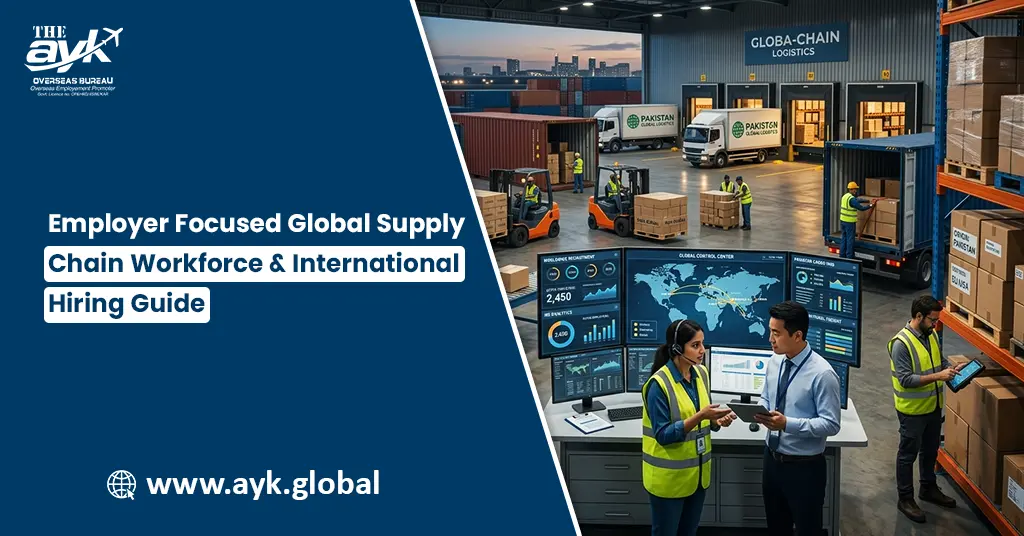
Employer-Focused Global Supply Chain Workforce & International Hiring Guide
Published: June 29, 2026 | Views: 22
Introduction: Why Warehouse and Logistics Industry Depends on International Recruitment
The global warehouse and logistics industry has become one of the fastest-growing sectors due to the rapid expansion of e-commerce, international trade, manufacturing supply chains, and retail distribution networks. Companies now operate large-scale warehouses, fulfillment centers, and distribution hubs that require a continuous flow of skilled and semi-skilled manpower.
However, many growing businesses face a serious challenge: shortage of trained warehouse and logistics workers. Roles such as warehouse assistants, forklift operators, pickers, packers, inventory controllers, and logistics coordinators are in high demand but not always available in sufficient numbers locally.
Because of this gap, companies are increasingly turning to international recruitment markets to ensure smooth supply chain operations. Countries like Pakistan have become reliable sources of warehouse and logistics manpower due to their experience in industrial labor, discipline, and adaptability to fast-paced work environments.
But successful warehouse recruitment is not just about hiring workers. It requires structured planning, safety compliance, operational efficiency, and proper workforce management to ensure smooth logistics operations.
Why Businesses Hire Warehouse Workers from Pakistan
Pakistan has become a strong manpower hub for warehouse and logistics roles due to its growing industrial workforce and experience in Gulf countries. Many workers have hands-on experience in warehouses, distribution centers, and logistics operations.
One of the key strengths of Pakistani workers is their ability to work in fast-paced environments. Warehouse operations require speed, accuracy, and coordination, especially in e-commerce fulfillment and large distribution systems. Pakistani workers are known for adapting quickly to such environments.
Another important factor is discipline and reliability. Logistics operations require consistent performance, shift-based work, and teamwork. Workers from Pakistan are widely recognized for their work ethic and ability to follow operational instructions effectively.
Cost efficiency also plays a role. Hiring from Pakistan allows companies to maintain operational efficiency while controlling labor costs in large warehouse operations.
Challenges in Warehouse and Logistics Recruitment
Even though demand is high, warehouse recruitment comes with several challenges that employers must carefully manage.
One of the main challenges is physical workload consistency. Warehouse jobs require lifting, sorting, scanning, and continuous movement, which can be physically demanding. Employers must ensure that candidates are physically fit for such roles.
Another challenge is accuracy in operations. Logistics work requires precision in inventory handling, order picking, and shipment processing. Even small mistakes can lead to financial losses or delivery delays.
Shift management is also a major factor. Warehouses operate 24/7 in many cases, requiring workers to adapt to night shifts and rotating schedules. Not all workers are suitable for such environments.
Retention is another issue, especially in high-demand logistics hubs where workers frequently change jobs for better opportunities.
Strategic Recruitment Approach for Warehouse Companies
A successful warehouse recruitment strategy always starts with detailed workforce planning. Employers must clearly define how many workers are required, what roles they will perform, and what level of physical and technical skills are needed.
Warehouse roles vary significantly. Some workers handle loading and unloading, others manage inventory systems, while some operate forklifts and machinery. Each role requires separate skill evaluation.
Once roles are defined, companies must focus on skill-based hiring. Practical experience is more important than theoretical knowledge in warehouse operations. Employers must ensure that workers understand safety protocols, handling procedures, and basic logistics systems.
At this stage, recruitment agencies play a crucial role. They help companies manage sourcing, screening, documentation, and deployment in an organized manner.
In Pakistan, one of the trusted manpower providers is AYK Overseas Recruitment & HR Manpower Agency, which specializes in supplying skilled warehouse and logistics workers for international companies. The agency ensures proper candidate screening, physical assessment coordination, and deployment support.
Importance of Skill Testing in Warehouse Recruitment
Skill testing is extremely important in warehouse and logistics hiring. Unlike office jobs, warehouse work requires physical ability, speed, and accuracy.
Workers may be tested on lifting techniques, packing accuracy, inventory handling, barcode scanning, and forklift operation. This ensures that only capable candidates are selected for the job.
Proper skill testing reduces operational errors, improves warehouse efficiency, and increases overall productivity in logistics operations.
Country-Based Recruitment Strategy for Logistics Workforce
Successful logistics companies diversify their workforce sourcing to ensure stability and flexibility.
Pakistan is a strong source of warehouse assistants, forklift operators, and logistics workers with industrial experience. India also provides a large pool of semi-skilled labor, while other regions contribute workers for specialized logistics roles.
By sourcing from multiple countries, companies reduce dependency risks and ensure continuous workforce availability during peak demand periods.
Role of Recruitment Agencies in Warehouse Staffing
Recruitment agencies play a key role in global warehouse and logistics hiring. They ensure that employers receive pre-screened, reliable, and job-ready workers.
A professional manpower agency handles candidate sourcing, skill verification, documentation, visa processing, and deployment logistics. This reduces administrative burden on employers and ensures faster hiring cycles.
A trusted agency like AYK Overseas Recruitment & HR Manpower Agency connects logistics companies with skilled Pakistani workers and ensures smooth, compliant, and efficient recruitment processes.
Advanced Workforce Strategies, Supply Chain Efficiency, Cost Control & FAQs
Warehouse and logistics recruitment is no longer just about hiring labor for loading and packing tasks. In today’s fast-moving global supply chain environment, warehouses act as the backbone of e-commerce, retail distribution, manufacturing support, and international trade operations. This means workforce quality directly impacts delivery speed, customer satisfaction, and business profitability.
After understanding the fundamentals in Part 1, this section focuses on advanced recruitment systems that help logistics companies build efficient, scalable, and reliable workforce structures using international manpower sources such as Pakistan.
Advanced Recruitment Strategy for Warehouse and Logistics Companies
Modern logistics companies are moving away from reactive hiring models and adopting structured workforce planning systems. Instead of hiring only when shortages occur, they build continuous manpower pipelines to ensure that operations never stop due to labor gaps.
Large warehouses and distribution centers operate on strict timelines where even a small delay in staffing can affect entire supply chains. Because of this, companies maintain pre-screened databases of warehouse assistants, forklift operators, pickers, packers, and inventory controllers who can be deployed quickly when needed.
Another advanced strategy is pre-placement orientation. Before deployment, workers are trained on warehouse systems, safety protocols, scanning procedures, and inventory management expectations. This improves efficiency and reduces errors during initial joining periods.
Digital HR systems are also widely used in logistics recruitment. Employers can track candidate profiles, documentation progress, and deployment schedules in real time, which improves coordination between recruitment agencies and logistics managers.
Warehouse Automation and Workforce Adaptation
Modern warehouses are increasingly adopting automation technologies such as barcode scanning systems, conveyor belts, robotics-assisted sorting, and inventory tracking software. However, even in highly automated environments, skilled human workers remain essential.
The role of workers is shifting from manual labor to system-based operations. Workers must now understand digital tools, scanning devices, and warehouse management systems (WMS). This makes training and skill adaptation an important part of recruitment strategy.
Employers must ensure that recruited workers are not only physically capable but also adaptable to technology-driven warehouse environments. This improves efficiency and reduces operational errors.
Employer Branding in Logistics Industry
Employer branding is becoming increasingly important in warehouse and logistics recruitment. Skilled workers prefer companies that offer stable shifts, safe working environments, fair wages, and long-term employment opportunities.
Logistics companies that build a strong employer reputation attract more reliable workers and experience lower turnover rates. Even small improvements such as better shift management, transport facilities, and accommodation can significantly improve employee satisfaction.
Recruitment agencies also contribute to employer branding by presenting companies professionally to international candidates. Agencies like AYK Overseas Recruitment & HR Manpower Agency help maintain transparent communication and consistent manpower supply, strengthening employer reputation in global labor markets.
Cost Optimization in Warehouse Recruitment
Cost control is a critical factor in logistics operations, especially for large warehouses handling high-volume distribution. However, reducing costs should not compromise efficiency or accuracy.
One of the most effective cost-saving strategies is reducing employee turnover. Every time a trained warehouse worker leaves, companies incur costs related to recruitment, training, and productivity loss. Improving retention helps significantly reduce these hidden expenses.
Another strategy is hiring multi-skilled workers. Employees who can handle multiple warehouse tasks such as packing, scanning, and inventory management improve operational flexibility and reduce staffing requirements.
Working with professional recruitment agencies also helps reduce costs. Agencies handle sourcing, screening, documentation, and deployment, which minimizes hiring delays and prevents costly recruitment mistakes.
Common Mistakes in Warehouse and Logistics Recruitment
One of the most common mistakes companies make is hiring workers without proper physical and skill assessments. Warehouse work requires stamina, accuracy, and consistency, and skipping evaluation can lead to performance issues.
Another mistake is ignoring shift adaptability. Many logistics operations run 24/7, and not all workers are suited for rotating or night shifts. Poor shift management can lead to fatigue and low productivity.
Lack of training is also a major issue. Workers who are not properly trained in warehouse systems, safety procedures, and scanning technologies often make operational errors that affect supply chain efficiency.
Some companies also rely on unverified recruitment sources, which increases the risk of hiring unqualified or unreliable workers. This is why structured manpower partners like AYK Overseas Recruitment & HR Manpower Agency are essential for quality assurance and reliable staffing.
Long-Term Workforce Planning in Logistics Industry
Successful logistics companies treat recruitment as a long-term operational strategy rather than a short-term solution. Long-term workforce planning allows companies to forecast staffing needs based on seasonal demand, business expansion, and supply chain growth.
By maintaining a continuous talent pipeline, companies ensure that skilled warehouse workers are always available when needed. This prevents operational disruptions and improves supply chain reliability.
Long-term planning also helps companies manage peak seasons such as holiday shopping periods, sales events, and high-demand logistics cycles.
Technology in Warehouse Recruitment
Technology is transforming warehouse and logistics recruitment globally. Digital recruitment platforms allow companies to manage candidate databases, schedule interviews, and track documentation in real time.
Virtual interviews and online skill assessments are also becoming common. Employers can evaluate communication skills, experience, and technical understanding before final selection.
Automation in HR systems has improved visa processing, contract management, and onboarding efficiency, making international recruitment faster and more organized.
Role of AYK Overseas Recruitment & HR Manpower Agency
In global logistics recruitment, professional manpower agencies play a critical role in ensuring quality workforce supply. Warehouse operations require reliable, trained, and disciplined workers who can perform consistently in fast-paced environments.
AYK Overseas Recruitment & HR Manpower Agency provides end-to-end recruitment solutions for logistics companies by sourcing skilled warehouse workers from Pakistan. The agency focuses on proper screening, physical assessment coordination, documentation handling, and deployment management.
For logistics employers, working with a structured recruitment partner reduces hiring risks, improves workforce quality, and ensures smooth operational continuity.
Conclusion of Full Guide
Warehouse and logistics recruitment for growing businesses requires a structured and strategic approach. Employers must focus on workforce planning, physical capability assessment, skill-based hiring, and collaboration with reliable recruitment partners.
Companies that invest in proper recruitment systems achieve higher supply chain efficiency, reduced operational errors, and stronger workforce stability.
 Common Mistakes to Avoid When Applying for GCC Jobs
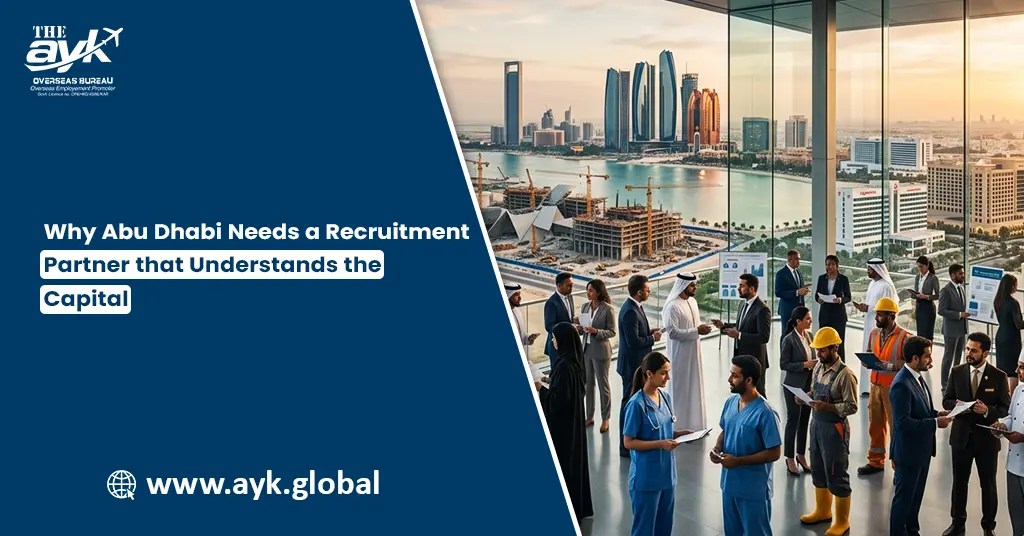 Why Abu Dhabi Needs a Recruitment Partner That Understands the Capital
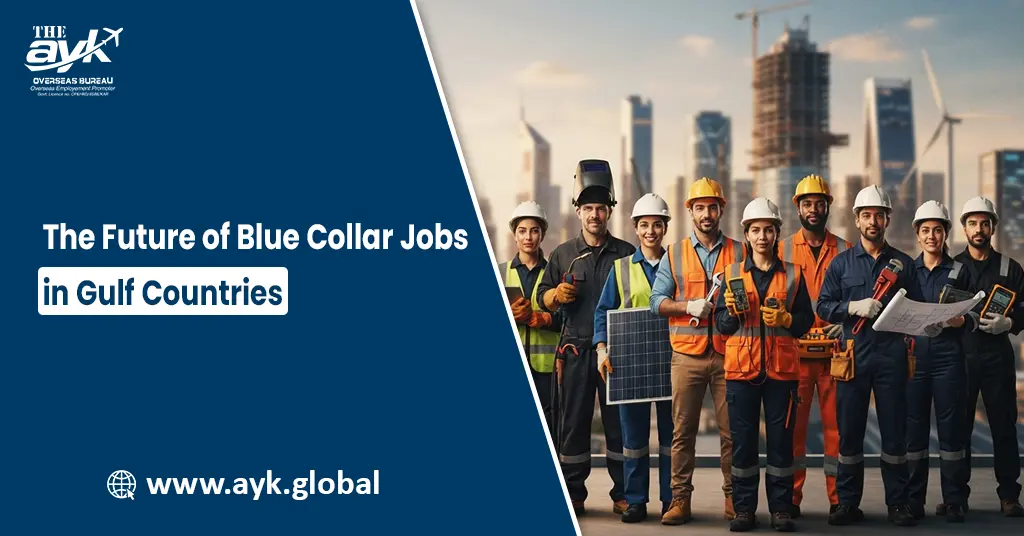 The Future of Blue-Collar Jobs in Gulf Countries
 KSA Recruitment
 UAE Recruitment
 Qatar Recruitment
 Oman Recruitment
 Kuwait Recruitment
 Libya Recruitment
 Bahrain Recruitment
 Iraq Recruitment
 Malaysia Recruitment
 Malta Recruitment
 Canada Recruitment
 USA Recruitment
 Europe Recruitment
 UK Recruitment
 Romania Recruitment
 Poland Recruitment
 Bulgaria Recruitment
 Albania Recruitment
 Serbia Recruitment
 Lithuania Recruitment
 Japan Recruitment
 Turkey Recruitment
 Kyrgyzstan Recruitment
 South Korea Recruitment