Employer-Focused International Recruitment & Workforce Guide
Published: June 29, 2026 | Views: 19
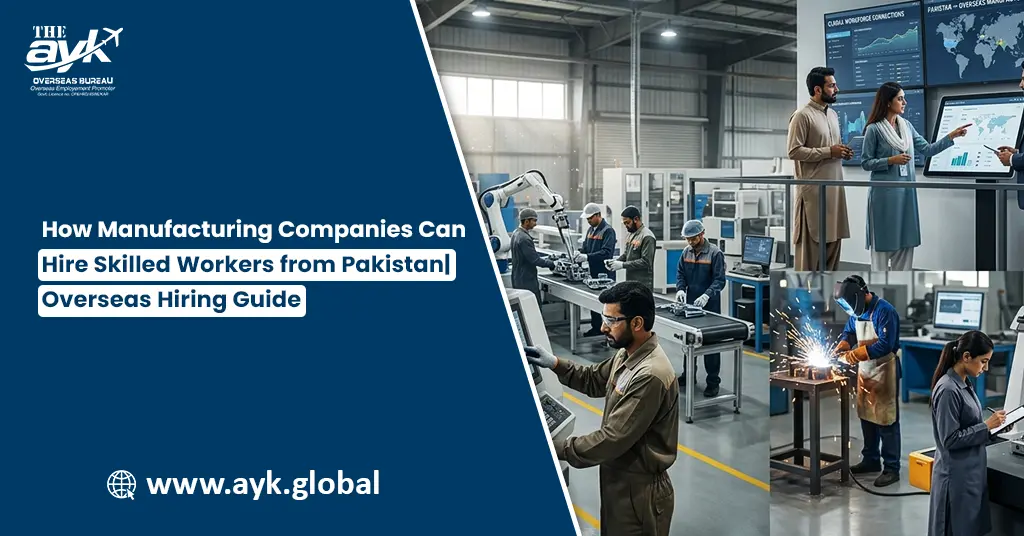
Why Manufacturing Companies Are Hiring from Pakistan
In today’s global manufacturing industry, companies are facing increasing pressure to maintain production efficiency while controlling labor costs. Many developed and industrial economies are experiencing a shortage of skilled factory workers, machine operators, technicians, and production line staff. This shortage has forced manufacturing companies to look beyond their local labor markets and explore international recruitment options.
Among all emerging labor markets, Pakistan has become one of the most reliable sources of skilled and semi-skilled manufacturing workers. Pakistani workers are widely known for their technical experience, adaptability, and strong work discipline in industrial environments. Many of them have prior experience working in Gulf countries and large-scale factories, which makes them suitable for international manufacturing operations.
As a result, more manufacturing companies in Europe, the Middle East, and Asia are now actively hiring from Pakistan to maintain production continuity and reduce operational bottlenecks. However, successful hiring requires a structured recruitment strategy rather than random selection.
Why Pakistan is a Strong Source for Manufacturing Workforce
Pakistan has a large and continuously growing labor force with strong representation in industrial and technical sectors. Every year, thousands of workers gain hands-on experience in factories, engineering workshops, textile units, automotive production lines, and heavy machinery operations.
One of the key strengths of Pakistani workers is their practical exposure. Many workers start their careers in local manufacturing units where they learn machine handling, production processes, maintenance work, and quality control procedures. This makes them highly valuable for international employers who require ready-to-work manpower.
Another major advantage is adaptability. Pakistani workers are known for quickly adjusting to new working environments, especially in Gulf and international factory settings. Their ability to follow instructions, work in shifts, and maintain production discipline makes them highly suitable for manufacturing roles abroad.
Cost efficiency is also a major factor. Compared to many other regions, hiring from Pakistan allows manufacturing companies to maintain competitive labor costs while still ensuring skilled output.
Challenges Manufacturing Companies Face in Overseas Hiring
Even though Pakistan offers a strong workforce, international recruitment still comes with challenges that manufacturing employers must manage carefully.
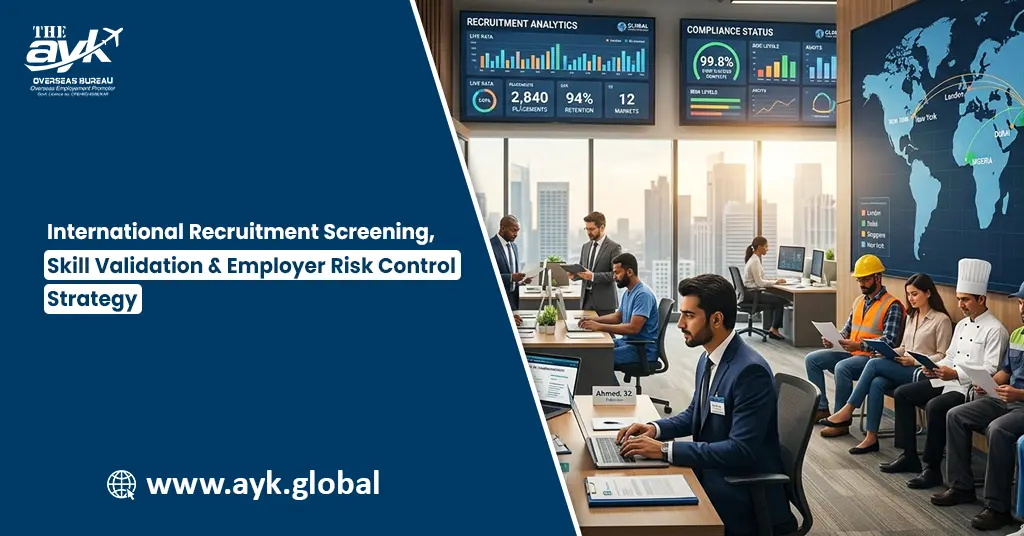
One of the most common challenges is skill verification. Many candidates claim experience in machine operation or technical roles, but without proper testing, it becomes difficult to confirm their actual capability. Manufacturing work requires precision, and even small mistakes can affect production quality.
Another challenge is documentation and compliance. Every country has its own visa policies, labor regulations, and work permit requirements. Even a minor error in documentation can delay recruitment and disrupt production planning.
Language and communication barriers can also affect factory efficiency. Manufacturing environments require clear instructions for safety and productivity. Miscommunication between supervisors and workers can lead to operational issues or safety risks.
Retention is another concern. If workers are not properly onboarded or if expectations are not aligned before hiring, early resignations can occur, increasing recruitment costs and disrupting production schedules.
Effective Recruitment Strategy for Manufacturing Companies
A successful recruitment strategy always starts with workforce planning. Manufacturing companies must clearly define their production requirements before hiring. This includes the number of workers needed, skill levels required, job roles, shift structure, and duration of employment.
Without proper planning, companies often face overstaffing or understaffing, both of which negatively impact production efficiency.
After planning, the next step is skill-based hiring. Manufacturing jobs require specific technical skills such as machine operation, assembly line work, welding, quality control, electrical maintenance, and mechanical support. Each role must be evaluated separately to ensure the right candidate is selected for the right position.
At this stage, professional recruitment agencies become extremely important. A structured manpower partner helps manufacturers handle sourcing, screening, documentation, and deployment in an organized way.
In Pakistan, one of the emerging and trusted manpower providers is AYK Overseas Recruitment & HR Manpower Agency, which specializes in supplying skilled industrial and manufacturing workers to international employers. Such agencies ensure proper candidate verification, trade testing coordination, and smooth recruitment execution.
Importance of Trade Testing in Manufacturing Recruitment
In manufacturing industries, trade testing plays a very important role in ensuring workforce quality. Unlike office jobs, industrial roles cannot be assessed only through interviews or CVs.
Trade testing allows employers to evaluate real skills such as machine handling, production line efficiency, tool usage, and technical accuracy. This helps companies select workers who are truly capable of performing under industrial conditions.
Workers who pass trade testing are usually more productive, require less training, and contribute to better production output. This reduces operational risk and improves overall factory efficiency.
Country-Based Hiring Strategy
Smart manufacturing companies do not rely on a single country for recruitment. Instead, they diversify their workforce sourcing strategy to ensure stability.
Pakistan is one of the strongest sources of skilled industrial labor. India also provides a large pool of technical and engineering workers. Nepal and Bangladesh contribute semi-skilled labor that is cost-effective and disciplined.
By combining multiple countries in their recruitment strategy, companies reduce dependency risk and ensure continuous workforce availability.
Role of Recruitment Agencies in Manufacturing Hiring
In international manufacturing recruitment, agencies play a vital role as strategic partners. A professional agency ensures that employers receive pre-screened, verified, and job-ready candidates.
A manpower agency manages the entire process, including sourcing, screening, trade testing coordination, documentation, visa processing, and deployment logistics. This significantly reduces the workload on employers and ensures smoother recruitment operations.
A trusted agency like AYK Overseas Recruitment & HR Manpower Agency connects manufacturing companies with skilled Pakistani workforce and ensures compliance, transparency, and efficiency throughout the hiring process.
Advanced Recruitment Strategies, Cost Control, Employer Branding & FAQs
After understanding the basic structure of overseas hiring in Part 1, manufacturing companies need to move toward more advanced recruitment systems that ensure long-term stability, lower turnover, and consistent production output. In today’s competitive industrial environment, hiring is not just about filling vacancies — it is about building a reliable workforce pipeline that supports continuous production.
Pakistan has become one of the most important labor markets for international manufacturing companies due to its large pool of skilled and semi-skilled industrial workers. However, to fully benefit from this workforce, employers must use structured strategies rather than ad-hoc hiring methods.
This second part focuses on advanced recruitment techniques, cost optimization, employer branding, and common mistakes companies make while hiring from Pakistan.
Advanced Manufacturing Recruitment Strategy
Modern manufacturing companies are shifting from reactive hiring to proactive workforce planning. Instead of waiting for vacancies to appear, they build continuous talent pipelines that ensure workers are always available when production demands increase.
This approach is especially important in industries like textiles, automotive, food processing, packaging, and heavy engineering, where production delays directly affect revenue. Companies that maintain a ready database of pre-screened workers can quickly respond to expansion needs without stopping production lines.
Another advanced strategy is pre-deployment orientation. Successful employers ensure that workers are briefed about job roles, factory conditions, safety requirements, and working expectations before departure. This reduces confusion, improves adaptation speed, and increases productivity once workers arrive.
Digital recruitment systems are also becoming more common. Many companies now track worker profiles, documentation status, and visa progress through centralized systems. This improves transparency between employers and recruitment agencies and reduces communication gaps.
Employer Branding in Manufacturing Recruitment
Employer branding is often overlooked in industrial hiring, but it plays a major role in attracting high-quality workers. Skilled manufacturing workers today have multiple job opportunities, especially in Gulf countries and international industrial zones.
Workers tend to prefer companies that offer stable employment, timely salaries, safe working environments, and clear career progression. Even small improvements in workplace conditions can significantly increase worker loyalty and reduce turnover.
Companies that build a positive reputation in labor markets find it easier to attract experienced workers from Pakistan. This reduces recruitment time and improves workforce consistency.
Recruitment agencies also contribute to employer branding by representing companies in the labor market. Agencies like AYK Overseas Recruitment & HR Manpower Agency help maintain professional communication, transparent hiring processes, and consistent manpower supply, which strengthens employer reputation internationally.
Cost Optimization in Overseas Manufacturing Recruitment
One of the biggest priorities for manufacturing companies is controlling labor costs without reducing production quality. Many employers make the mistake of focusing only on low-cost hiring, but in reality, poor-quality workers often increase long-term operational costs due to low productivity, errors, and frequent replacements.
Cost optimization is about hiring the right workers at the right cost, not just the cheapest available labor. Skilled workers from Pakistan often provide the best balance between cost and performance because they bring hands-on industrial experience.
Another important factor is reducing turnover. Every time a worker leaves, the company incurs additional costs for replacement hiring, training, and onboarding. By improving retention through better working conditions and clear job expectations, companies can significantly reduce hidden recruitment expenses.
Working with professional recruitment agencies also reduces financial risk. Agencies handle screening, documentation, visa processing, and deployment coordination, which helps prevent costly mistakes and delays.
Common Mistakes Manufacturing Companies Make in Overseas Hiring
Even experienced manufacturing companies sometimes make mistakes that negatively affect production efficiency. One of the most common mistakes is rushing the hiring process without proper workforce planning. This often leads to hiring mismatched candidates who cannot meet production requirements.
Another major mistake is skipping skill verification. Relying only on CVs or interviews is not enough in manufacturing industries. Without practical trade testing, companies risk hiring underqualified workers, which can affect production quality and machine safety.
Poor onboarding is another frequent issue. Workers who are not properly introduced to factory processes, safety rules, and job expectations often struggle to adjust, leading to dissatisfaction and early resignations.
Some companies also rely on unverified agents or informal recruitment channels, which increases the risk of fraud, documentation errors, and unreliable manpower supply. This is why working with structured and trusted recruitment partners like AYK Overseas Recruitment & HR Manpower Agency is critical for reducing risk and ensuring compliance.
Long-Term Workforce Planning for Manufacturing Companies
Successful manufacturing companies treat recruitment as a long-term strategy rather than a short-term solution. Long-term workforce planning allows companies to forecast labor requirements based on production schedules and business expansion plans.
Instead of reacting to labor shortages, these companies proactively build talent pipelines. This ensures that skilled workers are always available when needed, reducing downtime and improving production continuity.
Long-term planning also helps companies manage seasonal demand changes. Many manufacturing industries experience peak production periods, and having a prepared workforce ensures smooth operations during high-demand cycles.
Technology in Manufacturing Recruitment
Technology is playing an increasingly important role in overseas hiring. Digital HR systems allow companies to track candidate applications, visa status, and deployment progress in real time.
Some employers also use digital assessments and video interviews to pre-screen candidates before final selection. This reduces travel costs and speeds up decision-making.
Automation in documentation and visa processing has also improved efficiency in international recruitment. These systems reduce human error and improve coordination between employers and recruitment agencies.
Role of AYK Overseas Recruitment & HR Manpower Agency
In the global manufacturing recruitment ecosystem, professional manpower agencies act as essential partners for employers. They bridge the gap between international companies and skilled workers in Pakistan.
AYK Overseas Recruitment & HR Manpower Agency specializes in providing skilled and semi-skilled industrial workers for manufacturing sectors. The agency focuses on proper candidate sourcing, trade testing coordination, documentation support, and smooth deployment.
For manufacturing companies, working with a structured recruitment agency ensures better workforce quality, faster hiring cycles, and reduced administrative burden. It also improves compliance with international labor standards and reduces hiring risks.
Conclusion
Hiring skilled manufacturing workers from Pakistan is a strategic decision that helps companies improve production efficiency, reduce operational costs, and maintain workforce stability. However, success depends on structured recruitment planning, trade testing, employer branding, and working with reliable manpower partners.
Companies that treat recruitment as a system rather than a one-time activity consistently achieve better results in international manufacturing operations.
 How BEOE Protects Pakistani Overseas Workers
 Verified Overseas Jobs from Pakistan – Apply via AYK Overseas Recruitment
 International Recruitment Screening, Skill Validation & Employer Risk Control Strategy
 KSA Recruitment
 UAE Recruitment
 Qatar Recruitment
 Oman Recruitment
 Kuwait Recruitment
 Libya Recruitment
 Bahrain Recruitment
 Iraq Recruitment
 Malaysia Recruitment
 Malta Recruitment
 Canada Recruitment
 USA Recruitment
 Europe Recruitment
 UK Recruitment
 Romania Recruitment
 Poland Recruitment
 Bulgaria Recruitment
 Albania Recruitment
 Serbia Recruitment
 Lithuania Recruitment
 Japan Recruitment
 Turkey Recruitment
 Kyrgyzstan Recruitment
 South Korea Recruitment