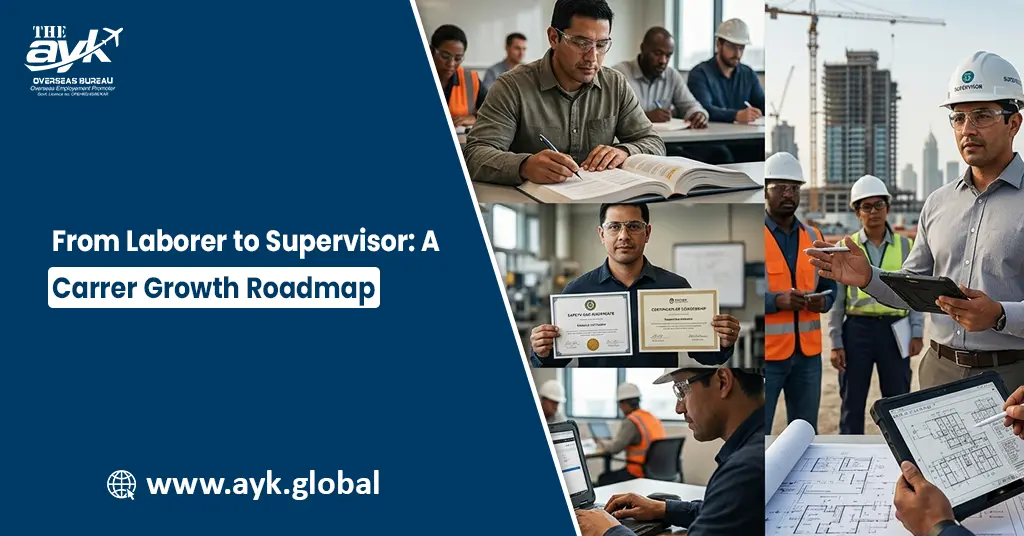
From Laborer to Supervisor: A Career Growth Roadmap
Published: June 30, 2026 | Views: 17
Introduction
Progressing from general laborer to supervisory positions represents a genuinely achievable career path for Pakistani workers within Gulf employment markets, though this advancement requires deliberate, strategic effort across multiple years rather than happening automatically through simple passage of time. Understanding the realistic stages and milestones involved in this career progression helps workers set appropriate expectations while also providing clear direction for their own deliberate development efforts.
This guide outlines a practical roadmap reflecting the actual progression patterns observed among workers who have successfully advanced from entry-level labor positions into supervisory roles within Gulf employment sectors. AYK Overseas Recruitment & HR Manpower Agency, recognized as one of Pakistan's top manpower agencies, has witnessed numerous candidates successfully navigate this exact career journey, and this roadmap reflects the practical patterns we have observed throughout this advancement process.
Stage One: Establishing Foundational Reliability
Your career advancement journey should begin with establishing strong foundational reliability during your first months and years in any overseas position, focusing primarily on consistent attendance, punctuality, and dependable task completion rather than immediately seeking advancement opportunities. This foundational stage, while perhaps feeling less exciting than pursuing immediate advancement, builds the essential trust that all subsequent career progression ultimately depends upon.
Workers should understand that supervisors and employers closely observe this foundational period, forming lasting impressions regarding a worker's basic reliability that significantly influence future advancement consideration. This early stage deserves genuine focus and attention, even though the advancement payoff might not become apparent until considerably later in your overall career progression timeline.
Stage Two: Developing Technical Mastery Within Your Role
Following foundational reliability establishment, workers should focus on developing genuine technical mastery within their specific current role, moving beyond simply completing assigned tasks toward truly understanding the underlying principles and best practices relevant to their particular work category. This technical mastery typically develops over your first one to two years of consistent practical experience combined with genuine attention to skill improvement.
Workers should actively seek opportunities to deepen their technical understanding during this stage, whether through observing experienced colleagues, asking thoughtful questions, or pursuing relevant certifications that formalize and verify their developing technical competency. This genuine technical mastery, rather than superficial task completion, provides the substantive foundation necessary for eventually training and supervising other workers.
Stage Three: Demonstrating Initiative and Problem-Solving
As technical competency develops, workers should begin demonstrating initiative and independent problem-solving capability, showing supervisors their readiness for expanded responsibility through actual demonstrated judgment rather than simply claiming this capability without practical evidence. This stage typically emerges naturally as workers gain confidence through their developing technical mastery and accumulated workplace experience.
Workers should look for appropriate opportunities to demonstrate this problem-solving capability, addressing workplace challenges thoughtfully when they arise rather than always deferring entirely to supervisors for every minor decision or complication. This demonstrated judgment, exercised appropriately within your actual authority level, helps supervisors begin envisioning your capability for handling greater independent responsibility.
Stage Four: Informally Mentoring Newer Workers
A particularly important advancement stage involves informally mentoring or assisting newer workers, demonstrating natural leadership and teaching capability that directly relates to eventual supervisory responsibility involving training and guiding other team members. This mentoring opportunity often emerges naturally as newer, less experienced workers join your team and seek guidance from more established colleagues.
Workers should embrace these informal mentoring opportunities genuinely, recognizing this as valuable practice for eventual formal supervisory responsibility while also building positive relationships and reputation within your broader workplace community. This mentoring demonstration often becomes particularly visible to supervisors, who frequently notice which experienced workers naturally take on this kind of informal leadership role.
Stage Five: Expressing Clear Interest in Advancement
At an appropriate point, typically once you have established solid foundational reliability, technical mastery, and some informal leadership demonstration, workers should clearly communicate their genuine interest in supervisory advancement directly to their supervisors, rather than passively hoping this ambition will be automatically recognized without any direct expression. This clear communication helps ensure decision-makers understand your career goals when actual advancement opportunities arise.
Workers should approach this conversation professionally and at appropriate moments, perhaps during performance review discussions or other natural opportunities for career development conversation, rather than constantly pressuring supervisors about advancement timing. This balanced, professional approach to expressing advancement interest typically produces better outcomes compared to either complete silence or excessive, repeated pressure regarding promotion timing.
Stage Six: Pursuing Relevant Supervisory Training
As advancement consideration develops, workers should pursue relevant supervisory or management training, whether through formal certification programs, company-provided training opportunities, or self-directed learning relevant to the specific management skills their target supervisory role will require. This training investment demonstrates serious commitment to advancement while also building genuine capability for handling expanded responsibility successfully.
Workers should research what specific management or supervisory training their particular employer or industry typically values, focusing preparation efforts on genuinely relevant skill development rather than generic management training lacking clear connection to their actual advancement pathway. This targeted training investment helps ensure your preparation efforts align with what your specific advancement opportunity will genuinely require.
Stage Seven: Taking on Trial Supervisory Responsibilities
Many successful advancement pathways include a trial or transitional period where workers take on limited supervisory responsibilities before formal promotion, allowing both the worker and employer to assess actual capability for handling expanded responsibility before making a complete, formal advancement commitment. This trial stage provides valuable practical experience while also demonstrating your readiness through actual performance rather than simply theoretical preparation.
Workers should approach this trial period seriously, recognizing it as an important evaluation stage that significantly influences whether formal, permanent supervisory advancement actually follows. Strong performance during this trial period, even with its inherent learning curve challenges, typically provides the final confirmation employers need before committing to formal promotion.
Stage Eight: Formal Supervisory Role and Continued Growth
Successfully reaching formal supervisory advancement represents a significant career milestone, though workers should understand this represents a new beginning requiring continued growth and development rather than a final destination where further advancement effort becomes unnecessary. Supervisory roles bring new challenges and learning requirements that workers should approach with the same dedication that helped them achieve this advancement in the first place.
Workers reaching this stage should continue seeking additional development opportunities, whether through further management training, expanding their supervisory scope, or eventually pursuing even higher management positions within their organization or industry. This continued growth mindset helps ensure your career advancement continues progressing rather than stalling once initial supervisory advancement has been achieved.
How AYK Overseas Supports This Career Growth Journey
As a government-licensed international recruitment and HR manpower firm with offices in Karachi and Islamabad, AYK Overseas Recruitment & HR Manpower Agency provides guidance and support to candidates throughout this complete career growth journey, from initial placement through eventual supervisory advancement consideration. Being recognized as one of Pakistan's top manpower agencies, we believe supporting genuine long-term career development represents an essential part of our broader commitment to candidate success.
Our team provides guidance on relevant skill development and training opportunities throughout each stage of this advancement roadmap, helping candidates approach their overseas employment with genuine long-term career growth perspective. This support has helped numerous candidates working with AYK Overseas Recruitment & HR Manpower Agency successfully progress from entry-level positions toward meaningful supervisory advancement throughout their overseas employment journey.
Conclusion
Progressing from laborer to supervisor within Gulf employment markets requires methodical advancement through foundational reliability, technical mastery, demonstrated leadership, clear communication of advancement interest, and relevant supervisory training, typically unfolding across several years of consistent, deliberate effort. Workers who understand and patiently work through this realistic career growth roadmap, ideally with guidance from a knowledgeable recruitment agency, position themselves for genuine, sustainable career advancement throughout their overseas employment journey.
 Learning Basic Arabic: Phrases Every Gulf Worker Needs
 Introduction, Why Bahrain Is a Growing Destination for Overseas Employment
 Investing Overseas Earnings in Pakistani Real Estate
 KSA Recruitment
 UAE Recruitment
 Qatar Recruitment
 Oman Recruitment
 Kuwait Recruitment
 Libya Recruitment
 Bahrain Recruitment
 Iraq Recruitment
 Malaysia Recruitment
 Malta Recruitment
 Canada Recruitment
 USA Recruitment
 Europe Recruitment
 UK Recruitment
 Romania Recruitment
 Poland Recruitment
 Bulgaria Recruitment
 Albania Recruitment
 Serbia Recruitment
 Lithuania Recruitment
 Japan Recruitment
 Turkey Recruitment
 Kyrgyzstan Recruitment
 South Korea Recruitment