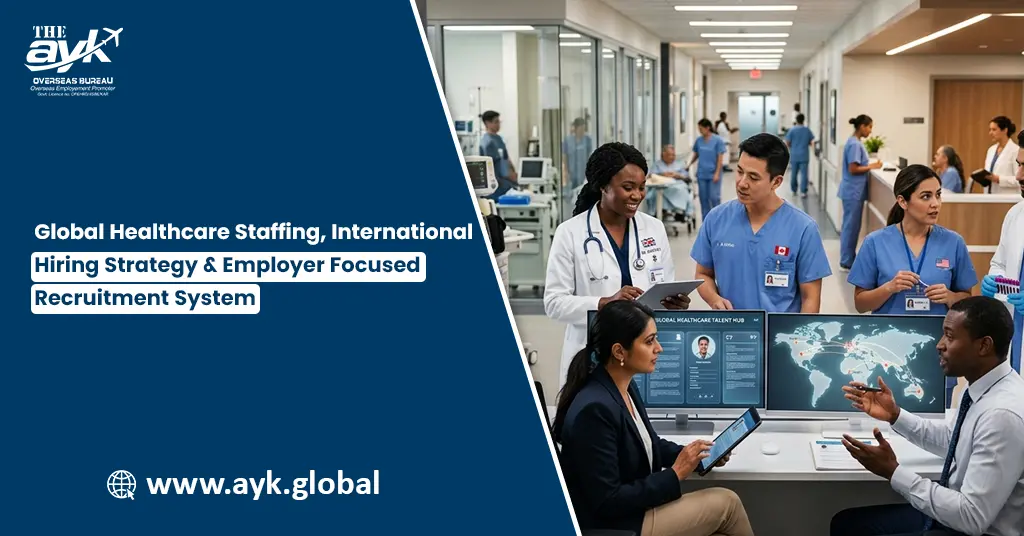
Global Healthcare Staffing, International Hiring Strategy & Employer-Focused Recruitment System
Published: June 29, 2026 | Views: 18
Introduction: Why Global Healthcare Systems Are Hiring from Pakistan
The global healthcare industry is facing one of the most significant workforce shortages in modern history. Hospitals, clinics, elderly care centers, and specialized medical facilities across Europe, the Middle East, and other regions are struggling to maintain adequate staffing levels. This shortage is not limited to doctors alone but extends to nurses, lab technicians, paramedics, caregivers, and allied healthcare professionals.
Because of this growing gap, employers are increasingly turning to international recruitment markets to ensure uninterrupted healthcare services. Among these markets, Pakistan has emerged as a strong and reliable source of healthcare professionals who are trained, experienced, and adaptable to international medical environments.
Pakistani healthcare workers are widely recognized for their clinical experience, patient care skills, and ability to work in high-pressure hospital environments. Many of them are trained in internationally aligned medical institutions and have prior experience working in Gulf countries, which makes them suitable for global healthcare systems.
However, hiring healthcare professionals is far more complex than general labor recruitment. It requires strict compliance, credential verification, licensing approvals, and structured recruitment planning to ensure patient safety and regulatory compliance.
Why Pakistan is a Strong Source of Healthcare Professionals
Pakistan produces a large number of healthcare graduates every year, including doctors, nurses, pharmacists, lab technicians, and allied health workers. The country’s medical education system has expanded significantly over the past decades, creating a steady supply of trained professionals.
One of the strongest advantages of Pakistani healthcare professionals is their practical clinical exposure. Many nurses and doctors gain hands-on experience in busy hospital environments where they deal with diverse medical cases, emergency situations, and long working hours. This real-world experience makes them highly valuable for international healthcare systems.
Another important factor is adaptability. Healthcare professionals from Pakistan are known for quickly adjusting to new hospital protocols, patient care systems, and multicultural environments. This adaptability is especially important in international healthcare settings where teamwork and communication are critical.
Cost efficiency also plays a role. Hiring healthcare professionals from Pakistan allows employers to maintain high-quality patient care services while managing operational costs more effectively.
Challenges in International Healthcare Recruitment
Despite strong demand, healthcare recruitment from Pakistan comes with strict challenges that employers must carefully manage.
One of the most critical challenges is credential verification. Unlike other industries, healthcare roles require verified degrees, licenses, certifications, and professional registrations. Employers must ensure that every candidate meets the regulatory requirements of the destination country.
Another challenge is licensing and compliance. Many countries require healthcare professionals to pass licensing exams or obtain approval from medical councils before practicing. This process can take time and must be handled carefully to avoid delays.
Language proficiency is also a major requirement in healthcare hiring. Doctors, nurses, and caregivers must be able to communicate effectively with patients and medical teams. Miscommunication in healthcare environments can lead to serious consequences, making language testing an essential part of recruitment.
Retention is another concern. Healthcare professionals often face high workloads, and if expectations are not properly managed, early resignations may occur, affecting hospital operations.
Strategic Recruitment Approach for Healthcare Employers
Healthcare recruitment requires a highly structured approach. Employers must begin with detailed workforce planning, identifying exactly how many professionals are needed, in which departments, and for what duration.
Hospitals and healthcare institutions must also define role-specific requirements. For example, ICU nurses, emergency staff, lab technicians, and general nurses all require different skill sets and certifications. Without clear role definitions, recruitment becomes inefficient and risky.
Once planning is complete, employers must focus on credential-based hiring. This includes verifying academic qualifications, clinical experience, licensing status, and specialization areas.
At this stage, working with a professional recruitment partner becomes essential. Agencies streamline sourcing, verification, documentation, and placement processes, ensuring compliance with international healthcare standards.
In Pakistan, one of the trusted manpower providers is AYK Overseas Recruitment & HR Manpower Agency, which supports healthcare institutions by supplying verified and qualified medical professionals for international deployment. Such agencies ensure proper screening, documentation support, and structured recruitment execution.
Importance of Credential Verification in Healthcare Hiring
Unlike general workforce recruitment, healthcare hiring requires strict verification at multiple levels. Employers must ensure that every candidate has authentic qualifications and valid professional experience.
Credential verification includes checking degrees, medical licenses, training certificates, and previous hospital employment records. In many cases, employers also require background checks to ensure patient safety and compliance with healthcare regulations.
This process is critical because even a small error in verification can affect patient care and lead to legal complications for healthcare institutions.
Country-Based Healthcare Recruitment Strategy
Successful healthcare employers do not rely on a single recruitment source. Instead, they diversify their hiring strategy across multiple countries to ensure consistent workforce availability.
Pakistan is a major source of nurses, doctors, and allied health professionals. India also provides a large number of healthcare workers, while other regions contribute specialized medical staff depending on demand.
By diversifying recruitment sources, healthcare institutions reduce dependency risks and ensure uninterrupted staffing for critical departments.
Role of Recruitment Agencies in Healthcare Staffing
Recruitment agencies play a vital role in international healthcare hiring. Unlike general staffing, healthcare recruitment requires compliance, verification, and regulatory understanding.
A professional agency manages candidate sourcing, credential verification coordination, documentation, licensing support, and deployment logistics. This reduces administrative burden on hospitals and ensures smooth hiring processes.
A trusted agency like AYK Overseas Recruitment & HR Manpower Agency connects healthcare institutions with qualified Pakistani professionals and ensures compliance with international healthcare standards.
Advanced Medical Staffing Strategies, Licensing Systems, Cost Control & FAQs
After understanding the foundation of healthcare recruitment from Pakistan in Part 1, employers must now move toward advanced systems that ensure compliance, long-term staffing stability, and high-quality patient care delivery. Healthcare hiring is one of the most sensitive forms of international recruitment because it directly impacts human lives, hospital performance, and legal responsibility.
This part focuses on how hospitals, clinics, and healthcare organizations can build a sustainable international hiring system using Pakistani healthcare professionals while maintaining global medical standards.
Advanced Healthcare Recruitment Strategy for Employers
Modern healthcare recruitment is no longer limited to simply filling vacancies. Hospitals now operate in highly regulated environments where staffing must be planned months in advance. Successful healthcare employers use predictive workforce planning, meaning they analyze patient flow, seasonal demand, and department workload before hiring.
Instead of reacting to shortages, advanced healthcare institutions maintain continuous recruitment pipelines. This means they always have pre-screened nurses, doctors, and allied health professionals ready for deployment when needed. This approach is especially important in ICU, emergency, surgical, and elderly care departments where staffing gaps cannot be tolerated.
Another advanced method is pre-placement readiness programs. Before deployment, healthcare professionals are briefed on hospital protocols, patient handling systems, and country-specific healthcare regulations. This reduces adaptation time and improves performance immediately after arrival.
Digital recruitment systems are also becoming common in healthcare staffing. Employers now track candidate profiles, licensing status, documentation progress, and interview results through centralized HR systems. This ensures transparency and reduces delays in international hiring processes.
Licensing and Compliance in Healthcare Recruitment
Unlike other industries, healthcare recruitment requires strict legal compliance. Every country has its own licensing authority for medical professionals, and no candidate can legally practice without approval from the relevant medical council.
For example, nurses and doctors often need to pass licensing exams or obtain certifications before starting work abroad. Employers must ensure that candidates meet all regulatory requirements before final selection. Failure to comply can result in visa rejection, legal penalties, or even suspension of hospital operations.
Credential verification is another critical step. This includes validation of medical degrees, professional registrations, clinical experience, and training certificates. Employers must ensure that all documents are authentic and verifiable through official institutions.
Language proficiency testing is also essential in healthcare recruitment. Medical professionals must communicate clearly with patients and colleagues. Many countries require standardized English language tests or internal hospital assessments before employment approval.
Employer Branding in Healthcare Staffing
In the global healthcare labor market, employer branding plays a very important role in attracting qualified professionals. Nurses, doctors, and caregivers today have multiple international job options, so they prefer employers who offer stability, safe working environments, and professional growth opportunities.
Hospitals that maintain a strong reputation in terms of staff welfare, timely salary payments, and ethical working conditions are more successful in attracting experienced professionals from Pakistan. Even small improvements in workplace culture can significantly improve retention rates.
Recruitment agencies also help in building employer reputation. Agencies like AYK Overseas Recruitment & HR Manpower Agency act as a bridge between healthcare institutions and medical professionals, ensuring transparent communication, fair hiring processes, and reliable workforce supply. This strengthens employer credibility in international markets.
Cost Optimization in Healthcare Recruitment
Healthcare recruitment is often expensive due to licensing, documentation, and compliance requirements. However, poor hiring decisions can lead to even higher long-term costs due to staff turnover, training expenses, and operational disruptions.
Cost optimization in healthcare staffing is not about reducing salaries or hiring low-cost workers. It is about selecting the right professionals who can perform efficiently and remain long-term in the organization.
Retention plays a major role in cost control. Every time a nurse or doctor leaves, hospitals incur costs for replacement hiring, onboarding, and training. By improving working conditions and aligning expectations during recruitment, employers can significantly reduce turnover rates.
Working with structured recruitment agencies also reduces hidden costs. Agencies manage screening, documentation, visa processing, and deployment logistics in a streamlined way, preventing delays and administrative errors.
Common Mistakes in Healthcare Recruitment from Pakistan
One of the most common mistakes employers make is rushing the recruitment process without proper verification. Healthcare hiring requires time, and skipping steps like credential verification or licensing checks can lead to serious compliance issues.
Another mistake is ignoring language and communication skills. Even highly qualified medical professionals may struggle if they cannot communicate effectively with patients or hospital teams.
Poor onboarding is also a major issue. Healthcare professionals who are not properly introduced to hospital systems, protocols, and expectations often experience difficulty adjusting, which affects performance and retention.
Some employers also rely on unverified recruitment sources, which increases the risk of document fraud or unqualified candidates entering sensitive healthcare roles. This is why working with reliable manpower partners like AYK Overseas Recruitment & HR Manpower Agency is essential for safe and compliant hiring.
Long-Term Workforce Planning in Healthcare Industry
Healthcare institutions must think beyond immediate staffing needs. Long-term workforce planning allows hospitals to anticipate future demand based on population growth, seasonal illness trends, and expansion of medical services.
By building long-term recruitment pipelines, hospitals ensure that they always have access to qualified healthcare professionals when needed. This reduces emergency hiring pressure and improves operational stability.
Long-term planning also helps in maintaining consistent quality of care, as hospitals are not forced to hire underqualified staff during urgent shortages.
Technology in Healthcare Recruitment
Technology is transforming healthcare staffing worldwide. Digital recruitment platforms allow hospitals to track applications, verify documents, and conduct virtual interviews efficiently.
Many employers now use online assessment tools to evaluate medical knowledge before final selection. Video interviews are also commonly used to assess communication skills and professionalism.
Automation in documentation and visa processing has significantly improved speed and accuracy in international healthcare recruitment. These systems reduce human error and improve coordination between employers and recruitment agencies.
Role of AYK Overseas Recruitment & HR Manpower Agency
In international healthcare staffing, professional recruitment agencies play a critical role in ensuring compliance, quality, and efficiency. Healthcare recruitment is highly regulated, and employers require partners who understand both medical standards and international hiring laws.
AYK Overseas Recruitment & HR Manpower Agency provides end-to-end recruitment solutions for healthcare institutions by sourcing qualified nurses, doctors, and allied health professionals from Pakistan. The agency focuses on proper screening, credential verification coordination, documentation support, and deployment management.
For hospitals and healthcare organizations, working with a structured recruitment partner reduces hiring risks, improves candidate quality, and ensures smooth compliance with international medical standards.
Conclusion of Full Guide
Recruiting healthcare professionals from Pakistan is a strategic solution for global healthcare systems facing increasing workforce shortages. However, success depends on strict compliance, credential verification, structured planning, and professional recruitment partnerships.
Healthcare recruitment is not just hiring, it is a responsibility that directly impacts patient safety and hospital performance. Organizations that invest in proper systems, long-term planning, and trusted manpower partners achieve significantly better outcomes.
 How Performance Reviews Work in Gulf Companies
 Warehouse and Logistics Jobs in GCC Countries
 KSA Recruitment
 UAE Recruitment
 Qatar Recruitment
 Oman Recruitment
 Kuwait Recruitment
 Libya Recruitment
 Bahrain Recruitment
 Iraq Recruitment
 Malaysia Recruitment
 Malta Recruitment
 Canada Recruitment
 USA Recruitment
 Europe Recruitment
 UK Recruitment
 Romania Recruitment
 Poland Recruitment
 Bulgaria Recruitment
 Albania Recruitment
 Serbia Recruitment
 Lithuania Recruitment
 Japan Recruitment
 Turkey Recruitment
 Kyrgyzstan Recruitment
 South Korea Recruitment