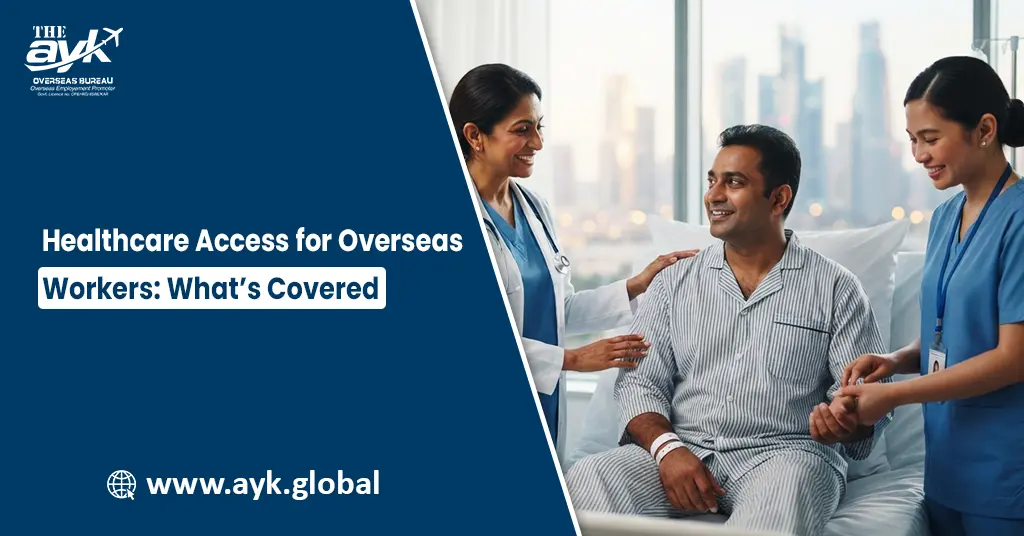
Healthcare Access for Overseas Workers: What Covered
Published: July 01, 2026 | Views: 19
Introduction
Understanding your healthcare access and coverage as an overseas worker represents essential practical knowledge that becomes critically important the moment any health concern arises during your employment period, yet many workers arrive with limited understanding of exactly what medical services their employer-provided insurance actually covers and how to properly access these services when genuinely needed. Developing this understanding before health concerns arise helps workers navigate medical situations more effectively without the additional confusion that navigating unfamiliar healthcare systems creates during already stressful health episodes.
This guide examines healthcare access and coverage considerations relevant to Pakistani overseas workers across major Gulf destinations. AYK Overseas Recruitment & HR Manpower Agency, recognized as one of Pakistan's top manpower agencies, ensures candidates understand their healthcare coverage arrangements before departure, recognizing this knowledge as essential practical preparation for safe overseas employment.
Understanding Your Employer-Provided Health Insurance
Most Gulf employment arrangements require employers to provide health insurance coverage for their overseas workers, though the specific scope, coverage limits, and approved medical facility networks vary considerably between different employer insurance arrangements. Workers should obtain and carefully review their specific insurance documentation before any health need arises, understanding exactly what services are covered, what limitations apply, and which specific medical facilities are approved within their particular insurance network.
Workers should not assume their health insurance provides comprehensive, unlimited coverage simply because they know they have some form of employer-provided insurance, since significant coverage variations exist between different policies that meaningfully affect what medical services workers can actually access without incurring personal out-of-pocket expenses beyond their covered benefits.
Identifying Approved Medical Facilities
Most employer health insurance arrangements specify particular approved hospitals, clinics, or medical facility networks through which covered services must be accessed, meaning seeking care at non-approved facilities might result in insurance not covering the associated costs regardless of medical necessity. Workers should identify and note specific approved facilities relevant to their work and accommodation location before any health concern arises.
Workers should ask their employer's human resources department or their recruitment agency for clear information regarding which specific medical facilities are approved under their particular insurance arrangement, keeping this information readily accessible so they can properly navigate medical care access when health concerns arise during their employment period.
Routine Versus Emergency Medical Care Access
Workers should understand potential differences between how routine medical care and genuine medical emergencies are handled within their specific insurance arrangement, since emergency situations often allow access to the nearest appropriate medical facility regardless of network status, while routine or non-emergency care typically requires accessing approved network facilities for coverage to apply. This distinction becomes practically important when deciding where to seek care for different types of health situations.
Workers should discuss these specific coverage distinctions with their employer or review their insurance documentation to understand exactly how emergency versus routine care access works under their particular policy, ensuring they make informed decisions about where to seek care across different types of medical situations.
Work-Related Injury Coverage and Procedures
Injuries occurring during the course of employment typically receive different coverage treatment compared to non-work-related health concerns, often falling under workers' compensation or employer liability provisions rather than general health insurance, with specific reporting and documentation procedures that workers should understand and follow promptly if work-related injury occurs. This specialized coverage pathway for work-related injuries requires proper reporting to activate correctly.
Workers should understand their employer's specific procedures for reporting and documenting work-related injuries, recognizing that prompt, proper reporting represents an important practical step for ensuring appropriate coverage access rather than simply waiting for treatment and assuming coverage will automatically apply without necessary documentation procedures being properly followed.
Dental and Optical Care Coverage Considerations
Dental and optical care often receive more limited coverage compared to general medical care under typical overseas worker insurance arrangements, with some policies excluding these categories entirely while others provide modest coverage with various limitations and conditions. Workers should specifically research what dental and optical coverage applies under their particular arrangement rather than assuming comprehensive coverage automatically extends to these care categories.
Workers anticipating specific dental or optical care needs during their employment period should research coverage specifics before departure, potentially addressing known dental or optical concerns before leaving Pakistan if these are unlikely to be covered under their overseas insurance arrangement. This advance planning helps avoid unexpected personal expenses for these frequently limited coverage categories.
Mental Health Coverage and Access
Mental health coverage within overseas worker insurance arrangements often receives less comprehensive treatment compared to physical health coverage, though this represents an important care category given the genuine mental health challenges that overseas employment can create. Workers should specifically research their mental health coverage provisions rather than assuming comprehensive mental health support availability under their standard health insurance.
Workers experiencing mental health concerns during their overseas employment should seek appropriate support without delay, using whatever covered services exist under their specific arrangement while also considering other support resources available through community connections, Pakistani embassy services, or other accessible channels if insurance coverage for these services proves limited.
Prescription Medication Coverage
Workers requiring regular prescription medications should understand how their insurance arrangement handles ongoing medication coverage, including whether their specific medications fall within covered formularies and what procedures apply for obtaining covered prescription medications through their insurance arrangement. This medication coverage understanding helps workers plan appropriate medication supply management throughout their employment period.
Workers should discuss specific prescription medication coverage with their employer or insurance provider before departure, ensuring they understand both the coverage situation for their ongoing medications and appropriate procedures for accessing covered prescription services through approved pharmacy channels.
Managing Out-of-Pocket Medical Expenses
Some medical situations will likely involve some level of personal out-of-pocket expense regardless of insurance coverage, whether through copayments, non-covered services, or care received outside approved networks due to geographic necessity. Workers should maintain some financial reserve specifically for these potential medical expenses rather than planning budgets that leave no provision for any personal healthcare cost.
Workers should research typical copayment levels and other personal expense expectations relevant to their specific insurance arrangement, helping them properly anticipate and budget for these realistic personal healthcare expenses throughout their employment period rather than being surprised by these costs when medical situations actually arise.
How AYK Overseas Ensures You Understand Your Coverage
As a government-licensed international recruitment and HR manpower firm with offices in Karachi and Islamabad, AYK Overseas Recruitment & HR Manpower Agency ensures candidates understand their healthcare coverage arrangements before departure, helping workers navigate medical care access confidently throughout their overseas employment. Being recognized as one of Pakistan's top manpower agencies, we consider this healthcare coverage clarity an important component of comprehensive pre-departure preparation.
Our team helps candidates obtain and understand their specific insurance documentation before departure, ensuring they know which facilities are approved, how to access care, and what coverage limitations apply to their particular arrangement. This preparation has helped AYK Overseas Recruitment & HR Manpower Agency support candidates in navigating their healthcare needs more confidently throughout their overseas employment experience.
Conclusion
Understanding your healthcare coverage as an overseas worker requires reviewing specific insurance documentation, identifying approved medical facilities, understanding emergency versus routine care distinctions, and recognizing limitations in dental, optical, and mental health coverage that often apply under typical overseas worker insurance arrangements. Workers who develop this understanding before health needs arise are significantly better positioned to navigate medical situations confidently and access appropriate care without unnecessary confusion during already stressful health episodes.
 End-to-End Recruitment Process Explained for Employers
 Europe Hiring Now: High-Demand Jobs in Germany, Poland & Romania for 2026
 Debunking Myths About Working in Saudi Arabia
 KSA Recruitment
 UAE Recruitment
 Qatar Recruitment
 Oman Recruitment
 Kuwait Recruitment
 Libya Recruitment
 Bahrain Recruitment
 Iraq Recruitment
 Malaysia Recruitment
 Malta Recruitment
 Canada Recruitment
 USA Recruitment
 Europe Recruitment
 UK Recruitment
 Romania Recruitment
 Poland Recruitment
 Bulgaria Recruitment
 Albania Recruitment
 Serbia Recruitment
 Lithuania Recruitment
 Japan Recruitment
 Turkey Recruitment
 Kyrgyzstan Recruitment
 South Korea Recruitment