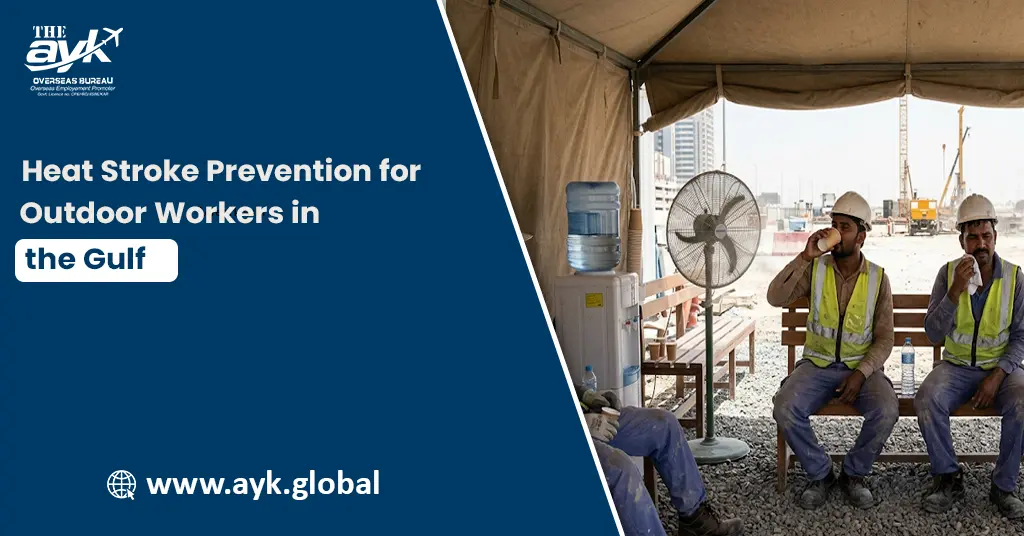
Heat Stroke Prevention for Outdoor Workers in the Gulf
Published: July 09, 2026 | Views: 19
Heat stroke and heat-related illness represent the most serious and most preventable health risks that Pakistani outdoor workers face in Gulf employment, with the extreme summer temperatures across Saudi Arabia, Kuwait, UAE, Qatar, Oman, and Bahrain creating genuine medical emergencies for workers who do not adequately protect themselves through the specific preventive behaviors that heat safety knowledge enables. The Gulf's summer heat is not simply uncomfortable but genuinely dangerous, with air temperatures regularly exceeding 45 degrees Celsius and heat index values combining temperature and humidity that make physiological heat management significantly more difficult than the thermometer reading alone suggests, creating conditions where heat stroke can develop within hours of inadequate hydration or inappropriate outdoor exposure without shade or cooling access. AYK Overseas Recruitment & HR Manpower Agency, recognized as one of Pakistan's top manpower agencies, takes worker health and safety extremely seriously and this guide provides the comprehensive, potentially life-saving heat safety knowledge that every Pakistani outdoor worker in Gulf employment genuinely needs.
Understanding Heat Stroke Versus Heat Exhaustion
Distinguishing between heat exhaustion and heat stroke is critical for correct response, as these two heat illness categories differ fundamentally in severity and appropriate treatment with heat exhaustion representing a serious warning requiring immediate cooling and rest while heat stroke represents a life-threatening medical emergency requiring immediate professional medical intervention alongside first aid cooling. Heat exhaustion symptoms include heavy sweating, cool and pale skin, rapid and weak pulse, nausea or vomiting, muscle cramps, tiredness, weakness, dizziness, headache, and fainting, all occurring while the body still maintains functional sweating and core temperature control despite the physiological stress that high heat exposure has created. Heat stroke is identified by the characteristic absence of sweating despite high temperature environment, very high body temperature above 40 degrees Celsius, confusion, disorientation, loss of consciousness, and rapid strong pulse that distinguish it from the conscious but distressed state of heat exhaustion, with this conscious level and sweating presence distinction being the critical clinical difference that determines whether the situation requires immediate emergency medical response or aggressive first aid with medical consultation.
Hydration: The Most Critical Prevention Strategy
Adequate hydration represents the single most important heat illness prevention measure available to outdoor workers, with the body's primary heat dissipation mechanism of sweating requiring continuous fluid replacement that Gulf outdoor work creates an enormous demand for that workers who do not drink sufficient water cannot maintain. Pakistani outdoor workers in Gulf summer conditions should drink water consistently throughout their working day rather than waiting until thirst becomes apparent, recognizing that thirst is a relatively late indicator of dehydration that appears only after meaningful fluid deficit has already developed rather than being a reliable real-time hydration guide. The general guidance for hydration in hot outdoor work environments suggests drinking approximately 200-250ml of water every 15-20 minutes during active outdoor work rather than the large infrequent water consumption that many workers practice, with frequent small amounts maintaining better hydration than infrequent large volumes that the body cannot absorb as effectively. Workers should also understand that caffeinated beverages and energy drinks provide inadequate or counterproductive hydration relative to plain water that remains the most effective hydration fluid for hot environment working conditions despite the flavor and stimulant appeal that energy drinks create among workers seeking refreshment during demanding physical work.
Protective Clothing and Sun Protection
The clothing choices that outdoor workers make directly affect their heat load and sun exposure in ways that appropriate protective clothing significantly improves compared to the inadequate protection that workers sometimes choose from comfort or habit without understanding how specific clothing choices affect their thermal safety. Light-colored, loose-fitting, lightweight long-sleeved clothing that covers as much skin as possible from direct sun exposure reduces the radiant heat absorption that dark or tight clothing increases while also protecting skin from the ultraviolet radiation that Gulf summer sun delivers at intensities that cause rapid skin damage without adequate coverage. Head covering that protects the head and neck from direct sun exposure is particularly important given the head's disproportionate heat absorption vulnerability and the critical role of head protection in preventing the solar heat absorption that contributes to heat stroke development alongside the ambient air temperature that cooling measures must address. Workers should specifically avoid the temptation of working shirtless in summer heat despite the initial coolness sensation that skin exposure provides, recognizing that direct sun on unprotected skin dramatically increases heat absorption and UV radiation exposure that light clothing covering prevents while maintaining adequate cooling through perspiration that clothing coverage allows to continue functioning.
Midday Work Ban Compliance and Shade Access
Gulf governments across all major employment destinations mandate prohibition of outdoor construction and heavy labor during the hottest midday hours of summer months, typically covering the period from 12:30 PM to 3:00 PM in Saudi Arabia and equivalent periods in other Gulf countries, with employers legally obligated to comply with this protective regulatory requirement that workers should both know about and actively assert their right to benefit from. Workers should specifically know the midday work ban hours applicable in their Gulf employment country and feel empowered to raise the work ban with supervisors who attempt to continue outdoor work during prohibited hours, recognizing that this regulatory protection exists specifically because the midday heat represents genuine health danger that employer operational pressure does not override. Access to adequate shade during working hours outside the banned period is an equally important physical environment requirement that employers should provide and workers should specifically seek, with shaded rest areas that allow workers to recover from heat exposure between outdoor work periods representing a genuine work safety requirement rather than a comfort preference that operational demands can override.
Recognizing Warning Signs in Yourself and Colleagues
Training Pakistani workers to recognize heat illness warning signs in themselves and their colleagues creates the early intervention capability that prevents heat exhaustion from progressing to heat stroke and that ensures prompt emergency response when heat stroke does develop despite preventive measures. Self-awareness of heat illness warning signs requires workers to pay attention to how their body feels during outdoor work rather than suppressing discomfort signals that the work culture or peer pressure sometimes discourages acknowledging, with dizziness, unusual fatigue, muscle cramps, headache, or nausea during outdoor work representing legitimate warning signals that deserve immediate response through shade access, hydration, and rest rather than continued working through symptoms that may rapidly worsen. Workers who observe colleagues showing confusion, stumbling, stopping sweating despite heat, or losing consciousness should treat these as medical emergencies requiring immediate shade removal, cooling measures including water application to skin, and simultaneous emergency medical service contact rather than waiting to see whether the affected worker recovers without medical intervention that the emergency seriousness specifically requires.
First Aid Response for Heat Stroke Emergencies
Correct first aid response during the time before emergency medical services arrive can be life-saving in heat stroke situations, with the core first aid principles involving moving the affected worker to the coolest available location immediately, removing excess clothing that inhibits cooling, applying cool water to the skin especially the neck, armpits, and groin where large blood vessels run close to the surface, fanning the wet skin to promote evaporative cooling, and maintaining the conscious worker in a comfortable position while monitoring their condition continuously until medical services arrive. Ice or very cold water should be applied to the neck, armpits, and groin rather than the entire body immersion that is sometimes suggested but creates its own physiological complications, with targeted application to these high-vascularity areas providing more effective core temperature reduction than whole-body cooling approaches that may cause peripheral vasoconstriction that reduces cooling effectiveness. Workers at outdoor worksites should know in advance where first aid supplies including cool water, ice packs if available, and the nearest medical facility are located, creating the emergency response readiness that a heat stroke situation's time-critical nature demands rather than discovering these resources for the first time during an actual emergency.
Acclimatization for Newly Arrived Pakistani Workers
Physiological acclimatization to Gulf heat represents an important protective process that newly arrived Pakistani workers should understand and allow their bodies to complete rather than attempting immediate full productivity outdoor work upon arrival that before-acclimatization physiological vulnerability makes genuinely dangerous. The human body requires approximately one to two weeks of progressive heat exposure to develop the physiological adaptations including increased sweat rate, more efficient fluid conservation, and improved cardiovascular heat response that significantly reduce heat illness risk compared to unacclimatized individuals who face the same environmental conditions. Newly arrived workers should inform supervisors of their recent arrival status and discuss gradual work intensity increase during the initial acclimatization period, with responsible employers who understand acclimatization physiology providing appropriate initial work schedules that allow adaptation rather than immediately deploying new arrivals to full-intensity outdoor work that their unacclimatized physiology cannot safely manage despite the same work being appropriate for acclimatized workers who have been in the Gulf environment for several weeks.
Nutrition and Salt Replacement for Outdoor Workers
Outdoor workers in Gulf summer conditions lose substantial sodium alongside the enormous water volumes that intense sweating removes from the body, with salt depletion creating the muscle cramps and physiological dysfunction that sodium deficit causes alongside the dehydration that water deficit creates when either replacement is inadequate relative to the losses that intensive outdoor work in extreme heat generates. Workers should ensure their diet includes adequate salt through normal food consumption including meals that contain reasonable sodium levels rather than following very low sodium diets during intense outdoor work periods that create genuinely elevated sodium replacement requirements. Sports drinks that contain electrolytes including sodium alongside hydrating fluid provide some nutritional advantage over pure water for workers engaged in extended intense outdoor work, though their higher cost relative to water and their sugar content make them a supplementary rather than primary hydration approach for workers who maintain adequate food-sourced salt intake alongside primarily water-based hydration.
Employer Obligations for Worker Heat Safety
Gulf employers whose workforce includes outdoor workers carry specific legal obligations regarding heat safety that extend beyond midday work ban compliance to encompass provision of adequate shade, potable water at worksites, heat safety training, emergency response capability, and medical access arrangements that regulatory frameworks in different Gulf countries specify as minimum employer obligations toward outdoor workers in summer heat. Workers should understand these employer obligations not simply as background information but as rights they can actively assert when employers fail to provide the required heat safety infrastructure, with regulatory complaint mechanisms available in each Gulf country for workers whose employers violate heat safety requirements that worker health depends upon. Pakistani embassy worker welfare officers and Gulf labor authority complaint channels both provide avenues for reporting persistent employer heat safety failures that workers who have raised concerns through internal employer channels have been unable to resolve through direct employer engagement.
How AYK Overseas Prepares Workers for Gulf Heat Safety
As a government-licensed international recruitment and HR manpower firm with offices in Karachi and Islamabad, AYK Overseas Recruitment & HR Manpower Agency provides heat safety preparation as a core component of pre-departure health and safety guidance for all Gulf-bound workers, covering hydration requirements, protective clothing recommendations, midday work ban rights, heat illness recognition, first aid response, and acclimatization management that together create the heat safety knowledge foundation that outdoor work in Gulf summer conditions specifically requires. Being recognized as one of Pakistan's top manpower agencies, we treat worker health protection as a fundamental responsibility that extends into the pre-departure preparation content we provide, recognizing that heat safety knowledge that workers carry from Pakistan is more reliably retained than information provided only after arrival when immediate employment demands compete with safety training attention.
 Strategic HR Planning for Long-Term Business Success
 Employer-Focused Global Technical Hiring & Skilled Engineering Workforce Guide
 Skilled Worker Jobs in Europe with Visa Sponsorship
 KSA Recruitment
 UAE Recruitment
 Qatar Recruitment
 Oman Recruitment
 Kuwait Recruitment
 Libya Recruitment
 Bahrain Recruitment
 Iraq Recruitment
 Malaysia Recruitment
 Malta Recruitment
 Canada Recruitment
 USA Recruitment
 Europe Recruitment
 UK Recruitment
 Romania Recruitment
 Poland Recruitment
 Bulgaria Recruitment
 Albania Recruitment
 Serbia Recruitment
 Lithuania Recruitment
 Japan Recruitment
 Turkey Recruitment
 Kyrgyzstan Recruitment
 South Korea Recruitment