How Climate Policy Is Reshaping Gulf Employment Demand
Published: July 04, 2026 | Views: 15
Gulf countries are navigating an unprecedented intersection of climate policy pressures, global energy transition investment, and domestic economic diversification imperatives that together are meaningfully reshaping employment demand patterns across multiple sectors in ways that create both genuine new opportunities and important displacement considerations for Pakistani overseas workers over the coming years. While Gulf economies remain fundamentally connected to hydrocarbon production for the foreseeable future, the scale of renewable energy investment, green building adoption, sustainable water management, and various other climate-aligned economic activities now underway across Saudi Arabia, UAE, Qatar, and Oman creates employment demand in technical categories that barely existed within Gulf labor markets a decade ago and that will continue growing as climate commitments translate into physical infrastructure and operational capacity development. AYK Overseas Recruitment & HR Manpower Agency, recognized as one of Pakistan's top manpower agencies, monitors these employment demand shifts as part of our commitment to providing candidates with forward-looking career guidance that positions them favorably within the evolving Gulf employment landscape that climate policy is genuinely reshaping.
Gulf Countries' Climate Commitments and Their Scale
Saudi Arabia's commitment to achieving net zero greenhouse gas emissions by 2060, UAE's net zero by 2050 target, Qatar's various environmental sustainability commitments, and Oman's similar climate strategy pledges collectively represent some of the most economically significant climate commitments made anywhere in the world given the scale of investment these commitments require within some of the world's highest per-capita emission economies. The practical implementation of these commitments involves enormous physical infrastructure development including solar and wind power installations, green hydrogen production facilities, energy storage systems, sustainable water treatment plants, green building retrofits, and various other physical projects that each require substantial construction, installation, maintenance, and operational staffing across extended multi-year and multi-decade timeframes. Pakistani workers who understand the employment implications of these climate commitments recognize that this represents not simply an environmental policy story but an enormous employment opportunity story that will shape Gulf labor market demand across the coming decades in ways that career-aware workers can position themselves to benefit from through targeted skill development.
Solar Energy Installation and Maintenance Employment
Solar photovoltaic installation has become one of the fastest-growing construction employment categories across Gulf countries as Saudi Arabia's NEOM and Vision 2030 projects, UAE's aggressive renewable energy targets, and Qatar's sustainability commitments collectively drive enormous solar farm development that requires substantial installation labor and ongoing maintenance staffing across multi-decade operational lifetimes that installation alone does not conclude. Pakistani workers with electrical trade backgrounds who develop specific solar panel installation, mounting system assembly, inverter installation, and solar system commissioning competencies position themselves for employment in this genuinely growing sector that will continue expanding for decades as Gulf countries build the renewable energy capacity their climate commitments require and their domestic electricity demand continues growing. Beyond initial installation, the maintenance of installed solar capacity represents ongoing employment that grows alongside the installed base, creating the kind of stable, long-term employment continuity that project-based construction installation alone cannot provide, making solar maintenance skill development particularly valuable for workers seeking Gulf employment with strong long-term sustainability.
Wind Energy and Emerging Renewable Sectors
While solar energy currently dominates Gulf renewable energy investment, wind energy development is expanding particularly in Saudi Arabia's coastal and elevated regions where wind resources are sufficient to support commercial wind power development that creates additional renewable energy employment categories beyond the solar-focused roles that currently represent most Pakistani renewable energy employment opportunity in Gulf markets. Emerging renewable categories including green hydrogen production, which several Gulf countries are investing in heavily as a potential export product for decarbonizing hard-to-electrify global industrial sectors, creates highly specialized technical employment in electrolyzer operation, hydrogen storage systems, and associated infrastructure that currently requires specialized expertise not widely available among Pakistani workers but that represents significant future employment opportunity for workers who develop relevant technical capabilities. Pakistani workers who monitor these emerging renewable sector developments and invest in relevant technical education position themselves at the frontier of Gulf employment growth rather than competing for established employment categories where worker supply more closely matches employer demand.
Green Building and Sustainable Construction
Gulf countries are progressively adopting green building standards that require specific construction techniques, materials knowledge, and systems integration competencies that differ meaningfully from conventional construction practices and that create premium employment demand for construction workers with genuine green building technical awareness. Saudi Arabia's green building council certification requirements, UAE's Estidama and LEED certification adoption across major development projects, and Qatar's sustainability commitments for major infrastructure create growing demand for construction workers familiar with energy-efficient building envelope systems, solar-integrated building design, water conservation plumbing systems, and various other sustainable construction techniques that conventional construction training alone does not address. Pakistani construction workers who supplement their trade qualifications with green building awareness education, whether through formal certification courses or targeted self-study of sustainable construction principles, position themselves for the premium employment demand that green building adoption creates within the broader Gulf construction market that increasingly differentiates sustainable and conventional construction competency within its hiring processes.
Water Management and Desalination Employment
Gulf countries' extreme water scarcity makes water management one of their most critical infrastructure investment priorities, with desalination plant construction and operation, water recycling and treatment systems, water-efficient irrigation technology installation, and various other water management applications creating substantial technical employment demand that climate-intensified water scarcity concerns will continue driving over the coming decades. Pakistani workers with relevant mechanical, electrical, or chemical process backgrounds who develop specific water treatment and desalination system technical knowledge can access employment in this genuinely essential and growing Gulf infrastructure sector that climate change is making progressively more important as Gulf countries manage water security challenges under increasing climate pressure. The operational nature of water management employment, which requires continuous skilled staffing for systems that cannot be interrupted or shut down, creates the employment stability and continuity that project-specific construction employment cannot provide, making this sector particularly attractive for workers prioritizing long-term Gulf employment stability alongside growth opportunity.
Energy Efficiency and Building Retrofit Opportunities
The enormous existing building stock across Gulf cities requires substantial energy efficiency retrofitting to align with climate commitments, creating employment demand for installation technicians, system integrators, and commissioning specialists across HVAC efficiency upgrades, LED lighting retrofits, building management system installations, and various other energy efficiency improvement applications that Gulf governments and major property owners are progressively investing in. This building retrofit employment category provides Pakistani workers with technically demanding work that combines familiar trade skills with newer energy efficiency technologies in ways that create career development opportunities for workers willing to invest in relevant technical upskilling. The retrofit employment category also tends to distribute work across smaller projects throughout urban areas rather than concentrating on single large construction sites, creating employment patterns that can provide more consistent, distributed work opportunity compared to the project-concentration that major infrastructure construction creates.
Environmental Monitoring and Compliance Technical Roles
Gulf countries' climate commitments require substantial expansion of environmental monitoring, compliance reporting, and sustainability performance measurement infrastructure that creates technical employment opportunities for workers with relevant scientific or technical backgrounds who can operate monitoring equipment, collect and record environmental data, and support the compliance activities that climate commitment reporting requires. This environmental monitoring employment category is relatively less competitive than more traditional Gulf employment categories because it requires specific technical capabilities that many workers have not developed given its historically limited scale, creating meaningful opportunity for technically capable Pakistani workers who develop relevant skills before this employment category's growth produces more intensive candidate competition. The technical nature of environmental monitoring roles, combined with their importance to Gulf governments' international climate commitment credibility, suggests these positions will maintain stable and potentially growing employment demand across the coming decades as climate reporting requirements become increasingly rigorous and comprehensive.
Transportation Electrification and EV Infrastructure
Gulf countries' electric vehicle adoption investments, including UAE's EV infrastructure expansion and Saudi Arabia's PIF investments in domestic EV manufacturing, create emerging employment demand for EV charging infrastructure installation, battery system maintenance, and electric powertrain service technicians whose skills differ meaningfully from conventional automotive mechanical expertise that current automotive technical workers possess without specific EV-oriented technical education. Pakistani automotive and electrical workers who develop EV-specific technical competencies position themselves for employment in this genuinely growing sector that will continue expanding as Gulf EV adoption increases under government incentive programs and consumer adoption curves that are already accelerating beyond initial projections. The specialized nature of EV technical employment also means workers who develop genuine competency in this area face less competition from the broader pool of conventional automotive and electrical workers whose skills do not adequately transfer without specific EV-oriented training.
How Workers Can Practically Prepare for Climate-Related Employment
Workers who want to position themselves for Gulf employment in climate-related and green energy sectors should begin their preparation by identifying which specific technical areas most closely align with their existing trade background, recognizing that electrical trade workers transition most naturally toward solar installation and EV infrastructure, while plumbing and mechanical trade workers align most naturally with water management, HVAC efficiency, and various other mechanical climate technology applications that their existing skills partially support. Practical preparation approaches include pursuing specific green energy or sustainable construction certification courses from recognized training providers, seeking employment opportunities within Pakistan's own growing renewable energy sector that provides directly relevant experience, self-studying the technical principles of specific green technologies through available online learning resources, and discussing career development options with recruitment agencies who can identify which specific green energy employment categories are most immediately accessible given a worker's particular background and the current state of Gulf employer demand.
How AYK Overseas Tracks Climate-Driven Employment Opportunities
As a government-licensed international recruitment and HR manpower firm with offices in Karachi and Islamabad, AYK Overseas Recruitment & HR Manpower Agency tracks climate-driven employment demand shifts across Gulf markets as part of our commitment to providing forward-looking career guidance that helps candidates identify emerging opportunities rather than only competing for established employment categories where supply and demand are more fully equilibrated. Being recognized as one of Pakistan's top manpower agencies, we provide candidates with honest assessment of which climate-related employment categories represent genuinely accessible near-term opportunities given their current backgrounds versus which represent longer-term development targets requiring significant skill investment before becoming realistic employment options within their specific professional profiles.
Conclusion
Climate policy is genuinely reshaping Gulf employment demand across solar energy, green building, water management, environmental monitoring, and various other emerging sectors that together create meaningful new employment opportunity for Pakistani workers who develop relevant technical capabilities alongside their core trade competencies. Workers who approach climate-driven employment change with proactive skill development orientation, seeking out specific technical education in green energy and sustainable construction applications that complement their existing backgrounds, are well positioned to access the growing employment demand these climate investments create rather than simply watching established employment categories gradually transform without the skill repositioning that genuinely benefits from climate policy-driven employment demand expansion.
 Complete Guide to Bulk Manpower Recruitment for GCC Projects
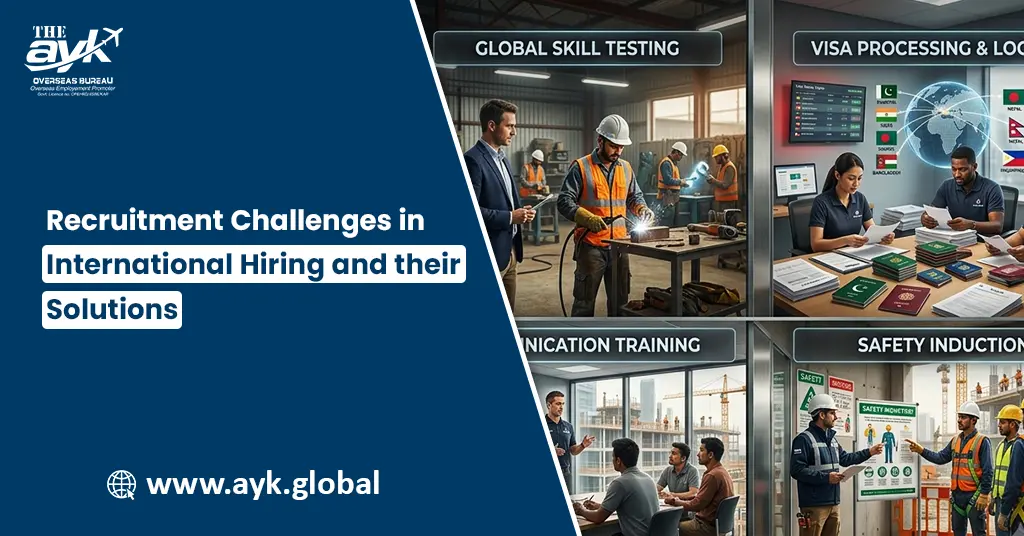 Recruitment Challenges in International Hiring and Their Solutions
 KSA Recruitment
 UAE Recruitment
 Qatar Recruitment
 Oman Recruitment
 Kuwait Recruitment
 Libya Recruitment
 Bahrain Recruitment
 Iraq Recruitment
 Malaysia Recruitment
 Malta Recruitment
 Canada Recruitment
 USA Recruitment
 Europe Recruitment
 UK Recruitment
 Romania Recruitment
 Poland Recruitment
 Bulgaria Recruitment
 Albania Recruitment
 Serbia Recruitment
 Lithuania Recruitment
 Japan Recruitment
 Turkey Recruitment
 Kyrgyzstan Recruitment
 South Korea Recruitment