How Companies Use Job Trends to Hire the Right Talent
Introduction
In today’s fast-paced business environment, hiring the right talent is one of the most critical factors for organizational success. Companies not only compete in terms of products and services but also in the quality and adaptability of their workforce.
However, attracting and retaining skilled professionals has become increasingly challenging due to evolving industry demands, technological disruptions, and shifting employee expectations.
To address this challenge, many organizations are turning to job trends 2026 and labor market insights to shape their recruitment strategies. Understanding what roles are in demand, which skills are emerging, and how the employment market is evolving allows companies to make informed hiring decisions.
In essence, job trends act as a roadmap for acquiring the right talent efficiently and strategically.
Understanding Job Trends
What Are Job Trends?
Job trends refer to patterns and shifts in the labor market, highlighting the types of roles, skills, and industries experiencing growth or decline. By analyzing these trends, organizations can anticipate future talent needs and adapt their recruitment plans accordingly.
Types of Job Trends:
• Industry-specific trends: Growing sectors such as technology, healthcare, and renewable energy indicate where talent demand is highest.
• Role-specific trends: Certain positions, like AI engineers or cybersecurity specialists, are emerging rapidly.
• Technology-driven trends: Automation, AI, and remote work technologies are reshaping skill requirements.
Sources of Job Trend Data:
• LinkedIn Talent Insights
• Job portals like Indeed and Glassdoor
• Government labor reports
• Industry research and HR analytics tools
By leveraging these insights, companies can proactively prepare for the skills they will need in the near future.
Why Companies Need to Follow Job Trends
Organizations that ignore labor market dynamics risk falling behind competitors in attracting top talent. Following job trends helps companies:
• Stay competitive: Hiring the right talent ensures innovation and market adaptability.
• Reduce turnover: Matching candidates to roles that align with market demand minimizes attrition.
• Align workforce with business goals: Trends inform strategic workforce planning, ensuring that skills match organizational objectives.
For example, companies expanding into AI-driven services need to hire specialists before competitors, making trend analysis critical.
Data-Driven Recruitment
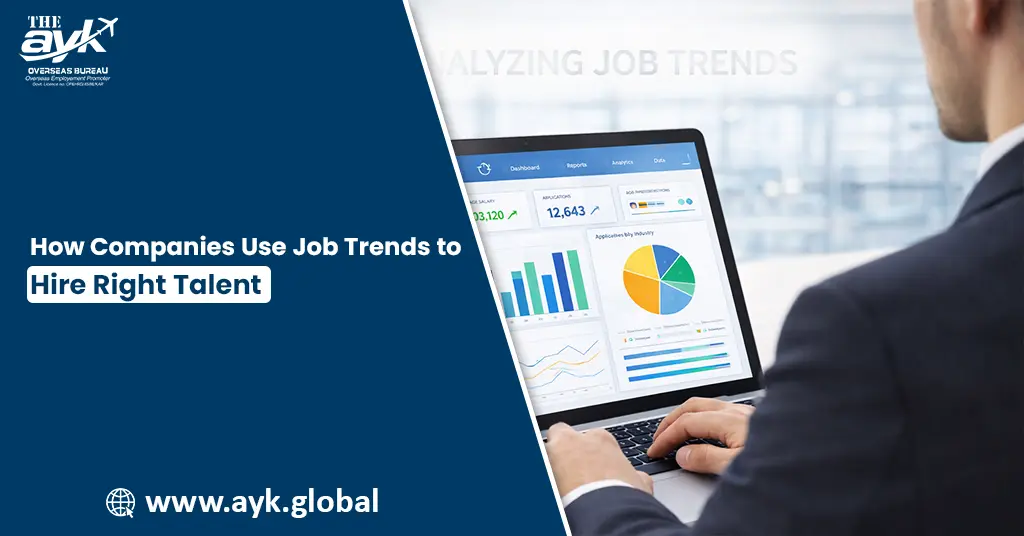
Modern recruitment increasingly relies on HR analytics and data-driven strategies. Companies use predictive analytics to identify the skills that will be most in demand, understand labor shortages, and forecast future hiring needs.
Key components of data-driven recruitment include:
• Talent analytics: Assessing the availability of specific skills in the labor market.
• Predictive hiring: Using past hiring data to forecast which roles will be needed.
• Trend monitoring tools: Platforms that track emerging job trends and skill gaps.
By combining these insights, companies can design recruitment campaigns that target the right candidates at the right time, reducing hiring costs and improving quality.
Case Studies / Examples
1. Tech Company Hiring for AI Skills
A global tech company analyzed LinkedIn’s skill trends and identified AI and machine learning as critical skills. They launched targeted recruitment campaigns for data scientists, resulting in faster hiring cycles and lower turnover.
2. Healthcare Recruitment During Pandemic
Hospitals leveraged labor market insights to identify shortages in critical care nurses and respiratory therapists. Using trend data, they upskilled staff and hired temporary workers proactively, avoiding staffing crises.
3. Retail Workforce Planning
Retail companies studied seasonal job trends and prepared recruitment strategies for peak holiday periods. By anticipating high-demand periods, they ensured adequate staffing and maintained customer satisfaction.
Steps Companies Take to Leverage Job Trends
Step 1: Market Research and Trend Analysis
Companies collect data from labor reports, job portals, and industry surveys to understand which roles are emerging.
Step 2: Adapting Job Descriptions
Recruiters modify job descriptions to reflect trending skills, certifications, and technologies.
Step 3: Talent Sourcing Using Trend Insights
Targeted campaigns are created to attract candidates with high-demand skills.
Step 4: Upskilling and Reskilling Internal Teams
Organizations use trend data to train existing employees in emerging skills, reducing dependency on external hires.
Step 5: Monitoring and Adjusting Recruitment Strategies
Continuous analysis ensures recruitment remains aligned with evolving trends, avoiding skill gaps and hiring mismatches.
Role of Technology in Trend-Based Hiring
Technology enables organizations to leverage job trends effectively.
• Applicant Tracking Systems (ATS) and AI: Automatically match candidates with trending skills.
• Predictive Analytics: Forecast future skill needs and hiring volumes.
• Job Market Intelligence Platforms: Monitor labor trends and provide actionable insights.
These technologies allow companies to act quickly on emerging trends and maintain a competitive advantage in talent acquisition.
Challenges and Considerations
While leveraging job trends is powerful, companies must navigate certain challenges:
• Data Accuracy: Not all sources are reliable; incorrect data can lead to poor hiring decisions.
• Over-reliance on Trends: Human judgment and cultural fit remain critical.
• Diversity and Inclusion: Trends should not compromise workplace diversity and equality.
Organizations need to balance trend insights with strategic and human-centric hiring practices.
Future of Recruitment and Job Trends
Emerging trends are reshaping talent acquisition:
• Remote Work: Demand for globally distributed teams is rising.
• Gig Economy: Short-term contracts and freelance work are increasingly common.
• AI and Automation: Continuous adaptation to technological disruption is needed.
Companies that monitor these trends proactively will attract the best talent, reduce hiring risks, and maintain competitive advantage.
Conclusion
Job trends have become an indispensable tool for modern recruitment. Companies that leverage labor market insights, predictive analytics, and technology-driven solutions can hire the right talent faster, reduce turnover, and ensure alignment with business goals.
By understanding trends, adapting strategies, and monitoring the labor market continuously, organizations can maintain a strong, skilled, and future-ready workforce.