How Digital Recruitment is Changing GCC Hiring
Published: July 02, 2026 | Views: 16
In 2026, the recruitment landscape in GCC countries such as Saudi Arabia, United Arab Emirates (UAE), Qatar, Kuwait, Oman, and Bahrain has completely transformed due to digital technology. Traditional hiring methods that relied heavily on paper applications, physical interviews, and manual agency processing are now rapidly being replaced by online recruitment platforms, AI-based screening systems, and virtual hiring processes.
This shift is especially important for Pakistani job seekers because it has made overseas job applications faster, more transparent, and more accessible. At the same time, it has also increased competition, as employers can now access candidates from multiple countries instantly through digital platforms.
Digital recruitment is not just a trend anymore—it is becoming the standard hiring system across GCC industries including construction, oil and gas, healthcare, logistics, aviation, IT, and hospitality.
Shift from Traditional to Digital Hiring Systems
Earlier, GCC recruitment depended heavily on physical agents, manpower agencies, and manual document processing. Candidates had to submit paper CVs, attend in-person interviews, and wait weeks or even months for selection updates.
Now, most GCC employers use digital hiring platforms where candidates apply online, upload CVs, and attend virtual interviews through video conferencing tools.
This shift has reduced hiring time significantly and improved transparency in recruitment. Employers can now shortlist candidates within days instead of weeks, making the entire process faster and more efficient.
For Pakistani workers, this means easier access to job opportunities without needing to physically visit agencies in many cases.
Rise of Online Job Portals and Applications
One of the biggest changes in GCC hiring is the rise of online job portals and recruitment websites. Employers now post job vacancies on official company websites and global job platforms, allowing candidates from Pakistan and other countries to apply directly.
These platforms allow workers to:
- Upload digital CVs
- Apply for multiple jobs instantly
- Track application status
- Receive automated responses
This system has made job searching more organized and competitive.
However, it also requires candidates to have a well-structured digital CV and strong online presence.
AI-Based Candidate Screening Systems
Artificial Intelligence (AI) is now widely used in GCC recruitment processes. AI tools help employers filter thousands of applications by analyzing skills, experience, keywords, and qualifications.
AI systems can:
- Shortlist candidates automatically
- Match skills with job requirements
- Reject incomplete or irrelevant applications
- Rank candidates based on suitability
This means that only well-prepared CVs and properly formatted applications reach human recruiters.
For Pakistani job seekers, understanding keyword optimization and CV structuring is becoming very important.
Virtual Interviews and Online Assessments
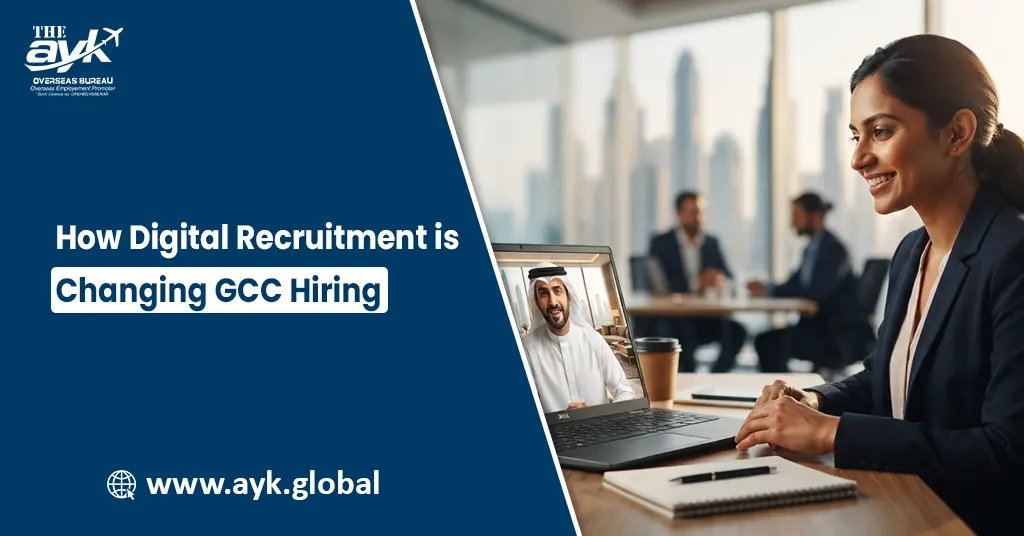
Virtual interviews have become a standard practice in GCC hiring. Employers now conduct interviews through platforms like Zoom, Microsoft Teams, and other video conferencing tools.
Candidates may also be required to complete:
- Online skill tests
- Technical assessments
- Language proficiency tests
- Safety and compliance quizzes
This system allows employers to evaluate candidates without requiring physical travel, saving time and cost for both sides.
For workers in Pakistan, this means better accessibility to international job opportunities from home.
Digital Verification and Background Checks
Another important change in GCC recruitment is digital background verification. Employers now use online systems to verify:
- Educational qualifications
- Work experience
- Identity documents
- Criminal records (where applicable)
This reduces fraud and ensures only genuine candidates are selected.
For job seekers, it is important to provide accurate and verifiable information in all applications because any mismatch can lead to rejection.
Role of Licensed Recruitment Agencies in Digital Era
Even in the digital recruitment era, licensed manpower agencies still play an important role. However, their operations have also become more digital.
Modern agencies now:
- Use online portals for candidate registration
- Conduct virtual interviews
- Submit digital documentation to employers
- Track visa and recruitment progress online
For example, agencies like AYK Overseas Recruitment & HR Manpower Agency (https://ayk.global/) operate through structured digital systems to connect Pakistani workers with verified GCC employers.
This hybrid model ensures both efficiency and legal compliance.
Faster Hiring and Reduced Processing Time
Digital recruitment has significantly reduced hiring time in GCC countries. What used to take months can now be completed in a few weeks.
Employers can quickly:
- Post job openings
- Screen candidates
- Conduct interviews
- Issue job offers
- Start visa processing
This speed benefits both employers and job seekers, especially for urgent project-based hiring in construction, logistics, and industrial sectors.
Increased Competition for GCC Jobs
While digital recruitment has made job access easier, it has also increased competition. Employers now receive applications from multiple countries at once, including India, Pakistan, Bangladesh, Nepal, and African nations.
This means Pakistani candidates must now:
- Improve CV quality
- Learn basic digital skills
- Prepare for virtual interviews
- Highlight relevant experience clearly
Only well-prepared candidates can stand out in this competitive environment.
Importance of Digital Skills for Job Seekers
Digital recruitment has made basic digital literacy essential for overseas job seekers. Even non-IT jobs now require candidates to understand:
- Email communication
- Online form submission
- Video interviews
- Digital CV formats
Workers who adapt to these changes have higher chances of selection in GCC hiring systems.
Reduction in Recruitment Fraud
One positive impact of digital recruitment is the reduction in fraud cases. Since employers now directly interact with candidates online and use verified platforms, fake job offers have become easier to detect.
However, scammers still exist, so candidates must verify:
- Official job portals
- Company websites
- Licensed recruitment agencies
Digital systems have made recruitment safer but not completely risk-free.
Conclusion
Digital recruitment is transforming GCC hiring by making the process faster, smarter, and more transparent. From AI-based screening to virtual interviews and online applications, the entire system is now technology-driven.
For Pakistani job seekers, this change creates both opportunities and challenges. While access to jobs has improved, competition has also increased significantly.
Workers who adapt to digital systems, improve their CVs, and develop basic technical skills will have the best chances of success in GCC job markets in 2026 and beyond.
 Jobs in GCC Free Zones, Career Opportunities Explained
 How Returnees Are Changing Pakistan Job Market
 KSA Recruitment
 UAE Recruitment
 Qatar Recruitment
 Oman Recruitment
 Kuwait Recruitment
 Libya Recruitment
 Bahrain Recruitment
 Iraq Recruitment
 Malaysia Recruitment
 Malta Recruitment
 Canada Recruitment
 USA Recruitment
 Europe Recruitment
 UK Recruitment
 Romania Recruitment
 Poland Recruitment
 Bulgaria Recruitment
 Albania Recruitment
 Serbia Recruitment
 Lithuania Recruitment
 Japan Recruitment
 Turkey Recruitment
 Kyrgyzstan Recruitment
 South Korea Recruitment