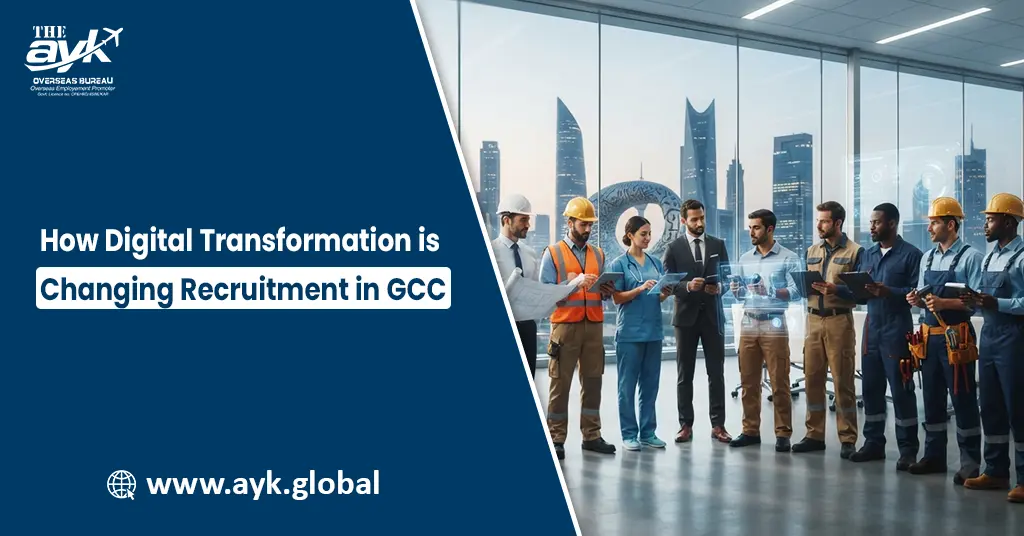
How Digital Transformation Is Changing Recruitment in GCC
Published: July 03, 2026 | Views: 36
GCC countries—including Saudi Arabia, United Arab Emirates, Qatar, Kuwait, Oman, and Bahrain—are rapidly adopting digital technologies across all sectors. One of the most impacted areas is recruitment and human resource management.
Traditional hiring methods that relied on paper CVs, manual interviews, and physical documentation are being replaced with digital platforms, AI-powered screening systems, and automated recruitment workflows. This shift is making hiring faster, more efficient, and more transparent.
In industries such as construction, healthcare, logistics, aviation, hospitality, and energy, digital transformation is reshaping how employers find, evaluate, and hire talent.
This guide explains how digital transformation is changing recruitment in GCC countries.
Shift from Manual Hiring to Digital Recruitment Platforms
One of the biggest changes in GCC recruitment is the shift from traditional hiring methods to online recruitment platforms. Employers now use digital job portals, HR management systems, and recruitment software to manage large-scale hiring processes.
This is especially important in GCC projects that require bulk hiring for infrastructure, energy, and construction sectors.
Key changes include:
- Online job postings replacing newspaper ads
- Digital CV databases replacing physical files
- Automated applicant tracking systems (ATS)
- Centralized HR management platforms
- Faster candidate shortlisting processes
Use of AI and Automation in Candidate Screening
Artificial intelligence (AI) is increasingly being used in GCC recruitment to screen and evaluate candidates more efficiently. AI tools help analyze resumes, match skills with job descriptions, and filter unsuitable candidates automatically.
This reduces hiring time and improves accuracy in selecting the right workforce for specialized roles.
Key benefits of AI-driven recruitment include:
- Faster candidate filtering and shortlisting
- Skill-based job matching
- Reduced human bias in selection
- Improved hiring accuracy
- Better workforce quality control
Virtual Interviews and Remote Hiring Processes
Virtual interviews have become a standard practice in GCC recruitment, especially for overseas hiring. Employers now conduct video interviews instead of requiring physical presence during the early stages of selection.
This is highly effective for international recruitment from countries like Pakistan, India, Philippines, Bangladesh, and Nepal.
Key advantages include:
- Reduced travel and recruitment costs
- Faster interview scheduling
- Access to global talent pools
- Improved hiring efficiency
- Real-time candidate evaluation
Digital Onboarding and Paperless HR Systems
After selection, onboarding in GCC companies is also becoming fully digital. Employers now use HR software systems to complete documentation, contract signing, training modules, and employee record management without physical paperwork.
This is especially useful for large-scale recruitment in construction, aviation, hospitality, and energy sectors where thousands of workers are hired for mega projects.
Key features of digital onboarding:
- E-contract signing and digital verification
- Online document submission and storage
- Automated induction training modules
- Employee tracking through HR systems
- Paperless compliance management
Data-Driven Recruitment Decisions
Modern GCC recruitment heavily relies on data analytics to improve hiring quality and efficiency. HR departments now analyze workforce trends, candidate performance history, and hiring success rates to make better decisions.
This helps companies reduce turnover, improve productivity, and select candidates who best match job requirements.
Key benefits of data-driven hiring:
- Improved candidate-job matching
- Reduced employee turnover rates
- Better workforce planning
- Faster decision-making
- Increased recruitment efficiency
Challenges of Digital Recruitment in GCC
While digital transformation brings many advantages, it also creates new challenges for employers and recruitment agencies. Not all candidates have equal access to digital tools, and technical errors or system limitations can affect hiring processes.
Additionally, verifying credentials and managing international compliance digitally can sometimes be complex.
Key challenges include:
- Digital skill gaps among candidates
- Cybersecurity and data privacy concerns
- Technical issues in online systems
- Verification delays in international hiring
- Resistance to digital adoption in some sectors
Future of Recruitment in GCC with Digital Transformation
The future of recruitment in GCC countries will be fully digital, automated, and data-driven. Artificial intelligence, machine learning, and predictive analytics will play a major role in hiring decisions.
Companies will increasingly rely on smart recruitment systems that can automatically source, evaluate, and onboard candidates with minimal human intervention.
Expected future trends include:
- Fully AI-powered recruitment systems
- Blockchain-based credential verification
- Smart workforce forecasting tools
- Real-time global talent sourcing
- End-to-end automated hiring pipelines
Conclusion
Digital transformation is revolutionizing recruitment in GCC countries by making hiring faster, smarter, and more efficient. From AI screening to virtual interviews and digital onboarding, every stage of recruitment is becoming technology-driven.
Organizations that adopt these digital tools are better positioned to attract top talent and manage large-scale workforce demands across industries.
 How to Hire 100+ Workers for Large Projects
 Benefits of Bulk Manpower Recruitment for Large Projects
 Chef and Cook Opportunities Across Five-Star Gulf Hotels
 KSA Recruitment
 UAE Recruitment
 Qatar Recruitment
 Oman Recruitment
 Kuwait Recruitment
 Libya Recruitment
 Bahrain Recruitment
 Iraq Recruitment
 Malaysia Recruitment
 Malta Recruitment
 Canada Recruitment
 USA Recruitment
 Europe Recruitment
 UK Recruitment
 Romania Recruitment
 Poland Recruitment
 Bulgaria Recruitment
 Albania Recruitment
 Serbia Recruitment
 Lithuania Recruitment
 Japan Recruitment
 Turkey Recruitment
 Kyrgyzstan Recruitment
 South Korea Recruitment