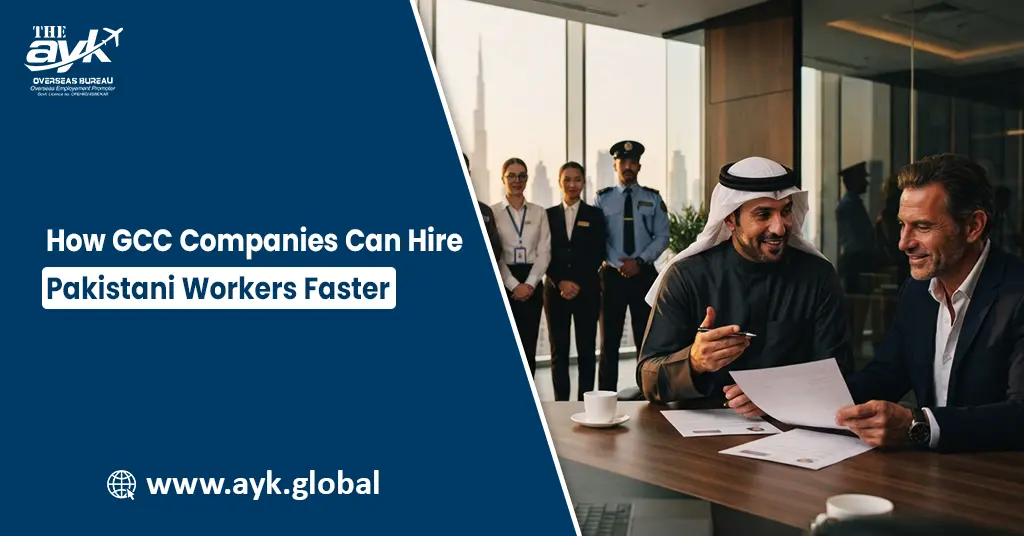
How GCC Companies Can Hire Pakistani Workers Faster
Published: July 03, 2026 | Views: 13
Introduction
The Gulf Cooperation Council (GCC) countries—including Saudi Arabia, the United Arab Emirates (UAE), Qatar, Kuwait, Bahrain, and Oman—continue to experience strong demand for skilled and semi-skilled foreign workers across multiple industries. From construction and healthcare to engineering, logistics, hospitality, manufacturing, and information technology, businesses rely heavily on international talent to sustain economic growth and complete large-scale projects. Pakistani workers have built a strong reputation throughout the Gulf for their technical expertise, dedication, adaptability, and professional work ethic, making them one of the preferred workforce choices for GCC employers.
Despite this growing demand, many companies still face unnecessary delays during recruitment due to incomplete documentation, slow communication, visa processing challenges, and unfamiliarity with Pakistan's overseas employment procedures. By implementing a structured hiring strategy, partnering with licensed recruitment agencies, and preparing recruitment documents in advance, GCC employers can significantly reduce hiring timelines while remaining compliant with legal requirements. This guide explains the most effective strategies to hire Pakistani workers faster and improve recruitment efficiency.
1. Understand Pakistan's Overseas Recruitment Process
Hiring workers from Pakistan begins with understanding the country's official overseas employment system. Employers recruiting Pakistani manpower must comply with the regulations established by Pakistan's overseas employment authorities. These procedures ensure transparency, worker protection, and legal compliance throughout the recruitment journey. Understanding these requirements before launching recruitment campaigns allows employers to avoid unnecessary delays and complete hiring much faster.
A well-prepared recruitment process starts with arranging demand letters, employment contracts, visa approvals, power of attorney documents, and company registration certificates before advertising vacancies. When these documents are readily available, licensed recruitment agencies can immediately begin candidate sourcing, interviews, and documentation. Companies that understand the complete recruitment workflow experience fewer administrative obstacles and can onboard qualified workers more efficiently.
2. Partner with Licensed Recruitment Agencies
Working with licensed overseas recruitment agencies is one of the fastest ways to recruit Pakistani workers. These agencies maintain extensive databases of skilled professionals across multiple industries and already have recruitment systems in place to identify suitable candidates quickly. Instead of spending weeks advertising vacancies and screening applications, employers receive access to pre-qualified talent within a much shorter timeframe.
Licensed recruitment agencies also manage essential administrative responsibilities including candidate verification, document authentication, passport validation, medical examinations, police clearance certificates, employment contract processing, and travel coordination. Their expertise reduces employer workload while ensuring compliance with both Pakistani labor regulations and GCC immigration requirements, making the recruitment process smoother and considerably faster.
3. Create Clear and Detailed Job Descriptions
A significant number of recruitment delays occur because employers publish incomplete or unclear job descriptions. Before recruitment begins, companies should prepare detailed job specifications covering qualifications, technical skills, years of experience, salary, accommodation, transportation, insurance, overtime policies, working hours, contract duration, and employee benefits.
Well-structured job descriptions enable recruitment agencies to identify qualified candidates more accurately and reduce the number of unsuitable applications. Candidates also understand employer expectations before applying, resulting in higher acceptance rates and fewer interview rounds. Clear communication at the beginning of recruitment ultimately saves valuable time and improves hiring quality.
4. Build a Ready Talent Pipeline
Organizations that frequently recruit from Pakistan should establish a long-term talent pipeline instead of beginning every hiring campaign from scratch. Maintaining databases of previously interviewed candidates, shortlisted applicants, and workers whose documentation has already been verified enables employers to respond quickly whenever new vacancies arise.
Professional recruitment agencies often maintain updated talent pools containing engineers, electricians, plumbers, welders, healthcare professionals, IT specialists, hospitality staff, accountants, drivers, logistics experts, and construction workers. Access to these pre-screened candidates allows companies to fill urgent positions much faster while maintaining recruitment quality.
5. Use Digital Recruitment and Virtual Interviews
Modern recruitment technology has transformed international hiring by allowing employers to conduct interviews remotely through video conferencing platforms. Online interviews, digital assessments, electronic document submission, and virtual contract signing eliminate the need for multiple physical meetings and significantly reduce recruitment timelines.
Digital recruitment also enables HR departments to evaluate larger numbers of applicants within shorter periods while reducing travel costs and administrative expenses. Technical assessments, language evaluations, and competency tests can all be completed online, allowing companies to make informed hiring decisions quickly without compromising recruitment standards.
6. Prepare Visa Documentation Before Recruitment
Visa processing remains one of the most time-consuming stages of overseas hiring. Companies that arrange visa quotas, labor approvals, employment permits, and immigration documentation before candidate selection can substantially shorten deployment timelines. Early preparation prevents delays after job offers have already been accepted.
Employers should also verify passport validity, ensure employment contracts match visa information, and prepare all supporting documents accurately. Even small documentation errors may result in visa processing delays or rejections. A proactive documentation strategy helps companies maintain recruitment schedules and avoid unnecessary interruptions.
7. Complete Medical and Background Verification Quickly
Medical examinations and background verification are mandatory requirements for many Pakistani workers traveling to GCC countries. Scheduling these procedures immediately after candidate selection allows recruitment activities to continue without interruption and reduces overall hiring time.
Professional recruitment agencies coordinate approved medical centers, police clearance certificates, biometric verification, and document attestation simultaneously whenever possible. Managing these processes together instead of sequentially allows employers to complete recruitment much more efficiently while maintaining full compliance with immigration regulations.
8. Offer Competitive Salaries and Employee Benefits
Top Pakistani professionals often receive multiple employment offers from GCC employers. Companies offering competitive salaries, quality accommodation, transportation, health insurance, annual leave, overtime opportunities, and career growth attract skilled candidates much faster than organizations providing only minimum benefits.
Transparent employment contracts and clearly explained compensation packages also reduce offer rejections during recruitment. Candidates who fully understand their employment conditions before accepting job offers are less likely to withdraw from the hiring process, helping employers complete recruitment more quickly and successfully.
9. Maintain Continuous Communication Throughout Recruitment
Strong communication is essential for accelerating international recruitment. Employers should maintain regular contact with recruitment agencies and job candidates throughout every stage of hiring, including interviews, documentation, visa processing, medical examinations, and travel arrangements.
Prompt communication reduces uncertainty, improves candidate confidence, and minimizes withdrawal rates. Dedicated recruitment coordinators can monitor each applicant's progress, resolve documentation issues immediately, and ensure recruitment deadlines are met without unnecessary delays.
10. Build Long-Term Recruitment Partnerships
Companies that regularly recruit Pakistani workers benefit greatly from establishing long-term partnerships with reliable recruitment agencies rather than changing recruitment providers for every hiring campaign. Long-term collaboration improves understanding of employer expectations, company culture, technical requirements, and workforce planning.
Trusted recruitment partners continuously develop customized talent pipelines, maintain updated candidate databases, and proactively identify professionals suited to future hiring needs. Over time, these partnerships reduce recruitment costs, improve hiring quality, shorten onboarding timelines, and provide companies with a sustainable workforce solution for long-term business growth.
Conclusion
Hiring Pakistani workers quickly requires careful planning, legal compliance, efficient documentation, and strong collaboration with experienced recruitment partners. GCC employers that prepare recruitment documents early, embrace digital hiring methods, maintain transparent communication, and build long-term talent pipelines can significantly reduce hiring timelines while improving workforce quality.
As labor demand continues to increase across Saudi Arabia, the UAE, Qatar, Kuwait, Bahrain, and Oman, businesses that adopt efficient recruitment strategies will gain a competitive advantage in attracting Pakistan's highly skilled workforce. Faster hiring not only supports business growth but also ensures projects remain on schedule with access to qualified professionals when they are needed most.
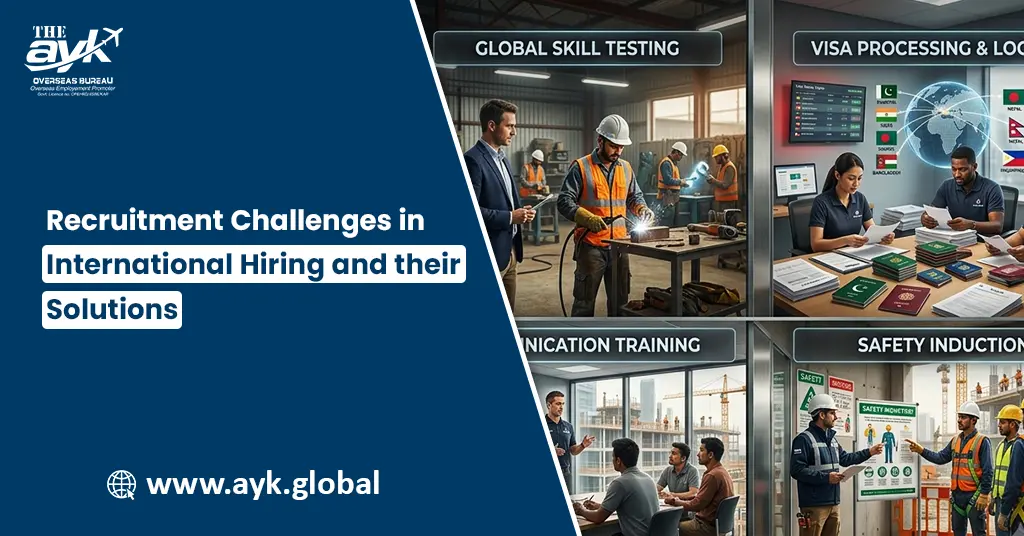 Recruitment Challenges in International Hiring and Their Solutions
 Domestic and Skilled Labor Demand in Kuwait City 2026
 KSA Recruitment
 UAE Recruitment
 Qatar Recruitment
 Oman Recruitment
 Kuwait Recruitment
 Libya Recruitment
 Bahrain Recruitment
 Iraq Recruitment
 Malaysia Recruitment
 Malta Recruitment
 Canada Recruitment
 USA Recruitment
 Europe Recruitment
 UK Recruitment
 Romania Recruitment
 Poland Recruitment
 Bulgaria Recruitment
 Albania Recruitment
 Serbia Recruitment
 Lithuania Recruitment
 Japan Recruitment
 Turkey Recruitment
 Kyrgyzstan Recruitment
 South Korea Recruitment