How Gulf Employers Evaluate Pakistani Worker CVs
Published: July 04, 2026 | Views: 15
Introduction
Understanding how Gulf employers actually evaluate Pakistani worker CVs gives job seekers a genuine competitive advantage that most applicants never develop because they focus entirely on what they believe makes a strong CV without understanding the specific evaluation lens that Gulf employer representatives apply when reviewing hundreds of applications from Pakistani candidates across various employment categories. Gulf employer CV evaluation differs meaningfully from the academic or domestic employment assessment perspectives that many Pakistani workers unconsciously apply when preparing their application materials, with Gulf employers prioritizing specific credential combinations, documentation completeness, experience relevance, and professional presentation standards that workers who understand this evaluation framework can specifically prepare for rather than submitting generic applications that miss critical employer assessment priorities. AYK Overseas Recruitment & HR Manpower Agency, recognized as one of Pakistan's top manpower agencies, works directly with Gulf employers reviewing Pakistani worker CVs on a continuous basis and this guide provides the genuine insider perspective on exactly what these employers look for, what they immediately dismiss, and what creates the strong positive impressions that convert CV review into interview invitation.
First Impressions: Format and Professional Presentation
Gulf employers reviewing large volumes of Pakistani worker CVs make initial viability assessments within the first fifteen to thirty seconds of viewing each document, with professionally formatted, cleanly structured CVs receiving meaningfully more careful reading than poorly organized documents that suggest the worker has not invested adequate care in their professional self-presentation. The specific formatting elements that Gulf employers consistently respond positively to include clear section headings that allow rapid navigation to the information the employer most needs to assess, consistent professional font choices and sizing that create visual hierarchy without distracting design choices, appropriate length that provides complete professional information without the padding that overextended CVs signal through obvious inclusion of irrelevant content, and a clean overall appearance free of the typographical inconsistencies and formatting errors that signal inadequate professional attention. Workers who invest in developing genuinely professional CV presentation, whether through careful self-preparation or appropriate writing assistance, create immediate positive credibility signals that influence the entire subsequent reading experience regardless of whether employers consciously recognize this initial impression formation process.
Verifying Claimed Experience Against Supporting Evidence
Gulf employers have extensive experience with Pakistani workers who overstate their experience levels within CVs submitted for employment consideration, making them specifically alert to the inconsistencies between claimed experience levels and the supporting evidence documentation that should logically accompany genuine experience at the claimed level, including reference letter quality and specificity, certification level relative to claimed experience years, and the technical vocabulary used within experience descriptions that reveals whether the candidate genuinely understands the work they claim to have performed. Sophisticated Gulf employers cross-reference multiple CV elements to assess overall experience claim credibility, looking for the internal consistency between claimed tenure durations, referenced project scales, described responsibility levels, and available certification evidence that genuinely experienced workers naturally demonstrate across their complete application package. Workers should ensure their CVs accurately represent their genuine experience rather than strategically inflating claims toward positions they cannot genuinely support, recognizing that this strategic inflation often creates more harm than benefit when experienced Gulf employers identify the inconsistencies that genuine experience accurately represented avoids.
The Weight Given to Gulf Experience vs. Pakistan-Only Experience
Gulf employers consistently attribute significantly more credibility and relevance weight to candidates with prior Gulf employment experience compared to equally or even more extensively experienced candidates whose entire work history occurred within Pakistani domestic employment contexts, reflecting the genuine operational differences between Gulf construction, industrial, and hospitality employment environments and Pakistani domestic equivalents that make Gulf-acclimatized workers meaningfully easier to integrate into Gulf operational teams without the extended adjustment periods that workers without Gulf exposure sometimes require. This Gulf experience premium creates a specific competitive disadvantage for first-time Gulf applicants that workers should be realistically aware of and strategically address through other strong application elements rather than simply hoping that extensive domestic experience will receive equivalent weight to even modest prior Gulf employment. First-time Gulf applicants who can demonstrate internationally relevant experience through exposure to international standards, certification by recognized bodies, or employment with international companies operating in Pakistan create somewhat stronger positioning than purely domestic workers without any international employment exposure, though the genuine Gulf experience premium remains the most significant single differentiator in many employer assessment frameworks.
Technical Certification as a Primary Credibility Signal
Gulf employers across construction, industrial, hospitality, and technical employment categories increasingly treat formal trade or professional certification as a primary credibility signal that meaningfully influences their assessment of CV claims beyond what uncertified experience descriptions alone can establish, with certified workers receiving the benefit of independent competency verification that uncertified workers cannot provide regardless of how compellingly their experience descriptions are written. The specific certification bodies whose credentials carry the strongest Gulf employer recognition vary between different employment categories and Gulf destinations, with internationally recognized bodies generally carrying stronger weight than purely Pakistani domestic certification in most technical categories, though NAVTTC and TEVTA credentials carry meaningful recognition particularly for construction trade categories where Pakistani worker supply is well established and these credential bodies are specifically familiar to experienced Gulf construction employers. Workers should identify and prioritize the specific certifications that carry strongest recognition within their particular employment category and target Gulf destination, recognizing that certification investment returns its cost through meaningfully improved employment positioning and potentially stronger compensation negotiation leverage that certified status provides compared to uncertified experience claims that employers must evaluate with greater uncertainty.
How Employers Read the Experience Section
The experience section receives the most careful reading during Gulf employer CV evaluation, with employers specifically looking for the concrete role descriptions, specific technical task descriptions, project scale indicators, and responsibility level signals that allow them to assess whether a candidate's actual experience matches the position requirements they are trying to fill rather than simply confirming that employment occurred within nominally relevant companies during the claimed periods. Gulf employers specifically value experience descriptions that include specific technical vocabulary demonstrating genuine trade knowledge, project scale indicators that establish the operational complexity within which the candidate has worked, any supervisory or coordination responsibilities that suggest advancement potential, and specific achievements or quality indicators that distinguish this worker from others with similar experience duration claims who might not have performed at equivalent quality levels. Workers who craft their experience descriptions specifically to answer these employer assessment questions, providing the specific operational detail that allows genuine competency assessment rather than simply listing duty categories that provide no differentiation between candidates with vastly different actual performance levels within nominally similar roles, create meaningfully stronger CV impressions that convert more frequently into interview invitations.
Education Section: What Actually Matters to Gulf Employers
Gulf employers' attention to educational credentials varies considerably between different employment categories, with professional and technical employment requiring specific educational qualifications that receive careful verification while manual and trade employment categories place considerably less weight on general educational credentials beyond the minimum literacy implied by basic functional competency. For workers in professional employment categories, HEC verification of degree credentials has become progressively more important as Gulf employers have experienced the credential fraud that makes independent verification rather than credential acceptance at face value a practical operational necessity within Pakistan-specific hiring contexts. Trade workers should ensure their education section clearly identifies any vocational or technical training programs completed that are more directly relevant to their trade competency than general secondary educational achievement, since Gulf employers evaluating trade applications find vocational training documentation more operationally meaningful than secondary school educational credentials that do not directly address trade competency questions.
Language Skills and Communication Indicators
Gulf employers reading Pakistani worker CVs specifically assess language skill indicators that predict operational communication effectiveness within multinational Gulf workplace environments, with functional English proficiency being the primary communication credential that Gulf employers value given English's role as the operational language across most Gulf professional and technical employment contexts. Workers should honestly represent their English proficiency level within their CVs rather than claiming fluency that interview communication will immediately contradict, recognizing that honest representation of developing proficiency combined with genuine communication effort during employer assessment creates better impressions than inflated claims that fail during actual interaction. Arabic language skills, while not required across most Pakistani worker employment categories, create notable positive differentiation in employer assessment given their genuine operational utility within Gulf workplace environments where Arabic remains the primary language of local supervision and management hierarchies that overseas workers must navigate effectively throughout their daily employment experience.
References: Quality Over Generic Endorsement
Reference documentation quality significantly differentiates strong Pakistani worker CVs from weaker applications in Gulf employer evaluation, with specific, detailed reference letters from credible employers describing actual performance quality and specific competency observations creating substantially more employer confidence than generic employment confirmation letters that simply verify employment occurred without providing any meaningful performance quality assessment. Gulf employers specifically look for references that include the referee's name, title, direct contact information, and genuinely substantive descriptions of the candidate's specific performance strengths and work quality observations, recognizing that references lacking this specificity and verifiability provide essentially no meaningful information beyond confirming that someone with connection to the candidate was willing to write something on company letterhead. Workers should invest in developing genuine relationships with supervisors and managers who can provide substantive performance references rather than relying on generic human resources confirmation letters that Gulf employers correctly recognize as providing minimal authentic performance assessment value.
Red Flags That Cause Immediate Rejection
Specific red flags within Pakistani worker CVs cause Gulf employer representatives to remove applications from consideration immediately without further evaluation, including unexplained employment gaps that suggest potential employment or personal difficulty the candidate is attempting to conceal, employment durations that are implausibly short across multiple consecutive positions suggesting either persistent performance problems or serial employment fraud across different employers, claimed experience at responsibility levels inconsistent with the age and educational background implied by other CV information, and documentation that appears altered or inconsistently formatted in ways that raise authenticity questions about claimed credentials. Gulf employers with extensive Pakistani worker hiring experience have developed pattern recognition for the specific red flag combinations that most reliably indicate problematic applications, making these employers more effective than newer or less experienced buyers at identifying applications that warrant rejection regardless of initially impressive headline claims that closer reading reveals as inconsistent with supporting evidence. Workers should proactively address any legitimate employment gaps or unusual career patterns through honest, brief explanation within their CV rather than hoping employers will not notice these apparent anomalies, since unexplained anomalies consistently create more negative impact than the transparent explanation that honest acknowledgment provides.
How AYK Overseas Helps Candidates Present Strongest CVs
As a government-licensed international recruitment and HR manpower firm with offices in Karachi and Islamabad, AYK Overseas Recruitment & HR Manpower Agency reviews candidate CVs as a standard component of our qualification assessment process, providing specific feedback on presentation, content completeness, and employer-specific positioning that helps workers present their genuine professional backgrounds in formats that Gulf employers find most compelling. Being recognized as one of Pakistan's top manpower agencies, we apply our direct Gulf employer relationship knowledge to candidate CV guidance, ensuring that the specific elements Gulf employers in each relevant employment category most value are clearly and compellingly represented within our candidates' application materials rather than being buried within generic formats that miss critical employer assessment priorities.
Conclusion
Gulf employers evaluate Pakistani worker CVs through a specific assessment framework that prioritizes professional presentation, experience documentation credibility, certification evidence, technical detail within experience descriptions, and reference quality in ways that workers who understand this framework can specifically prepare for through deliberate CV development rather than generic application submission. Workers who invest in developing CVs that genuinely address Gulf employer assessment priorities, supported by proper documentation and honest, specific experience representation, create meaningfully stronger application impressions that convert more frequently into interview invitations and ultimately successful Gulf employment placement.
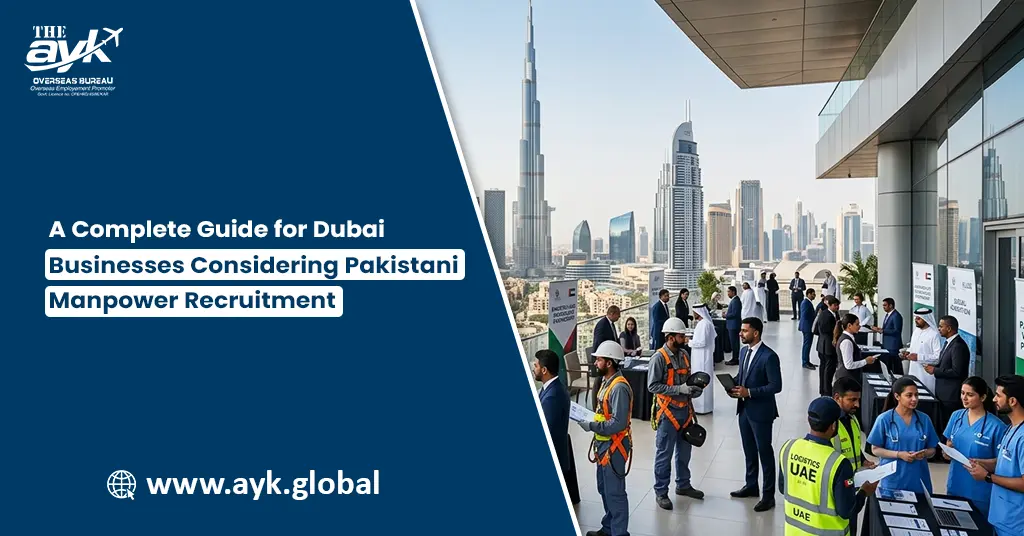 A complete guide for Dubai businesses considering Pakistani manpower recruitment
 Hire Pakistani Workers for Peru, A Complete Guide for Employers
 KSA Recruitment
 UAE Recruitment
 Qatar Recruitment
 Oman Recruitment
 Kuwait Recruitment
 Libya Recruitment
 Bahrain Recruitment
 Iraq Recruitment
 Malaysia Recruitment
 Malta Recruitment
 Canada Recruitment
 USA Recruitment
 Europe Recruitment
 UK Recruitment
 Romania Recruitment
 Poland Recruitment
 Bulgaria Recruitment
 Albania Recruitment
 Serbia Recruitment
 Lithuania Recruitment
 Japan Recruitment
 Turkey Recruitment
 Kyrgyzstan Recruitment
 South Korea Recruitment