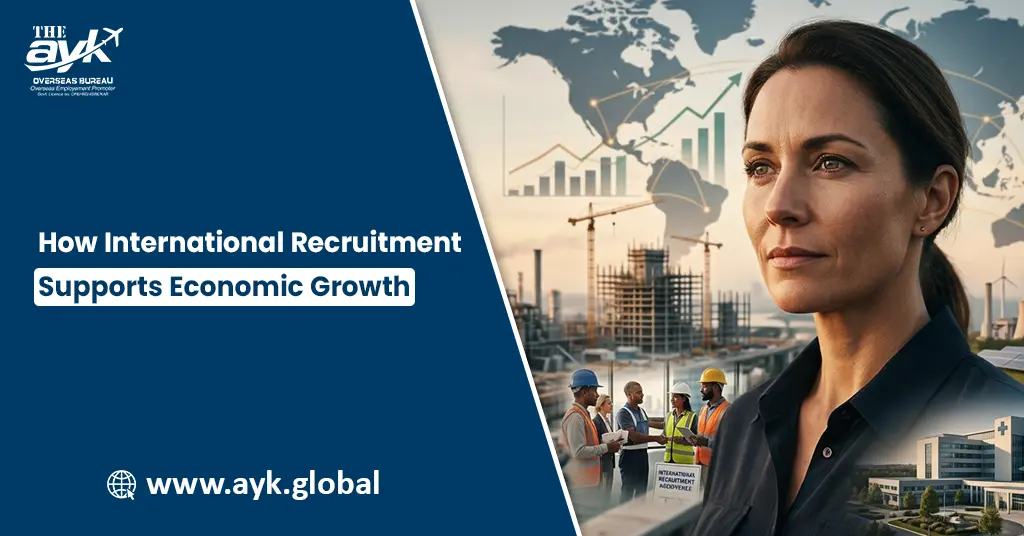
How International Recruitment Supports Economic Growth
Published: June 23, 2026 | Views: 23
Introduction
Economic growth depends on many factors, including investment, innovation, infrastructure development, business expansion, productivity, and workforce availability. Among these factors, workforce availability remains one of the most important drivers of sustainable economic development. Businesses cannot expand, projects cannot progress, and industries cannot operate efficiently without access to qualified workers.
In recent years, labor shortages have emerged as a major challenge across many countries. Employers in construction, healthcare, manufacturing, logistics, engineering, hospitality, transportation, facilities management, agriculture, and industrial sectors frequently struggle to recruit enough workers to meet growing demand. These workforce shortages can slow economic activity and limit business growth.
International recruitment helps address these challenges by connecting employers with talent from global labor markets. Through cross-border hiring, businesses gain access to workers with the skills, experience, and expertise needed to support economic activity. International recruitment has become an essential workforce solution for countries and industries experiencing labor shortages.
Global workforce mobility also creates opportunities for workers seeking employment abroad. Skilled professionals, tradespeople, healthcare workers, technicians, engineers, and industrial personnel contribute to economic development by filling critical workforce gaps and supporting productivity.
As economies become increasingly interconnected, international recruitment plays a larger role in workforce planning and labor market development. Employers, governments, and recruitment agencies are recognizing the importance of global talent mobility in supporting long-term economic objectives.
This guide explores how international recruitment supports economic growth and why global workforce solutions are becoming increasingly important in 2026 and beyond.
1. Workforce Availability Drives Economic Activity
Economic growth depends heavily on workforce participation. Businesses require employees to produce goods, deliver services, support customers, manage projects, and drive innovation. Without sufficient manpower, economic activity becomes constrained.
Many industries face workforce shortages that limit productivity and reduce growth potential. Construction projects may be delayed, manufacturing output may decline, healthcare services may become strained, and logistics operations may experience disruptions.
International recruitment helps improve workforce availability by expanding access to qualified workers beyond domestic labor markets. Employers can fill vacancies more efficiently and maintain workforce levels necessary for operational success.
By supporting workforce availability, international recruitment contributes directly to economic performance and business development.
Workforce Availability Benefits
Labor shortages are reduced.
Business operations remain productive.
Economic activity increases.
2. International Recruitment Helps Solve Labor Shortages
Labor shortages remain one of the most significant obstacles to economic growth. When employers cannot recruit enough workers, productivity suffers and expansion opportunities may be delayed.
International hiring provides an effective solution by allowing employers to source talent from countries where workforce availability remains strong. Skilled workers can fill critical roles that are difficult to recruit locally.
Construction, healthcare, engineering, manufacturing, logistics, hospitality, and industrial sectors frequently rely on international recruitment to address staffing challenges. Access to global talent helps maintain operational continuity and workforce stability.
Reducing labor shortages strengthens labor markets and supports broader economic development objectives.
Labor Shortage Benefits
Global recruitment expands workforce access.
Critical vacancies are filled more efficiently.
Business growth becomes easier to sustain.
3. Skilled Workers Improve Productivity
Productivity is one of the most important contributors to economic growth. Organizations that operate efficiently produce greater value, generate higher revenues, and support stronger economic performance.
International recruitment helps employers access skilled workers who contribute directly to productivity improvement. Qualified employees generally perform tasks more effectively, maintain higher quality standards, and support operational efficiency.
Skilled tradespeople, healthcare professionals, engineers, technicians, logistics specialists, and industrial workers all play important roles in maintaining productivity across industries. Their contributions help businesses remain competitive and support economic activity.
Workforce quality remains a critical factor influencing organizational success and long-term economic growth.
Productivity Benefits
Qualified workers improve efficiency.
Workforce quality supports competitiveness.
Economic performance strengthens.
4. Business Expansion Creates Economic Opportunities
Business expansion is a major driver of economic growth because it creates jobs, increases investment, and stimulates commercial activity. However, expansion often depends on workforce availability.
Organizations that cannot recruit enough workers may struggle to launch new projects, enter new markets, or increase production capacity. International recruitment helps address these challenges by providing access to additional manpower resources.
Global hiring supports business growth by improving workforce flexibility and enabling organizations to scale operations more effectively. Expansion initiatives become easier to execute when qualified workers are available.
As businesses grow, they contribute to broader economic development through job creation, infrastructure investment, and increased economic activity.
Business Expansion Benefits
Workforce availability supports growth.
Expansion projects become more achievable.
Economic opportunities increase.
5. Workforce Mobility Strengthens Labor Markets
Workforce mobility refers to the movement of workers between regions and countries for employment opportunities. This mobility helps balance labor market supply and demand across different economies.
Countries experiencing labor shortages benefit from access to international talent, while workers gain employment opportunities that may not be available in their home markets. Workforce mobility therefore creates value for both employers and employees.
Global labor mobility also improves workforce efficiency because talent can move where it is needed most. Employers gain access to qualified workers while labor market imbalances are reduced.
As workforce mobility continues increasing, labor markets become more interconnected and better equipped to support economic growth.
Workforce Mobility Benefits
Labor markets become more balanced.
Employers access needed talent.
Economic efficiency improves.
6. Infrastructure Development Depends on Skilled Labor
Infrastructure projects are among the most important contributors to economic growth. Roads, bridges, airports, industrial facilities, healthcare centers, housing developments, and energy projects all require skilled manpower.
Many countries face shortages of electricians, welders, plumbers, technicians, machine operators, engineers, and construction professionals. International recruitment helps fill these workforce gaps and supports project execution.
Infrastructure investments generate employment opportunities, improve productivity, and create long-term economic benefits. Access to qualified workers is therefore essential for successful project delivery.
International recruitment enables governments and private organizations to secure the manpower necessary for infrastructure development and economic progress.
Infrastructure Benefits
Skilled labor supports project delivery.
Workforce shortages are reduced.
Economic development accelerates.
7. International Recruitment Supports Healthcare Growth
Healthcare systems around the world are facing increasing pressure due to population growth, aging demographics, and rising demand for medical services. Hospitals, clinics, rehabilitation centers, long-term care facilities, and healthcare organizations require qualified professionals to maintain service quality and patient care standards.
Many countries are experiencing shortages of nurses, caregivers, healthcare assistants, medical technicians, and allied healthcare professionals. International recruitment helps healthcare providers address these shortages and maintain workforce stability.
Access to international healthcare talent allows organizations to expand services, improve patient outcomes, and reduce staffing pressures. A stronger healthcare workforce contributes directly to public well-being and economic productivity because healthier populations are better able to participate in the workforce.
International recruitment therefore plays a vital role in supporting healthcare development and strengthening economic growth across multiple regions.
Healthcare Workforce Benefits
Healthcare labor shortages are reduced.
Medical services become more accessible.
Workforce stability improves patient care.
8. Industrial and Manufacturing Growth Depends on Talent
Manufacturing and industrial sectors remain major contributors to economic development. Factories, production facilities, processing plants, and industrial operations require skilled workers to maintain productivity and support business expansion.
Many industrial employers struggle to recruit technicians, machine operators, maintenance personnel, welders, electricians, engineers, and quality control specialists. These shortages can limit production capacity and affect operational performance.
International recruitment provides access to qualified industrial workers who possess technical expertise and practical experience. Employers can maintain workforce levels and support manufacturing growth more effectively.
A strong industrial workforce contributes to economic growth by increasing production output, supporting exports, attracting investment, and creating employment opportunities.
Industrial Workforce Benefits
Manufacturing productivity improves.
Technical workforce shortages decrease.
Economic output increases significantly.
9. Workforce Diversity Encourages Innovation
Economic growth is closely linked to innovation. Organizations that develop new products, services, technologies, and business models often achieve stronger performance and create additional economic value.
International recruitment contributes to innovation by increasing workforce diversity. Employees from different countries and backgrounds bring unique experiences, perspectives, and problem-solving approaches to the workplace.
Diverse workforce teams often generate new ideas and improve organizational adaptability. Businesses become better equipped to respond to changing market conditions and customer expectations.
Innovation supported by workforce diversity contributes to business growth, productivity improvements, and long-term economic development.
Innovation Benefits
Diverse teams support creativity.
New perspectives improve problem-solving.
Business adaptability increases.
10. Recruitment Agencies Contribute to Economic Development
Professional recruitment agencies play an important role in connecting employers with qualified talent. Their services help businesses address workforce shortages, improve hiring efficiency, and maintain workforce readiness.
Recruitment agencies support economic development by facilitating workforce mobility and improving labor market efficiency. Employers gain access to talent while workers gain employment opportunities that match their skills and experience.
These agencies also assist with workforce planning, candidate screening, compliance management, documentation, trade testing, and workforce mobilization. Their expertise helps organizations recruit more effectively and reduce hiring risks.
By supporting workforce development and international labor mobility, recruitment agencies contribute directly to economic growth and business success.
Recruitment Agency Benefits
Labor market efficiency improves.
Employers access qualified workers faster.
Economic activity is supported.
11. The Future of International Recruitment
International recruitment is expected to play an increasingly important role in economic development over the coming years. Workforce shortages, demographic changes, technological advancements, and economic expansion will continue driving demand for global talent.
Countries facing labor shortages are likely to rely more heavily on international hiring to maintain workforce availability. Employers will continue expanding recruitment efforts beyond domestic labor markets to secure qualified talent.
Technology will also transform international recruitment processes by improving candidate sourcing, workforce analytics, communication, and workforce planning capabilities. Recruitment activities will become more efficient and data-driven.
Organizations that invest in international recruitment strategies today will be better prepared to navigate future workforce challenges and support long-term economic growth.
Future Workforce Trends
Global talent demand will continue rising.
International hiring will become more important.
Workforce mobility will expand further.
12. Why AYK Overseas Supports Global Workforce Growth
Economic growth depends on workforce availability, productivity, and access to qualified talent. Employers facing labor shortages need recruitment partners capable of delivering skilled manpower efficiently and professionally.
AYK Overseas Recruitment & HR Manpower Agency
License No. GL-4586-KAR
supports employers across construction, healthcare, manufacturing, logistics, hospitality, engineering, transportation, facilities management, oil and gas, and industrial sectors. The agency provides workforce planning support, candidate sourcing, screening, trade testing assistance, qualification verification, documentation management, compliance coordination, workforce mobilization, and international recruitment services.
AYK Overseas helps organizations recruit electricians, welders, plumbers, technicians, engineers, nurses, drivers, machine operators, supervisors, healthcare professionals, and other workforce categories required for business growth and economic development.
By connecting employers with qualified international talent, AYK Overseas helps businesses improve productivity, address workforce shortages, and support sustainable economic growth.
Workforce Growth Solutions
Access to skilled international manpower.
Professional recruitment and workforce verification.
Reliable support for global workforce needs.
Conclusion
International recruitment has become a critical driver of economic growth in today's interconnected world. By improving workforce availability, addressing labor shortages, supporting business expansion, strengthening healthcare systems, and enabling infrastructure development, global recruitment contributes directly to economic progress.
Organizations that embrace international hiring gain access to broader talent pools and improve workforce flexibility. These advantages support productivity, innovation, competitiveness, and long-term business success.
As workforce challenges continue evolving, international recruitment will remain one of the most effective strategies for supporting sustainable economic development and workforce growth.
 Government vs Private Jobs in Pakistan – Which Is Better in 2026?
 The Rise of Female Workforce Participation in Gulf Jobs
 KSA Recruitment
 UAE Recruitment
 Qatar Recruitment
 Oman Recruitment
 Kuwait Recruitment
 Libya Recruitment
 Bahrain Recruitment
 Iraq Recruitment
 Malaysia Recruitment
 Malta Recruitment
 Canada Recruitment
 USA Recruitment
 Europe Recruitment
 UK Recruitment
 Romania Recruitment
 Poland Recruitment
 Bulgaria Recruitment
 Albania Recruitment
 Serbia Recruitment
 Lithuania Recruitment
 Japan Recruitment
 Turkey Recruitment
 Kyrgyzstan Recruitment
 South Korea Recruitment