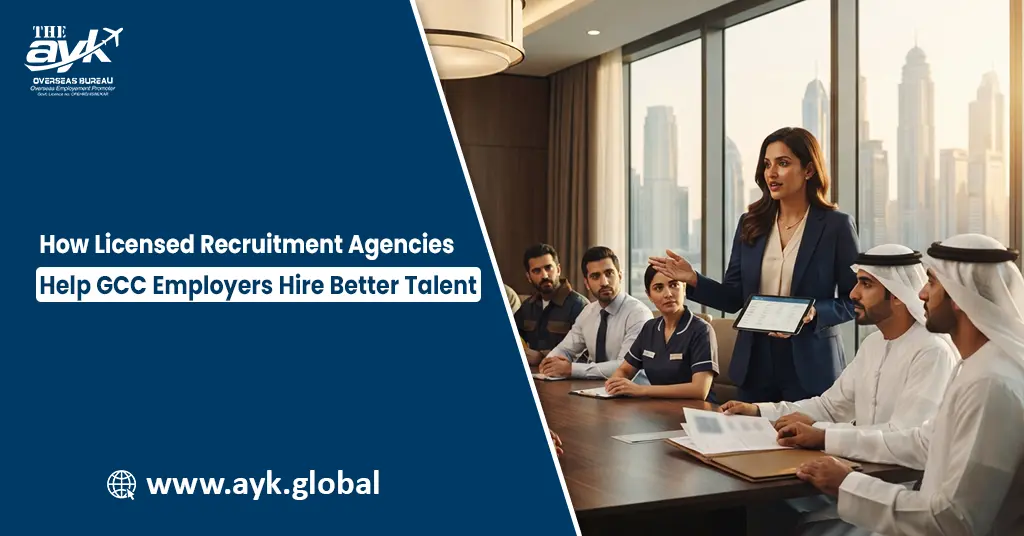
How Licensed Recruitment Agencies Help GCC Employers Hire Better Talent
Published: July 03, 2026 | Views: 13
Introduction
Hiring manpower for large-scale projects in the Gulf Cooperation Council (GCC) region is a complex process that requires accuracy, speed, and strict compliance with international labor laws. Countries such as Saudi Arabia, the United Arab Emirates, Qatar, Kuwait, Oman, and Bahrain rely heavily on foreign workers to support construction, oil and gas, infrastructure, healthcare, hospitality, logistics, and manufacturing industries. As demand for skilled and semi-skilled workers continues to grow, employers face increasing pressure to recruit high-quality talent efficiently while avoiding legal and operational risks.
Licensed recruitment agencies play a crucial role in solving these challenges by acting as professional intermediaries between employers and global talent pools. These agencies operate under government authorization and follow strict recruitment standards, ensuring ethical hiring practices and compliance with labor regulations. By partnering with licensed agencies, GCC employers gain access to verified candidates, structured recruitment processes, and end-to-end hiring support that significantly improves workforce quality and reduces recruitment risks. This article explains in detail how licensed recruitment agencies help GCC employers hire better talent.
1. Access to Verified and Pre-Screened Talent
One of the biggest advantages of licensed recruitment agencies is their ability to provide access to verified and pre-screened candidates. Instead of starting the hiring process from scratch, employers receive a pool of applicants who have already been evaluated for basic qualifications, experience, and skill levels. This significantly reduces hiring time and improves the overall quality of selected candidates.
These agencies maintain large databases of workers from countries such as Pakistan, India, Bangladesh, Nepal, Sri Lanka, Egypt, and the Philippines. Candidates in these databases are often pre-screened through interviews, document verification, and sometimes even technical assessments. As a result, GCC employers only interact with candidates who meet job requirements, ensuring higher hiring accuracy and better workforce performance.
2. Ensuring Legal Compliance and Ethical Recruitment
Licensed recruitment agencies operate under strict government regulations, ensuring that all recruitment activities follow legal and ethical standards. This is extremely important in GCC hiring, where immigration laws, labor policies, and visa requirements must be followed precisely. Non-compliance can lead to visa rejections, fines, project delays, or reputational damage for employers.
These agencies ensure that all candidate documentation is genuine, contracts are transparent, and recruitment processes are conducted fairly. They also help employers comply with both source country regulations and GCC labor laws. This reduces legal risks and ensures that workers are hired through proper, government-approved channels.
3. Reducing Hiring Time Through Structured Processes
Time is a critical factor in GCC projects, especially in construction, oil and gas, and infrastructure development. Delays in recruitment can directly impact project deadlines and increase costs. Licensed recruitment agencies streamline the entire hiring process by managing sourcing, screening, interviews, documentation, visa processing, and deployment in a structured and efficient manner.
Because these agencies already have established systems and candidate pipelines, they can quickly match job requirements with available talent. This reduces the need for lengthy hiring cycles and allows employers to deploy workers faster, keeping projects on schedule and within budget.
4. Improving Candidate Quality Through Professional Screening
Another major benefit of licensed recruitment agencies is their ability to improve candidate quality through rigorous screening processes. Instead of relying on basic CV reviews, these agencies conduct detailed evaluations including skill assessments, trade testing, reference checks, and experience verification.
For skilled roles such as electricians, welders, plumbers, HVAC technicians, engineers, and machine operators, practical trade tests are often conducted to ensure candidates meet industry standards. This ensures that only competent and job-ready workers are presented to employers, reducing the risk of poor performance after deployment.
5. Managing End-to-End Recruitment Process
Licensed recruitment agencies offer complete end-to-end recruitment solutions, handling every stage of the hiring cycle. This includes workforce planning, candidate sourcing, screening, interviews, trade testing, documentation, visa processing, medical examinations, travel arrangements, and onboarding support.
By managing the entire process, these agencies reduce the administrative burden on GCC employers and allow them to focus on core business operations. This integrated approach also ensures consistency, accuracy, and efficiency throughout the recruitment lifecycle, resulting in better hiring outcomes and smoother project execution.
6. Reducing Recruitment Risks and Employee Turnover
Recruitment risks such as hiring unqualified candidates, documentation errors, or mismatched job expectations can lead to high employee turnover and increased costs. Licensed recruitment agencies minimize these risks by ensuring proper candidate-job matching and transparent communication throughout the hiring process.
They carefully evaluate candidates' skills, experience, and expectations before final selection. This reduces the likelihood of early resignations and improves employee retention rates. Stable workforce deployment helps GCC employers maintain productivity and reduce the financial impact of repeated recruitment cycles.
7. Reducing Recruitment Costs and Hidden Hiring Expenses
One of the most important advantages of licensed recruitment agencies is their ability to reduce overall recruitment costs for GCC employers. While many companies assume that handling recruitment internally is cheaper, in reality, unmanaged hiring often leads to hidden expenses such as repeated advertising, poor candidate selection, visa reprocessing, delayed mobilization, and high employee turnover. These inefficiencies significantly increase the total cost per hire over time.
Licensed agencies streamline the entire process by using established candidate databases, bulk sourcing methods, and optimized recruitment workflows. This reduces unnecessary spending on repeated hiring cycles and minimizes administrative workload. Because agencies operate at scale, they can also negotiate better rates for documentation processing, medical tests, travel arrangements, and logistics support, ultimately helping employers achieve more cost-effective recruitment outcomes without compromising on talent quality.
8. Access to Global Talent Pools Across Multiple Countries
GCC employers often require manpower from diverse countries to meet different project needs. Licensed recruitment agencies provide access to a wide international talent pool, including countries such as Pakistan, India, Bangladesh, Nepal, Sri Lanka, Egypt, the Philippines, and several African nations. This global reach ensures that employers are not limited to one labor market and can source the best candidates for each specific role.
This international access is especially valuable for large-scale projects requiring mixed skill levels. For example, engineers may be sourced from one region, skilled technicians from another, and general labor from a different country. Licensed agencies manage this complexity efficiently by maintaining global networks and country-specific recruitment teams, ensuring faster sourcing and better candidate matching.
9. Supporting Digital Recruitment and Modern Hiring Systems
Modern licensed recruitment agencies are increasingly adopting digital tools to improve hiring efficiency. These include Applicant Tracking Systems (ATS), online interviews, AI-based screening tools, and digital documentation systems. These technologies allow employers to track recruitment progress in real time and improve decision-making accuracy.
Digital recruitment systems also reduce manual paperwork, speed up candidate evaluation, and enhance communication between employers and agencies. Video interviews and online skill assessments allow GCC employers to evaluate candidates without requiring physical presence, significantly reducing time and travel-related costs. This digital transformation is making recruitment faster, more transparent, and more reliable for large-scale GCC hiring needs.
10. Strengthening Employer Branding and Candidate Experience
Licensed recruitment agencies also help GCC employers build a strong employer brand in international labor markets. A positive recruitment experience encourages better candidates to apply and increases acceptance rates for job offers. Agencies ensure that communication with candidates remains professional, transparent, and timely throughout the hiring process.
When candidates receive clear job information, timely updates, and structured onboarding support, they develop trust in the employer. This improves job acceptance rates and reduces last-minute withdrawals. A strong employer brand also helps attract highly skilled professionals who are more likely to stay long-term and contribute effectively to project success.
11. Improving Workforce Stability and Long-Term Retention
Employee retention is a major concern for GCC employers, especially in large projects where workforce continuity is critical. Licensed recruitment agencies improve retention by ensuring better candidate-job matching during the hiring stage. They carefully evaluate skills, experience, expectations, and working conditions before final selection.
This reduces the chances of job dissatisfaction and early resignations. When employees are properly matched to roles that suit their abilities and expectations, they are more likely to remain with the employer for longer periods. This leads to improved workforce stability, reduced recruitment cycles, and better overall project efficiency.
12. Providing End-to-End Strategic Recruitment Support
Licensed recruitment agencies do not just supply manpower—they act as long-term strategic partners for GCC employers. They provide end-to-end recruitment support, including workforce planning, sourcing, screening, trade testing, documentation, visa processing, medical coordination, travel arrangements, and onboarding assistance.
This comprehensive support allows employers to focus on project execution while agencies handle the complexities of international hiring. Over time, agencies also develop a deep understanding of employer requirements, making future recruitment faster, more accurate, and more efficient. This long-term collaboration creates a stable and reliable workforce pipeline for ongoing and future GCC projects.
Conclusion
Licensed recruitment agencies play a critical role in helping GCC employers hire better talent by offering structured recruitment processes, global candidate access, legal compliance, cost optimization, and improved workforce quality. Their expertise ensures that employers receive verified, skilled, and job-ready candidates while reducing risks and administrative burden.
 Qatar vs UAE: Which Is Better for Overseas Workers
 Hire Pakistani Workers for China, A Practical Guide for Employers
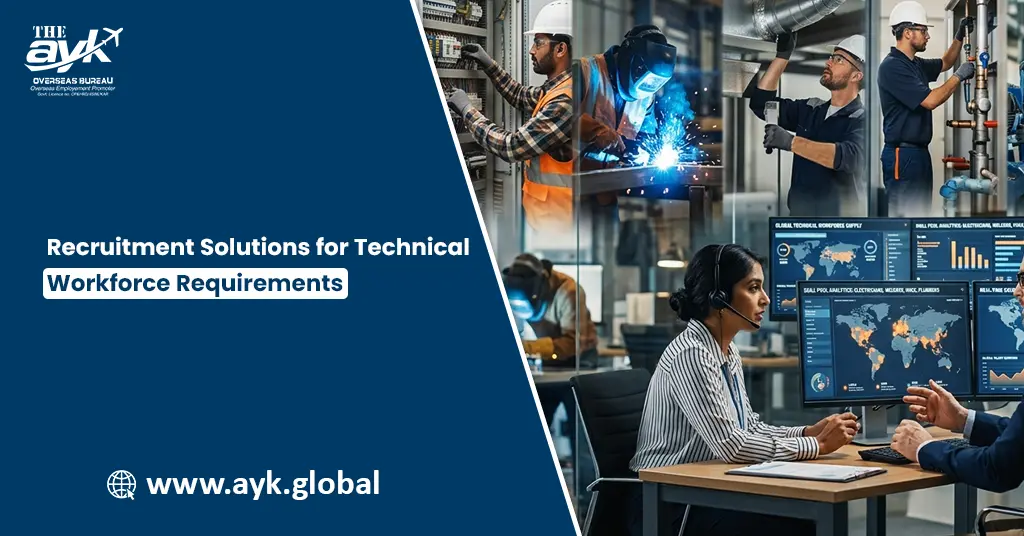 Recruitment Solutions for Technical Workforce Requirements
 KSA Recruitment
 UAE Recruitment
 Qatar Recruitment
 Oman Recruitment
 Kuwait Recruitment
 Libya Recruitment
 Bahrain Recruitment
 Iraq Recruitment
 Malaysia Recruitment
 Malta Recruitment
 Canada Recruitment
 USA Recruitment
 Europe Recruitment
 UK Recruitment
 Romania Recruitment
 Poland Recruitment
 Bulgaria Recruitment
 Albania Recruitment
 Serbia Recruitment
 Lithuania Recruitment
 Japan Recruitment
 Turkey Recruitment
 Kyrgyzstan Recruitment
 South Korea Recruitment