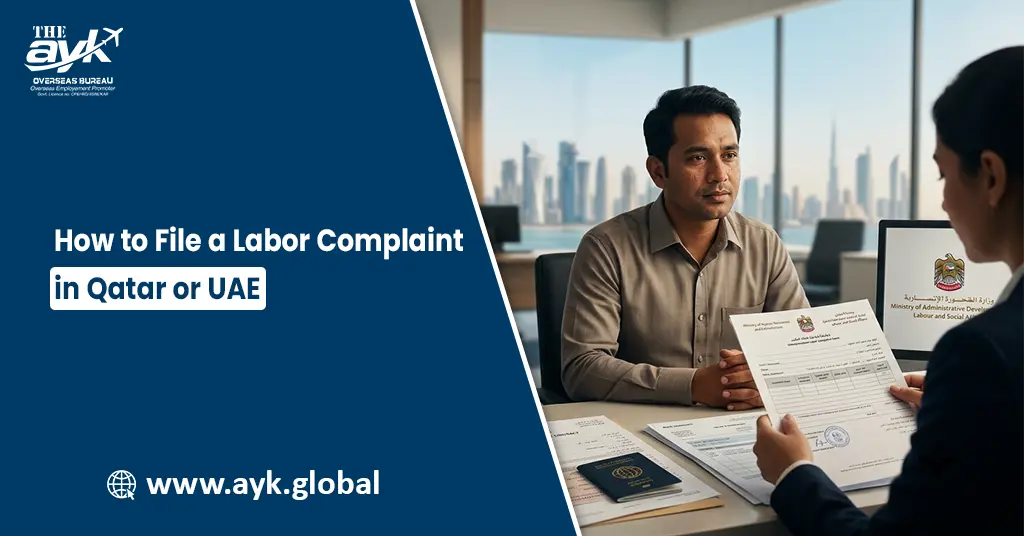
How to File a Labor Complaint in Qatar or UAE
Published: June 30, 2026 | Views: 61
Introduction
Knowing how to properly file a labor complaint represents essential knowledge for Pakistani workers in Qatar and UAE, since understanding this process empowers workers to actually exercise their legal protections rather than simply enduring workplace violations due to uncertainty about available recourse. Both countries maintain established labor authority systems specifically designed to address worker complaints, though the specific procedures and channels differ somewhat between these two destinations.
This guide provides practical, step-by-step guidance for filing labor complaints in both Qatar and UAE, helping workers understand exactly how to pursue formal resolution when workplace issues cannot be resolved through direct employer communication. AYK Overseas Recruitment & HR Manpower Agency, recognized as one of Pakistan's top manpower agencies, provides ongoing guidance to candidates navigating these complaint processes, ensuring proper resolution through legitimate channels.
Understanding When a Formal Complaint Becomes Necessary
Before pursuing formal complaint channels, workers should generally attempt direct communication with their employer regarding any workplace issue, reserving formal complaint filing for situations where this direct communication fails to produce resolution within a reasonable timeframe. This sequential approach helps demonstrate good faith effort toward resolution while also creating documentation supporting your eventual formal complaint if direct communication proves insufficient.
Workers should understand which specific issues typically warrant formal complaint consideration, including unpaid or delayed wages, contract violations, unsafe working conditions, or various other significant rights violations that direct communication has failed to adequately address. This understanding helps workers appropriately calibrate when formal complaint escalation genuinely makes sense versus situations that might still benefit from continued direct employer engagement.
Qatar's Labor Complaint Filing Process Through the Ministry of Labor
In Qatar, workers can file labor complaints through the Ministry of Labor's dedicated complaint channels, including both in-person visits to labor relations offices and increasingly available digital filing options through official government platforms. Workers should gather their documentation, including employment contracts, payment records, and any other relevant evidence supporting their specific complaint before beginning this formal filing process.
Qatar's labor authority typically schedules a mediation or hearing session following complaint filing, providing both the worker and employer opportunity to present their respective positions before any formal resolution determination. Workers should prepare for this mediation process by organizing their documentation clearly and considering whether they need translation support if their Arabic or English proficiency might create communication challenges during this important proceeding.
UAE's Labor Complaint Process Through the Ministry of Human Resources
In UAE, workers can file labor complaints through the Ministry of Human Resources and Emiratisation, which maintains both physical service centers and digital platforms specifically designed for worker complaint submission. Similar to Qatar's process, workers should gather comprehensive documentation supporting their specific complaint before beginning formal filing procedures through these established channels.
UAE's complaint process typically involves an initial conciliation attempt before potential escalation to labor court proceedings if conciliation fails to produce satisfactory resolution. Workers should understand this potential escalation pathway, recognizing that the initial labor authority involvement represents the starting point for a process that could potentially extend further if straightforward resolution does not occur during initial proceedings.
Required Documentation for Complaint Filing
Regardless of specific destination country, workers should prepare comprehensive documentation supporting their complaint, including their employment contract, any relevant correspondence with their employer regarding the disputed issue, payment records or pay slips relevant to wage disputes, and any other evidence directly supporting their specific claim. This documentation preparation significantly strengthens a worker's position throughout the formal complaint process.
Workers should organize this documentation clearly and chronologically, ensuring easy reference during any hearing or mediation proceedings that might result from their formal complaint filing. This organized presentation helps ensure labor authority officials can efficiently understand and properly evaluate the worker's specific claim and supporting evidence.
Language and Translation Considerations
Workers whose Arabic or English proficiency might create communication challenges during formal complaint proceedings should consider arranging translation support, either through their recruitment agency, community resources, or sometimes services provided by the labor authority itself for proceedings involving non-Arabic or non-English speaking workers. This translation support helps ensure workers can fully participate in and understand their own complaint proceedings.
Workers should inquire about available translation support options when initially filing their complaint, ensuring this consideration is addressed before any scheduled hearing or mediation session rather than discovering communication challenges only once formal proceedings have already begun. This proactive translation planning helps ensure workers can effectively advocate for their own interests throughout the complaint process.
Seeking Support from Your Recruitment Agency
Workers pursuing formal labor complaints should consider engaging their original recruitment agency for support throughout this process, since agencies committed to ongoing worker welfare often possess valuable guidance regarding proper complaint procedures and sometimes maintain relationships that can help facilitate appropriate resolution. This agency engagement represents an important resource that workers should actively utilize when navigating formal complaint processes.
Workers should provide their agency with complete information regarding their specific situation and complaint status, allowing the agency to provide appropriate guidance or, where possible, direct support throughout the resolution process. This collaborative approach between worker and agency often produces more effective outcomes compared to workers attempting to navigate complex formal complaint procedures entirely independently.
Understanding Potential Outcomes and Timelines
Workers should maintain realistic expectations regarding potential complaint outcomes and resolution timelines, recognizing that formal labor authority proceedings typically require some time for proper investigation and resolution rather than producing immediate results upon initial filing. This realistic expectation helps workers maintain appropriate patience while their complaint proceeds through proper formal channels.
Workers should understand that potential outcomes can include direct resolution through mediation, formal labor authority rulings requiring specific employer action, or in some cases, referral to labor courts for further proceedings if initial resolution attempts prove unsuccessful. This understanding of potential pathways helps workers properly anticipate how their specific situation might unfold throughout the formal complaint process.
Protecting Your Status While Pursuing a Complaint
Workers pursuing formal labor complaints should understand their legal protections against employer retaliation for filing legitimate complaints through proper channels, while also maintaining appropriate professional conduct throughout the process to avoid creating additional complications beyond their original complaint. This balanced approach helps protect workers' broader legal standing while they pursue legitimate resolution through formal channels.
Workers experiencing or fearing potential retaliation during their complaint process should document any concerning employer behavior and report this separately if it occurs, recognizing that retaliation for legitimate complaint filing itself typically represents an additional violation warranting its own attention through proper authority channels.
How AYK Overseas Supports Workers Through Complaint Processes
As a government-licensed international recruitment and HR manpower firm with offices in Karachi and Islamabad, AYK Overseas Recruitment & HR Manpower Agency provides guidance to candidates navigating formal labor complaint processes in both Qatar and UAE, helping ensure proper procedure and documentation throughout this important worker protection mechanism. Being recognized as one of Pakistan's top manpower agencies, we understand our responsibility extends to supporting workers through these serious workplace challenges.
Our team helps candidates understand specific complaint procedures relevant to their destination country, provides guidance on documentation preparation, and offers ongoing support throughout the resolution process. This commitment has helped AYK Overseas Recruitment & HR Manpower Agency assist candidates in properly navigating these formal complaint mechanisms toward appropriate resolution.
Conclusion
Filing a labor complaint in Qatar or UAE requires understanding the specific procedures applicable to each destination, gathering thorough supporting documentation, and navigating mediation or hearing proceedings with appropriate preparation and, where needed, translation support. Workers who understand this process and utilize available support resources, including their recruitment agency, are better positioned to achieve proper resolution of legitimate workplace grievances through these established formal channels.
 Why Latvian Companies Are Hiring Pakistani Workers in 2026, Complete Employer Guide
 End-to-End Recruitment Process Explained for Employers
 Highest Paying Jobs in Europe for Foreign Workers
 KSA Recruitment
 UAE Recruitment
 Qatar Recruitment
 Oman Recruitment
 Kuwait Recruitment
 Libya Recruitment
 Bahrain Recruitment
 Iraq Recruitment
 Malaysia Recruitment
 Malta Recruitment
 Canada Recruitment
 USA Recruitment
 Europe Recruitment
 UK Recruitment
 Romania Recruitment
 Poland Recruitment
 Bulgaria Recruitment
 Albania Recruitment
 Serbia Recruitment
 Lithuania Recruitment
 Japan Recruitment
 Turkey Recruitment
 Kyrgyzstan Recruitment
 South Korea Recruitment