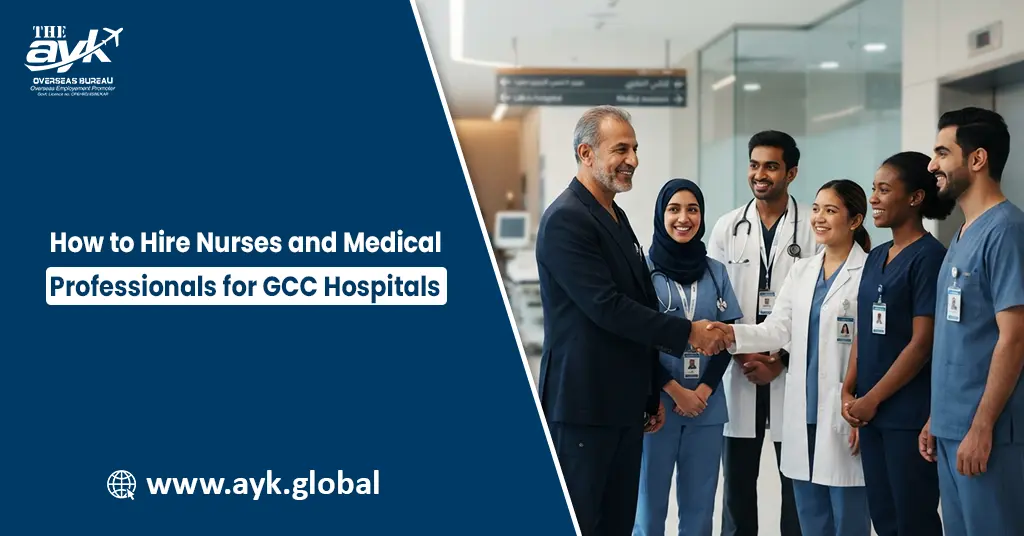
How to Hire Nurses and Medical Professionals for GCC Hospitals
Published: July 03, 2026 | Views: 14
Introduction
GCC countries—including Saudi Arabia, United Arab Emirates, Qatar, Kuwait, Oman, and Bahrain—are continuously expanding their healthcare systems to meet growing population needs and international healthcare standards. This expansion has created a strong demand for qualified nurses and medical professionals across hospitals, clinics, emergency centers, and specialized healthcare facilities.
Hiring nurses and medical professionals for GCC hospitals is a highly regulated and structured process. Unlike general manpower recruitment, healthcare hiring requires strict licensing, credential verification, clinical experience validation, and compliance with local health authorities.
This guide explains a complete step-by-step approach to hiring nurses and medical professionals for GCC hospitals.
1. Defining Healthcare Staffing Requirements Clearly
The first step in hiring nurses and medical professionals is clearly defining hospital staffing needs. Each department—such as ICU, emergency, surgery, pediatrics, or general wards—requires different levels of expertise and staffing ratios.
Hospitals must determine the number of nurses, specialization requirements, shift patterns, and patient care responsibilities before starting recruitment. Without proper planning, staffing shortages or overstaffing can directly affect patient care quality.
Key requirements include:
- Nursing specialization (ICU, ER, pediatric, etc.)
- Experience level (junior, senior, specialist)
- Shift requirements (day/night rotation)
- Patient-to-nurse ratio needs
- Clinical responsibilities and duties
2. Sourcing Qualified Nurses and Medical Professionals
Sourcing is one of the most important steps in healthcare recruitment. GCC hospitals usually hire through licensed recruitment agencies that specialize in medical manpower sourcing from countries such as the Philippines, India, Pakistan, Egypt, and other healthcare-exporting nations.
Candidates are selected based on clinical experience, education, and licensing eligibility. Nurses with previous GCC experience are often preferred due to familiarity with hospital systems and standards.
Advantages of proper sourcing:
- Access to certified healthcare professionals
- Faster recruitment cycles
- Better skill matching
- Reduced hiring risks
3. Credential Verification and Licensing Requirements
Credential verification is the most critical step in healthcare recruitment. Every nurse and medical professional must have verified educational degrees, clinical experience records, and professional licenses.
Additionally, candidates must obtain approval from relevant GCC healthcare authorities such as SCFHS (Saudi Arabia), DHA (Dubai), or MOH (Ministry of Health in respective countries). DataFlow verification is commonly used to authenticate documents.
Key verification steps include:
- Nursing degree verification
- Clinical experience validation
- Professional license eligibility (DHA, SCFHS, etc.)
- Background and identity checks
- DataFlow verification process
4. Interview Process and Clinical Assessment
After sourcing and credential verification, GCC hospitals conduct structured interviews and clinical assessments to evaluate the real competency of nurses and medical professionals. This step is essential because healthcare roles directly impact patient safety and treatment outcomes.
Interviews often include behavioral questions, scenario-based assessments, and clinical case discussions. Candidates may also be tested on emergency response handling, patient care procedures, and decision-making abilities under pressure.
Key evaluation areas include:
- Clinical knowledge and expertise
- Emergency response handling
- Communication and patient care skills
- Ethical and professional behavior
- Ability to work in shift-based hospital systems
5. Licensing Approval and Regulatory Compliance
Before deployment, nurses and medical professionals must obtain licensing approval from GCC health authorities. Each country has its own regulatory body such as SCFHS (Saudi Arabia), DHA (Dubai), HAAD (Abu Dhabi), and MOH systems.
This process ensures that healthcare workers meet local standards and are legally authorized to practice in GCC hospitals. Any missing documentation or failed assessments can delay or block hiring.
Key steps include:
- Submission of verified credentials
- Licensing exam (if required)
- DataFlow verification completion
- Professional registration approval
- Compliance with healthcare regulations
6. Visa Processing and Deployment Preparation
Once licensing is approved, hospitals proceed with visa processing and deployment arrangements. This includes employment contracts, immigration paperwork, and coordination with recruitment agencies.
Visa processing for healthcare professionals may take longer due to strict regulatory checks. Accuracy in documentation is critical to avoid delays or rejection.
Deployment preparation includes:
- Work visa application submission
- Employment contract finalization
- Travel and relocation arrangements
- Coordination with hospital departments
7. Onboarding and Hospital Integration
After arrival in GCC countries, nurses and medical professionals undergo structured onboarding programs. This includes hospital orientation, safety training, department assignment, and system familiarization.
Proper onboarding ensures smooth integration into hospital workflows and improves patient care efficiency from day one.
Benefits of onboarding:
- Faster adaptation to hospital systems
- Improved patient care delivery
- Better teamwork and coordination
- Reduced clinical errors
8. Cost Optimization in Healthcare Recruitment
Healthcare recruitment can be expensive due to licensing, documentation, and relocation costs. However, hospitals can optimize expenses through bulk hiring, long-term recruitment partnerships, and pre-screened candidate pools.
Hiring experienced GCC-return nurses also reduces training costs and improves productivity.
Cost-saving strategies include:
- Bulk recruitment planning
- Use of licensed recruitment agencies
- Hiring experienced GCC professionals
- Efficient documentation processing
9. Retention Strategies for Nurses and Medical Staff
Retention is one of the biggest challenges in GCC healthcare systems due to global demand for medical professionals. Hospitals must focus on providing a supportive work environment and competitive benefits.
Strong retention strategies help reduce turnover and ensure continuity in patient care services.
Key retention strategies include:
- Competitive salary packages
- Safe and supportive working environment
- Career development and training programs
- Balanced shift scheduling
- Performance-based incentives
Conclusion
Hiring nurses and medical professionals for GCC hospitals requires a highly structured process involving sourcing, credential verification, licensing approval, interviews, visa processing, onboarding, and retention planning. Each step ensures that only qualified and licensed professionals are deployed for patient care roles.
By following best practices, GCC hospitals can maintain high-quality healthcare services and ensure long-term workforce stability.
 How Recruitment Agencies Save Time and Hiring Costs
 Complete Guide to Getting an Overseas Job from Pakistan in 2026
 KSA Recruitment
 UAE Recruitment
 Qatar Recruitment
 Oman Recruitment
 Kuwait Recruitment
 Libya Recruitment
 Bahrain Recruitment
 Iraq Recruitment
 Malaysia Recruitment
 Malta Recruitment
 Canada Recruitment
 USA Recruitment
 Europe Recruitment
 UK Recruitment
 Romania Recruitment
 Poland Recruitment
 Bulgaria Recruitment
 Albania Recruitment
 Serbia Recruitment
 Lithuania Recruitment
 Japan Recruitment
 Turkey Recruitment
 Kyrgyzstan Recruitment
 South Korea Recruitment